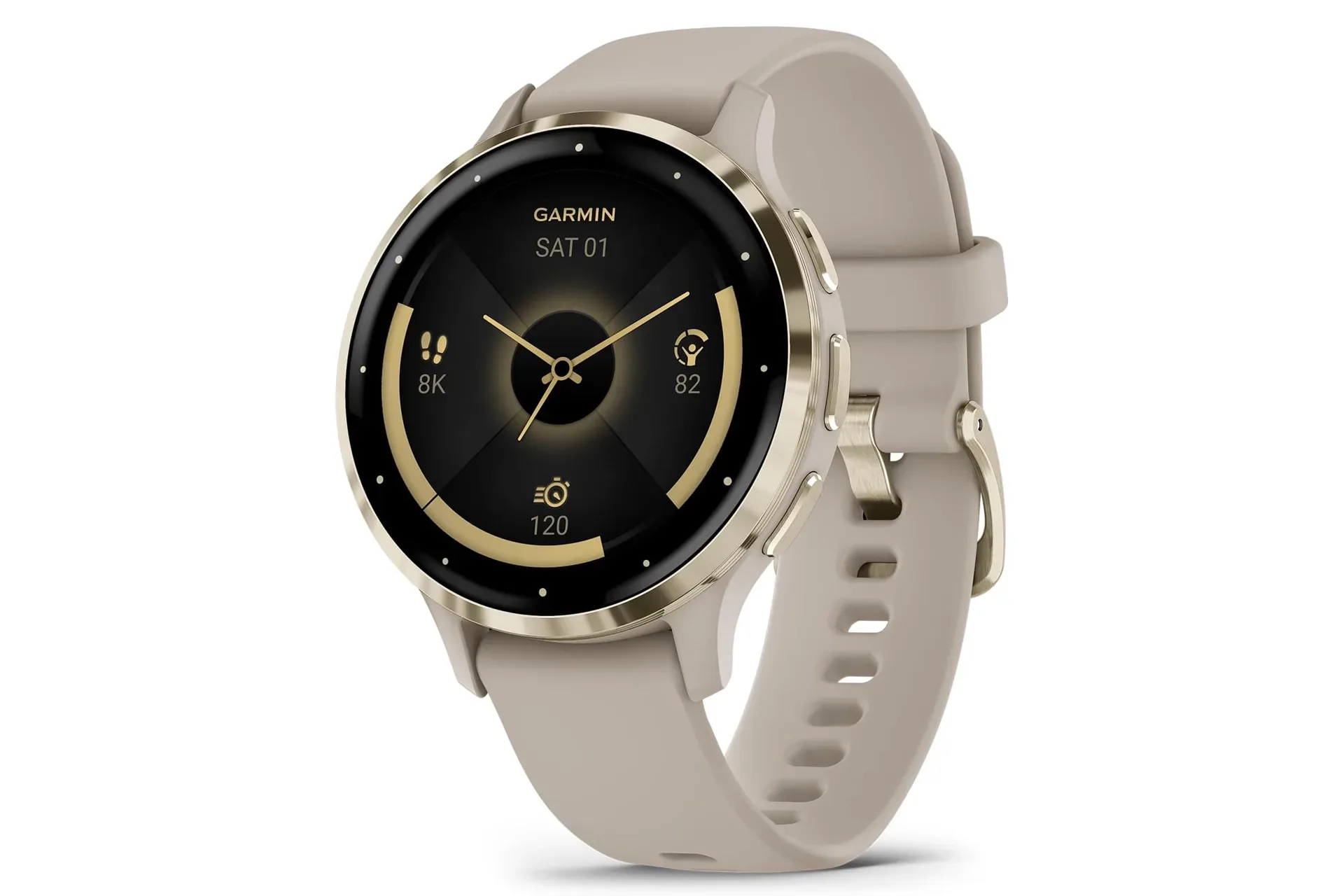
The Garmin Venu 3S is currently listed at $288, a reduction of $162 from its stated $450 regular price. That works out to roughly 36% off, and puts the watch’s appeal squarely in the overlap between structured exercise tracking and everyday smartwatch use.
It is being positioned for runners preparing through the cooler part of the year, including people with autumn marathon plans in mind. But the more useful way to look at the Venu 3S is not as a single-sport device. Its stated feature set is designed for someone whose training log is a mixture of runs, hikes, paddling sessions, golf, climbing and recovery days—and who also wants notifications, calls and contactless payments from their wrist.
As with any retailer listing, the price and availability can change. The $288 figure is the listed deal price at the time of publication, rather than a promise that the discount will remain in place.
What the $288 listing includes in practical terms
The Venu 3S has GPS smartwatch duties at its center, but its activity support is broad. Garmin’s interface offers dozens of activity types, with running joined by hiking, kayaking, paddleboarding, golf and rock climbing among the examples cited for the watch.
That breadth matters because activity tracking is only helpful when a person actually uses it. A runner who occasionally hikes does not necessarily want those outings to vanish from the same device used for run records. Similarly, a person who treats cross-training as part of a regular routine may prefer one watch that can log the different sessions rather than treating each non-running workout as an afterthought.
There is an important limit to keep in mind: support for an activity means the watch can be used to track or log it; it does not by itself tell us which data fields, coaching plans or sport-specific measurements apply to every mode. Buyers considering the Venu 3S for a highly specialized discipline should check the retailer and manufacturer details for the particular tracking tools they need rather than assuming every activity gets the same treatment.
GPS is the training-oriented piece
GPS, short for Global Positioning System, is the satellite-based location function commonly used by fitness watches to record where an outdoor activity took place. For runners, that can make a wristwatch more useful than a simple timer: it connects a session to a route rather than leaving a workout as only a duration.
The supplied information identifies the Venu 3S as a fitness GPS watch, making it a logical option for people who want location-aware run tracking. Yet a GPS label should not be treated as a blanket guarantee of perfect tracking in every environment. The listing information here does not provide accuracy testing, route examples or a sport-by-sport breakdown of GPS behavior. The responsible buying takeaway is simply that GPS is part of the watch’s core proposition, not that it solves every measurement question a serious runner might have.
That distinction is especially useful during marathon preparation. A training cycle is often a sequence of different efforts rather than a single race-day calculation: regular runs, long outings, recovery and other activities all have a place. The Venu 3S’s argument is that it can follow those varied sessions while remaining an all-day watch.
Garmin Coach and recovery: tools, not commands
The watch includes Garmin Coach, which can help with recovery management and can lead users through guided meditations. This widens the focus beyond recording what happened during a workout. It acknowledges that a fitness device can also be worn in the quieter time between sessions.
Recovery is the period in which a person rests and prepares after activity. In the context described here, the watch’s recovery-oriented functions are framed as guidance, including meditation, rather than as a replacement for a coach or medical advice. A device can present measurements and prompts, but it cannot know every outside factor affecting an individual: how they feel, how demanding their recent schedule has been, or what changes may be appropriate for them.
That is not a knock on the feature. It is a more sensible expectation for it. Guided breathing or meditation can be useful when someone wants a deliberate pause between workouts. The key is to regard it as one component of a routine instead of turning a watch prompt into an unquestionable instruction.
Smartwatch features make it viable away from a workout
The Venu 3S is not presented solely as exercise equipment. It can display text messages and other notifications, let the wearer answer incoming calls, and keep them connected while their phone remains in a pocket. Those are familiar smartwatch functions, but their value is straightforward: they reduce the number of times a person needs to pull out a phone during a day or while moving between activities.
Garmin Pay is another part of that everyday package. It enables tap-to-pay purchases from the watch using a credit card. Tap-to-pay refers to a contactless payment action: instead of inserting a physical card, the user pays by bringing a compatible device close to a payment terminal. For an outdoor session, that could be most appealing to someone who prefers not to carry a wallet on every outing. Compatibility and card setup are still practical details to verify before treating it as a replacement for a physical payment method.
The combination is the point. A fitness watch that must be removed whenever messages arrive, a call comes in, or a purchase is needed may feel too narrowly focused for all-day use. Conversely, a regular smartwatch that needs frequent charging can complicate consistent workout and sleep tracking. The Venu 3S is trying to cover both sides of that divide.
Battery life is the major differentiator claimed here
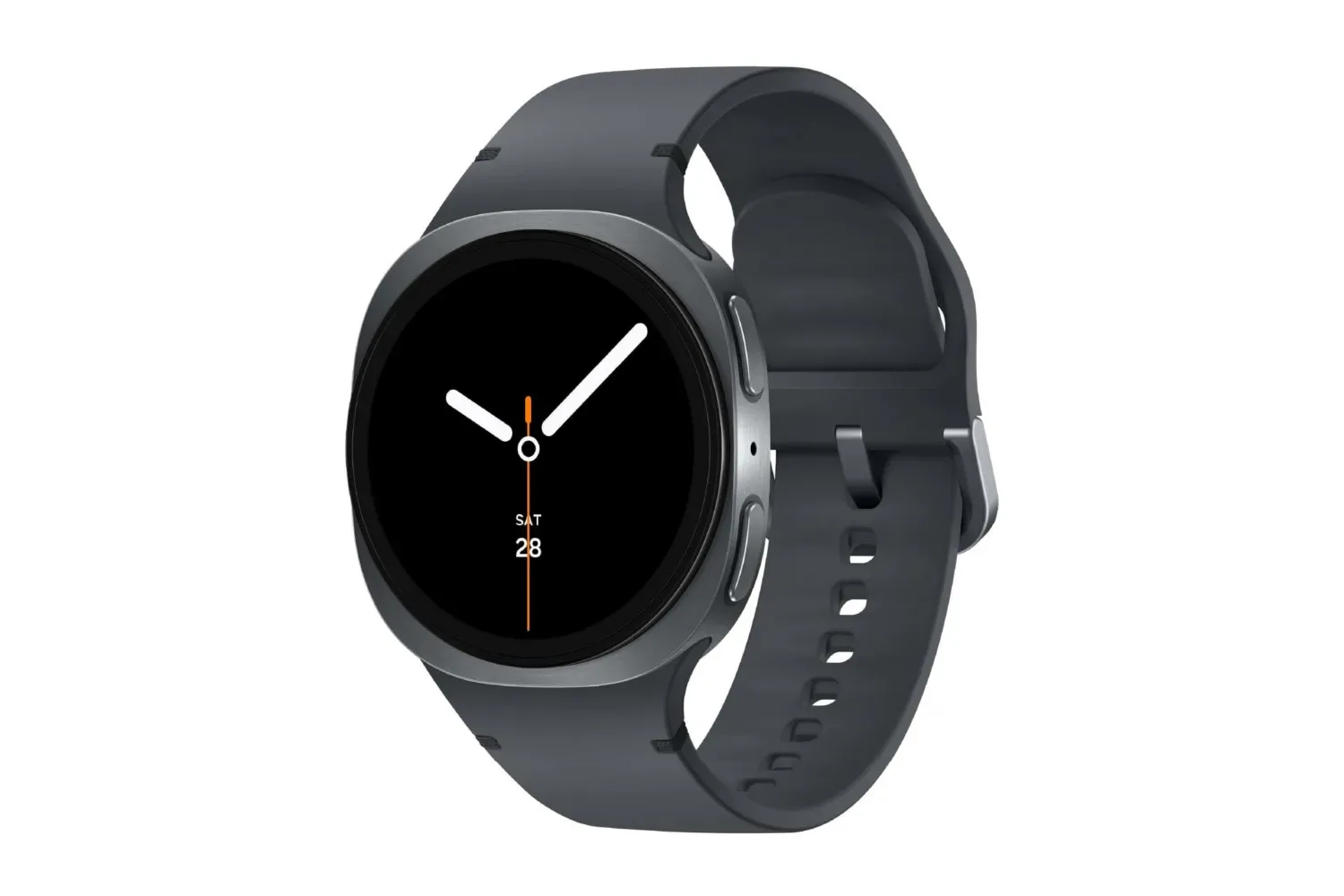
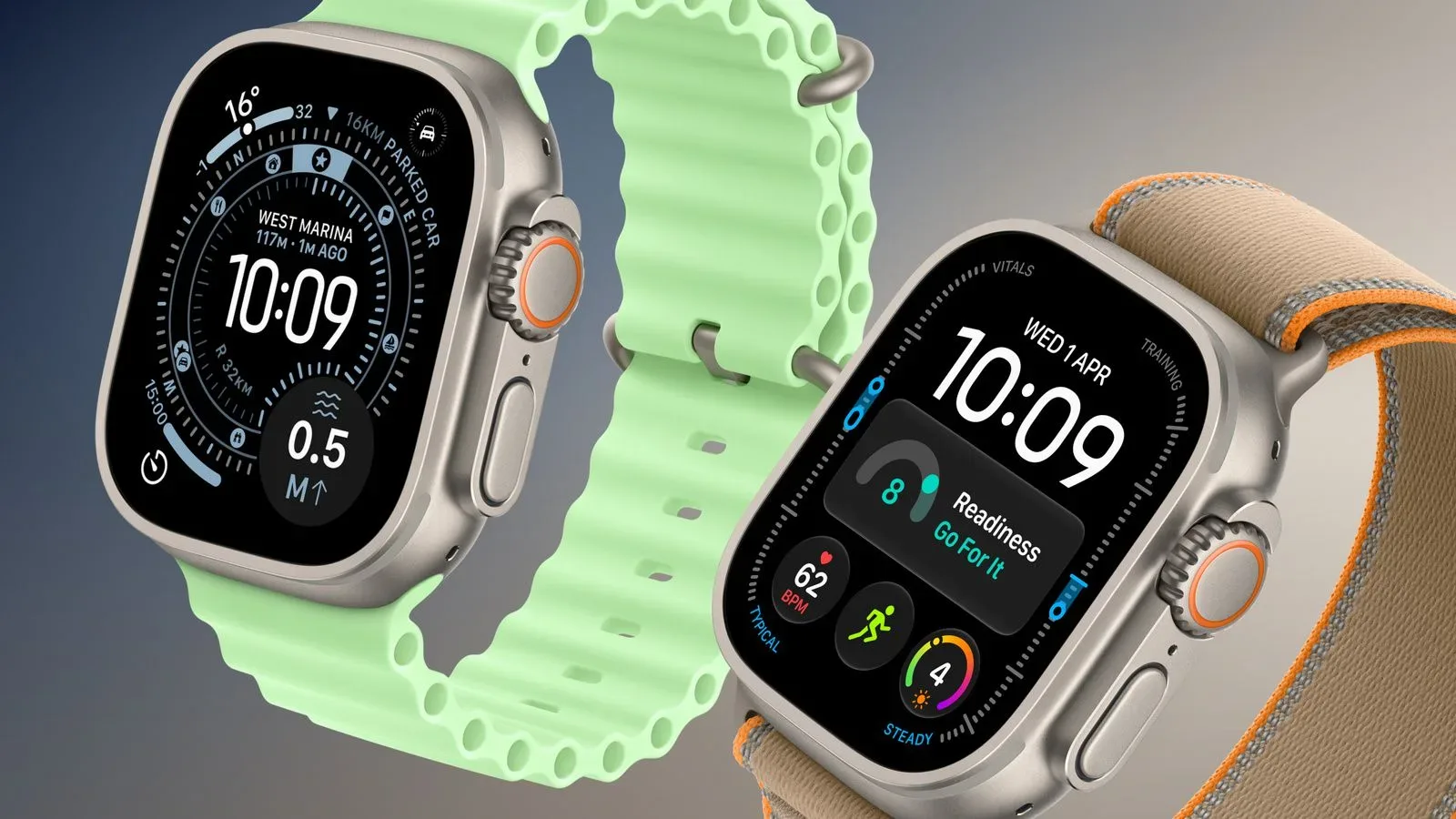
The headline hardware claim is battery life of up to two weeks before recharging. That is presented as a clear advantage over Apple Watch and Galaxy Watch models, which are described as lasting a few days at best with regular use.
“Up to” is the vital phrase. It describes a maximum stated figure, not a duration every owner should automatically expect. The information available does not specify which settings or patterns of use underpin that two-week number, and wearable battery results can depend on how a person uses the device. It is best interpreted as a long-running-battery objective that could make charging less frequent, rather than a fixed guarantee.
Still, the practical upside is easy to understand. Less frequent charging can reduce the chance that a watch is on a cable when a user is about to leave for a run, and it can make overnight wear easier to maintain. For people who value continuous use more than the ritual of daily charging, that may be a stronger purchasing factor than the breadth of the activity list.
Battery claims are also a useful reminder to compare the whole offer rather than a discount percentage in isolation. A lower price is meaningful only if the functions match a buyer’s habits. Readers weighing several discounted devices may also want to compare the way sale pricing can vary across configurations, as seen in this look at the Pixel 10 Pro’s uneven color pricing. The same general discipline applies to a wearable: verify the exact model and the current listing before checking out.
Overnight wear unlocks the sleep-focused features
The Venu 3S includes Sleep Coach, which provides sleep-health insights when the watch is worn overnight. The cited measurements include the length of the REM cycle and overnight HRV.
REM, or rapid eye movement, is a named stage in sleep tracking. In this context, the watch reports a measurement related to the length of that cycle. HRV means heart rate variability, a measurement based on variation in the time between heartbeats. The Venu 3S can report HRV during the night as part of its sleep features.
Those labels can sound more definitive than they are. The available information says the watch provides insights, not diagnoses. Sleep and HRV figures are best used as personal tracking data and context for a user’s routine, not as standalone proof of health, recovery readiness or a medical condition. Anyone relying on a wearable for clinical answers would need more than the watch’s overnight summary.
Where long battery life becomes relevant again is consistency. Sleep features require the watch to be worn while sleeping. A device that spends more time charging can make that habit harder, while a device designed to run for longer can more conveniently remain on the wrist overnight. That does not prove better sleep tracking quality; it explains why the battery claim and the sleep feature set reinforce each other in the product’s pitch.
Who should consider the Venu 3S at this price
- Multi-activity exercisers: People who run but also log hiking, paddling, golf, climbing or other activities have a stated range of modes to consider.
- Users who want smartwatch basics: Notifications, call answering and Garmin Pay make the watch relevant beyond training time.
- People who want overnight data: Sleep Coach, REM-cycle length and overnight HRV are part of the package for those prepared to wear the watch to bed.
- Buyers who dislike frequent charging: The up-to-two-week battery claim is the standout reason to investigate the Venu 3S rather than treating it as another standard smartwatch.
What to verify before buying
- Confirm that the listing is still $288 and that the discount applies to the exact Venu 3S configuration being purchased.
- Check whether the activity modes most important to your routine provide the tracking information you expect.
- Verify that Garmin Pay works with your preferred payment setup before depending on it during outings.
- Read the battery estimate as an “up to” claim and consider how your intended use may affect charging habits.
- Keep sleep and HRV data in perspective: they are wellness insights from a wearable, not a diagnosis.
At the listed $288 price, the Garmin Venu 3S’s strongest case is not simply that it is discounted from $450. It is that the discount applies to a watch balancing GPS activity logging, recovery and sleep tools, daily communication features and a claimed battery life long enough to support near-continuous wear. For shoppers whose routine genuinely includes all of those pieces, the $162 reduction makes the value proposition considerably more compelling—provided the current listing and the details that matter most to them check out.
Shop the products
Check current price, model and availability at the retailer.