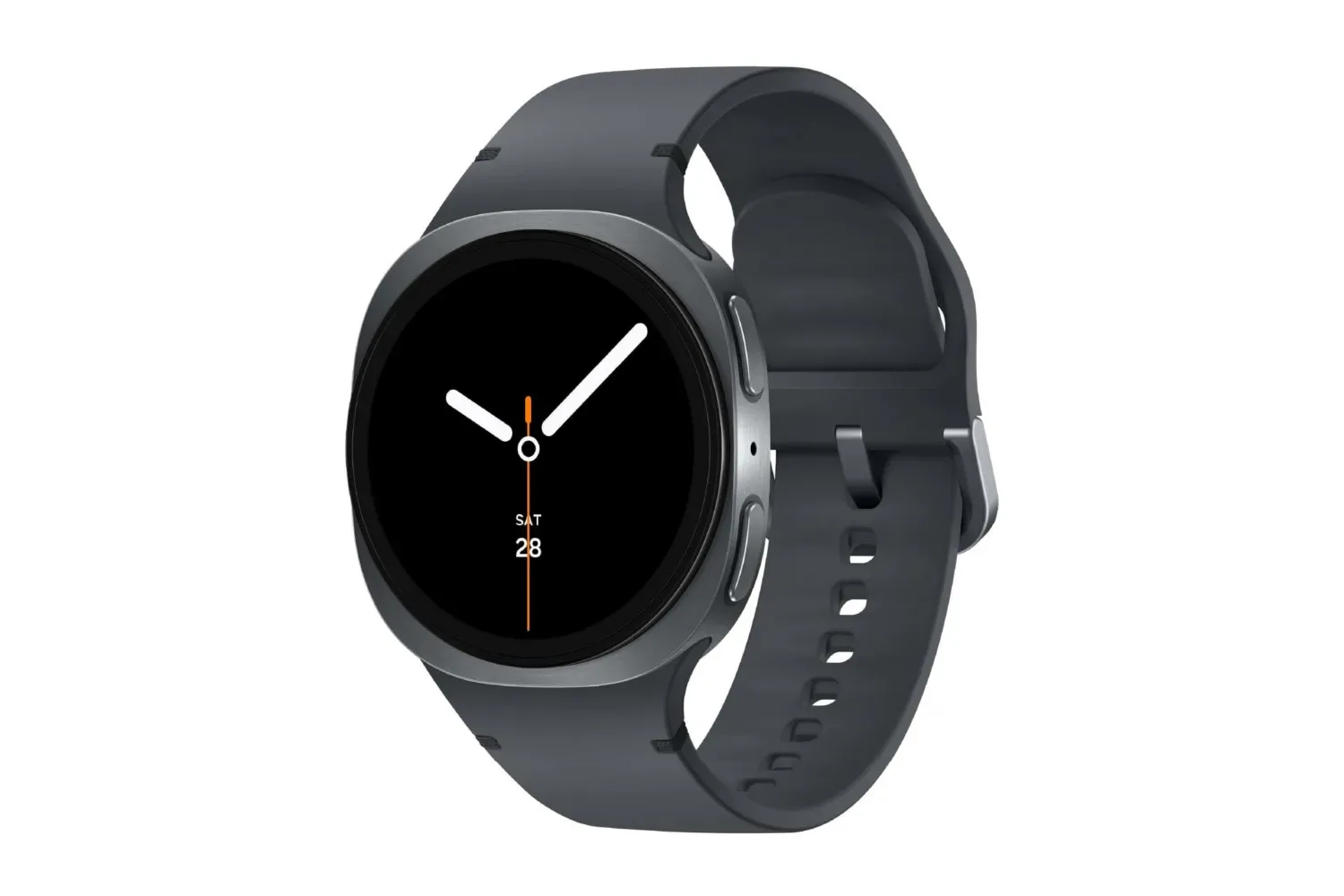
Amazon is listing the Samsung Galaxy Watch 8, 40mm Bluetooth model for $260, a $40 reduction from the stated $300 price. The deal applies to the Graphite and Silver versions and is marked as a limited-time offer, so its end date is not specified.
For anyone comparing smartwatch purchases, the important detail is the configuration: this is the 40mm Bluetooth Watch 8. Shoppers should make sure that is the size and connectivity option they actually want before treating the $40 saving as the deciding factor. A lower headline price is useful only when it matches the device a buyer intended to choose.
The Watch 8’s stated feature set centers on health and fitness tracking, phone-connected wrist controls, and hands-free help through Google Gemini. Its quoted battery estimate is about 25 to 30 hours with normal use, which makes charging cadence a practical consideration rather than a tiny footnote buried below the buy button.
What the $260 listing covers
The current price represents roughly 13% off the stated $300 price. That is a meaningful discount in dollar terms, but it should not be read as a permanent new baseline: the retailer labels it a limited-time deal and provides no confirmed cutoff. In other words, the price may change, but there is no supplied evidence for predicting exactly when.
Both listed color options—Graphite and Silver—receive the same reduction. That removes one common deal complication, where a discount is limited to a single finish that may not be the buyer’s first choice.
Connectivity also matters. Bluetooth means the watch can connect with a phone for functions such as viewing notifications, managing calls, and changing music tracks from the wrist. The supplied details do not establish features, terms, or pricing for any other Watch 8 sizes or connectivity variants, so those should not be assumed to be included in this offer.
Fitness tools: what they are intended to do
The Galaxy Watch 8 tracks physical activity, stress levels, and sleep quality. Taken together, those categories are meant to give wearers a broader view of day-to-day wellness rather than simply logging a workout total. Activity tracking covers exercise and movement; stress tracking is presented as another ongoing data point; and sleep tracking looks at rest patterns, including naps.
One feature built from that information is the Energy Score. The watch uses data from the previous day to generate an indication of how ready a wearer may be for upcoming demands. This kind of score is best understood as a summary signal: it condenses several tracked inputs into one easy-to-check result. It can be handy for spotting a personal pattern, but it does not turn a wrist device into an authority on what someone must do that day.
That distinction matters in practical use. A score may encourage a wearer to consider whether yesterday’s activity, stress, or sleep patterns line up with how they feel. It should not replace personal judgment, professional advice, or attention to symptoms. The useful part is the trend-oriented convenience: instead of manually reconciling several sets of data, the watch presents a single readiness-style metric.
Running Coach and activity logging
The built-in Running Coach analyzes running performance and provides real-time feedback intended to help users improve ahead of an event. For someone preparing for a marathon or another running goal, immediate feedback is the central appeal. It keeps guidance on the wrist while the activity is happening, rather than making the wearer wait to review a session afterward.
The supplied information does not detail the coach’s exact measurements, training plans, or compatibility requirements, so prospective buyers should avoid assuming a particular coaching method. What is established is the basic role: performance analysis and live feedback for runners.
Beyond running, the Watch 8 can log activities including cardio and weight training. That wider activity support is relevant to people whose routine does not fit neatly into a running-only tracker. Someone alternating between gym sessions, cardio work, and runs can use the device as a central record of those activities instead of treating each workout type as an unrelated task.
Sleep Coach includes naps
The Sleep Coach tracks overall sleep patterns, including naps, and provides guidance on improving them. Including naps is a small but useful detail. Rest does not always happen in one uninterrupted overnight block, and an approach that recognizes daytime sleep can offer a more complete record for people whose schedules are less conventional.
“Coaching” here means the device offers guidance based on the patterns it has tracked. It is not the same thing as a medical diagnosis or a substitute for clinical care. The practical upside is straightforward: people who want reminders and feedback around sleep habits can find that directly on a watch that is already handling activity logging.
Phone controls and Gemini at the wrist
When connected to a phone, the Galaxy Watch 8 can show notifications, manage calls, and change tracks. These are not glamorous features, but they are often the functions people use most often. A quick music adjustment during a workout, a glance at a notification, or call management without reaching for a phone can make the watch feel more useful across an ordinary day.
The device also supports Google Gemini. In this context, that support is positioned around hands-free tasks such as research, schedule creation, and brainstorming. Hands-free operation can be particularly useful when a person is exercising or has wet, dirty, or sweaty hands and does not want to operate a touchscreen.
It is worth separating the capability from an assumption of total phone independence. The supplied details say the watch connects to a phone and supports Gemini, but they do not specify every setup condition, account requirement, or limitation. Buyers who consider voice assistance their main reason to purchase should check the current product listing and their phone setup before ordering.
Battery life deserves equal billing with the feature list
The quoted estimate of around 25 to 30 hours on a charge with normal use suggests a routine that may involve charging about daily, depending on individual habits. “Normal use” is inherently variable: a wearer using more fitness tracking, calls, notifications, and other watch functions may not use the device in exactly the same way as someone who checks the time and occasional alerts.
That does not make the estimate unhelpful. It gives shoppers a reasonable planning point. The key is to treat it as an approximate usage claim, not a guarantee that every owner will see the same number. For a watch focused on sleep as well as daytime activity, the timing of charging may be especially important. A buyer who wants overnight tracking will likely prefer finding a regular charging window that does not overlap with sleep.
Who should consider this particular deal
The $260 listing is most relevant to shoppers who already want a compact 40mm Bluetooth smartwatch and value a mix of activity tracking, sleep tools, running feedback, phone controls, and voice-driven assistance. The combination is most coherent for a person who expects to wear the device throughout the day, rather than someone interested in a narrowly single-purpose fitness accessory.
It may be less compelling for shoppers who need a different size, require a connectivity option not named in the listing, or do not care about the health and phone features that account for much of the product’s value. The deal does not erase the need to choose the right configuration.
The wider lesson applies to tech discounts generally. First confirm the model, size, connectivity, colors, and the functions you will genuinely use; only then calculate the saving. Readers following other current hardware pricing can also see this MacBook Air discount roundup, where configuration is likewise essential to comparing offers.
For the Galaxy Watch 8 offer, the verifiable basics are clear: the 40mm Bluetooth model is listed at $260 in Graphite or Silver, down $40 from $300, and the listing calls the reduction limited-time. The watch’s appeal rests on its tracking and coaching features, its phone-linked convenience, Gemini support, and an estimated 25–30 hours of normal-use battery life. The remaining decision is personal: whether those are the features that will still matter after the novelty of checking a score from your wrist has worn off.
Shop the products
Check current price, model and availability at the retailer.