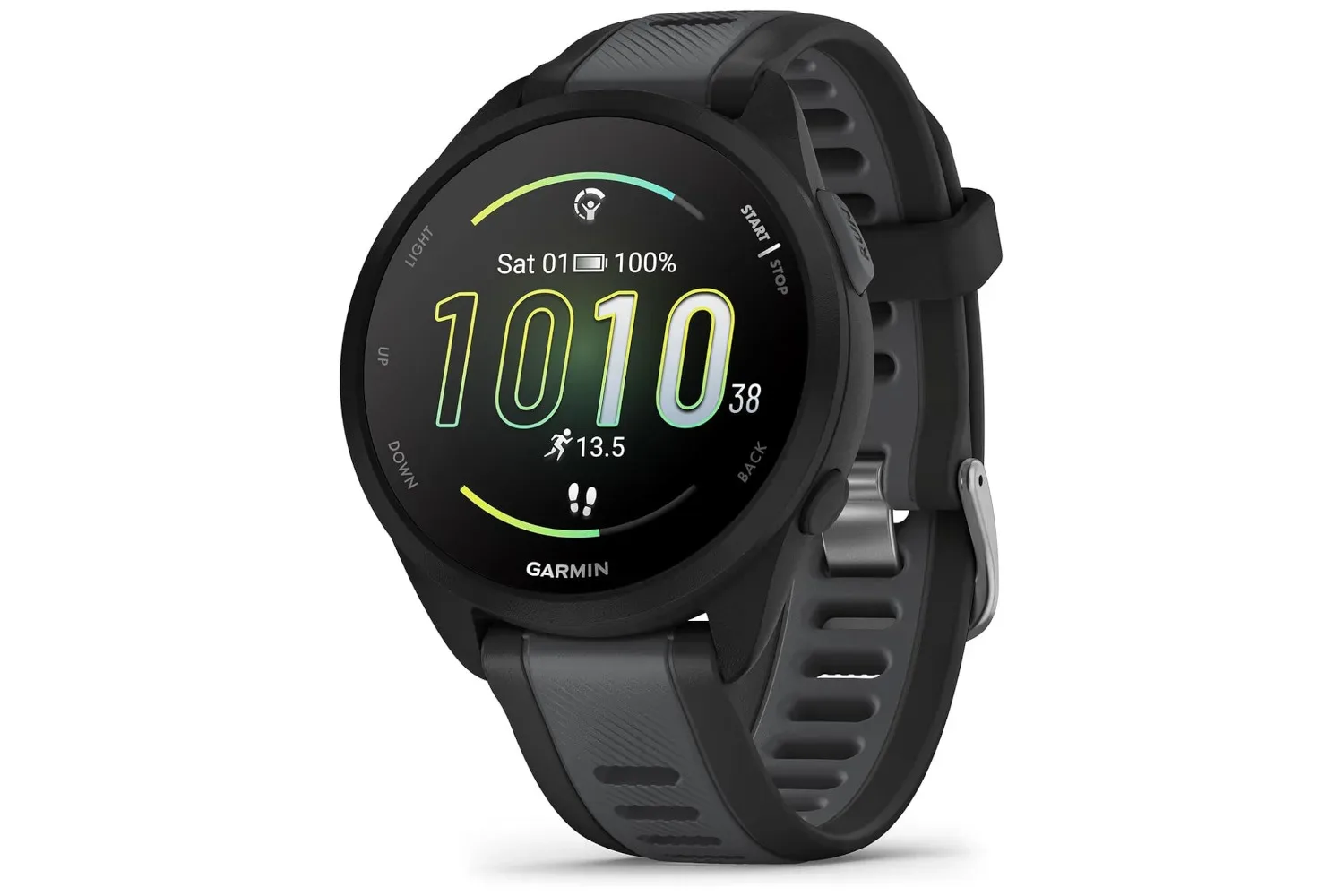
The Garmin Forerunner 165 is currently listed for $200, a $50 reduction from its stated $250 price. That works out to 20% off for a limited-time deal, though no end date is provided.
This is a running-first smartwatch rather than a gadget described mainly around notifications or general lifestyle use. Its core appeal is the set of data points that can turn an outdoor run into a record: built-in GPS for route-related tracking, distance, pace and speed. It also offers heart-rate information and suggested workouts, giving runners a single wrist-worn place to check both a session’s basics and a potential idea for the next one.
What the Forerunner 165 deal includes
The feature list presented for the Forerunner 165 centers on a straightforward training loop. Go for a run, use GPS to record key movement information, review the result, then use that information as part of the motivation to run again. It can be used outside, on streets, or in a gym, but GPS is especially relevant when a run takes place outdoors.
- Built-in GPS: intended to track an outdoor run’s distance along with pace and speed information.
- Running metrics: distance, pace and speed provide separate ways of looking at a session.
- Heart-rate information: another training-related data point viewable on the watch.
- Suggested workouts: prompts that can help when deciding what to do next.
- Timekeeping: it remains, usefully, a watch as well as a training device.
At $200, the deal is most meaningful to somebody who will use those running tools regularly. A discount alone does not make a device a fit for every athlete; the value comes from whether GPS-backed run records, quick at-a-glance metrics and workout suggestions match the way a person wants to train.
Why GPS, pace and speed are different useful signals
“GPS” is short for Global Positioning System. In this context, built-in GPS means the watch can collect location-related information during an outdoor run and use it to help record distance, pace and speed. Those terms can sound interchangeable in casual conversation, but they answer different questions.
Distance answers how far the session went. Pace is a way to express the time taken over a unit of distance, making it useful for asking whether a runner moved through comparable portions of a route more quickly or slowly. Speed expresses how quickly someone is moving. Seeing all three gives a runner more context than simply remembering that a workout felt easy, difficult or unusually flat.
That context does not remove the human element from training. A run can feel off for many reasons, and one watch screen cannot fully explain a bad day. But recorded distance, pace and speed can provide a useful counterpoint to memory. A runner may discover that a session they considered disappointing was still consistent with recent efforts, or may spot a clear change worth paying attention to over time.
Suggested workouts are prompts, not a substitute for judgment
The Forerunner 165 can suggest workouts. For many runners, the hard part of maintaining a routine is not putting on shoes; it is deciding what kind of session belongs on the calendar. A suggestion can lower that decision-making friction by putting an option on the wrist instead of requiring a plan to be created from scratch.
It is important to separate what is stated from what is not. The available details establish that the watch can suggest workouts, but do not specify the kinds of workouts, how suggestions are generated, how they can be changed, or what information is used. Prospective buyers who need particular coaching functions should verify those details before treating the feature as a complete training plan.
The same caution applies to heart-rate data. The watch provides heart-rate information, which can be another reference point during training. The supplied information does not describe medical uses, accuracy conditions, alerts or health features, so it is best understood here as a fitness-oriented metric rather than evidence of capabilities beyond that description.
Who this $200 price is likely to suit
The clearest audience is someone whose regular exercise includes running outdoors and who would rather have distance, pace and speed available on a wrist than rely solely on recollection. It may also appeal to people trying to build consistency: the combination of a visible record and workout suggestions can make progress feel more concrete when motivation starts to sag.
Gym users may find it useful as well, since the watch is described as usable there, but the information provided does not detail gym-specific modes or measurements. Likewise, runners should not assume unlisted details such as battery expectations, display specifications, phone support, music functions, contactless payments, water resistance, mapping features or included accessories. None of those are established by the deal information.
That restraint is especially worthwhile during a short-lived promotion. The $50 saving is real relative to the stated $250 normal price, but a sensible purchase still starts with the essential question: will built-in GPS, running metrics, heart-rate data and suggested workouts actually be used? If yes, the $200 price makes the Forerunner 165 a more accessible entry point into a dedicated running smartwatch.
Practical checks before buying
Because the discount is described as limited-time and no cutoff is given, shoppers should confirm the price at checkout rather than assume it remains available. It is also wise to read the current product listing for the details that matter personally, especially if the watch will be used for a particular training routine or alongside a specific phone.
- Confirm that the listed price is still $200 and note the final total before completing an order.
- Prioritize the confirmed features: GPS, distance, pace, speed, heart-rate information and workout suggestions.
- Check any requirements that are not stated here instead of inferring them from the product name or sale price.
- Consider whether quick on-wrist access to run data would improve an existing routine more than a general-purpose smartwatch would.
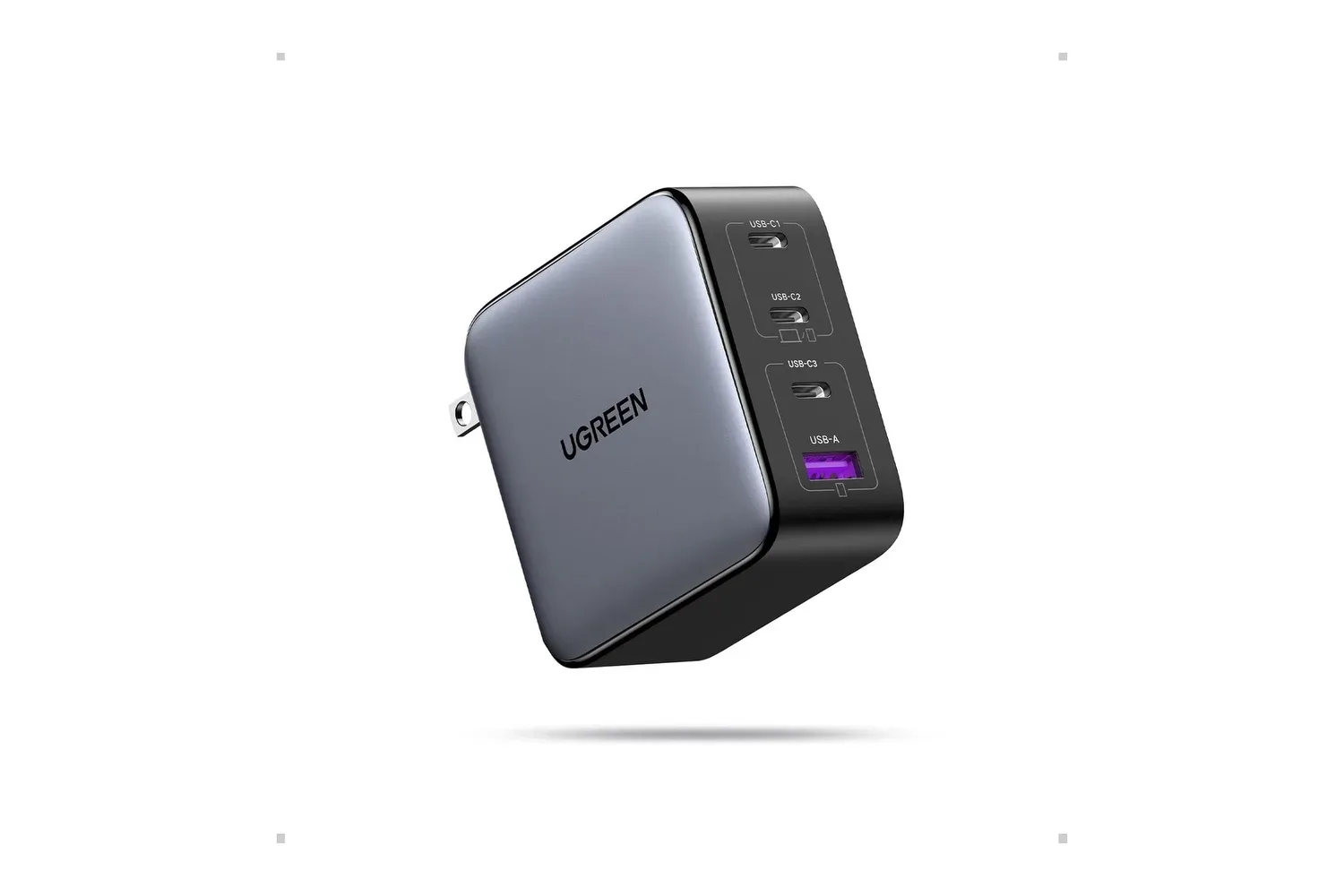
For readers assembling a broader portable-device setup around phones, wearables and gaming hardware, the current UGREEN Nexode 100W GaN charger deal may also be relevant. That is a separate product and promotion, but it is a reminder to check charging needs and included equipment individually rather than assume one purchase covers everything.
The headline is simple: Garmin’s running-focused Forerunner 165 has been reduced from $250 to $200. The best reason to act is not the limited-time language by itself, but the practical fit between its confirmed GPS and run-tracking tools and the buyer’s own training habits.
Shop the products
Check current price, model and availability at the retailer.