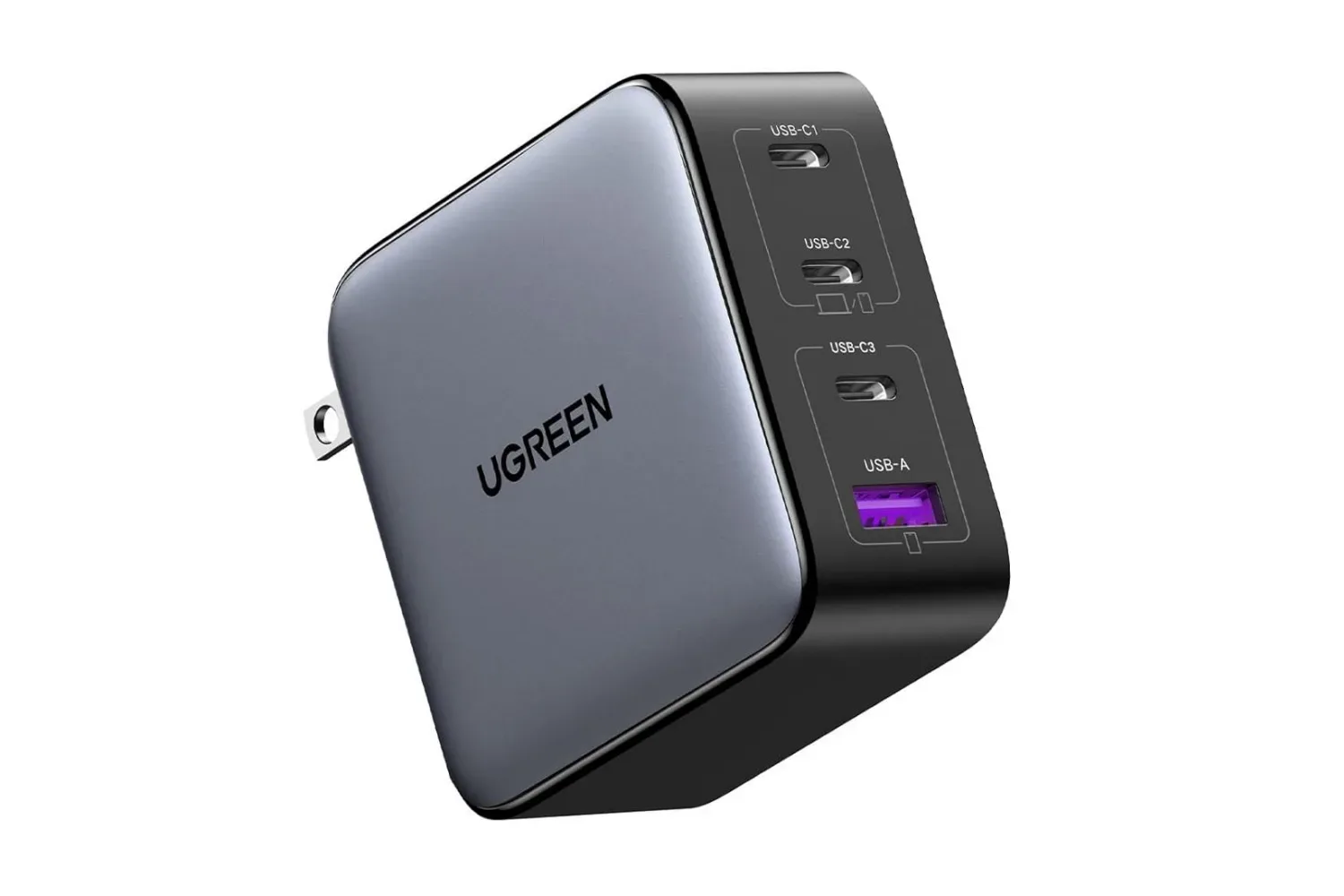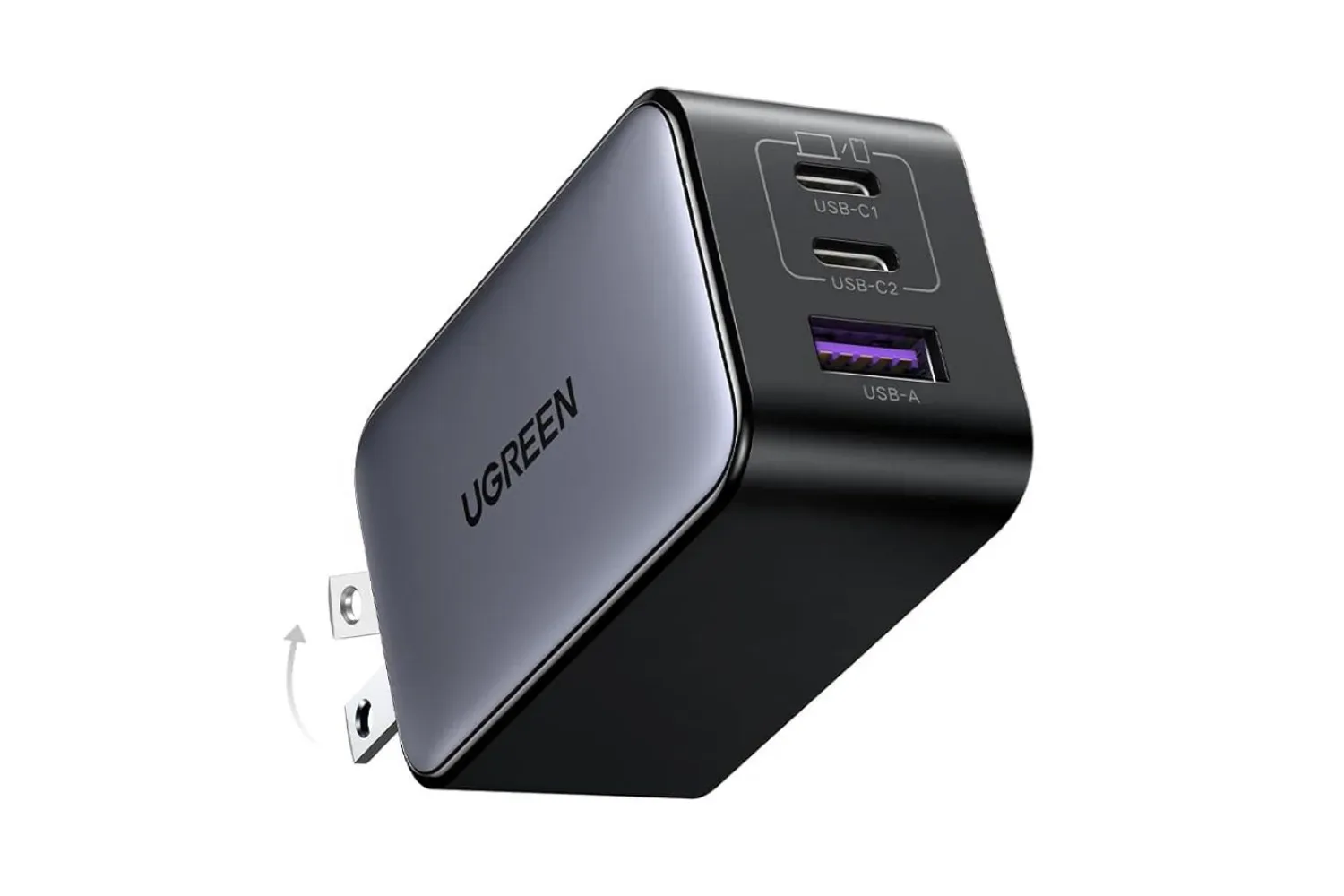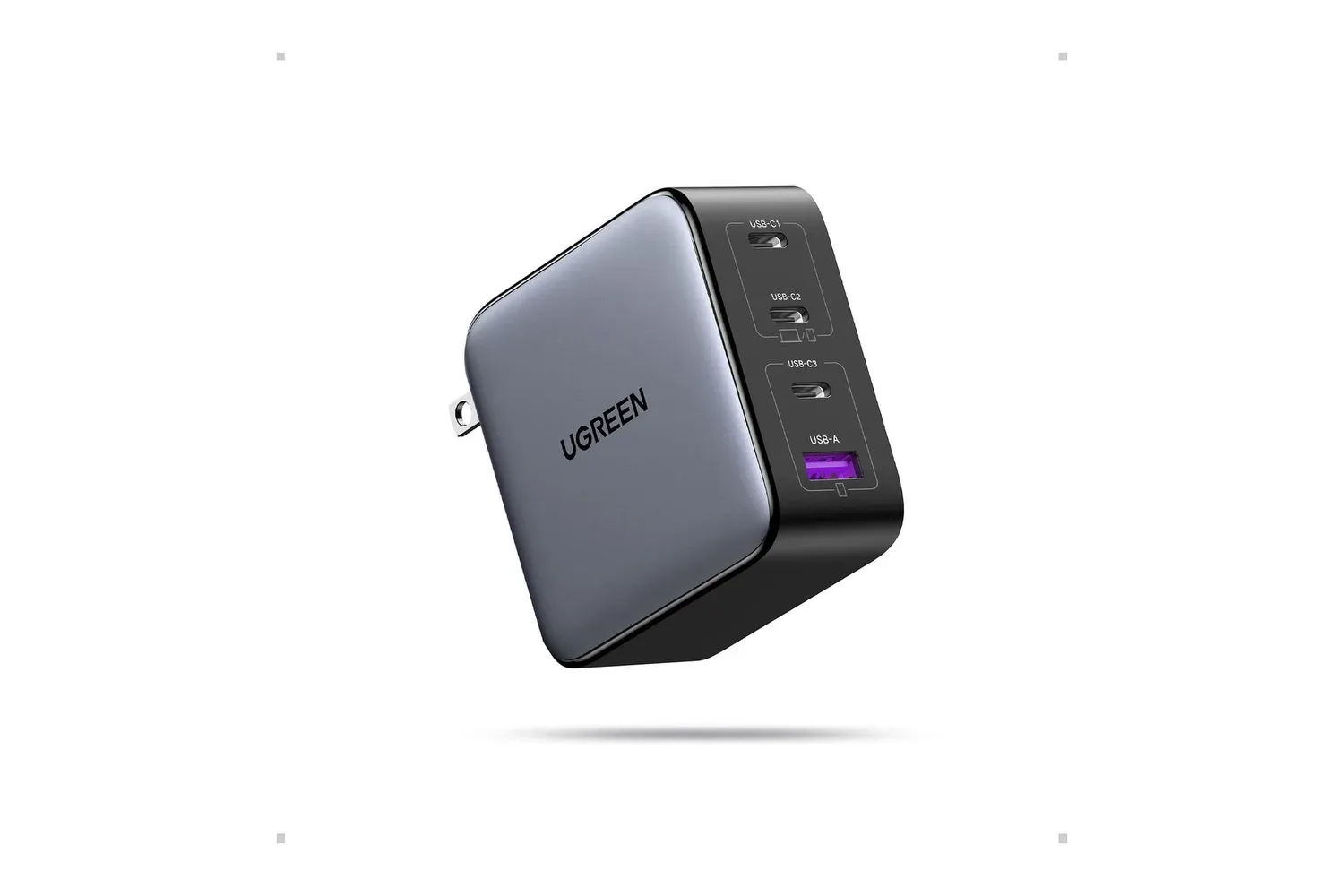
A charger is not the most glamorous addition to a gaming setup, right up until a laptop, phone, handheld and earbuds are all competing for the same hotel-room outlet. UGREEN’s Nexode 100W GaN USB-C Charger is aimed squarely at that mundane but familiar bottleneck: it combines three USB-C ports and one USB-A port in a compact wall charger with 100 watts of total available power.
The charger is listed at $40, down from its usual $55. That is a $15 reduction, or 27% off. For players who regularly travel with a Steam Deck or Nintendo Switch alongside a phone and computer, the appeal is less about adding another accessory and more about replacing several power bricks with one.
What the Nexode 100W actually offers
UGREEN’s unit has four physical outputs: three USB-C connections and one older USB-A connection. A single USB-C port can supply up to 100W, which is the headline figure and the level intended for larger hardware such as a MacBook Air or MacBook Pro. Two of its USB-C ports are rated for up to 100W when used individually.
That wording matters. 100W is the charger’s combined power budget, not a promise that every connected device receives 100W at once. Once several devices are plugged in, the charger divides that capacity among them. In plain terms, a laptop can share the unit with a tablet while a phone or earbuds take a smaller portion of the available output. The third USB-C port and USB-A port can each provide up to 22.5W, a level positioned for phones and portable accessories.
For a desk, that shared-power arrangement can turn one outlet into a small charging hub. For travel, it can mean packing the charger itself plus the cables needed for each device rather than bringing every bundled wall adapter. The Nexode measures roughly 2.7 by 2.7 by 1.3 inches and weighs about 8.3 ounces, so it is built to occupy considerably less bag space than a collection of separate laptop, phone and handheld adapters.
Why 100W matters to a gaming bag
Modern portable gaming hardware can be unusually demanding compared with earbuds or a basic phone. The Nexode is stated to charge both the Steam Deck and Nintendo Switch, putting it in the useful category of a single charger that can cover a handheld as well as more conventional mobile gear. A player can use the same block for a computer, then switch a cable over to a handheld instead of reserving an outlet for a dedicated console charger.
The benefit is practical rather than magical: one wall outlet becomes more flexible, but the total capacity still has to be shared. Someone charging a laptop while topping up a handset and wireless earbuds should think of the 100W figure as the whole table, not four separate 100W meals. It is a meaningful distinction for anyone expecting a laptop to continue receiving its maximum possible rate while every other port is in use.
That does not make the four-port layout less handy. It makes it more important to match the charger to the job. A laptop on its own can use the high-output USB-C connection. Smaller devices can take the lower-power ports. With several devices attached, the charger is designed to split output so those jobs can happen at the same time. That is the central convenience proposition: fewer adapter swaps, fewer bricks, and less negotiation over available sockets.
Related coverage includes UGREEN Nexode 100W Charger Brings Four-Port GaN Charging to $40.
Nintendo’s handheld remains part of that broader portable-gaming equation, while the company’s software legacy is never far away. For a separate look at one of its most enduring adventures, see our coverage of the Ocarina of Time remake trailers and Dark Link’s Water Temple appearance.
GaN II, explained without the charger-box jargon
The “GaN” in the product name refers to gallium nitride, the technology UGREEN uses in this charger. The company describes its GaN II implementation as reducing heat and enabling a high-output charger in a smaller form factor than standard laptop chargers. The result here is a palm-sized unit rather than a large, dedicated laptop brick.
Small size is not merely a cosmetic win. A compact charger is easier to leave in a backpack permanently, fit into a laptop bag pocket or place on a crowded bedside table. It also changes the packing calculation: if one item handles several devices, there is less reason to hunt down every manufacturer-supplied adapter before a trip.
The charger includes protection circuitry for short circuits, overheating and excessive current flow. Those safeguards are especially relevant when a single unit may be connected to a higher-end laptop, a handheld console and smaller electronics at the same time. They are part of the product’s charging design, not an invitation to ignore the basic limits of the hardware or cables attached to it.
Fast-charging standards: the compatibility checklist
The Nexode supports Power Delivery 3.0, Quick Charge 4+ and PPS. Those are charging standards—agreed methods through which compatible devices and a charger can negotiate power delivery. The important result is compatibility across several common device families rather than a single proprietary ecosystem.
- Power Delivery 3.0: The charger supports fast charging for iPhones, iPads and Pixel phones through this standard.
- PPS: Programmable Power Supply support enables Samsung Super Fast Charging 2.0 on compatible Galaxy smartphones.
- Quick Charge 4+: This is another supported fast-charging standard listed for the Nexode.
- USB-C and USB-A: The port mix accommodates newer USB-C-based devices while retaining a USB-A option for accessories or existing cables.
UGREEN says a MacBook Air M4 can reach 55% in under 30 minutes when charged in the appropriate single-device setup. That is a manufacturer-stated example, and it should not be read as a universal timing estimate for every laptop or every multi-device arrangement. Once additional gear is connected, the unit’s 100W total is apportioned across those ports.
For buyers, that is the key piece of technical literacy: “fast charging” depends on the connected device, the charging standard it recognizes, the selected port and whether the charger is simultaneously powering other equipment. The Nexode’s value is its broad support and flexible port count, not a claim that every device will charge at the same top rate in every scenario.
Cables remain part of the purchase
The charger does not include cables. That is a potentially welcome detail for people who already have a set of USB-C and USB-A cables in useful lengths, since the block can work with those existing cables. It also means prospective buyers should account for cables if they do not already have the connections they need for a laptop, handheld, phone or accessories.
That flexibility suits a mixed-device household. One person may use USB-C for a laptop and phone, another may need USB-A for an older accessory, and a handheld can occupy another USB-C port. Keeping cables attached where devices normally live—on a desk or bedside table, for instance—can make the shared charger more convenient without turning the space into a pile of individual power bricks.
Who this deal fits best
The Nexode 100W makes the most sense for someone who frequently charges more than one category of device from the same outlet. Laptop owners who travel, handheld players, families sharing limited sockets and desk setups with phones, tablets and earbuds all fit that description. Its compact dimensions and four-port selection are as much a space-management feature as a specification-sheet perk.
It is less about needing 100W for every item than having enough headroom to make a laptop the priority while preserving ports for lower-demand gear. The USB-A port also prevents an immediate all-USB-C conversion for anyone with compatible accessories already on hand.
At $40 rather than $55, the current listing lowers the cost of that consolidation. The real decision is straightforward: if a single outlet is routinely serving a laptop, phone and gaming handheld, a compact charger that can distribute 100W among four ports has a clear purpose. Just remember the shared-output design, supply the necessary cables, and reserve expectations of maximum laptop charging speed for the appropriate single-port, lighter-load circumstances.
Shop the products
Check current price, model and availability at the retailer.