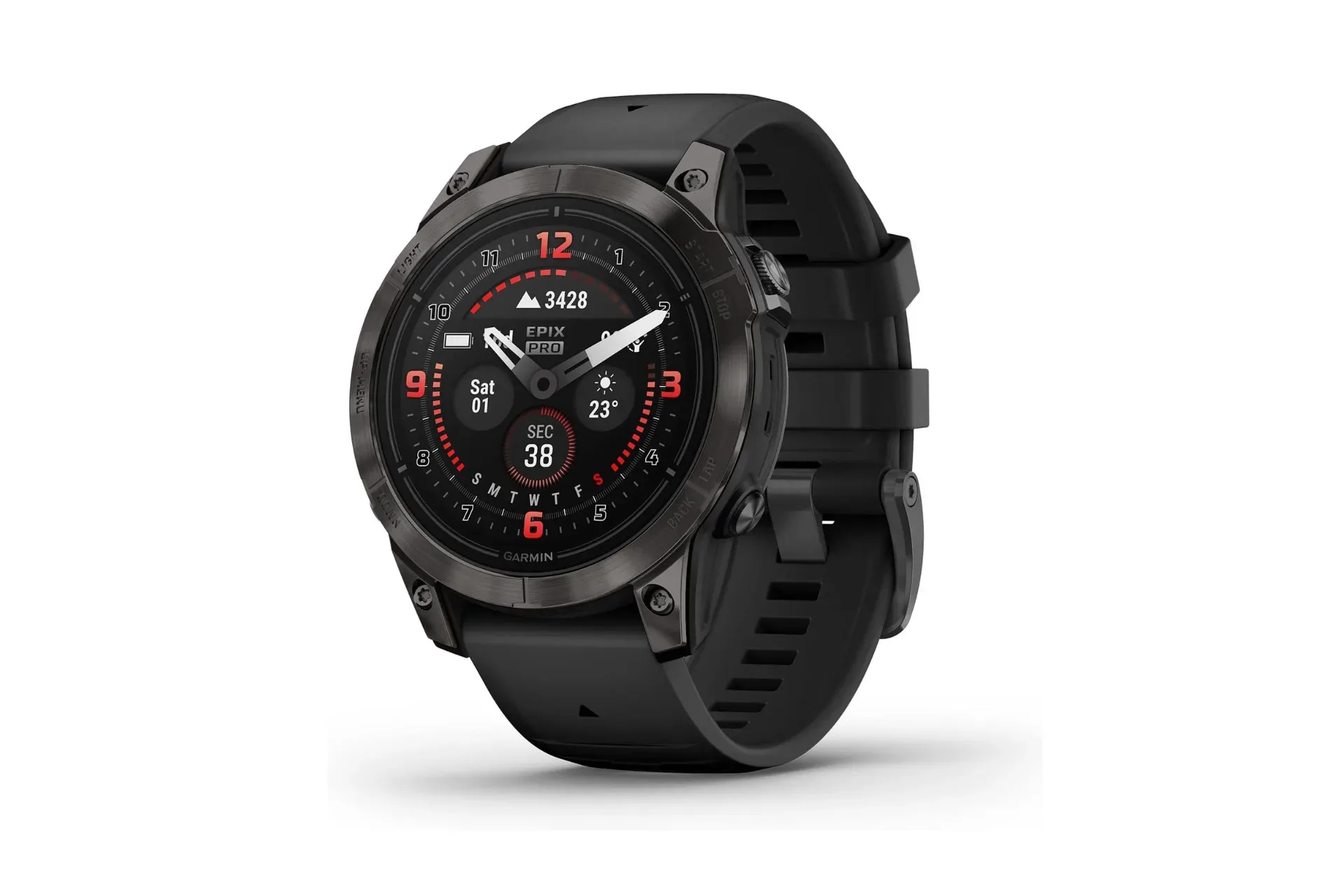
The 47mm Garmin epix Pro (Gen 2) Sapphire is currently listed on Amazon at $529.99 in Carbon Gray DLC titanium with a black band, reduced from $999.99. That is a 47% cut from the stated list price, and it materially changes the proposition of a watch positioned around serious training, outdoor navigation and everyday recovery tracking.
It is important to be precise about what that price covers. The $529.99 listing applies to the 47mm Pro Sapphire configuration in Carbon Gray DLC titanium with a black band. A Titanium model with Whitestone Band is separately listed at $684.01. The product family also comes in 42mm and 51mm sizes, but no prices for those versions are established here. As with any retailer listing, prospective buyers should confirm the selected size, finish, band and final checkout price rather than assuming every epix Pro variation carries the same discount.
For readers comparing premium wearables, the key appeal is not merely that the epix Pro records an activity. It brings display durability, a built-in light, training-oriented scoring, health and sleep summaries, mapping and a broad collection of sport profiles together in one device. That combination makes the watch most relevant to people who move between running, cycling, gym work and outdoor pursuits instead of treating fitness tracking as a single-sport exercise.
What the Sapphire model adds
The watch has a 1.3-inch always-on AMOLED display beneath a scratch-resistant sapphire lens, with a titanium bezel around it. AMOLED is the display technology used here for the always-on screen; in practical terms, the important buying consideration is that this is a display-forward watch rather than a basic training computer with a simpler screen.
The Sapphire designation matters because the lens is the surface most exposed to ordinary knocks. A watch used around trail rocks, gym equipment, door frames and daily tasks can take repeated incidental contact. The sapphire lens and titanium bezel are therefore tangible parts of the premium configuration, not just a cosmetic label. Buyers deciding between this version and the Pro Standard style listed by Amazon should make the screen and exterior materials a central part of their comparison.
There is also an integrated LED flashlight, with variable intensity levels and strobe modes. That is unusually practical for early-morning and evening training: it can help illuminate a nearby path, while the strobe setting can act as a warning light in low visibility. It is a small feature on a specification sheet, but it addresses a distinctly real situation for runners and other athletes who start before sunrise or finish after dark.
Training scores aimed at mixed routines
Garmin includes hill score and endurance score on the epix Pro. Hill score is intended to measure running strength and endurance during ascents and track changes over time. That makes it especially relevant for runners whose routes or events include sustained climbing, where a flat-route pace alone does not tell the whole story.
Endurance score takes a broader view by combining training data across the sports a wearer does. The distinction is useful. Someone who runs, cycles, lifts and plays a field or court sport may not get a complete picture from a metric built around only one of those activities. A combined score does not replace judgment about fatigue, performance or health, but it can provide a single place to observe how a varied training week accumulates.
Related coverage includes Garmin epix Pro Sapphire 47mm Is Listed at $529.99.
The watch also offers wrist-based running power, strength-training features and advanced pacing modes for race day. Running power is a training measure presented from the wrist in this case, while pacing tools are designed to help a runner manage effort during an event. The device supports activity profiles that include soccer, football, baseball, volleyball, ice hockey and racquet sports alongside its broader fitness and outdoor focus.
That breadth could be the deciding factor for an athlete who wants one activity record across workouts rather than separate devices or disconnected logs. It does not mean every number should be treated as equally decisive. The practical value comes from using the data consistently and comparing one’s own trends over time.
Recovery data is best read as a trend
Around-the-clock health and recovery functions include HRV status, Pulse Ox and advanced sleep monitoring. HRV, or heart rate variability, is included as a status measure. Pulse Ox refers to the watch’s blood-oxygen-related feature. Morning report and training readiness then organize the collected information into a summary intended to indicate readiness to train.
Those tools may be useful when they encourage a more thoughtful response to a poor night of sleep or a demanding stretch of training. For example, a readiness summary may give someone reason to reconsider a hard interval session and opt for an easier day. But the watch should not be mistaken for a medical product. Garmin notes that it is not a medical device and that its measurements are close estimations. Pulse Ox availability also varies by country.
That caveat is not a footnote; it is central to sensible use. Wearable metrics are most useful as directional information—a pattern of sleep, recovery or training load worth noticing—rather than a diagnosis or a final authority on whether somebody is well. Any shopper interested primarily in health measurements should consider that limitation before treating a high-end sports watch as a substitute for professional advice or medical equipment.
Maps, satellite reception and route awareness
For trail runners, skiers and golfers, navigation is a major portion of the epix Pro’s value. It uses multi-band reception and multi-GNSS with SatIQ technology. GNSS is the umbrella term for satellite-navigation systems; multi-GNSS means the watch can draw on more than one such system. Garmin says its SatIQ technology is intended to improve coverage in challenging environments while helping preserve battery life.
The watch includes TopoActive maps for trails, preloaded maps for thousands of golf courses and ski resorts, and Up Ahead prompts that warn of turns before the wearer reaches them. The distinction between a general activity tracker and a navigation-oriented sports watch is meaningful here: mapping and route prompts can be more valuable on an unfamiliar trail or resort than another post-workout graph.
There is one notable specification to verify independently before planning a long outing: the listing does not provide battery-life figures. An always-on AMOLED display can use more power, so battery expectations are an important practical question for extended races, full days of navigation or travel. Buyers should confirm battery specifications and assess them against their intended activities rather than making assumptions from the presence of mapping features alone.
Who this deal fits—and what to check
At $529.99, this particular 47mm Sapphire model makes the most sense for someone who expects to use several parts of its feature set: structured running support, recovery summaries, outdoor maps, activity profiles and the LED light. The sapphire lens and titanium bezel also have clearer value for a wearer concerned about routine contact and abrasion.
It may be less compelling for someone who only wants notifications or basic step and workout tracking. This is an advanced multisport device, and the sensible measure of value is whether its specific capabilities will be used—not simply whether its percentage discount is large.
- Confirm that the selected listing is the 47mm Carbon Gray DLC titanium model with black band.
- Check the displayed price at checkout, since alternative finishes and sizes can differ.
- Compare the Sapphire materials with the Pro Standard style if durability is not a priority.
- Verify battery-life details for long events or all-day map use.
- Remember that Pulse Ox is not available in every country and that health figures are estimations, not medical readings.
The listing carries a 4.6 out of 5 rating from 1,473 ratings. It also offers a payment option of $31.30 per month for 24 months for shoppers who prefer installments. Readers browsing other currently listed consumer-tech discounts can also see the Bose SoundLink Max price reduction.
For the right user, the epix Pro Sapphire’s appeal is clear: a bright protected display, a flashlight that can serve a real training purpose, extensive sport support and navigation features in one watch. The current $529.99 listing makes that package far less expensive than the stated $999.99 price, but careful configuration and battery checks remain part of making an informed purchase.
Shop the products
Check current price, model and availability at the retailer.