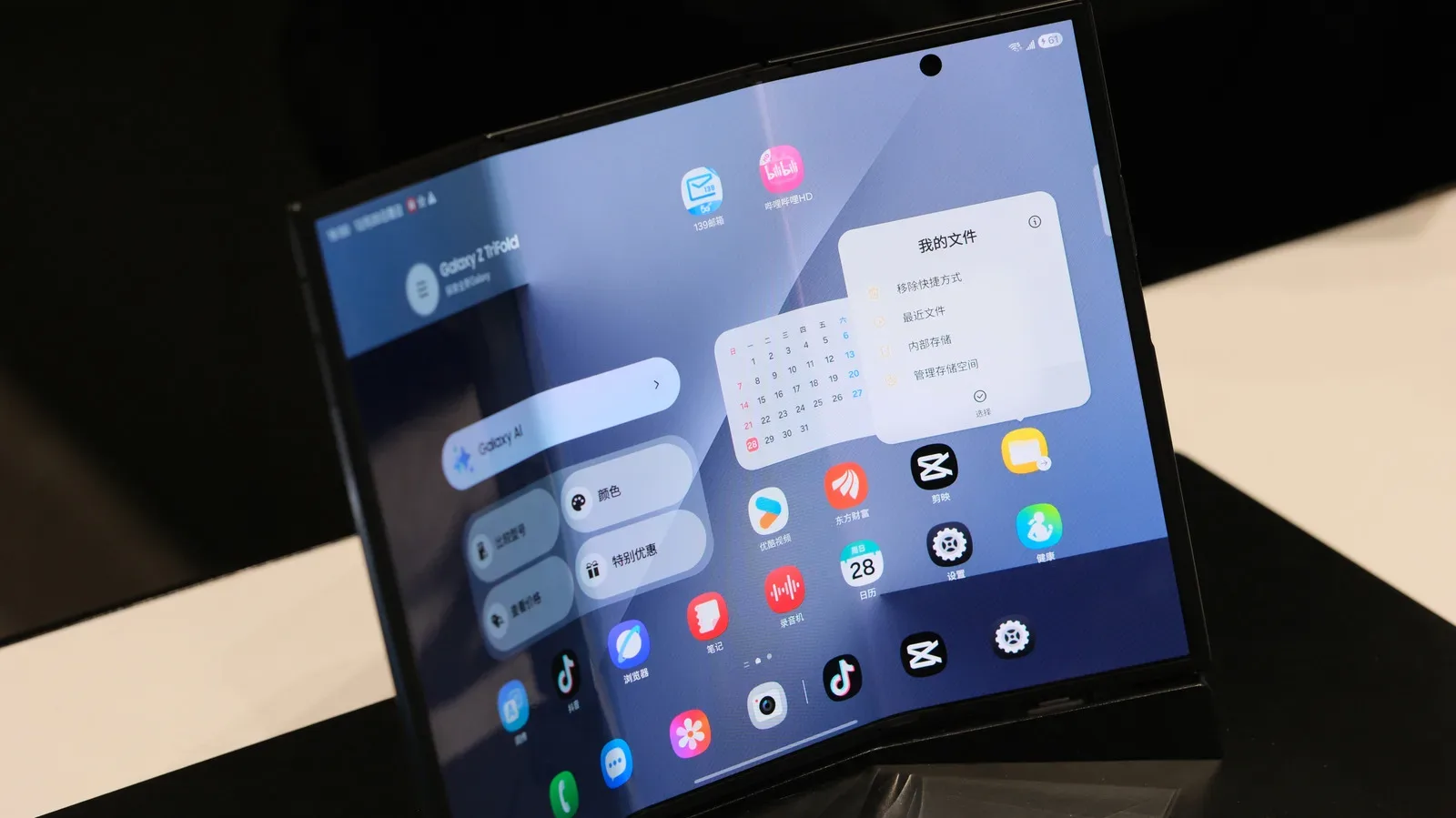
A foldable phone is meant to be opened and closed. That is its entire party trick, and owners should not have to treat every hinge movement as a high-stakes stunt. But the flexible inner display is not interchangeable with the rigid glass panel on a conventional smartphone. The most useful way to protect it is not obsessively counting every fold; it is adopting a few quick habits that account for the screen, the hinge and the places where debris can hide.
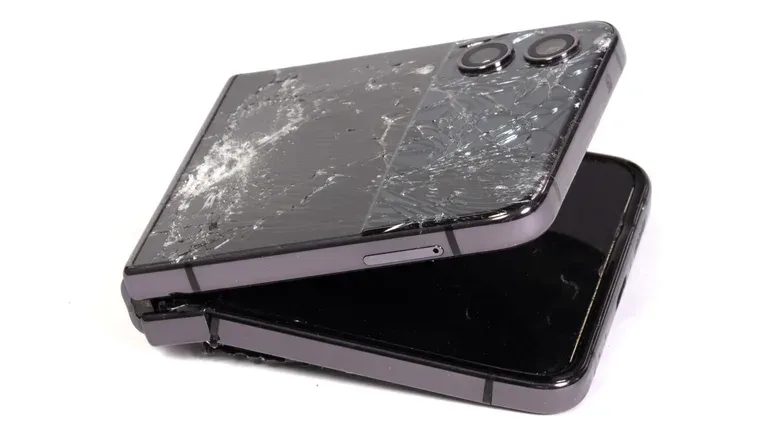
The central rule is simple: close a foldable only when the inner display is clear. Coins, cards and keys can scratch or even puncture the inner display if they are trapped inside as the device closes. Less obvious particles can matter too. Sand and job-site dirt may be hard to notice, particularly around a phone that has been in a pocket, bag or vehicle.
That distinction is important. A dropped phone is an obvious risk for almost every device, while a foldable introduces a more specific hazard: turning a small object or abrasive particle into a point of concentrated pressure between two closing halves. The problem is not that the phone folds; it is what gets caught in the fold.
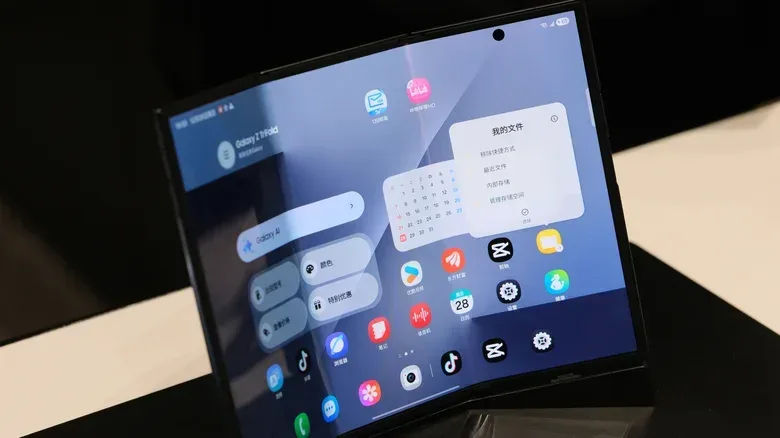
Think of the inner display as a flexible surface, not ordinary cover glass
On a traditional slab-style phone, it is easy to build habits around a rigid outer screen: wipe away a mark with a thumb, pick at a stubborn speck with a fingernail, or press more firmly when something appears stuck. Those instincts are less suitable for a folding display.
The inner panel must bend repeatedly, so it should not be treated as though it has the same tolerance for concentrated force as a conventional phone screen. A fingernail pressing into one tiny spot, for example, is a different kind of interaction than tapping normally across the display. The practical takeaway is uncomplicated: do not dig at debris, scrape at a mark or press hard on a small area of the inner screen.
When a mark needs cleaning, a soft cloth is the safer option described here. If there is a particle on the display, resist the reflex to dislodge it with a nail. First, make sure the phone is open, inspect the area and gently clean it rather than applying pressure directly to the flexible surface.
What “concentrated force” means in everyday use
Concentrated force is pressure aimed at a small point instead of being spread over a wider area. A fingertip tap is part of normal phone use. A key, grain of sand or fingernail can focus pressure far more sharply. Closing the handset with one of those objects between its halves compounds that pressure.
This is why a quick inspection before closing can be more valuable than elaborate rituals. Look for obvious objects and loose debris, especially after time at the beach or in a dirty work environment. Then close the device with nothing but open air between the two sides.
Related coverage includes Foldable Phone Mistakes That Can Damage the Inner Screen.
- Keep keys, coins and cards away from an open inner display.
- Check for sand or dirt before folding the phone shut.
- Do not scratch at specks with a fingernail.
- Use a soft cloth for routine screen cleaning.
- Avoid hard, pinpoint pressure on the inner panel.
Do not mistake the factory screen film for disposable packaging
A factory-applied inner screen film can look like something that ought to be peeled away, especially to anyone used to removing temporary plastic from new electronics. On foldables, that is a mistake. The protective layer is intended to remain in place, and manufacturers advise against removing it. On newer designs, its edges may be tucked away or less conspicuous than they were on earlier foldables, but that does not make it shipping material.
The opposite mistake is adding an arbitrary third-party protector as if every screen accessory works the same way. It does not. A foldable display has a bending requirement that a standard phone display does not. A protector or stylus should be used only when the device manufacturer specifically lists it as compatible with that model.
That limitation is not needless fussiness. Any accessory that touches, adheres to or moves across a folding panel has to coexist with the display’s movement. Compatibility is therefore a model-specific matter, not a broad promise that a product works with “foldables” in general.
The same principle applies to styluses. The relevant question is not whether a stylus works on some touchscreen; it is whether it is approved for the particular foldable being used. An unsuitable stylus can place the wrong type of pressure on a screen designed to flex.
IP ratings are useful, but they are not a blanket durability verdict
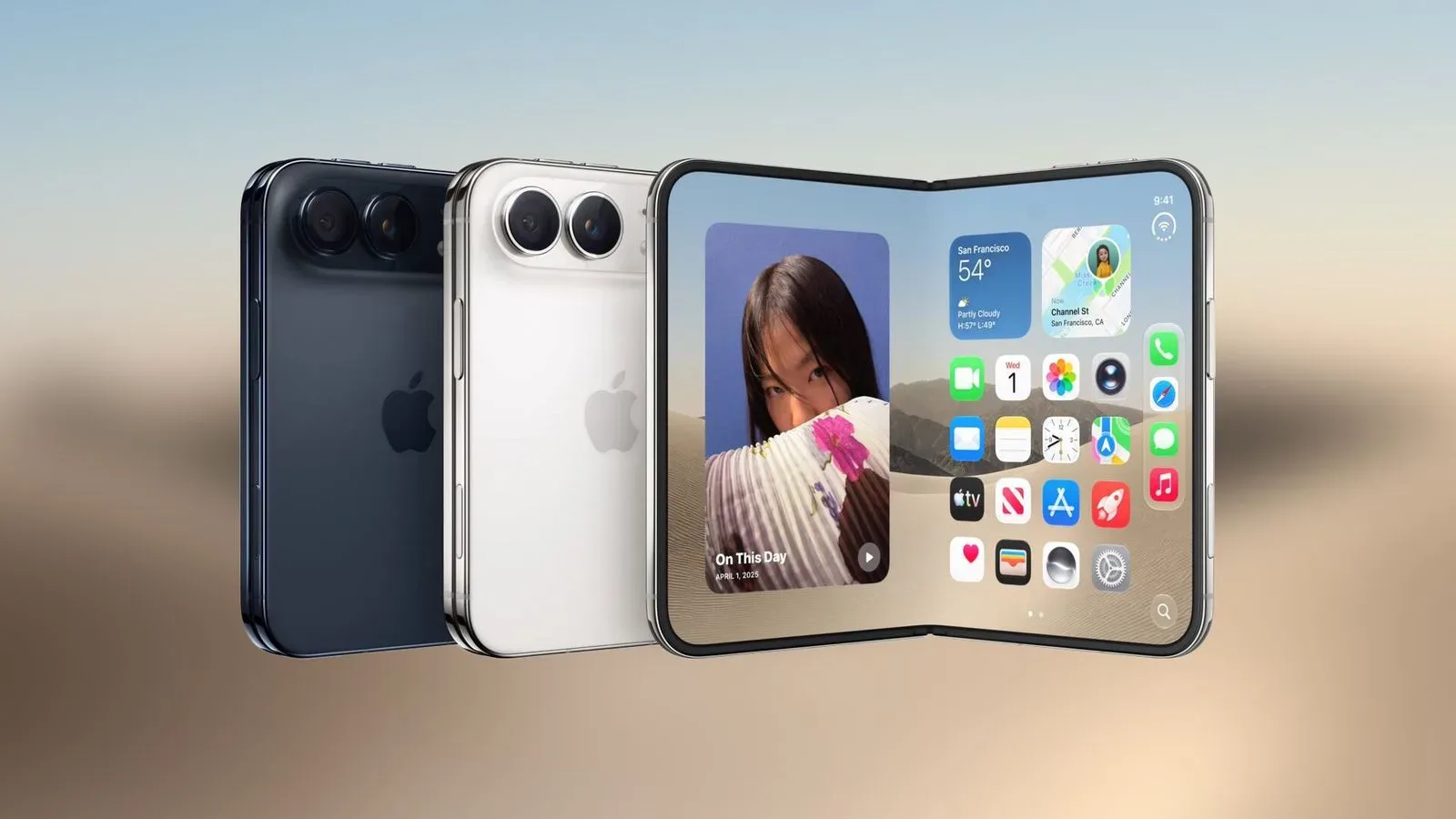
Water and dust resistance ratings are one of the easiest specs to misunderstand because a short code can sound like an all-purpose toughness score. It is not. The first digit in an IP rating addresses protection from solid objects. In the examples at hand, an IP48-rated Galaxy Z Fold8 or Fold8 Ultra is protected against objects 1mm thick or larger entering the device, while an IP68-rated iPhone Duo is described as dust-tight.
That makes the contrast meaningful: a 6 in the first position represents stronger protection against dust than a 4. Yet even a dust-tight rating should not be read as permission to stop thinking about debris on the screen before closing a foldable. The rating concerns ingress protection—how resistant the device is to material getting inside—not whether a visible grain of sand is safe to trap against a flexible display.
There is also a durability limit built into the language surrounding these ratings. Apple notes that the iPhone Duo’s water and dust resistance can diminish through normal wear. That is especially relevant to hardware with moving parts. A rating describes a tested level of resistance, not an eternal condition that remains unchanged after years of ordinary use.
For readers tracking Apple’s phone coverage more broadly, recent iPhone 18 Pro Max service-replacement reports are a separate reminder that a device’s practical ownership experience can involve more than its headline specifications.
A plain-English guide to the first IP digit
In this context, the first digit is about solid-object protection. An IP4x device is protected against the entry of objects 1mm thick or larger. An IP6x device is dust-tight. The second digit is part of the full rating too, but the supplied comparisons specifically establish the meaning of the first digit.
So, IP48 and IP68 should not be treated as interchangeable labels. Nor should either label replace basic care. A phone may resist dust entry well while still being vulnerable if grit is left directly on an inner screen and the device is closed around it.
Fold-count claims are benchmarks, not a personal expiration date
Manufacturers test folding screens and hinges through large numbers of opening-and-closing cycles, commonly between 200,000 and 500,000 folds. At a hypothetical 100 openings per day, that works out to roughly five to 10 years. It is a useful way to make a huge number more understandable, but it is not a guarantee that an individual handset will last precisely that long.
Lab testing creates a controlled measure. Daily ownership does not. Real-world use includes pocket debris, uneven pressure, cleaning habits, environmental exposure and ordinary wear. The gap between a controlled folding test and a person’s routine is why a cycle count should be understood as an indicator of design testing rather than a promise of a fixed lifespan.
Samsung said the Galaxy Z Fold7 display remained functional after 500,000 folds in lab testing. That is substantial evidence of a test target, but it does not establish that every Fold7 will deliver the same result under every user’s conditions. There is also precedent for caution: the original Galaxy Fold’s 200,000-fold claim fell short.
High fold counts are most helpful as a measure of what was tested—not as a warranty-like prediction for one person’s phone.
That perspective can prevent two unhelpful reactions. One is panic, where an owner regards every normal opening as damage. The other is false confidence, where an owner assumes a large test number makes cleaning and compatible accessories irrelevant. The sensible middle ground is to use the device normally while avoiding the avoidable sources of damage.
A practical routine for daily foldable ownership
Foldables do not need to be babied, but they reward a little more intention than a standard phone. The best routine is short enough to follow consistently:
- Before closing: glance at the inner display for keys, cards, coins, sand and dirt.
- If the screen is marked: clean it with a soft cloth instead of scraping at it.
- Keep the installed film in place: do not peel the factory-applied layer because it resembles protective packaging.
- Use only approved accessories: choose a screen protector or stylus specifically listed as compatible with the exact model.
- Read resistance ratings precisely: they describe particular protections, not immunity from wear or trapped debris.
- Ignore the fold counter: focus on avoiding pressure, contamination and unsuitable accessories.
For people who work in dusty conditions or regularly visit sandy places, the inspection step matters most. Dirt is not always visible at a glance, and sand has a talent for reaching places it should not. Take an extra moment before folding the device, particularly after it has been exposed to those environments.
The bigger lesson: prevent damage at the moment it is easiest to prevent
There is no single, guaranteed lifespan for a foldable phone. The hinge and screen test figures provide useful context, while IP ratings tell buyers something specific about resistance to solids. Neither replaces careful use of the flexible screen.
Owners do not need to fear the hinge or ration normal openings. They should instead concentrate on the moments where small choices make the largest difference: keep objects out of the closing path, do not apply pinpoint pressure, leave the intended protective film alone, and use only accessories designed for the model. Those habits are practical because they address the aspects of a foldable that differ most from a conventional smartphone—its flexible display and its moving construction.