Exodus is positioning itself as a large-scale science-fiction role-playing game with a familiar squad-based foundation and an unusually ambitious sense of time. A newly described 60-minute, combat-led mission offers the clearest indication yet of how that mix may work: protagonist Jun brings guns, gadgets and alien abilities to a three-person party, while companions supply specialized skills that can be directed in battle. Beyond the firefights, the game’s universe is populated by the Awakened, hyper-intelligent animal species whose roles seem designed to make the setting feel more distinct than a standard humans-versus-aliens space opera.
Archetype Entertainment’s game is currently scheduled to launch on April 27, 2027 for PC, PlayStation 5 and Xbox Series X, with Wizards of the Coast publishing. That date leaves plenty of time before players can judge the whole experience, particularly its promised long-range consequences. Still, the latest details suggest that Exodus is not hiding its genre influences. Its gunplay, rotating companion abilities and dialogue-driven relationship signals plainly occupy territory that fans of squad-based sci-fi RPGs will recognize.
The important distinction, at least on paper, is the combination of that combat framework with a galaxy shaped by time dilation. Exodus has framed its story around journeys where time passes differently across space, potentially allowing choices made during one expedition to resurface years or decades later for people left behind. A single mission cannot prove whether the concept will land across an entire RPG, but the reported slice did include a small moment that hints at the kind of delayed consequence the game wants to pursue.
Jun’s loadout is built around more than one combat answer
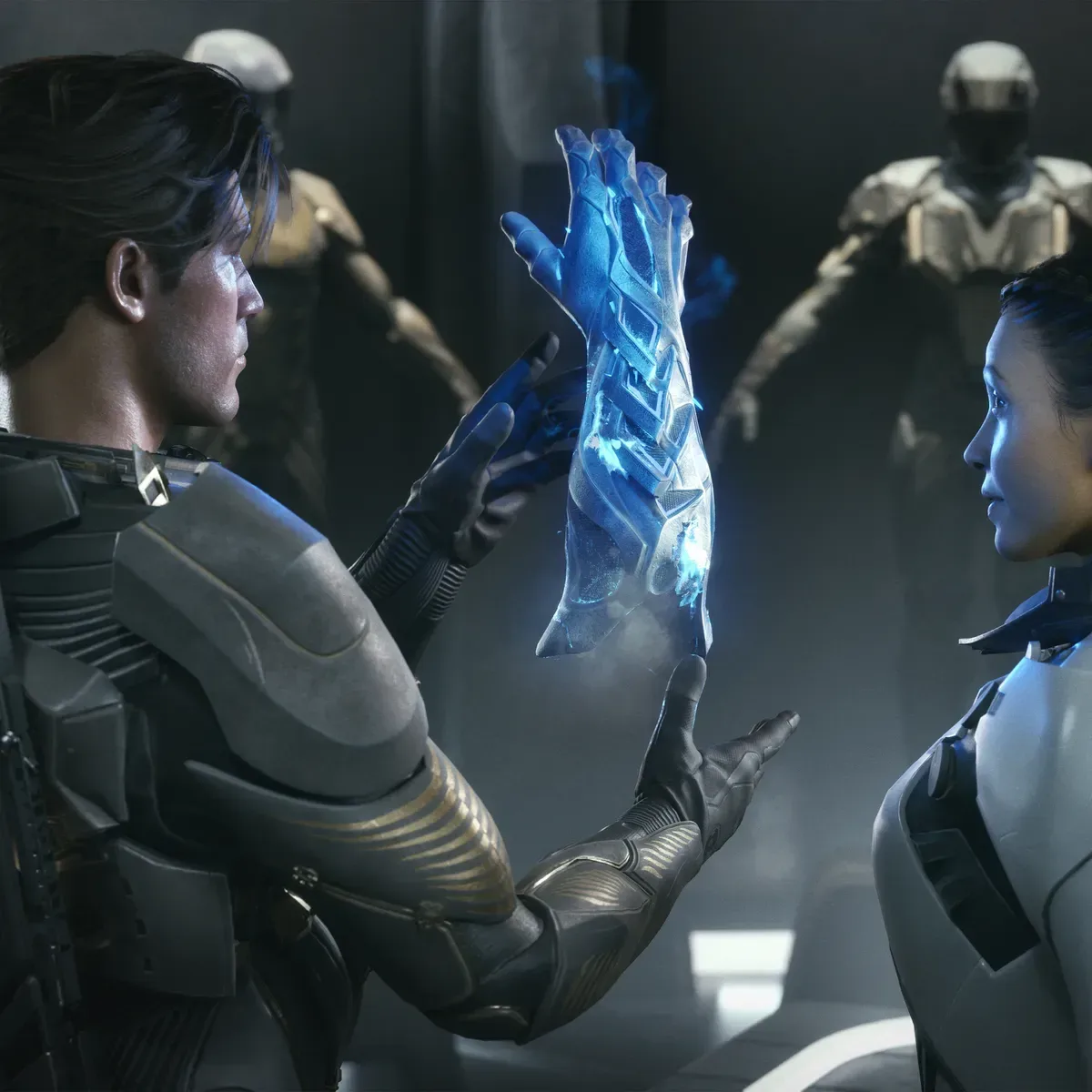
The mission takes place after Jun has acquired a ship, gathered a crew and learned to use powers connected to his mysterious Celestial link. At the center of that toolkit is an ancient alien gauntlet. Its functions are said to include manipulating the environment and expanding Jun’s available combat options, ensuring he is more than a shooter protagonist with occasional cooldowns.
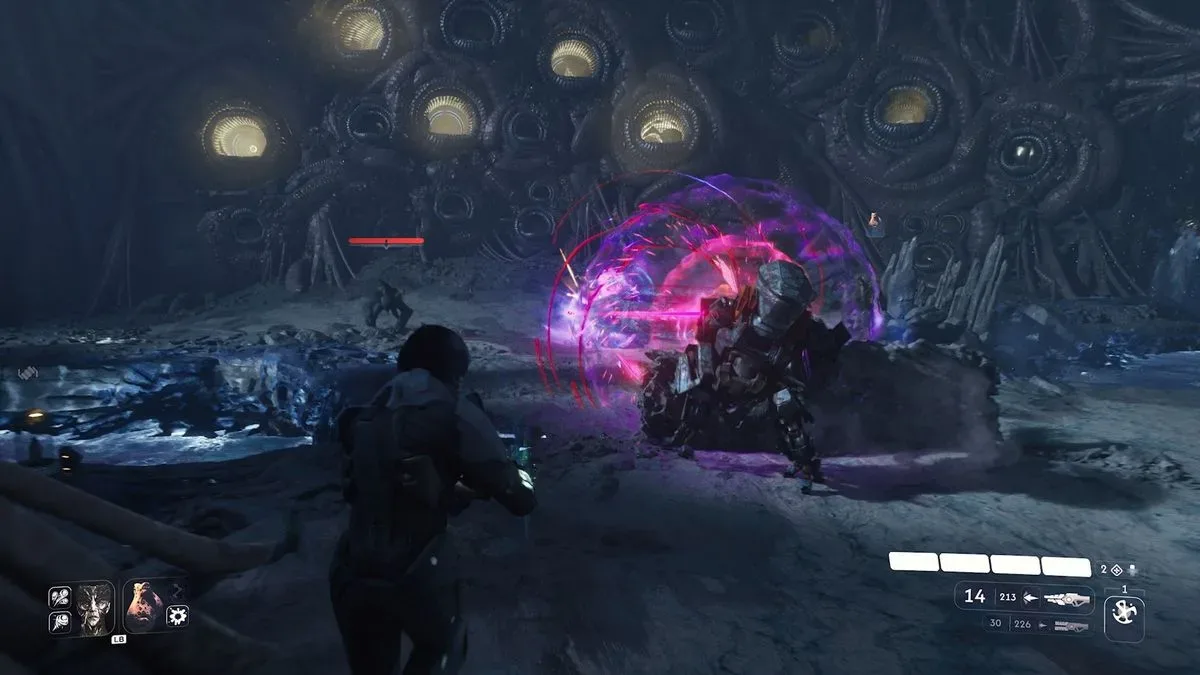
Examples from the mission point to a flexible approach to engagement. Jun can cloak to move into position and set up a sniper shot, or immobilize a larger enemy before closing the gap for melee combat and shotgun fire. Firearms, gadgets and gauntlet powers appear intended to overlap rather than force a single ideal build. Ammo matters, too: the sniper rifle’s limited magazine reportedly creates pressure to reserve its high-impact shots for the moments that justify them.
That is a promising direction for an RPG whose central character must be present in every mission roster. Jun is the constant, while the other two party slots can support different tactical identities. The formula is recognizable, but recognition is not necessarily a criticism. Squad combat works when the player has enough tools to react to changing situations without making every encounter feel like a menu-management exercise. Exodus appears to be aiming for that middle ground.
It also sounds as though stealthy openings are possible without companions immediately ruining the plan. Allies can remain restrained at the start of an encounter, waiting until the situation becomes an open fight before joining in. For anyone who has watched an AI teammate turn a careful infiltration into a galactic parking-lot brawl, that restraint could be welcome.
Suliman and Elise offer sharply different companion styles
The two companions assigned for this mission demonstrate how varied the party roles may become. Suliman is the covert specialist. He can teleport toward unsuspecting targets and dispatch them at close range, an ability that complements quiet positioning and selective takedowns. His personality is described as smug and provocative, seemingly built to challenge Jun and irritate the player just enough to remain interesting rather than disposable.
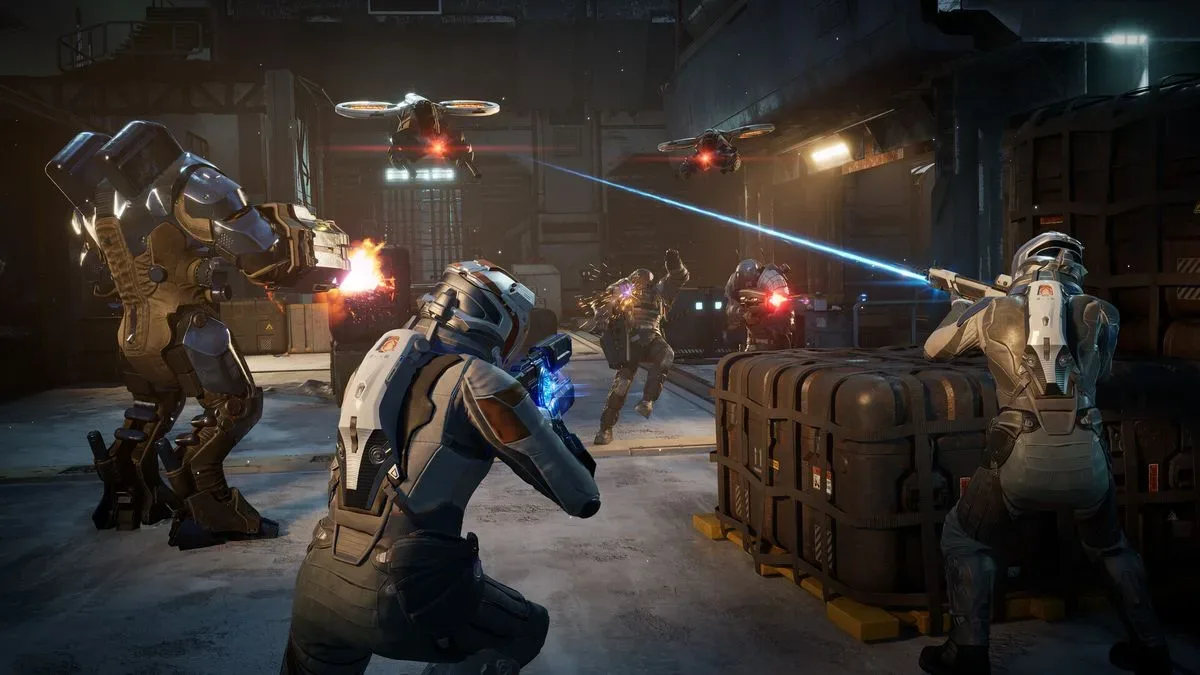
Elise, by contrast, pilots a massive mech and leans enthusiastically into rockets. Her capabilities revolve around delivering repeated explosive damage, giving the group a much louder solution to problems that will not stay solved. Together, the pair represent an effective basic contrast: one character rewards discretion, while the other appears ready to introduce every enemy in the area to the concept of splash damage.
Players can apparently tell each companion when and where to deploy their recharged abilities. The control scheme is described as straightforward, with the payoff being substantial bursts of damage against enemy health bars. That matters because companion systems often fall into one of two unhelpful extremes: teammates either play themselves so completely that they become scenery, or demand so much constant oversight that the player spends more time issuing orders than inhabiting the action. Exodus seems to be targeting a more accessible command layer.
There is at least one reported rough edge. During a larger boss encounter, the enemy’s behavior appeared focused almost entirely on Jun, even while Suliman and Elise were attacking. The resulting evasive play could feel awkward, with repeated dodge rolls needed to escape an opponent that seemingly had little interest in the rest of the squad. It is a limited observation from an unfinished game and one battle, not a final verdict on enemy AI, but it is exactly the kind of issue that becomes much more visible when an RPG asks companions to feel tactically essential.
Choices may matter on a scale beyond the immediate mission
Combat was the focus of the available demonstration, so the larger role-playing systems remain less certain. Even so, several signals pointed toward a conventional-but-useful layer of party approval and moral alignment. Suliman and Elise can react to Jun’s actions, while choices may award Paladin alignment points when the player avoids more ruthless behavior.
The potentially bigger idea emerged when Jun spared an enemy combatant who had been treated as expendable cannon fodder. There is no confirmation that this particular character will return, or precisely how the system will function. However, the scene was presented in a way that suggested the spared figure could become relevant much later in the narrative. In a game built around time dilation and journeys spanning centuries, an apparently minor act of mercy could conceivably gain meaning long after the player has forgotten the immediate firefight.
That prospect is the real test for Exodus. Plenty of RPGs can display approval icons and offer a paragon-style path. Far fewer can make delayed consequences feel personal, understandable and substantial instead of merely revealing a different cutscene hours later. The game has not yet demonstrated the full breadth of its branching narrative, so caution is warranted. But the framework gives its decisions a thematic reason to exist. Time is not just lore decoration if it changes whom Jun encounters and what earlier choices have become.
For a lighter reminder that multiplayer alliances can be every bit as fragile as interstellar diplomacy, see The Unwritten Rules of Couch Multiplayer, Now Written Down.
The Awakened could give Exodus its own voice
Exodus has already expanded its setting outside the game through short fiction, a novel and a tabletop game. The latest mission details suggest that world-building is not only happening in supplementary material. The Awakened, intelligent animal species living alongside humanity, are a major part of what differentiates the game’s galaxy.
The mission occurs on Khonsu, home of the Kay, an Awakened frog species. The Kay maintain a planetary shield that protects Khonsu from dangerous space debris. Their work is largely voluntary, but an invasion has put them under pressure and consequently put the planet at risk. It is a premise with immediate stakes, yet it also communicates something useful about the setting: Awakened communities are not simply comic relief mascots or a one-note novelty. They occupy vital places in the social and physical functioning of this universe.
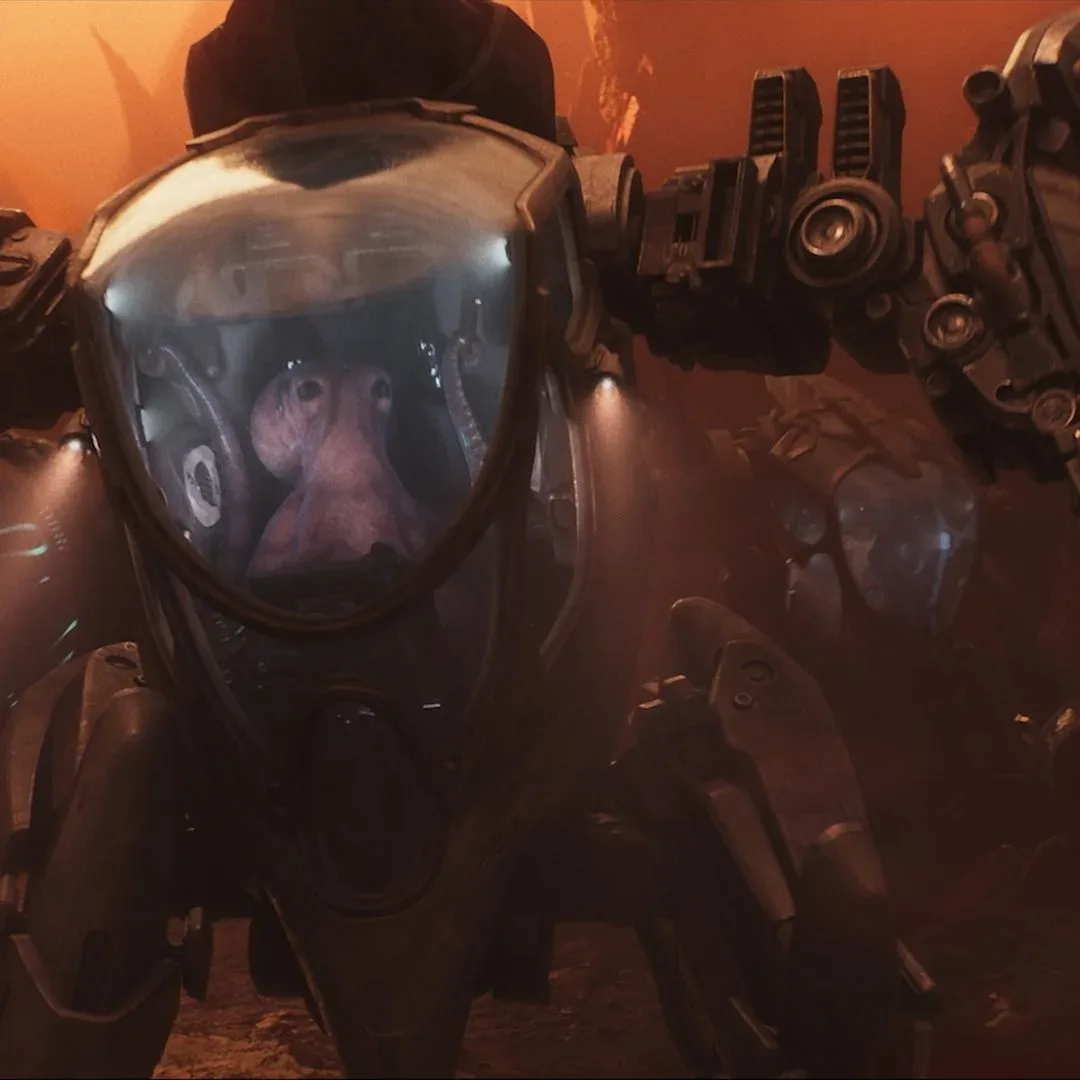
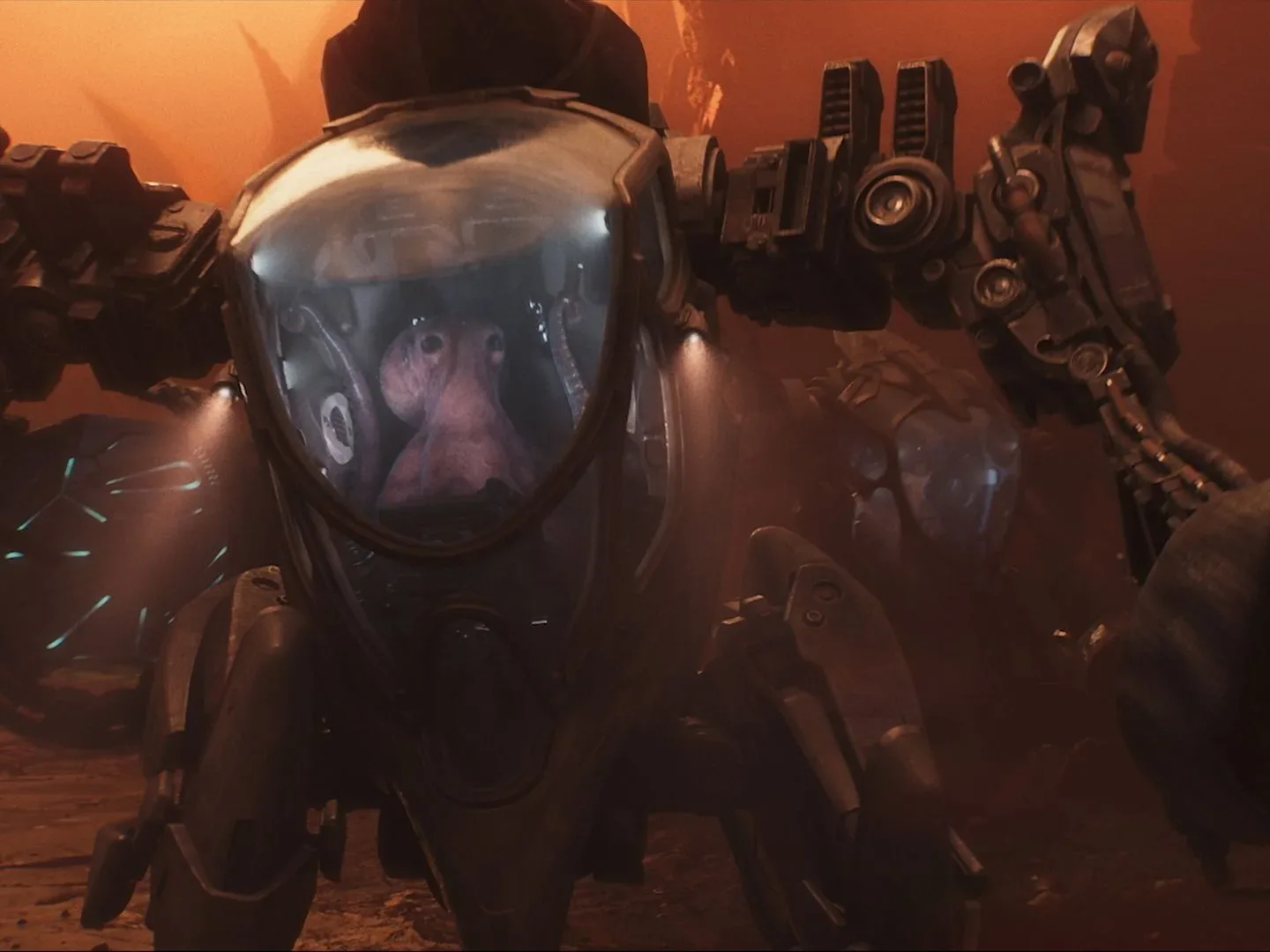
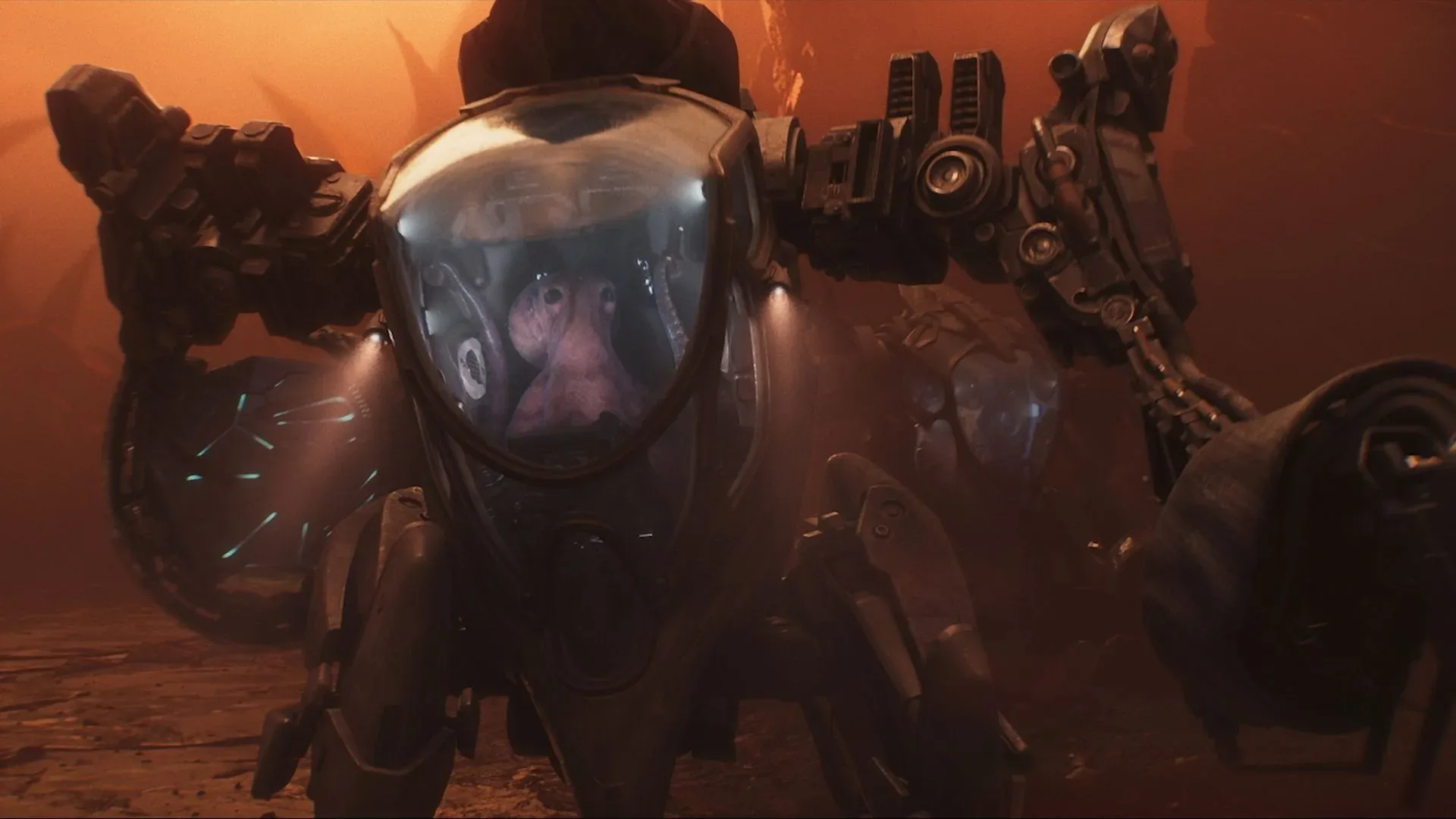
One Kay character, C42, is energetic and distractible, bouncing between subjects while Jun and Suliman attempt to keep the conversation moving. The mission also introduces a very different Awakened presence in the form of a huge mother bear who becomes a frightening opponent. Meanwhile, a companion named Salt is an Awakened octopus operating from a water-filled chassis. That is a wonderfully specific bit of science-fiction design: it implies a world that has thought about how nonhuman bodies might participate in spacefaring life, rather than simply attaching a human voice to an animal-shaped character model.
The basic premise of talking animals is certainly not new, but the Awakened could provide Exodus with an identity all its own if their cultures, needs and relationships to humans are allowed to be complicated. The strongest speculative settings are not defined only by their biggest cosmological idea. They are also defined by the everyday oddities that make players feel they are somewhere no other game has taken them.
A familiar combat lineage, with the difficult part still ahead
Everything shown so far invites comparisons to the great squad-based space RPGs: third-person gunplay, ability cooldowns, companion banter, approval responses and missions structured around a central protagonist. Exodus does not appear interested in denying that lineage. Instead, its pitch is to build on it with a deeper equipment suite for Jun, a varied crew and a timeline capable of stretching a choice far beyond its initial scene.
That makes the road to April 2027 unusually clear. The combat loop already appears to have the raw ingredients it needs: satisfying weapon feedback, distinct party roles, viable stealth openings and a commanding system that does not sound needlessly cumbersome. The setting also has a memorable hook in the Awakened and the practical details of worlds such as Khonsu.
The unanswered question is whether all those pieces can sustain a story about cause and effect across centuries. Until the full game arrives, that remains an ambition rather than a settled fact. But Exodus now has a more concrete foundation than a broad promise of spiritual succession. Jun’s gauntlet, Elise’s mech, Suliman’s teleports, the Kay’s shield and Salt’s aquatic chassis all point to a universe trying hard not to be mistaken for somebody else’s galaxy.
Players looking for another kind of game-world preservation project can also read How to Store Retro Games: A Collection You Can Find and Play.