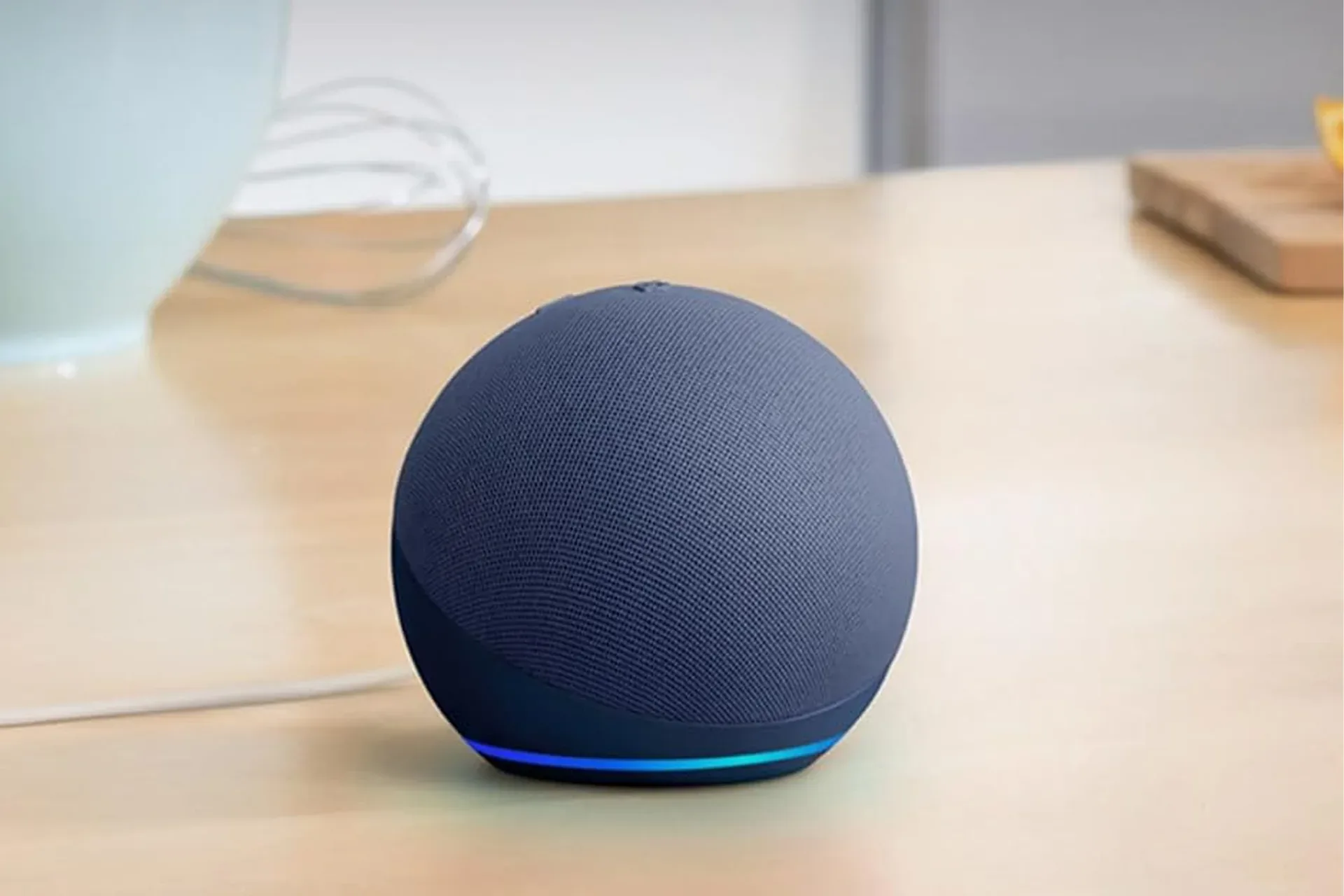
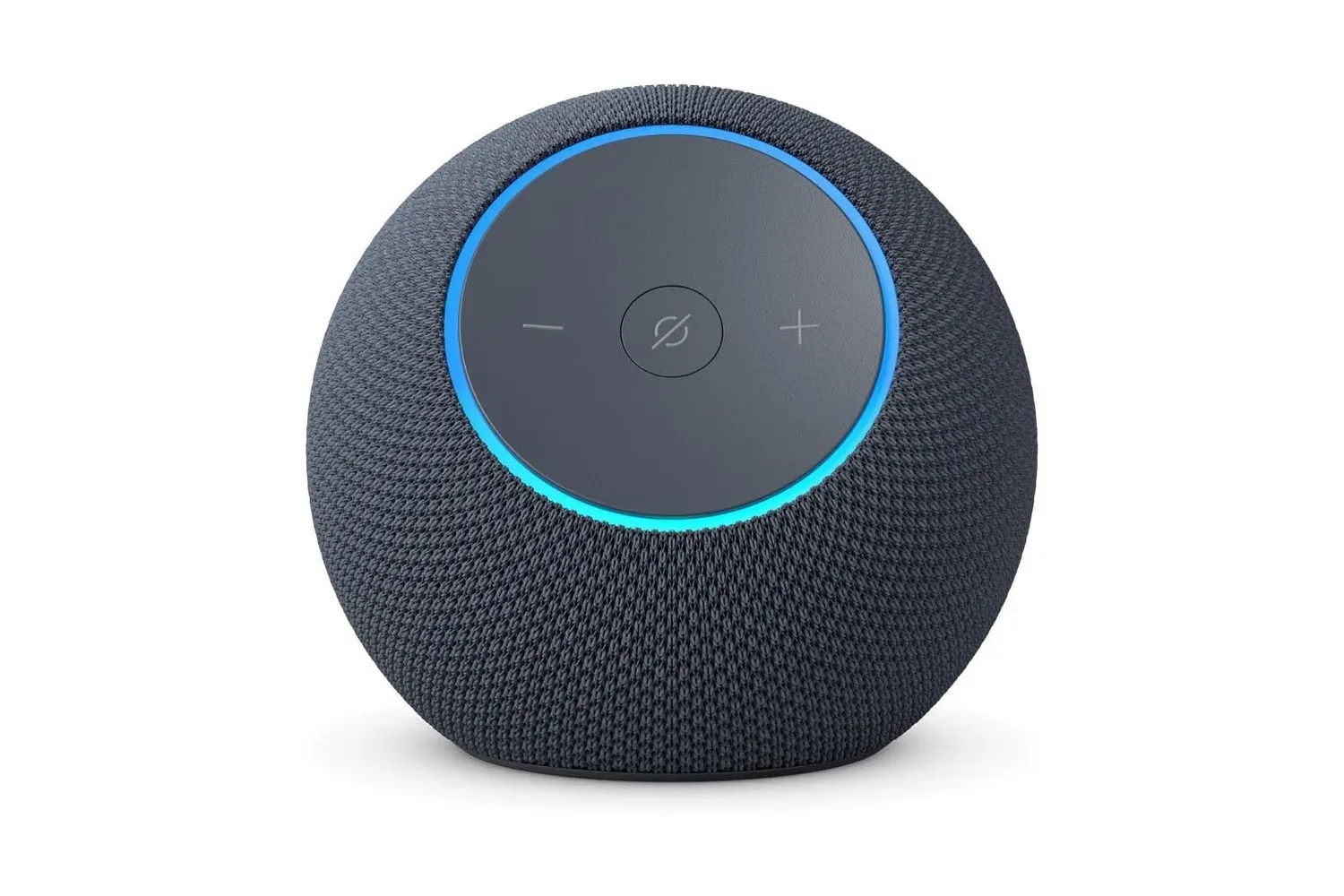
Amazon’s Echo Dot Max is listed at $49.99 for Cyber Monday, a reduction from its stated $119.99 regular price. That is a 58% discount and a notable price for a compact Alexa speaker positioned as more than a bedside voice-assistant device.
The important qualifier is that the deal is for one speaker. It is not automatically a two-speaker stereo package, a complete eero mesh system, or a bundle with accessories and services. Still, the Dot Max’s listed combination of enhanced audio ambitions, a built-in smart-home hub and eero Built-in support gives the discount more practical weight than a simple markdown on a basic voice speaker.
For people comparing holiday deals, the useful question is not merely whether $49.99 is much lower than $119.99. It is whether the Dot Max replaces, or meaningfully adds to, hardware already needed in a particular room: a music speaker, a control point for compatible smart devices, or a small extension to an existing eero Wi-Fi setup.
The audio pitch: bigger sound, with limits on the available detail
Amazon says the Echo Dot Max delivers nearly twice the bass of the Echo Dot released in 2026. It is also said to adapt its playback to the room, with the listing describing sound intended for living rooms and medium-sized spaces rather than just a nightstand.
Those claims establish the design goal, but they are not the same as independent performance measurements. No wattage, driver specifications, or measured loudness figures are provided in the listed details. That means shoppers should regard “room-filling” sound and deeper bass as manufacturer positioning, not as a guaranteed comparison against a particular standalone speaker.
In practical terms, bass refers to the low-frequency part of music and effects: the thump in a kick drum, the weight behind a bass line, or the rumble in a game soundtrack. More bass can make a small speaker sound fuller, but it does not by itself describe clarity, maximum volume, stereo separation, or how the speaker will perform in an unusually large or open room.
The room-adaptation claim is also worth reading precisely. If a speaker fine-tunes playback for its surroundings, the intended benefit is a better fit for placement near walls, on shelves, or in rooms with different acoustics. It should not be interpreted as a substitute for testing a speaker in every possible setup, especially when the listing does not supply technical measurements.
Supported music services listed for the Echo Dot Max include Amazon Music, Apple Music, Spotify and SiriusXM. That broadens its appeal for households that already subscribe to one of those services, though the source material does not detail service tiers, account requirements, or feature differences between them.
Related coverage includes Amazon’s Echo Dot Max drops to $49.99 for Cyber Monday.
One speaker now, a broader Echo setup later
The Dot Max can be paired with compatible Echo speakers and smart displays in other rooms. This is useful for someone who wants audio in several spaces but does not intend to buy an entire system immediately. The speaker can also pair with a second Echo Dot Max for stereo sound.
Stereo sound splits left and right audio channels between two speakers. That can create a more spacious presentation than a single unit, particularly for music mixed with distinct left and right elements. A second device is required, however, so the $49.99 single-speaker price should not be mistaken for the price of a stereo pair. A two-pack appears in the listing, but no price was provided here.
There is a sensible upgrade path in that arrangement. A buyer could start with one Dot Max in the room that needs it most and add a second later if stereo playback becomes the priority. Equally, someone concerned chiefly with smart-home controls may find one unit sufficient. Which use case wins depends on whether sound quality, automation, or network reach is the main reason for buying it.
The built-in hub is the feature with the widest practical reach
Audio may be the headline, but the integrated smart-home hub is arguably the more consequential feature. A hub is the coordinating point that lets compatible connected devices work together. In this case, Amazon says the Echo Dot Max can control lights, locks and thousands of compatible devices and can run routines without requiring a separate hub.
A routine is an automation: a rule that tells compatible devices what to do when a selected condition occurs. Instead of asking Alexa to switch on a light each time, a household might set an action to occur under a particular trigger. The point is convenience through repeatable behavior, not merely voice control.
The listing specifically identifies Omnisense technology, allowing routines to begin from temperature changes or presence detection. Presence detection means a routine can respond when someone enters a room. Temperature-based automation could use a temperature condition as its trigger. The available information does not lay out every compatible device or every routine option, so it is best to treat this as a capability area rather than assume any desired automation will work with every product.
The distinction matters for prospective buyers. “No separate hub” can simplify a smart-home setup, but it does not eliminate compatibility checks. Anyone buying devices around the Dot Max should confirm that each light, lock, display or other accessory is supported before treating the speaker as the answer to every smart-home connection problem.
For a gaming or media room, these automations could be appealing in a straightforward way: lighting can be controlled as part of a routine, and voice access can reduce the need to reach for another device. But the supplied details do not establish platform-specific game integration, television control, or specialized gaming features. The smart-home story here is about compatible household devices, not a claim that the speaker changes a console setup.
eero Built-in is an extension feature, not a replacement for a router
The Echo Dot Max also includes eero Built-in. Amazon says it can act as a mesh Wi-Fi extender, adding up to 1,000 square feet of coverage to an existing eero network.
A mesh Wi-Fi network uses multiple connected points to spread wireless coverage through a home. An extender in that setup is intended to help reach an area where the main network’s signal is less dependable. That can be meaningful for a room where streaming, smart devices or online play sit at the edge of wireless coverage.
There are two restrictions worth keeping front and center. First, the stated figure is “up to” 1,000 square feet, not a promise that every home will gain that exact amount. Physical layout and other conditions are not described in the supplied material. Second, it works as an addition to an existing eero network. It is not presented as a replacement for a router or as a standalone answer for a home without eero.
That makes eero Built-in a potentially valuable bonus for current eero owners, while being much less relevant to shoppers using something else. It is an example of why the Dot Max cannot be judged only as a speaker: its value changes significantly with the equipment already in the house. People looking to improve a desk or cabinet’s physical airflow, rather than wireless coverage, are dealing with a completely different problem; old PC fans can still be repurposed for cooling and exhaust duties, whereas a Wi-Fi extender addresses signal reach.
Alexa+ support and privacy: check the details that are not settled by the sale price
The Echo Dot Max is designed to support Alexa+, described as a newer, more conversational version of Alexa. The available listing information does not say what Alexa+ costs or when it will be available to every buyer. Shoppers who consider that newer assistant a deciding reason to purchase should verify both availability and any associated cost before factoring it into the bargain.
Amazon also says the speaker has multiple layers of privacy controls, including a physical button that turns off the microphones. That is a concrete feature a buyer can inspect and use after setup. A microphone-off button does not answer every personal privacy question by itself, but it provides a direct hardware control for moments when a household does not want the microphones active.
The most cautious buying approach is to separate three kinds of claims. The sale price, the included color options and the presence of a microphone-off button are straightforward listing details. Audio quality and room-filling performance are performance claims that lack measurements in the supplied information. Alexa+ availability and cost are unresolved items that need confirmation from the buyer before purchase.
Colors, bundles and what the listed prices mean
The $49.99 single-speaker deal applies to Graphite, Amethyst and Glacier White, with all three colors listed at the same price. That is helpful for shoppers who do not want to pay a color premium.
Several bundles are also listed, each at a different price:
- Echo Dot Max with Alexa Emergency Assist: $55.98
- Echo Dot Max with a wall mount: $73.98
- Echo Dot Max with a charging stand: $83.98
- Echo Dot Max with an Echo Dot: $89.98
A bundle is not automatically the better value simply because it groups products together. The wall mount, charging stand, second Echo device and Emergency Assist option only add value when they match an actual need. The base price is the cleanest comparison point for someone who wants the Dot Max itself and nothing else.
At $49.99, the Echo Dot Max looks most compelling for an existing Echo or eero household that can use several of its features: music playback, Alexa access, smart-home routines and potentially a bit more mesh coverage. It may also make sense for someone who specifically wants to begin building an Echo multi-room or stereo setup. Buyers seeking a guaranteed audio-performance leap, a complete Wi-Fi solution, or confirmed Alexa+ access should verify those individual expectations rather than let the size of the percentage discount make the decision for them.
Shop the products
Check current price, model and availability at the retailer.