Amazon’s fifth-generation Echo Dot is currently listed at $40 ahead of Prime Big Deal Days, framed as a 50% reduction from an $80 suggested retail price. That headline is technically straightforward: $40 is half of $80. It is not, however, the whole shopping story.
The Echo Dot’s MSRP was raised from $50 to $80 around a month before this promotion. At $40, the speaker is therefore $10 below the earlier $50 price point. That is still a real discount for a compact Alexa speaker with built-in environmental sensors, touch gestures and Eero network-extension capability. But it is more useful to think of this as a $10 saving against the longstanding price than to treat “$40 off” as the practical bargain.
For people deciding whether to add Alexa to a bedroom, kitchen, office or another room where a small speaker makes sense, the relevant question is less whether a percentage label sounds enormous and more whether the Echo Dot 5’s particular conveniences fit the room. Its strongest pitch is not cinematic sound or a full smart-home overhaul. It is making simple, repeated tasks less fiddly: timers while cooking, music playback while doing chores, voice-driven routines and a few sensor-based automations.
The price label is correct, but comparison shopping still matters
Sale math is often most helpful when it is separated into two ideas: the reference price, which is the price used to calculate the advertised percentage, and the price history shoppers remember or have recently seen. Here, $80 is the reference price for the 50% claim, while $50 was the Echo Dot’s MSRP before the recent increase.
That does not make the $40 listing meaningless. A buyer paying $40 spends $10 less than the previous MSRP. It does mean the discount’s apparent scale can overstate the difference a shopper will actually feel compared with the product’s prior baseline.
At $40, the Echo Dot 5 is best understood as a modestly discounted compact smart speaker, rather than an unprecedented $40 windfall.
This distinction matters especially for low-cost connected devices. A shopper may be tempted to purchase several units because a percentage-off graphic makes the offer feel time-sensitive. Before doing so, it is worth deciding what each device will do. A Dot that runs a bedtime alarm, controls a nearby light and plays music in a room has a clear role. A second or third device without a routine, playback or connectivity purpose may simply be a bargain-shaped object waiting for an assignment.
What the fifth-generation Echo Dot adds
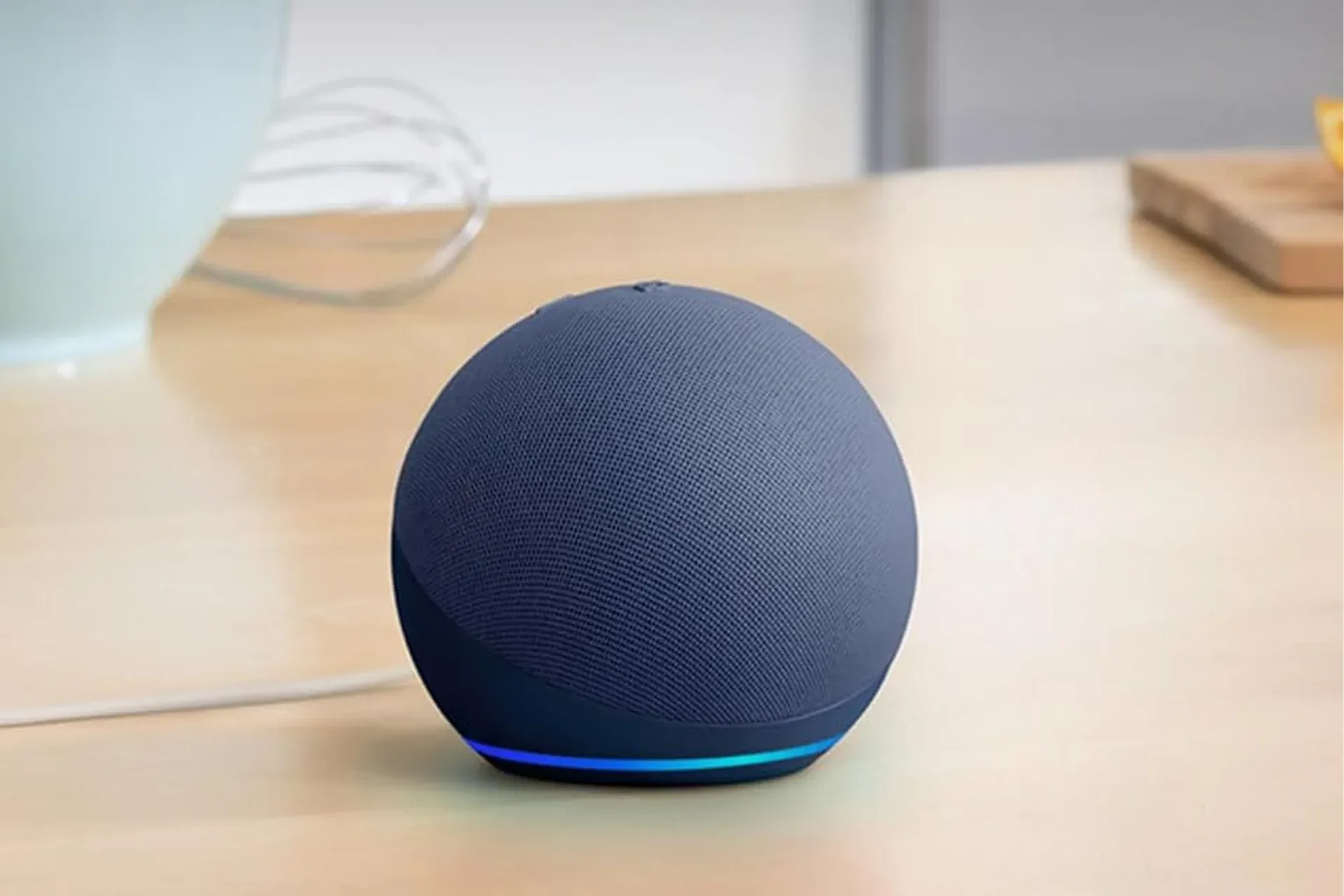
The fifth-generation Echo Dot updates the small spherical Alexa speaker with several hardware features intended to move it beyond basic voice commands. Amazon says its upgraded audio delivers double the bass of the preceding model. “Bass” refers to the lower-frequency part of sound: kick drums, bass lines and the weight behind effects. More bass can make a small speaker sound fuller, though it should not be confused with a promise that the Echo Dot will replace a larger dedicated audio system.
Its more distinctive changes are the onboard sensors. The Echo Dot 5 includes both a temperature sensor and an occupancy sensor. These can be used to trigger routines, which are automated chains of actions initiated by a condition or command. A routine could turn on lights when someone enters a room, for example, or switch on a fan after the room passes a preferred temperature threshold.
Those examples show why the sensors are potentially useful, but also reveal the requirement behind them: the Dot is an input to an automation, not necessarily the device performing the action. Turning on lights or a fan depends on compatible connected equipment and on a routine being configured. Without that surrounding setup, the sensors are still present, but their practical benefit is reduced.
Tap gestures offer a non-voice shortcut
An accelerometer adds another route for interacting with the speaker. An accelerometer detects movement, enabling tap gestures on the Echo Dot 5 for actions including snoozing an alarm, pausing or resuming music, and ending a call.
This is a small feature with a sensible purpose. Voice control is handy when hands are busy or across a room; a tap can be less disruptive when a person is already beside the unit, does not want to speak, or wants to silence an alarm quickly. It is not a replacement for the familiar voice-assistant experience, but it gives the speaker a practical physical control beyond spoken commands.
An Eero extension feature, with an important condition
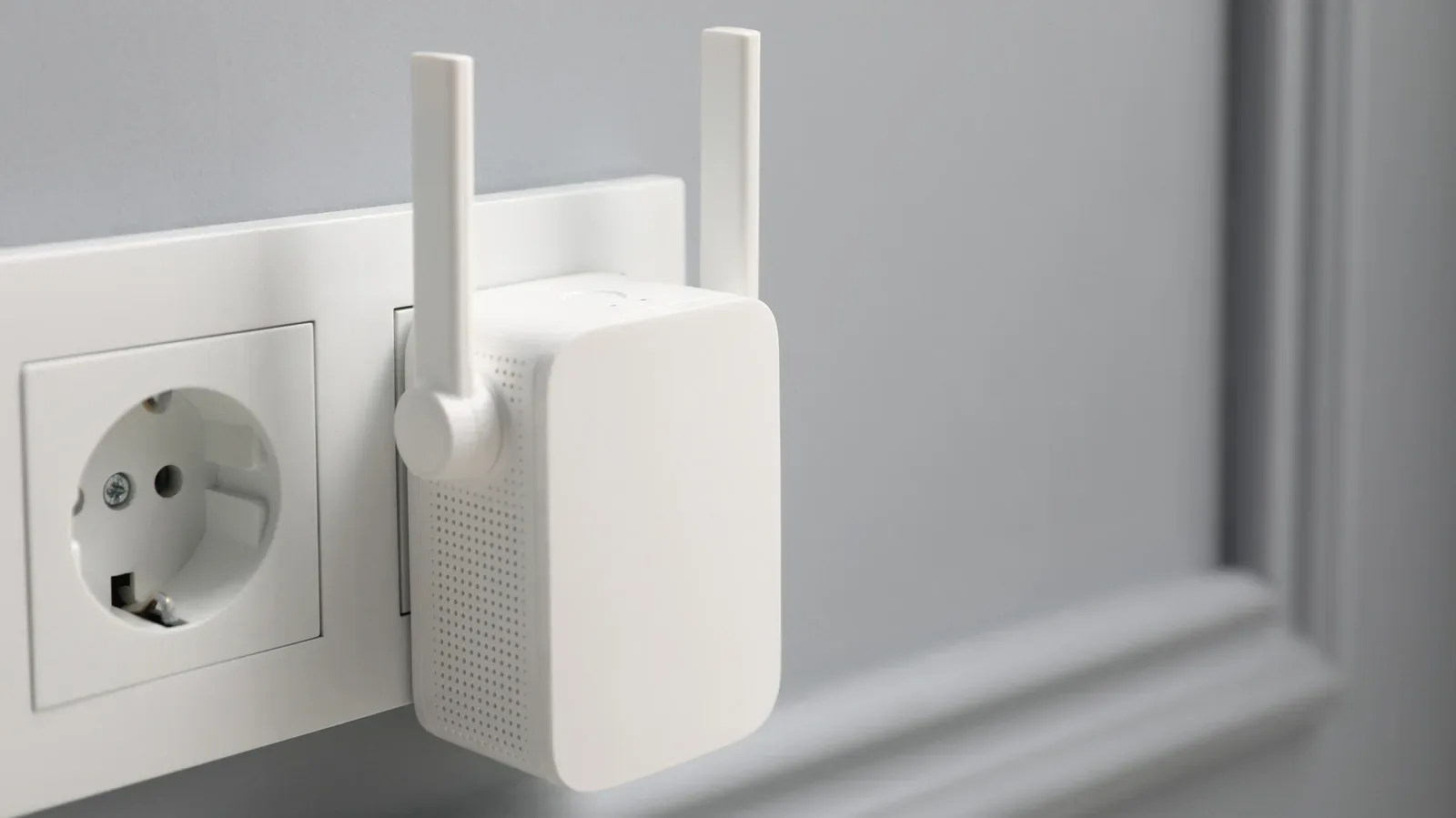
The Echo Dot 5 can also work as a Wi-Fi extender on an Eero network. Eero is Amazon’s mesh Wi-Fi system. A mesh system uses multiple network points to spread coverage through a home rather than relying only on one router location.
Amazon says adding the Echo Dot can extend coverage by up to 1,000 square feet. The key phrase is up to: it describes a maximum claim rather than a guaranteed result for every layout. Walls, distance, interference and device placement can all affect wireless coverage, and the feature is specifically tied to an Eero network.
That makes the Eero function a useful bonus for a home already using that ecosystem, not a reason to assume that any Wi-Fi setup will gain a thousand square feet of coverage. Anyone whose real issue is broad or unstable home connectivity may also want to consider the wider network design. As our look at the limits of Wi-Fi extenders explains, a coverage patch for one area is not automatically a substitute for a sound overall setup.
Put another way, the Echo Dot’s network role is most attractive when it solves a defined dead-zone or edge-of-coverage problem within an existing Eero arrangement. It is less compelling as an all-purpose answer to Wi-Fi frustrations.
Alexa+ and the day-to-day smart-speaker case
Prime members are set to receive access to Alexa+ at no added cost. Alexa+ is described as an AI assistant designed for more natural back-and-forth conversation than earlier Alexa versions. The claim is about conversational interaction: people may be able to express a request in a less rigid, more ordinary way, rather than treating every command as a carefully phrased prompt.
That can be meaningful for someone who regularly asks follow-up questions or builds complex habits around a voice assistant. Yet the source-supported everyday use case remains refreshingly ordinary. For many owners, a smart speaker is mainly a hands-free button for music, timers and reminders. Asking for a song while folding laundry, starting a kitchen timer with messy hands, or setting an alarm while getting ready are simple tasks, but they are exactly the kind that make a small speaker feel useful over time.
The worthwhile purchase question is therefore whether those repeated moments occur often enough in a buyer’s home. People who prefer to use their phone for music and timers, or who do not want voice interaction in shared spaces, may find little value in even a discounted unit. By contrast, someone already using compatible smart-home gear could get more from the Dot’s routines and sensors than from its audio improvements alone.
Privacy control is physical and visible
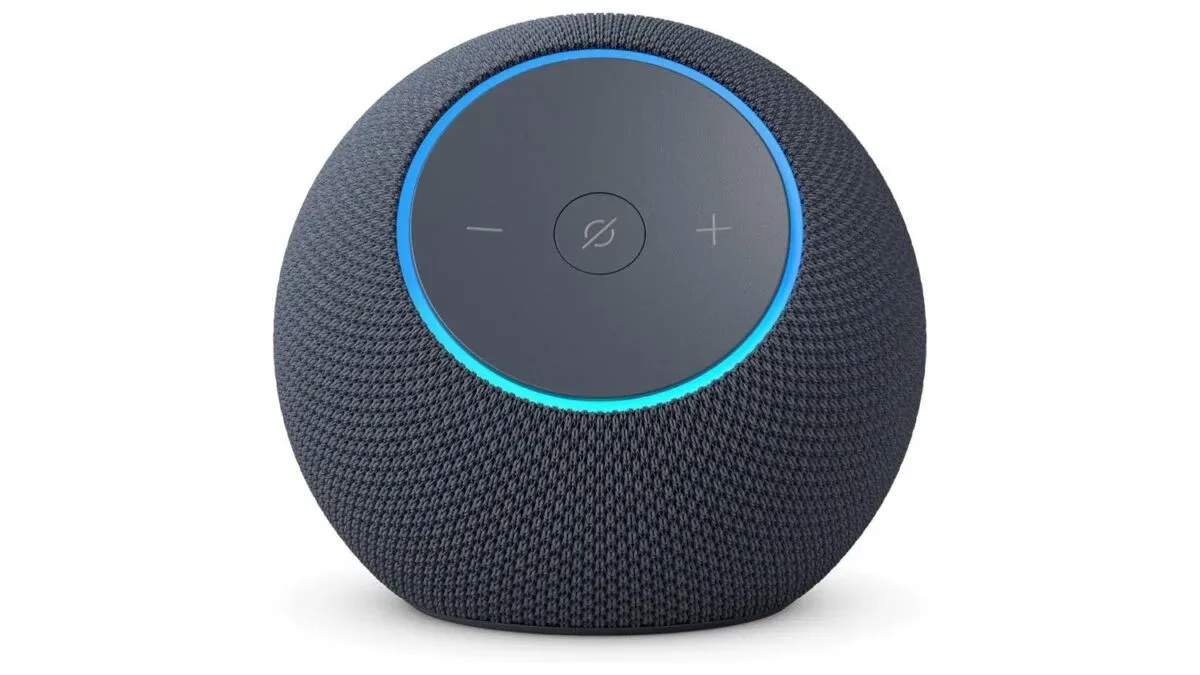
Amazon includes a dedicated microphone button that lets users disable the Echo Dot’s microphone. When the microphone is off, a red light glows through the device as a visible status indicator.
That is an important practical detail for a product built around listening for voice interaction. A hardware control is simple to understand: it gives an owner a direct way to turn microphone listening off when they do not want to use voice commands. Naturally, disabling it also means Alexa cannot hear a request until it is switched back on.
For privacy-conscious shoppers, the presence of this control should be treated as one decision factor rather than an automatic resolution of every concern someone may have about a connected assistant. Still, its straightforward operation and visible red indicator mean users do not need to rely solely on an app setting to tell whether the microphone has been disabled.
Who the $40 Echo Dot 5 makes sense for
- Existing Alexa users: A $40 unit can be an inexpensive way to add voice access, timers and music playback to an additional room.
- Eero households with a specific coverage need: The extension feature has clear relevance, provided the home is already on the supported mesh network and expectations remain realistic.
- Smart-home beginners with compatible devices in mind: The temperature and occupancy sensors can support simple routines, such as lighting or fan control, when there is connected equipment for them to operate.
- People who value hands-free routines: Cooking, chores, alarms and casual music requests are the mundane but credible reasons to own one.
It is less obviously a fit for buyers seeking a substantial audio upgrade, an all-in-one solution to weak home Wi-Fi, or a device whose headline percentage discount alone justifies an impulse purchase. The speaker comes in charcoal, deep sea blue and glacier white, with all three finishes included in the promotion. Color can be chosen on preference rather than price.
The bottom line is simple: $40 is a decent price for the Echo Dot 5’s mix of Alexa functionality, sensors, tap controls and potential Eero support. The deal is most persuasive when those features solve a real room-by-room need. Just keep the arithmetic in view: the current price is $40, the advertised comparison is $80, and the more meaningful recent comparison is the earlier $50 MSRP.
Shop the products
Check current price, model and availability at the retailer.