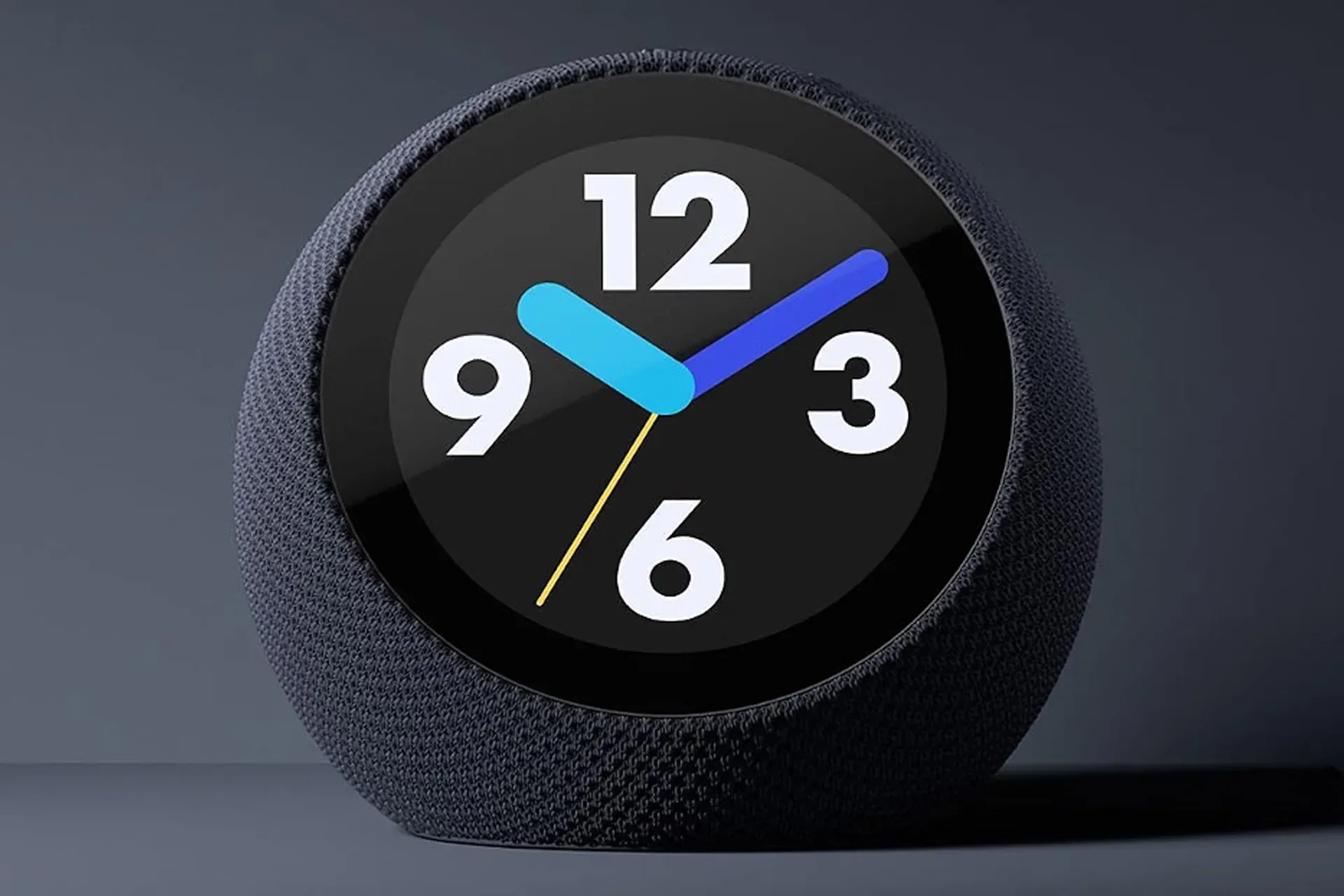
Amazon’s Echo Time, a recently launched Alexa-enabled smart speaker with a built-in circular display, is reportedly part of the company’s early Black Friday promotions. The device is positioned between the screen-free Echo Dot and the larger, tablet-style Echo Show: it remains a spherical speaker, but adds a small round screen designed chiefly to show the time.
There is one very important wrinkle before anybody starts rehearsing a triumphant “Alexa, add impulsive purchase to cart.” The reported pricing details do not entirely agree with one another. The Echo Time is described as having a $200 retail price and a 25% discount, which would mean $50 off and a $150 sale price. Elsewhere, the reported discount is called $40 off, while the listed sale price remains $150. Those numbers cannot all be correct at once.
The practical takeaway is straightforward: $150 is the reported promotional price, and a drop from $200 to $150 is a $50 reduction, or 25%. Shoppers should verify the live price and the discount shown for their selected color before checking out, especially because promotion windows can change. The offer is presented as limited-time and as the product’s first discount since release.
What the Echo Time is trying to do differently
The Echo Time’s main visual distinction is its integrated circular screen. Unlike an Echo Show’s larger rectangular display, this screen stays inside the device’s rounded form factor. Its headline purpose is remarkably refreshingly literal: it displays a clock face, making the speaker something a user can glance at for the time without turning it into a full countertop display.
That design creates a middle ground in Amazon’s Echo range. A conventional smart speaker is generally about audio and voice commands. A smart display generally makes visual information more prominent, with a larger screen suited to broader on-screen interaction. Echo Time instead appears built around a smaller visual layer: enough display space for a clock face and a dose of personality, without becoming a large tablet-like device.
Alexa-enabled means the device uses Amazon’s voice assistant for spoken requests. In the uses described for Echo Time, that includes asking for music or a playlist, controlling connected living-room lights, and adjusting a compatible smart thermostat. Those latter requests depend on the relevant smart-home products already being on the same network and set up to work with the system. The speaker itself is not a magic spell for a home that has not been equipped with connected lights or climate controls. Sadly, even a round screen cannot negotiate with an ordinary lamp.
A clock face, not just a clock
Amazon is offering a choice of clock faces for Echo Time. The available styles are described as ranging from tech-oriented looks to more natural, grounded designs. That is a small detail, but it matters to the role the product seems to be claiming: it is intended to sit visibly in a room rather than disappear into it.
More clock faces based on licensed characters and media properties are also planned, beginning with DC heroes including Superman. No timetable or full list of properties was provided. That makes the DC material a promised personalization option rather than a reason to assume every desired character design will be available immediately.
The clock-face concept is also the clearest explanation for the name. Rather than presenting a large panel of visual information, the Echo Time uses a compact display to let the clock remain permanently legible within the speaker’s round body. For people who want an always-visible timepiece where a voice assistant happens to live, that could be the central appeal. For people who primarily want a larger display, the described screen size and shape suggest an Echo Show-style device remains the more directly aligned category.
Colors and the reported sale
Three Echo Time finishes are named: graphite, coral pink and glacier white. The promotion is said to apply across all three, so there is no indication that choosing a particular finish should mean sacrificing the reported sale price. As always with retail listings, it is sensible to confirm that the specific color selected still shows the same price at the point of purchase.
The product launched only last month, making the reported promotion notable as an early discount for a new model. Still, “lowest price” needs the same sensible caveat as the rest of the pricing discussion. It may be the lowest price reported so far, but the supplied details do not establish what later promotions may do, how long this offer will last, or whether stock will be consistent across colors.
How to read the deal without getting distracted by the blinking clock
The apparent $150 price is the cleanest number in the report. If Amazon’s listing shows a $200 regular price and a $150 deal price, then the calculation is simple: that is $50 off, equal to 25%. If it instead shows $40 off, the listed price would normally be $160 from a $200 baseline. A buyer seeing the latter should not assume the $150 figure applies without checking the actual product page.
- Reported regular price: $200.
- Reported promotional price: $150 for a limited time.
- Mathematically consistent saving at $150: $50, or 25%.
- Reported colors: graphite, coral pink and glacier white.
- Key feature: a circular integrated display for customizable clock faces.
That distinction is especially useful during Black Friday-adjacent sales, when a percentage badge can be more persuasive than the figures behind it. The percentage is simply the amount saved divided by the usual price. Here, $50 divided by $200 equals 0.25, or 25%. It is basic arithmetic, but it is also a handy defense against deal-season fog, when every product page seems to be yelling in capital letters.
Who this kind of Echo may suit
Based on the described feature set, Echo Time makes the most sense for somebody who values three things at once: Alexa voice controls, compact speaker hardware, and a visible clock. It is not presented as a replacement for a full-size display, and it is not merely a plain speaker either. The circular screen and changeable faces make it more decorative than a standard voice-first model while keeping the device’s stated purpose focused.
It may also make sense as a gift for someone already using compatible smart-home gear, because the described commands for lights and temperature become more useful when those devices are already installed and connected. By contrast, someone without compatible smart products should judge Echo Time primarily as a clock-equipped Alexa speaker, not as an instant whole-home automation kit.
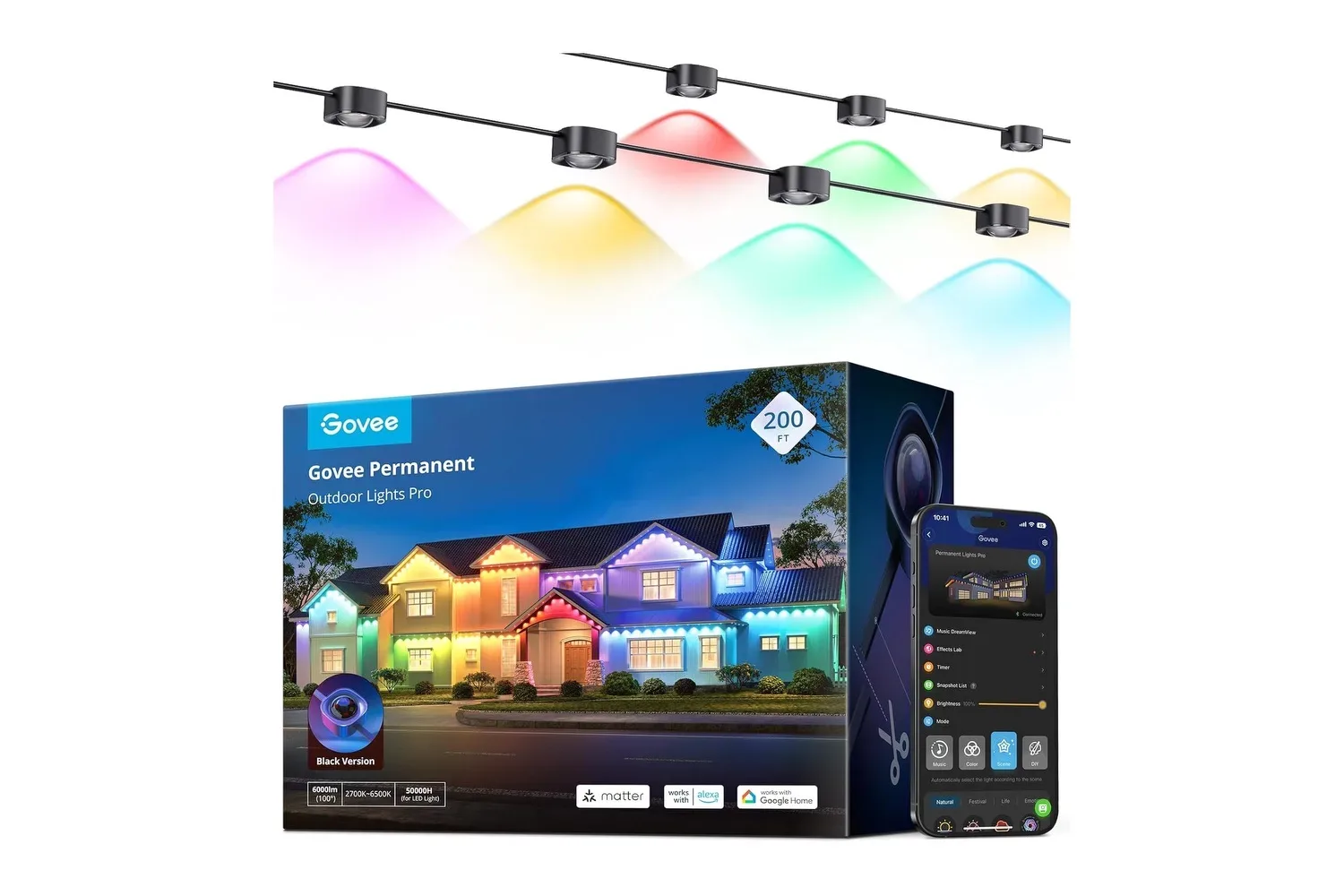
For another current example of smart-home deal shopping, see this look at a Govee permanent outdoor lighting promotion. The same purchasing principle applies: confirm compatibility, understand what hardware a product actually includes, and check the live price rather than relying solely on a promotional headline.
The sensible bottom line on the Echo Time offer
The reported Echo Time promotion is notable because the device only launched last month and is said to be receiving its first markdown. Its appeal is easy to parse: an Alexa smart speaker with a small circular display, configurable clock faces, three color choices and future DC-themed visual options starting with Superman.
But the discount description needs careful reading. Treat $150 as the reported target price, not the conflicting claims of both $40 off and 25% off. At a $200 regular price, $150 means $50 off. Verify the figure shown for the desired color, make sure the compact clock-first display is actually the display style wanted, and confirm that any hoped-for smart-home controls have compatible equipment behind them. Then the Echo Time can be judged on the useful thing it is designed to be: a visible timepiece that can also answer when you ask it to play a song.
Shop the products
Check current price, model and availability at the retailer.