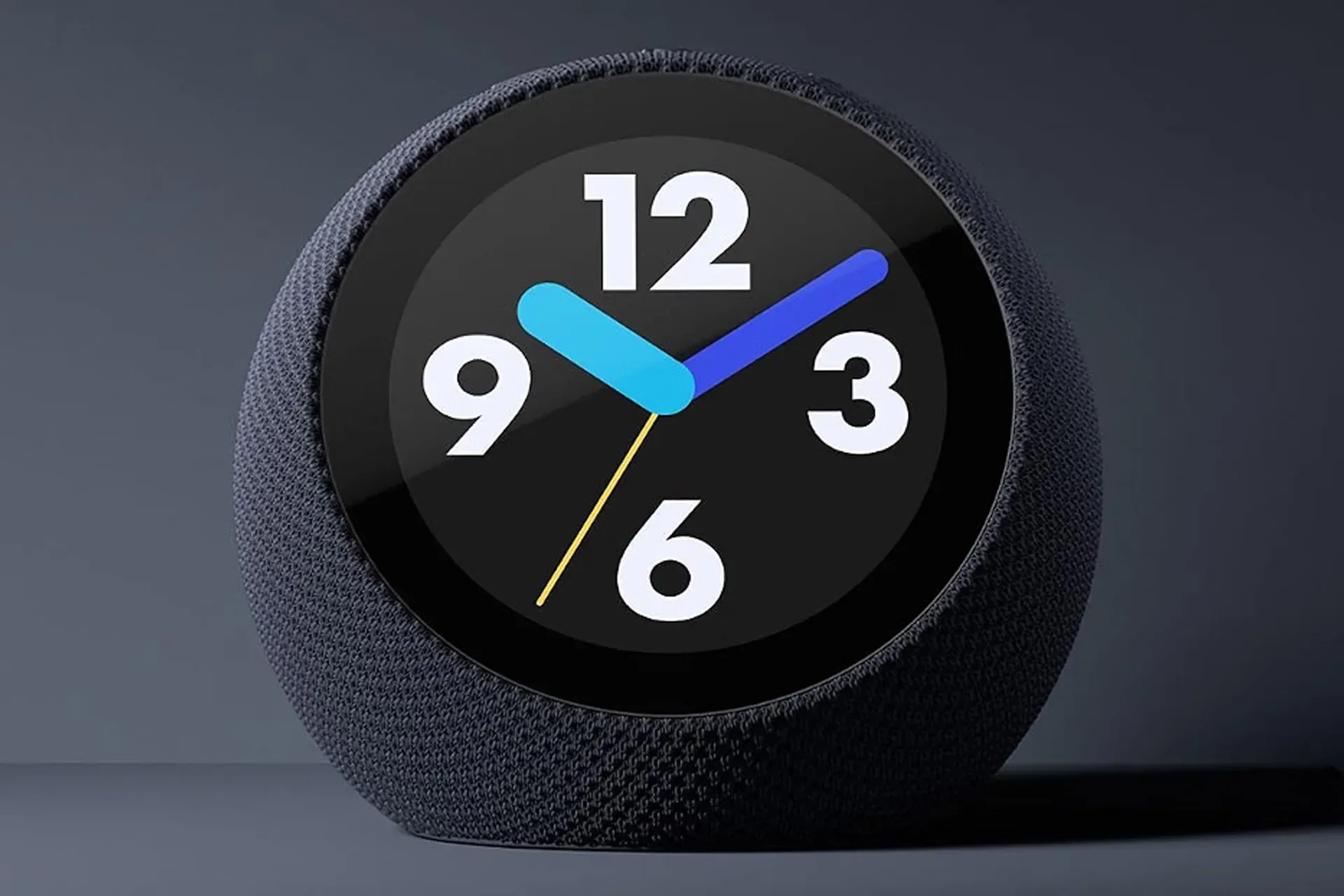
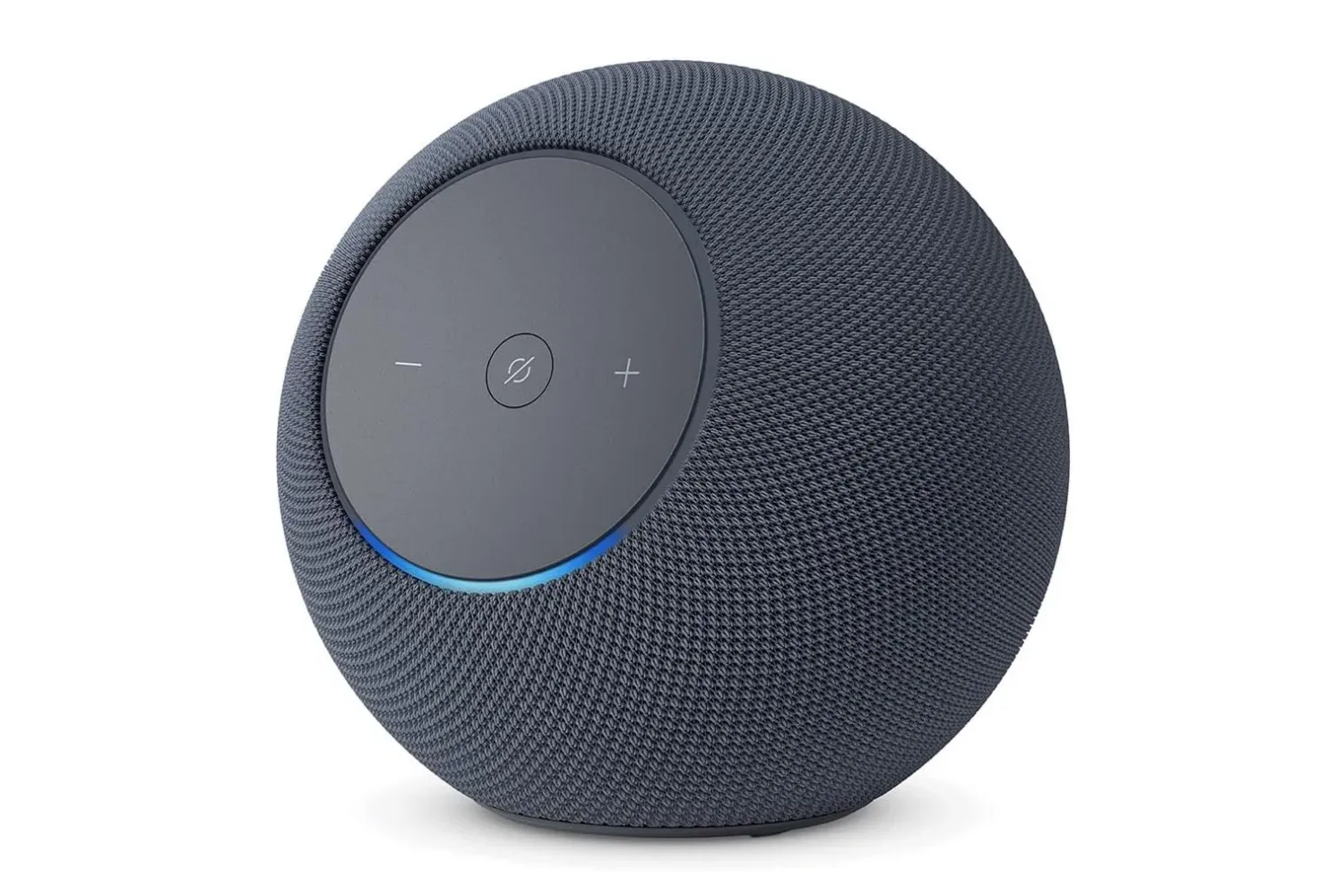
Amazon’s Echo Studio smart speaker is currently listed at $160, a $60 reduction from its stated $220 regular price. The Black Friday promotion applies to both the Graphite and Glacier White finishes, putting the single-speaker offer at 27% off.
For shoppers considering a wider audio setup from the outset, a two-pack is also reduced to $320, down from $440. That arithmetic preserves the single-unit sale price across both speakers, rather than making the bundle a separate per-speaker bargain. The retailer is also offering free delivery with the promotion.
The Echo Studio sits in a category that is more involved than a basic voice-assistant speaker. It combines music playback, Alexa voice control and built-in smart-home hub duties in one device. That combination makes the sale potentially relevant to players building a living-room setup around a television, console, PC or display—especially where a compact, voice-controlled audio device is more useful than another screen-specific peripheral. Those comparing broader desk or entertainment-room hardware may also want to keep an eye on the rapid pace of specialist display tech, as seen with the Samsung Odyssey G6 G60H’s unusual 1,100Hz refresh-rate proposition.
What the $160 Echo Studio offer includes
The quoted deal is for the Echo Studio in Graphite or Glacier White. At $160, the reduction is $60 off the supplied $220 usual price. The percentage is worth reading alongside the dollar figure: 27% is a substantial cut, but it does not turn this into an impulse-priced small speaker. The purchase still makes most sense for someone who expects to use more than one side of its feature set—audio, Alexa, or smart-home control.
Its audio proposition is centered on strong bass and clear vocals, with output described as suitable for filling a small- to medium-sized room. That room-size qualifier matters. A single unit may be a sensible fit for a bedroom, office, den or compact game space, but it should not be treated as a guarantee of full, even coverage in every larger open-plan area.
Two features are intended to make the speaker adapt beyond a fixed out-of-the-box sound profile:
- Room analysis: the Echo Studio analyzes the acoustics of the room in which it is placed, then adjusts its audio tuning for that environment.
- Spatial audio and Dolby Atmos support: these formats are designed to create a more enveloping presentation, with sound perceived as coming from around the listener rather than solely from a single conventional direction.
In practical terms, room tuning is about accounting for the space around the speaker. Furniture, walls and placement can all affect how bass and voices are heard. The supplied information does not claim that the feature can overcome every difficult room layout; rather, it is an automatic adjustment intended to optimize the speaker’s output in its location.
Spatial audio is also easy to oversimplify. It refers to audio designed with a sense of positional space, while Dolby Atmos is a supported audio format associated with that more immersive approach. Support does not mean every track, service or listening scenario will produce the same effect. Buyers should think of it as capability that can improve appropriate content, not as a substitute for carefully placing speakers or choosing the right setup for a room.
A single speaker, a stereo pair, or an expanded setup?
The two-pack is the key option for buyers who know one speaker will not be enough. Two Echo Studios can be paired for stereo channels. Stereo means separating left and right audio channels between two speakers, which can give music and compatible audio a broader, more clearly defined presentation than one speaker handling both channels from one location.
At $320, the bundle is $120 below its stated $440 usual price. It is also exactly double the sale price of the $160 individual Echo Studio. That makes the choice straightforward: the bundle’s value is convenience and a planned two-speaker configuration, not an additional markdown beyond buying two singles at the current listed price.
There is a second route for people focused more on low-end impact than channel separation. The Echo Studio can be paired with an Echo Sub for larger, richer sound. A subwoofer is a speaker dedicated to low frequencies, commonly used to reinforce bass. The two approaches solve different needs. A stereo pair is about distinct left and right channels; adding a subwoofer is about deeper bass presence. Some buyers may value one more than the other depending on their room and how they listen.
Compatible Echo devices can also be added to create a fuller arrangement. The available details do not spell out the exact combinations, room layout behavior or every compatibility limitation, so prospective purchasers should avoid assuming any Echo-branded product will automatically deliver identical pairing options. The supported takeaway is narrower: additional compatible Echo hardware can expand the setup, two Echo Studios can form a stereo pair, and an Echo Sub can be used for a bigger bass response.
Smart-home hub features may be the deciding factor
For some households, the Echo Studio’s most useful role may have little to do with a playlist. It includes a built-in smart-home hub and can control compatible smart-home devices through Alexa voice commands. The example given is the ability to turn lights off or adjust a thermostat without manually operating those devices.
A smart-home hub is the control point that helps bring compatible connected devices into one system. In this case, the point is not that the speaker replaces every dedicated controller, app or switch. It is that it can provide a central voice-driven way to manage supported products. The word compatible remains important: usefulness depends on the lights, thermostat and other home devices already in use or planned for the home.
That could be appealing in a gaming area where hands are occupied, across a room, or simply away from a phone. It may also be of limited value to buyers who do not own compatible smart-home products and have no interest in Alexa commands. The deal should therefore be judged as a combination of speaker and home-control device, rather than assuming all of its headline capabilities carry equal weight for every buyer.
Privacy controls and Alexa+ access
Voice control naturally raises privacy considerations, and the Echo Studio includes microphone enable/disable controls. Disabling the microphones gives the owner a direct hardware-level way to disconnect them when Alexa is not wanted. Privacy settings can also be managed in the Alexa app, including options to review and delete recordings.
Those are practical controls rather than reasons to ignore setup choices. Anyone buying a voice-enabled speaker should decide where it belongs, when its microphones should be active, and whether they are comfortable managing voice-recording settings in the companion app. The availability of a microphone disable control is particularly relevant for a device intended to remain in a shared room.
Prime members are said to receive Alexa+ at no extra cost. Alexa+ is described as a more capable version of the assistant that can be more helpful with everyday tasks. The provided details do not define a full feature list, regional availability, or the difference in behavior across every task, so it is best viewed as an included benefit for eligible Prime members rather than the sole basis for a purchase decision.
Trade-in credit could lower the effective cost—but read the mechanism carefully
Eligible older devices can receive a further 20% saving on a qualified device through the retailer’s trade-in program. However, the form of that saving is crucial: trade-in savings are issued as Amazon credit once the retailer has received the product. It is not described as an immediate cash payment or an instant reduction that works without the old device being received.
Anyone relying on that incentive should establish three things before treating it as part of the Echo Studio’s final cost:
- Whether the device they own is eligible for trade-in.
- Whether the Echo Studio qualifies for the stated 20% offer.
- That the value arrives as account credit after the trade-in product is received.
The distinction between a sticker price and future account credit can affect a purchase budget. The public sale price presented here is $160 for one Echo Studio and $320 for two; any trade-in benefit is a separate potential saving subject to eligibility and the receipt process.
Who the promotion appears to suit
The strongest fit is a buyer who wants a speaker that can serve several functions in a small- or medium-sized room: clear music playback with pronounced bass, room-aware tuning, Dolby Atmos and spatial-audio support, Alexa operation, and smart-home control. It is also a plausible starting point for someone who intends to expand later with a second Echo Studio or an Echo Sub.
The stereo package is more appropriate for shoppers who already know they want left/right channel separation. Conversely, buyers seeking only occasional background music may not need the additional functions that distinguish the Echo Studio from simpler speaker options. And anyone primarily interested in home automation should first confirm their existing devices are compatible, since the hub’s usefulness hinges on that ecosystem.
Both color options named in the promotion—Graphite and Glacier White—are covered at the $160 price. As with time-limited promotional listings, buyers should verify the current price, color selection, delivery terms and trade-in eligibility at checkout before committing. The core offer, as listed, is a $60 reduction on one Echo Studio and a $120 reduction on a two-pack, with the latter aimed squarely at buyers ready to make stereo part of the plan.
Shop the products
Check current price, model and availability at the retailer.