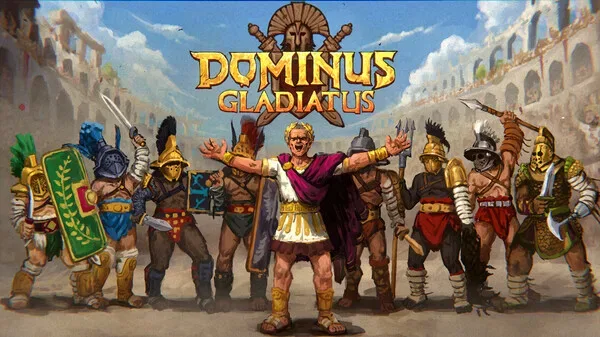
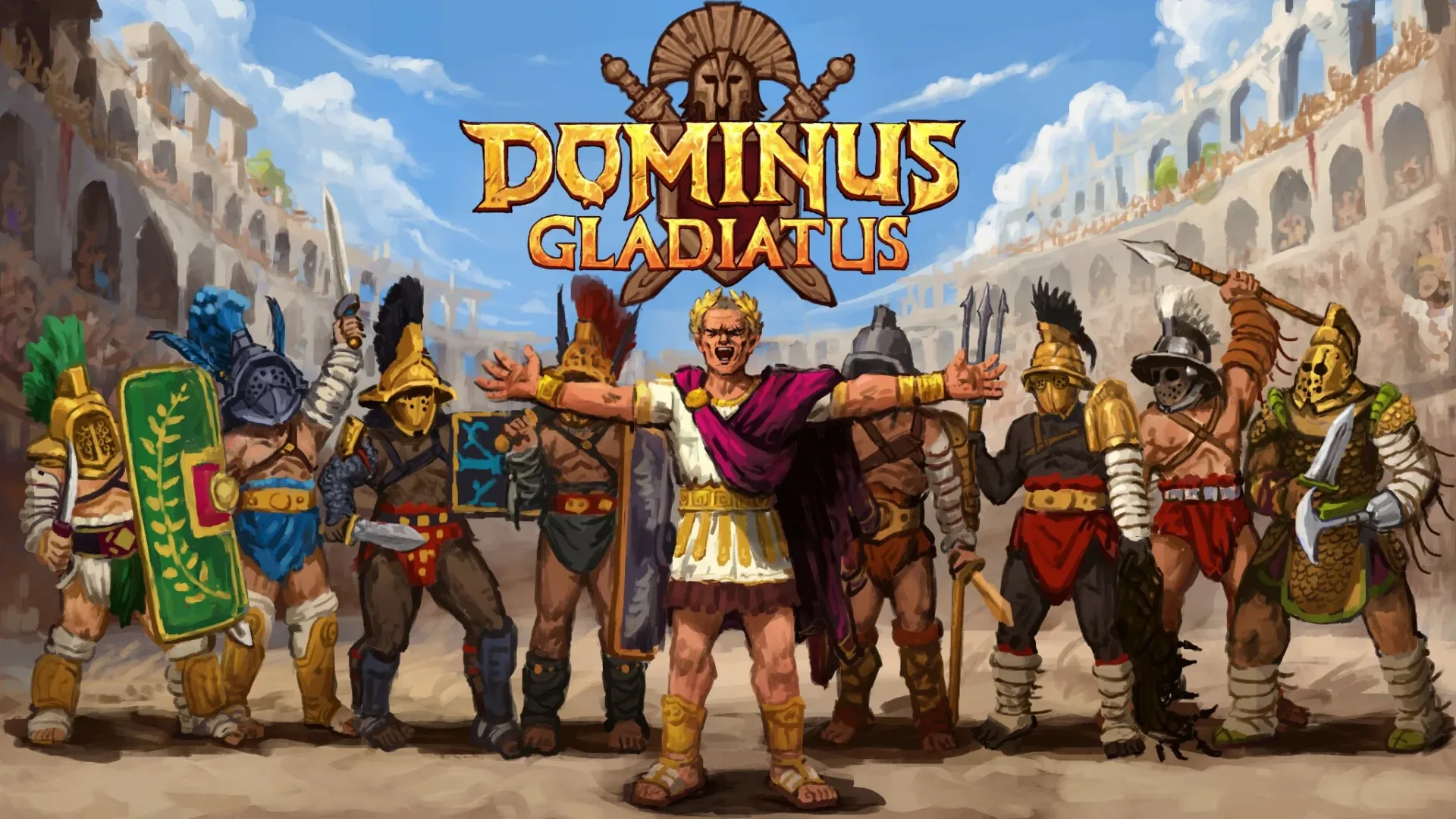
Dominus Gladiatus is now available worldwide on PC via Steam, PlayStation 5, Xbox Series X|S and Nintendo Switch. Released on November 5, 2026, the management simulator puts players in the role of a Dominus: the owner and operator of a gladiator school competing for a seasonal championship.
The central idea is not to control every sword swing in real time. Instead, players are responsible for the decisions that happen before the arena gates open: finding recruits, developing their abilities, assigning equipment, maintaining their readiness and choosing the lineup best suited to an opponent. Its combat is presented as tactical auto-battling, with one-on-one duels and team battles determined by preparation, skills, loadouts and positioning.
That makes the game’s basic promise less about being the gladiator and more about being the person who has to make the difficult calls around a roster of them. A fighter may need rest, recovery or attention to morale; a promising recruit may need training and gear before they can become a crowd favorite; and a school that focuses only on the next bout may have to contend with the larger demands of a full tournament season.
Six schools compete across a tournament season
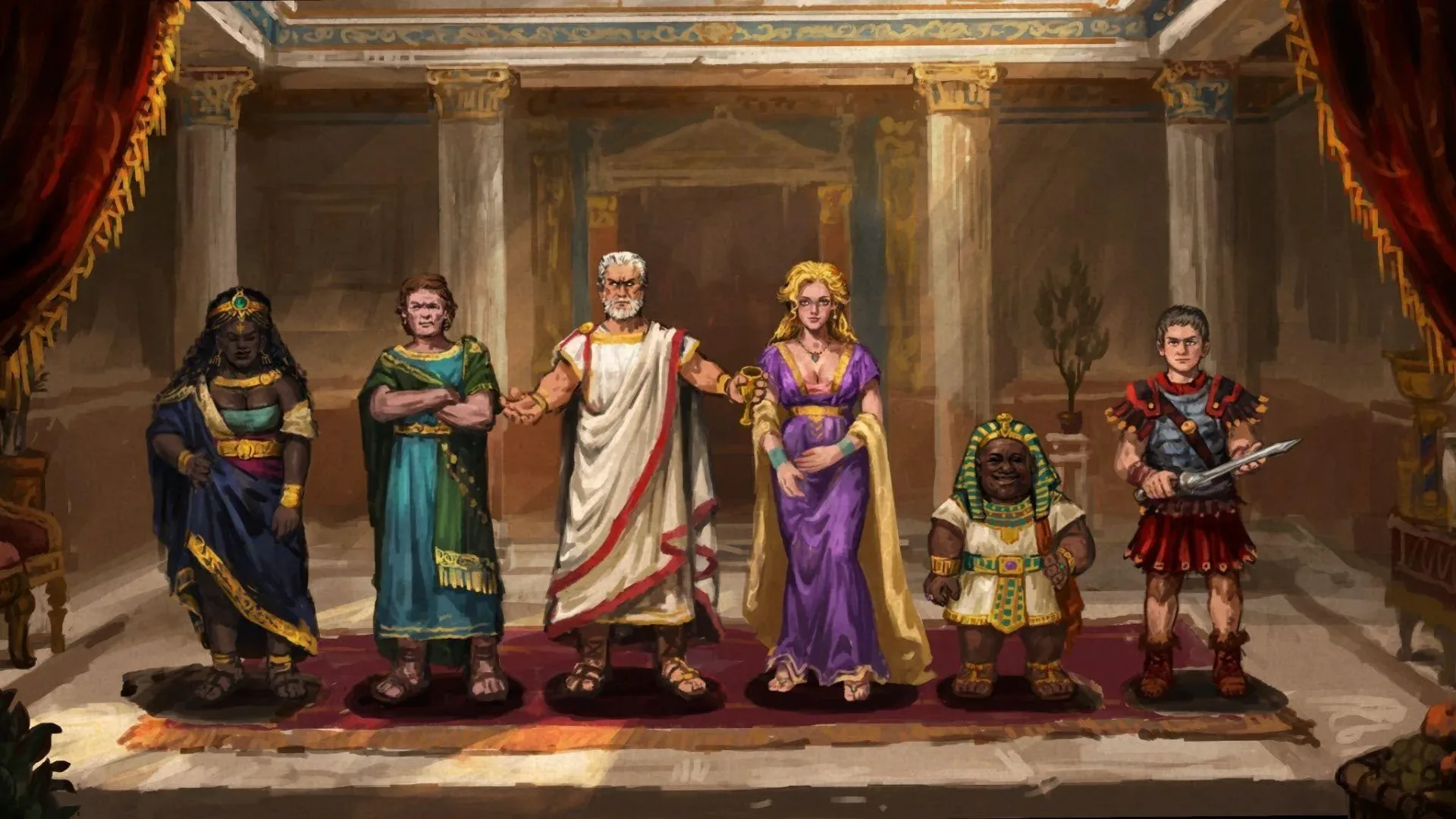
Players select from six Domini. Each represents a competing gladiator school, with the five unselected Domini serving as championship rivals. The season structure gives the management layer a clear competitive purpose: build and improve a Ludus, prepare its fighters, meet rival schools in tournaments and try to finish ahead of the field.
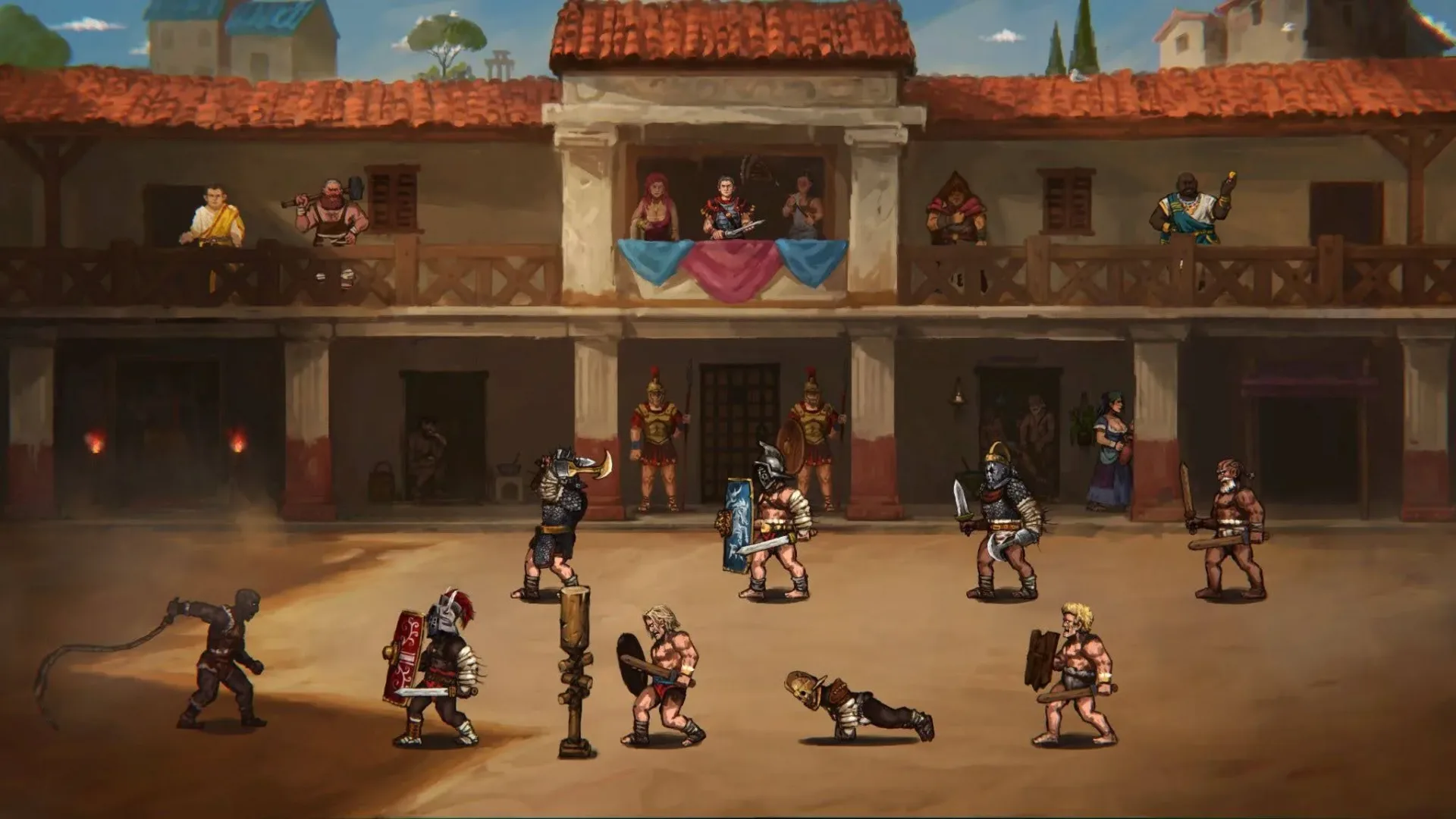
Ludus is the term used here for the gladiator school under the player’s control. It is the hub of the game’s management systems, encompassing its fighters, facilities and staff. Expansion is one of the stated responsibilities, alongside hiring personnel and overseeing the condition of the roster.
That framework suggests a steady set of trade-offs rather than a single-minded focus on acquiring the strongest available combatant. Facilities need to grow, staff need to be hired, and gladiators need to be managed as people with rest, morale and recovery requirements. The game also frames recruitment around uncovering overlooked talent, so building a competitive school is positioned as a process of development rather than merely selecting finished champions.
Recruitment, training and readiness
Dominus Gladiatus asks players to scout for potential in untested recruits, then develop that potential through training, equipment and ongoing care. The supplied feature outline does not detail specific statistics or training exercises, but it does establish the intended loop: discover fighters, improve them and turn them into arena favorites.
Rest, morale and recovery are especially important terms for a management game because they indicate that a fighter’s value is not just a fixed combat rating. Rest concerns time away from exertion. Recovery concerns returning a fighter to competitive condition. Morale describes a fighter’s state of confidence or satisfaction. The exact mechanical effects are not specified, but players should expect these concerns to factor into how they maintain a usable roster over the course of the season.
Related coverage includes Dominus Gladiatus Brings Gladiator School Management to PC and Consoles.
For a player considering the game, the practical implication is straightforward: a strong team plan will likely involve more than choosing a favorite combatant and sending them into every match. A school must be developed, fighters must be prepared, and decisions around personnel and facilities share space with battle planning. The season competition also means rival schools are not simply isolated matches; they are fellow contenders pursuing the same championship.
Arena fights are auto-battles shaped before they begin
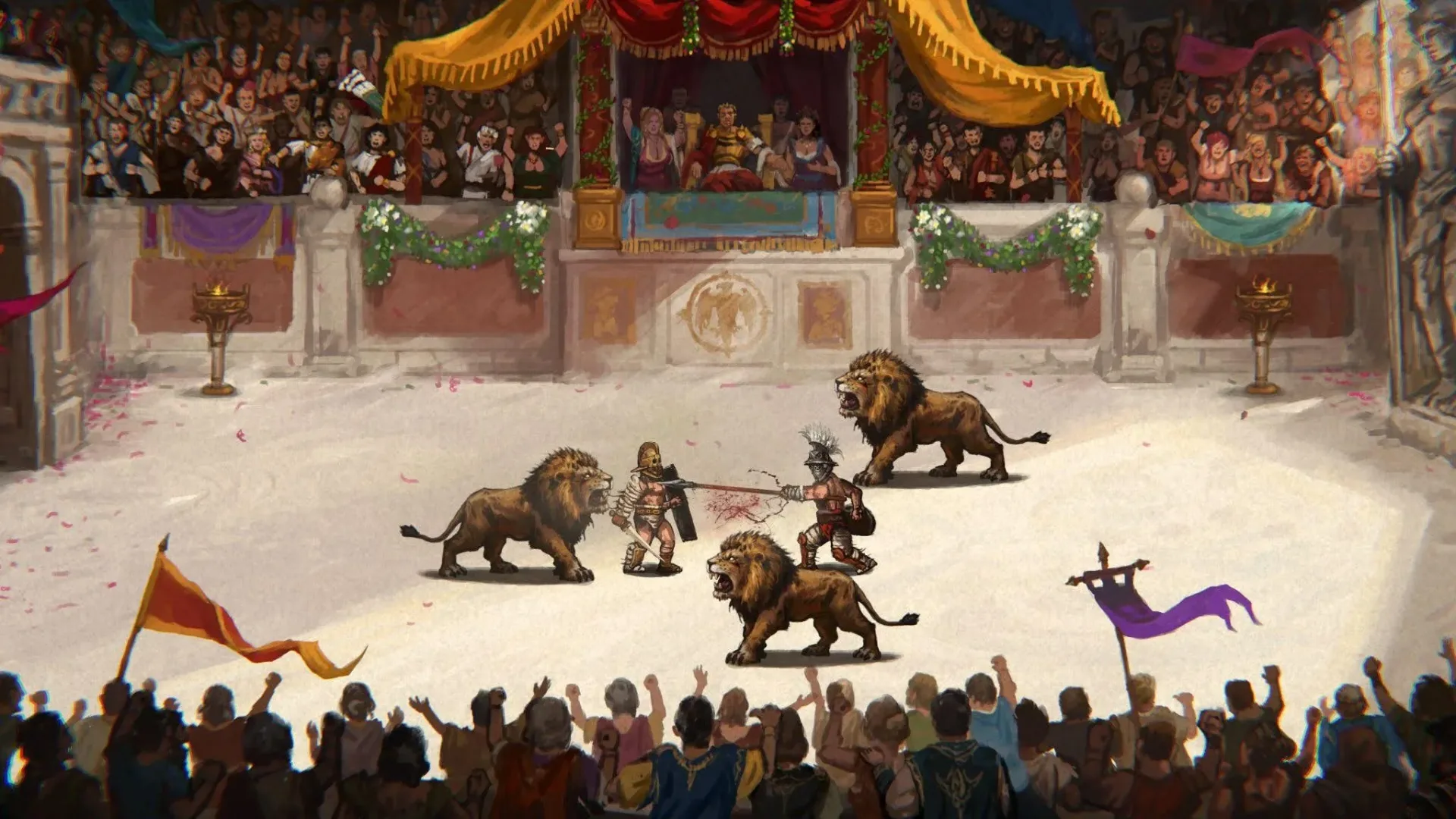
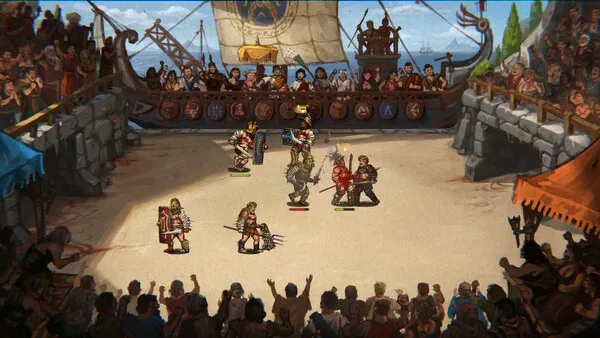
The arena component uses tactical auto-battler combat. In an auto-battler, combat resolves automatically after the player has made strategic decisions in advance. Those choices are still the basis of success or failure: the player selects skills, equipment, placements and lineups, then watches the match play out rather than directly issuing moment-to-moment attack commands.
Dominus Gladiatus supports both individual duels and team clashes. Before a fight, players can study opponents and make tactical decisions around their own combatants. The stated factors are:
- Skills selected for gladiators.
- Loadouts, meaning the equipment setup carried into battle.
- Positions chosen for the upcoming encounter.
- The lineup used against an opponent.
- The opponent’s apparent strengths and weaknesses.
Equipment is a major part of that preparation. The game includes Roman weapons, armor and specialized fighting styles, with players expected to equip their gladiators for the arena rather than treating all recruits as interchangeable. The available details do not list individual weapons or styles, so it would be premature to assume a particular item roster or combat meta. What is clear is that equipment and fighting specialization are part of the planning stage, alongside the school-management systems.
Positioning matters most immediately in team clashes, where the place assigned to a fighter can change how a proposed lineup operates. The game does not spell out the exact positioning rules, but its inclusion alongside skills and loadouts indicates that the order and arrangement of fighters is an explicit tactical choice, not merely visual presentation.
For players who enjoy planning but do not necessarily want action-game inputs during every exchange, that division is the point. The important question becomes whether the roster was trained properly, whether its equipment fits the intended approach, and whether the planned formation makes sense against the opposing school. A loss is therefore framed as a reason to reassess preparation, development and matchup choices before the next tournament encounter.
The crowd is part of the competitive equation
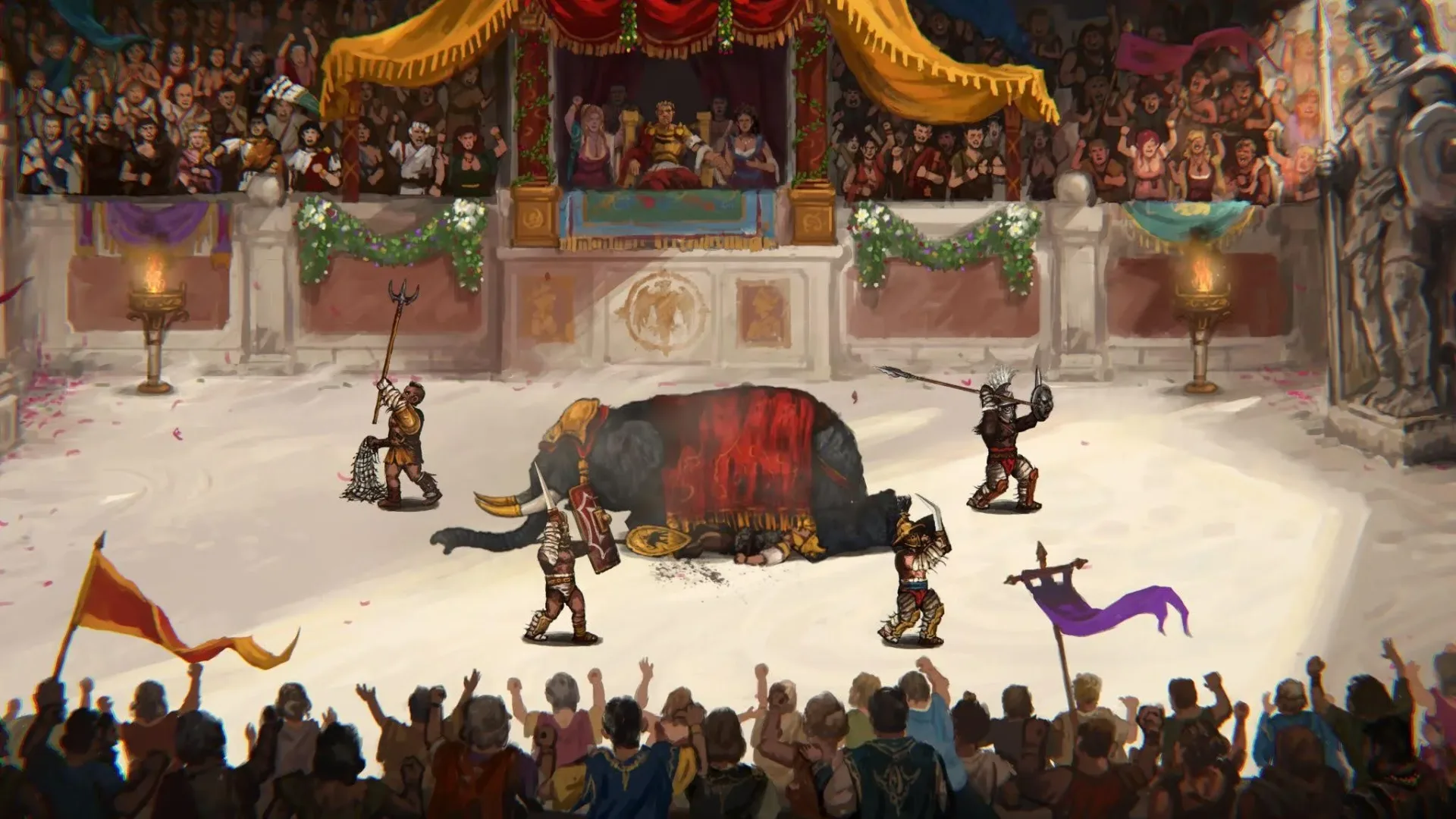
The spectators are not presented as background decoration. Dominus Gladiatus includes crowd favor as a system that can influence a gladiator’s fate. Winning over the audience is therefore another stated objective alongside defeating opponents and managing the school.
The exact rules behind spectator favor have not been detailed. There is no confirmed list of actions that raise it, nor a precise explanation of how it changes an outcome. Still, its presence adds an additional strategic consideration to the arena: a school is trying to create champions who appeal to the public as well as fighters who can win a planned matchup.
That theme aligns with the game’s emphasis on taking recruits from inexperience to crowd-favorite status. Training and equipment are practical tools for improving a roster, while spectator support introduces an outward-facing measure of success. In effect, players are balancing the needs of a school, the demands of competition and the response of the people watching the fights.
Platforms, languages and launch pricing
Dominus Gladiatus is available on four platform families at launch: PC through Steam, PlayStation 5, Xbox Series X|S and Nintendo Switch. Its listed pricing is $19.99 USD, £16.99 GBP and €19.99 EUR, with a 20% launch discount also in effect.
The game is playable in 16 languages. It includes full English audio and English subtitles. The information available does not identify which of the other supported languages include text, audio or both, so prospective players seeking a particular localization should check their platform store listing before buying.
The simultaneous PC and console release gives the management game a broad opening audience, from players who prefer arranging a roster with a controller on a console to those looking for another strategy-focused PC release. Players following the latter platform can also see how another recent strategy title approached a refreshed demo in The Vow: Vampire’s Curse.
What players can reasonably expect
The clearest picture of Dominus Gladiatus is a season-based gladiator school simulator built around preparation and consequence. Choose one of six school owners, improve the Ludus, find and train fighters, manage their needs, equip them for battle and set the plan for automatic arena matches. The championship is the long-term objective, while rival schools and crowd favor give each tournament result added context.
Players looking for direct, real-time arena control should note the auto-battler format: the tactical decisions occur ahead of combat rather than through constant inputs during it. Conversely, players drawn to roster building, opponent study, equipment choices and the satisfaction of seeing a prepared plan succeed have a clear foundation in the game’s announced systems.
Dominus Gladiatus is out now on PC, PS5, Xbox Series X|S and Nintendo Switch.