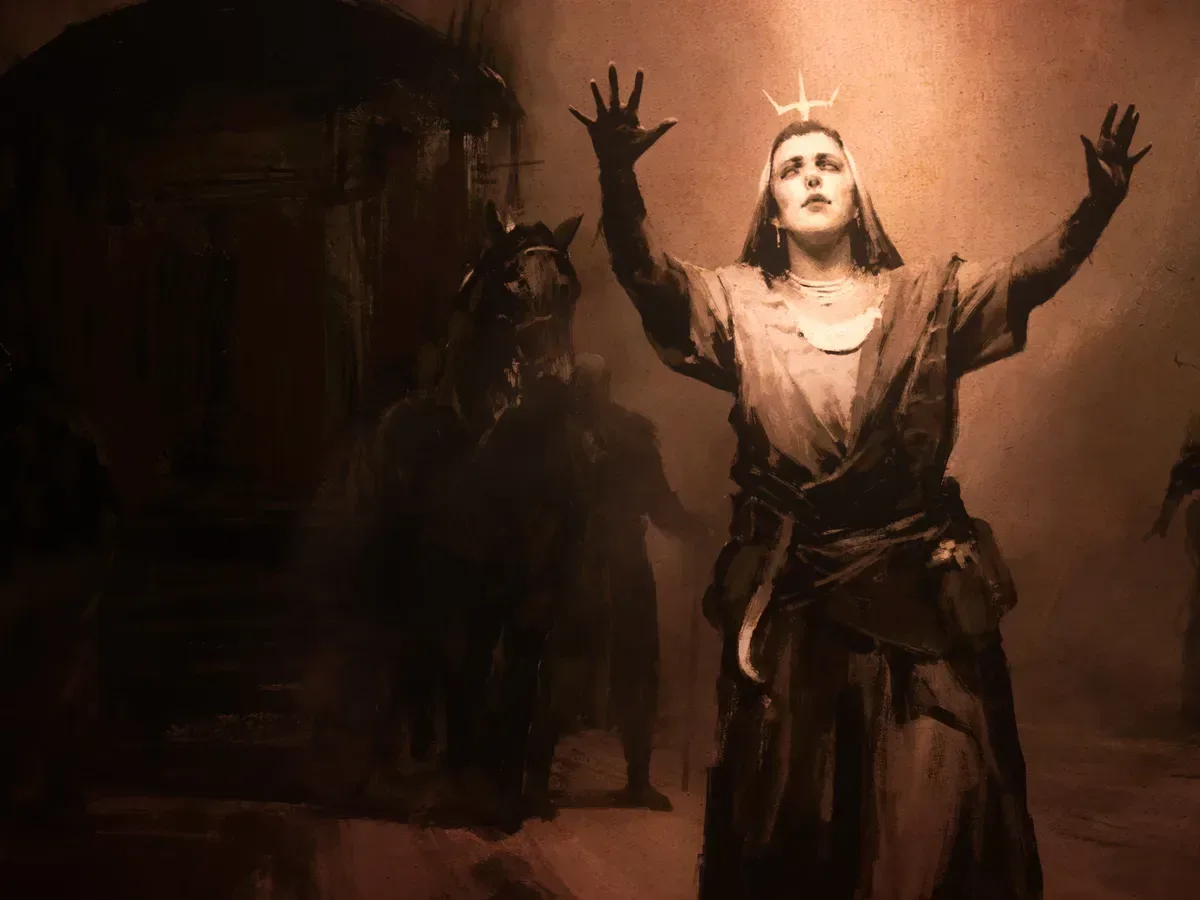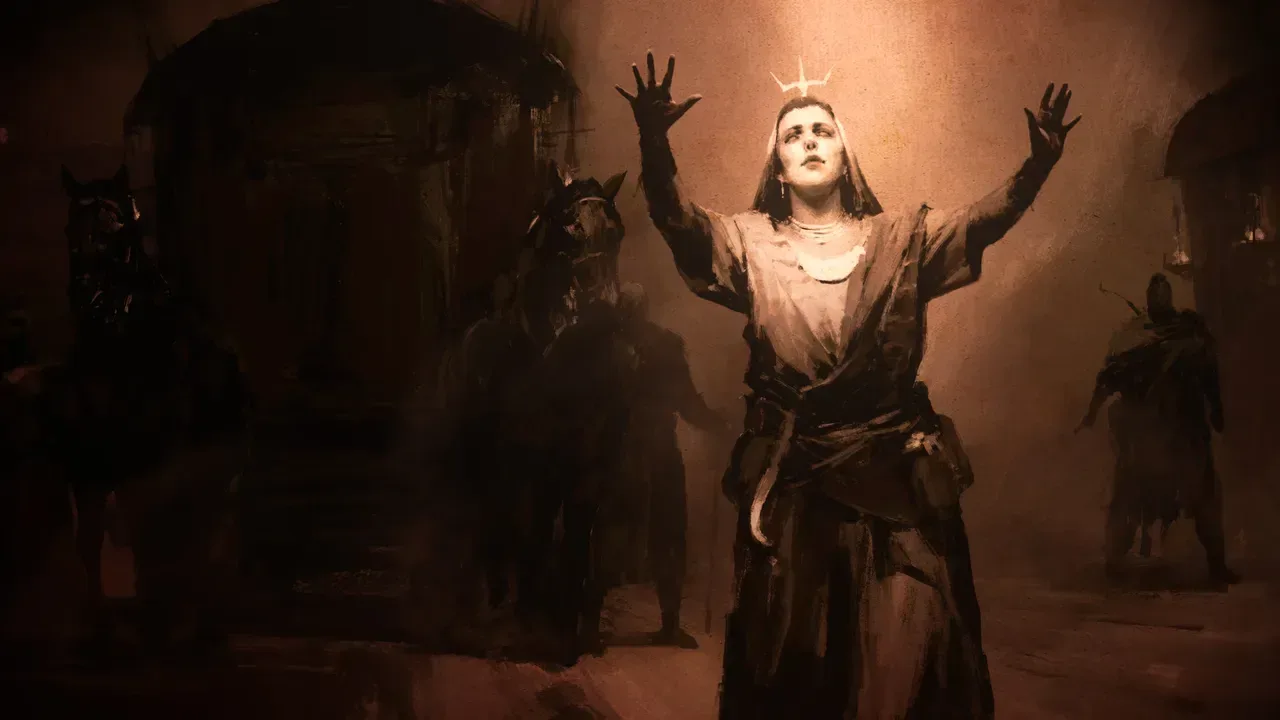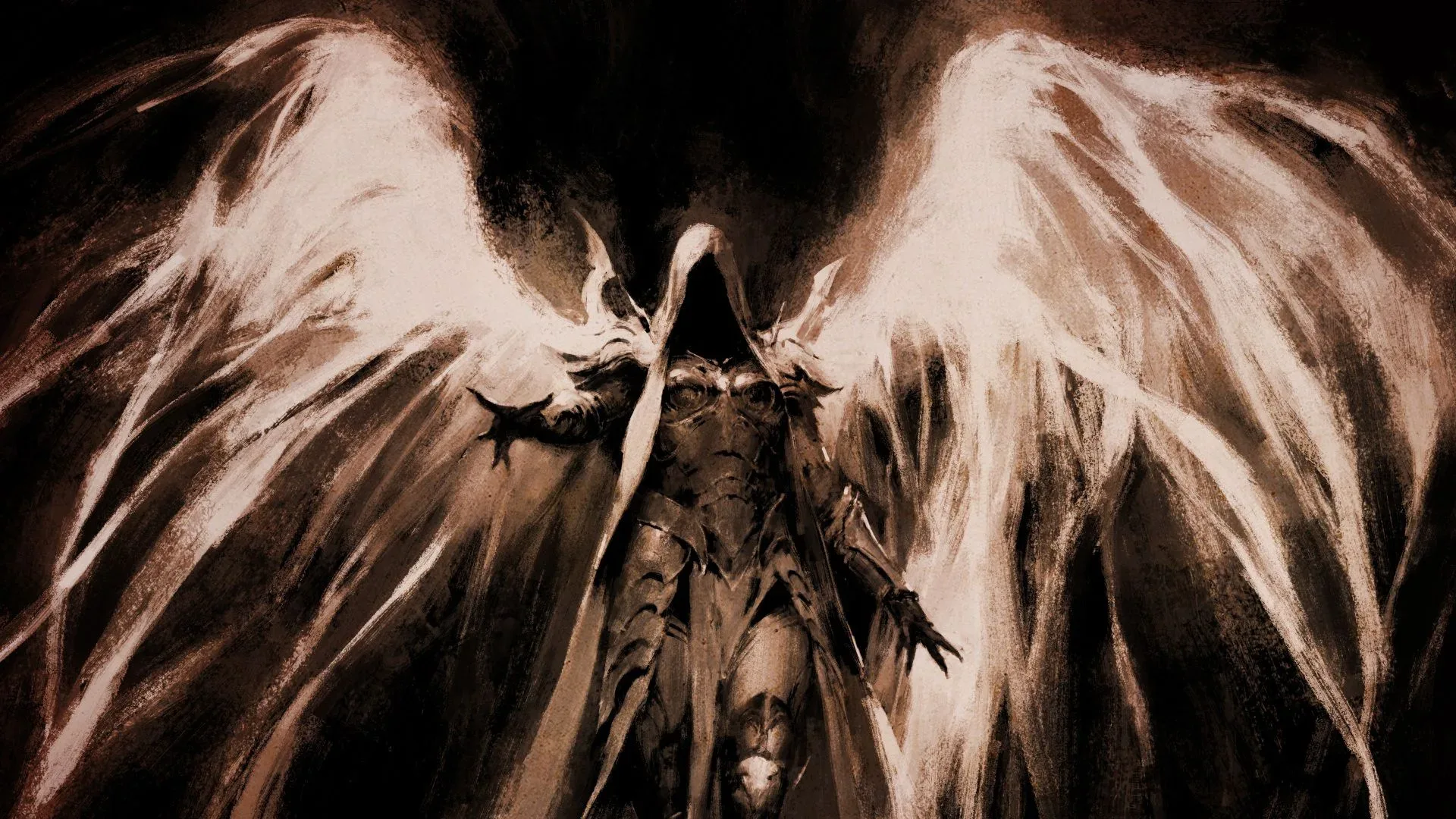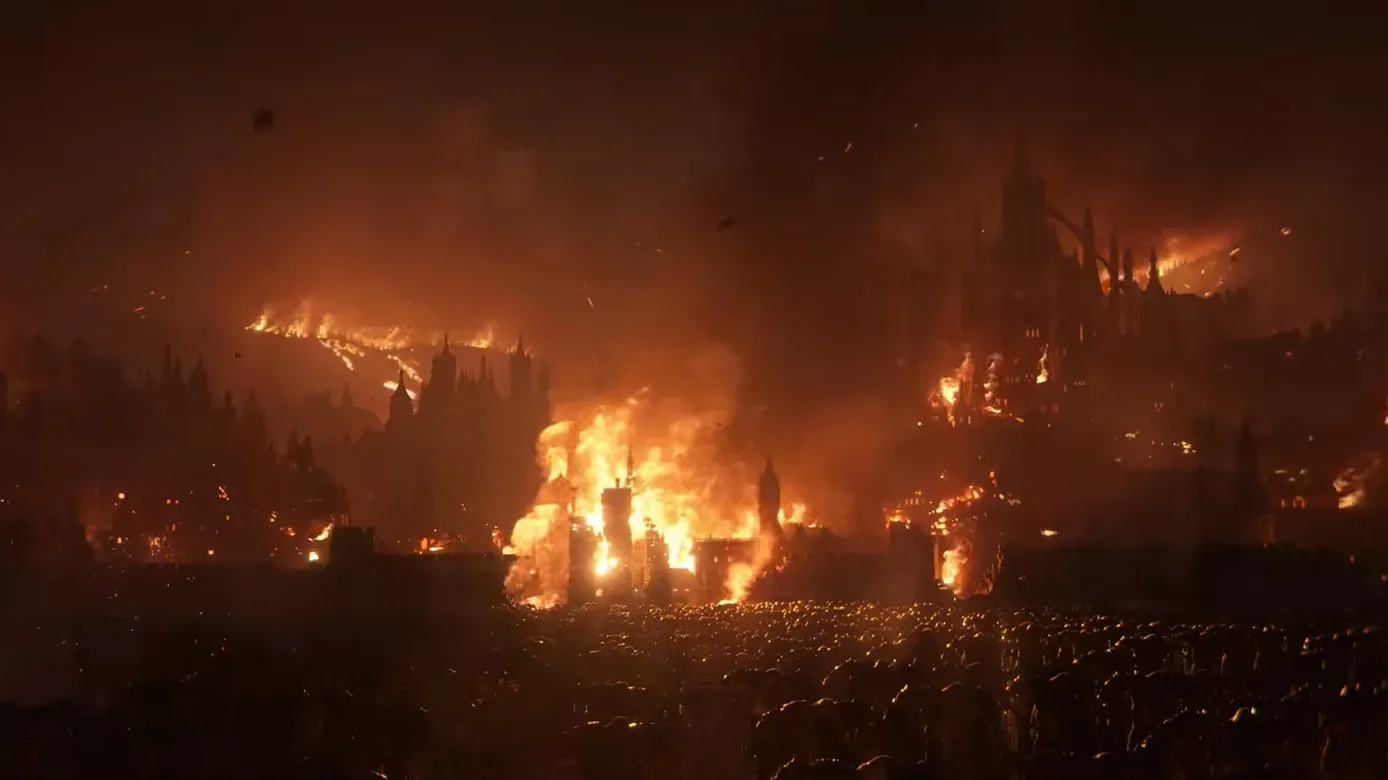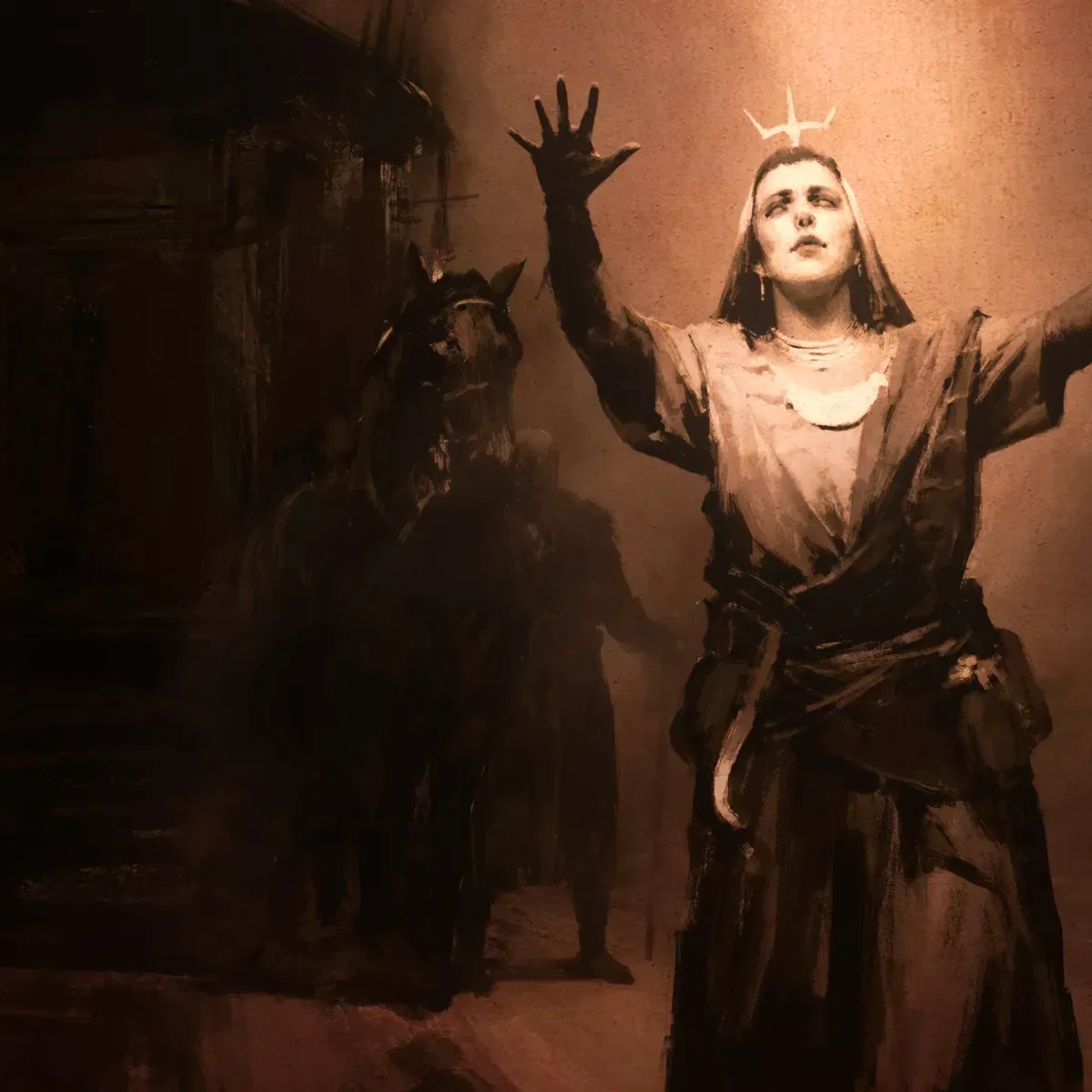
Diablo 5’s cinematic production has moved into motion capture, a tangible milestone for Blizzard’s next action role-playing game even as the broader project remains years from release. Cinematic director Neil David Carter shared an image from a motion-capture stage marked simply as the first Diablo 5 shoot.
That is not a launch-window announcement, nor does it settle how far along every part of the game may be. It does, however, indicate that work is underway on the performances that can underpin major story sequences. For a series with an enormous interest in its pre-rendered spectacle and demonic melodrama, the news matters: Diablo 5’s story is no longer only a high-level premise. At least some of its cinematic scenes are being physically performed.
What motion capture means—and what it does not
Motion capture records an actor’s movements, typically through a specialized stage setup, so animators can use that performance as a foundation for digital characters. For a game cinematic, that can inform body language, staging, combat, and the timing of a scene. It is only one part of the pipeline. Animation cleanup, camera work, lighting, environments, facial work, effects, voice recording, editing, and rendering can all remain substantial jobs after a shoot.
As a result, the first shoot should not be read as evidence that Diablo 5 is near completion. It is better understood as a sign that at least one production stream has reached a sufficiently defined point to put performers on a stage. A team generally needs an idea of the scene, its characters, and its action before it can capture performances for it.
That also offers a reasonable, if limited, clue about narrative planning. Diablo 5 is expected to tell three connected strands: the past, the present-day devastation after Diablo’s victory, and a future in which a new terror is forming. The game is set roughly a century after Diablo 4 in a post-apocalyptic Sanctuary where Diablo, the Lord of Terror, has already won. Building scenes around that premise requires decisions about how those timelines relate, whose perspectives anchor them, and what moments merit cinematic treatment. The shoot does not reveal those answers, but it suggests that the project’s narrative framework is progressing beyond broad concept work.
A Sanctuary built after defeat
The stated setting is a sharp departure point. Diablo 5 will begin from the consequences of Diablo’s success rather than asking players to prevent it. A fallen Sanctuary and a Lord of Terror already in control create a more openly ruined status quo, while the three-story structure leaves room to connect that aftermath to both its origins and what follows.
There is still far too little detail to determine how those stories will be delivered in play. “Three stories” could refer to parallel arcs, a chronology that moves among eras, or distinct threads that converge later. It also remains unclear how heavily cinematics, dialogue, exploration, or quests will carry the narrative. The motion-capture update answers none of those gameplay questions. What it does establish is that Blizzard is investing in the kind of character performance and scene work expected of major story moments.
For players, the practical implication is patience rather than a reason to count down to release. Cinematics are often produced alongside many other disciplines, not after the whole game has been finished. A motion-capture stage can be busy while systems designers are still iterating on combat, item drops, progression, or multiplayer-facing structure.
Related coverage includes Diablo 5 Cinematics Enter Motion-Capture Production as Blizzard's Next ARPG Takes Shape.
The engine head start does not remove the hard work
Senior producer Tiffany Watt has said Diablo 5 is using its own fork of the Diablo 4 engine. In development terms, a fork is a separate version of an existing technology base. It allows a new team to begin with established tools and systems while making changes that serve its own game, rather than constructing an engine entirely from zero.
That should be an advantage, but it is not the same as reusing Diablo 4 unchanged. The supplied information points to procedurally generated maps as one area that could make Diablo 5 more complicated than its predecessor. Procedural generation means parts of a game world or its layouts are assembled through rules and systems instead of every space being manually fixed in a single arrangement. The appeal is variety and replayability; the challenge is making generated spaces feel purposeful, readable, and consistently fun.
That pressure touches nearly everything in an ARPG. World design has to ensure routes, fights, rewards, and objectives make sense across changing layouts. Balance has to account for the ways classes, abilities, enemy encounters, and player power can collide. Itemization—the structure governing gear, stats, rarity, and how loot changes a character build—must offer meaningful choices without allowing a small set of options to flatten the rest.
Those are long-term design problems, not details solved merely by starting from a familiar engine. A cinematic shoot can demonstrate momentum in one highly visible part of the project, while the systems that determine whether players want to keep running dungeons may require extensive tuning. That distinction is especially useful when interpreting isolated development updates: a game can be far enough along to capture a pivotal performance and still have a great deal of production ahead.
Why the proposed release cadence draws scrutiny
Diablo 5 has been discussed with a spring 2029 target. If that target holds, it would put the gap from Diablo 4 at just under six years. That is notably shorter than the 11-year interval between Diablo 3 and Diablo 4, and it has prompted skepticism about whether the newer schedule can be met.
The concern is not that a shorter gap is automatically impossible. The use of a Diablo 4 engine fork provides a clear reason the sequel may not face the same starting conditions as its predecessor. But Diablo 5 is also described as taking on procedural maps and a substantially different ARPG direction, both of which could expand the design and testing burden. The important fact is that spring 2029 remains a target, not a certainty established by the beginning of motion capture.
There is a broader industry lesson in that restraint. Development milestones are meaningful because they show particular work has started or advanced. They become misleading when turned into a universal measure of the entire project. Motion capture tells us about cinematics; it cannot independently verify the readiness of endgame balance, item progression, world systems, technical performance, or the final release schedule. Readers tracking long-running development should distinguish between evidence of forward movement and evidence that a game is almost done.
That same need for clarity shapes an ongoing concern around Diablo 4. Blizzard has had to reassure players that the current game will continue to receive content even after Diablo 5 arrives. Whether that support ultimately remains substantial or shifts toward a smaller rotation of repeat seasons is unresolved. Nothing about a Diablo 5 cinematic shoot changes that uncertainty.
For now, Diablo 4 players have two separate timelines to watch: the current game’s future updates and the much longer route to its successor. The first motion-capture shoot belongs firmly to the second. It is encouraging evidence that Diablo 5’s cinematic team is active, and it fits a premise ambitious enough to demand memorable scenes. It is not, on its own, a promise that the target date will hold or a replacement for details on the game’s systems.
Diablo 5’s production also arrives during a period when development choices, technology, and the pressures put on teams are receiving closer attention across games. That wider conversation is worth keeping in view when weighing what a single milestone can and cannot say about a project’s future; the debate around AI coding and game-industry safeguards is one example of how production tools can bring both promises and complications.
What to watch next
The most useful future updates would add specificity rather than simply reiterate that Diablo 5 is in development. Confirmation of its structure, a clearer explanation of how procedural maps will work, and concrete detail on itemization and balance would all say more about its identity as an ARPG than the cinematic milestone alone. More information on how the past, present desolation, and future threat connect would likewise clarify the scope of the story now being performed.
Until then, the measured read is straightforward. Blizzard has begun motion-capture work for Diablo 5 cinematics. The project is using a dedicated branch of Diablo 4’s engine, is planned around a radically altered Sanctuary, and has a spring 2029 target that still deserves to be treated as provisional. The stage is active; the long road to a finished game remains ahead.