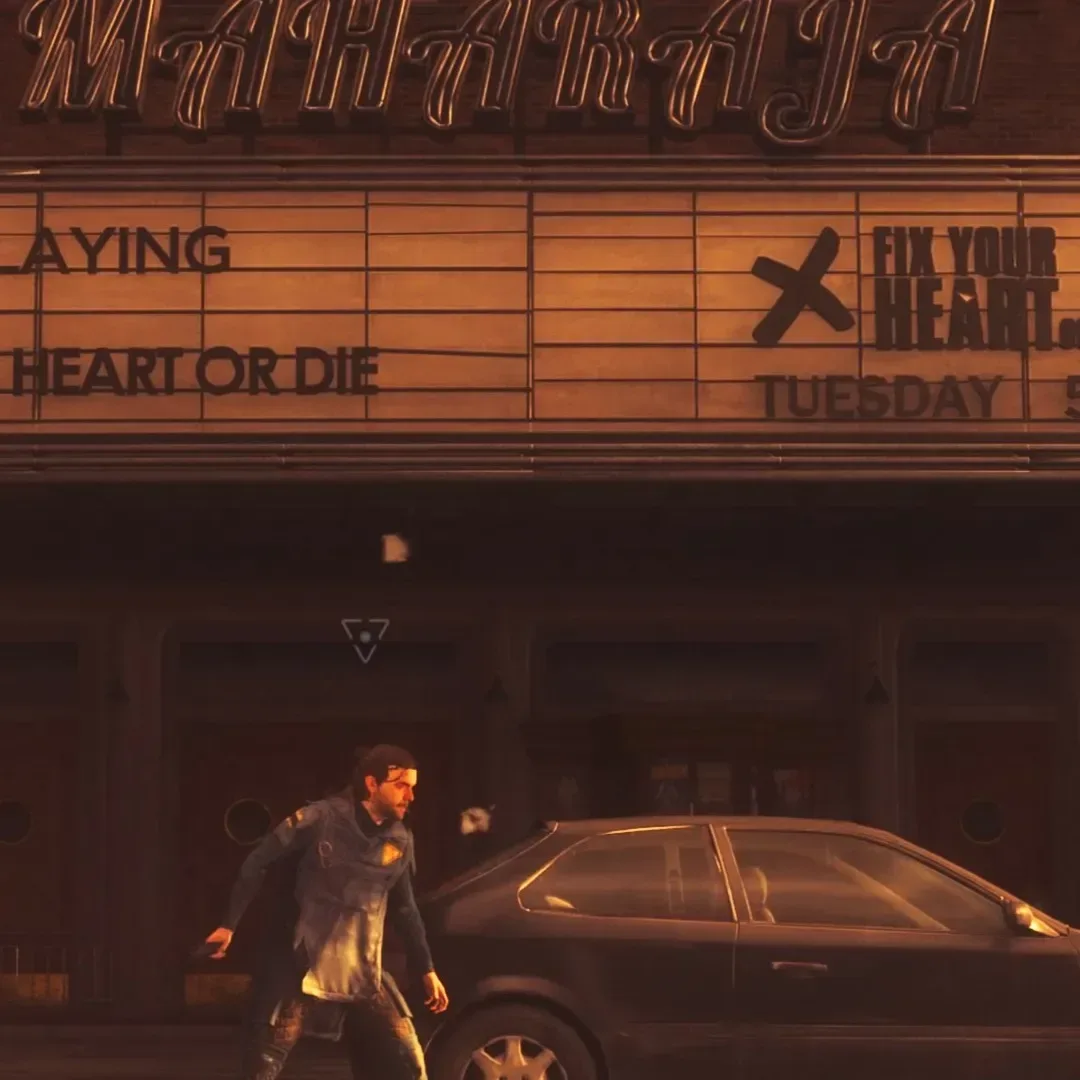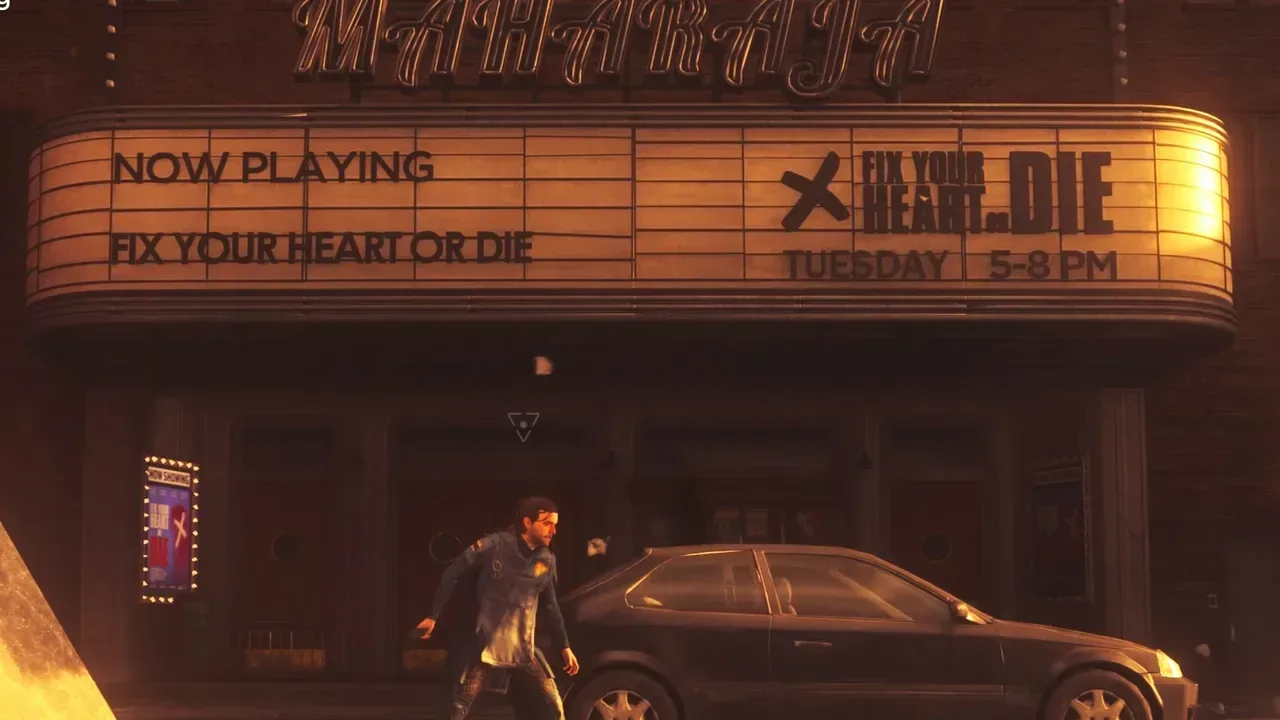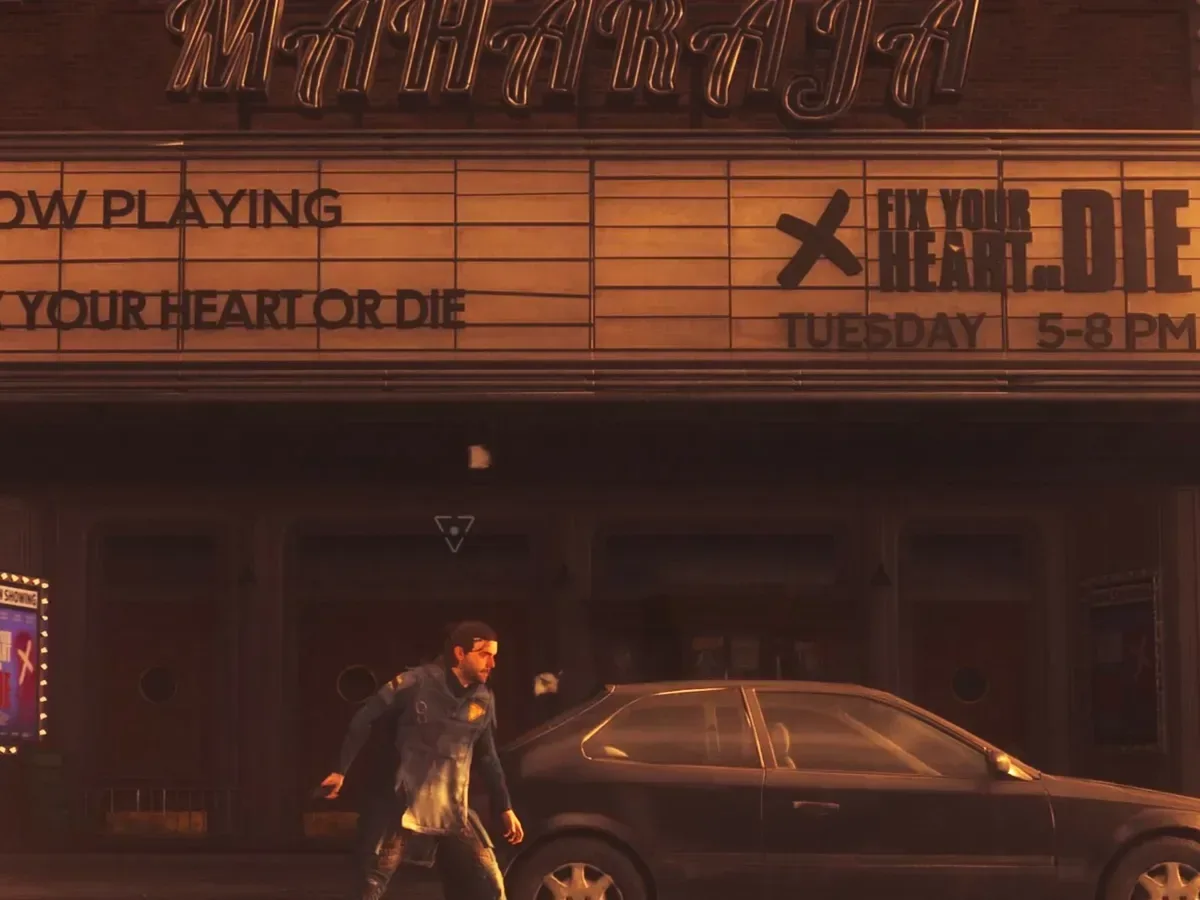
Control Resonant hides a compact but unusually weighty tribute in its version of New York City: a movie-theater marquee declaring, “NOW PLAYING: FIX YOUR HEART OR DIE.” The wording is an unmistakable reference to Twin Peaks: The Return, and specifically to a line delivered by David Lynch as Gordon Cole.
That makes the environmental detail more than a familiar-name nod or a general salute to surreal cinema. “Fix your heart or die” has a distinct emotional and cultural meaning tied to Cole’s defense of his colleague Denise Bryson, a transgender DEA agent portrayed by David Duchovny. In placing it on an in-world cinema sign, Remedy has made a Lynch influence visible while invoking one of the filmmaker’s clearest statements against transphobia.
It is also a fitting phrase for a game rooted in paranormal intrigue. A marquee ordinarily sells an attraction, promising that something is currently playing inside. Here, its imperative turns a piece of city dressing into a message with moral force. It invites players to recognize the reference, but it does not require recognition to read as ominous, strange, and direct—qualities that sit naturally beside Control’s established blend of bureaucracy, horror, absurdism, and the unknowable.
The Twin Peaks meaning behind the message
The line originates in 2017’s Twin Peaks: The Return. Gordon Cole tells Denise Bryson that, when she transitioned, he told her colleagues to “fix their hearts or die.” The larger speech establishes that Cole’s respect is based on Denise’s value as an agent and person, while condemning those around her who might respond with ridicule or prejudice.
Within the world of Twin Peaks, Gordon is often a heightened, comic figure: loud, idiosyncratic, and frequently surrounded by the show’s dreamlike non sequiturs. The scene lands differently because it cuts through that eccentricity. The language is theatrical, as much of Lynch’s dialogue can be, but its purpose is plain. Cole refuses to turn Denise’s identity into a basis for exclusion. His instruction is not for Denise to justify herself; it is for everyone else to examine and correct their own cruelty.
That reversal matters. The phrase has consequently endured beyond the series as a line embraced by transgender people and used in trans-rights activism. It is concise enough to function as a slogan, yet its core meaning is not ambiguous: dignity and acceptance are obligations of the people who hold power, work alongside someone, or claim to care about them.
There is necessary complexity around Denise’s depiction across the full history of Twin Peaks. The original 1990–1991 run includes elements and tropes that have been criticized as problematic. Acknowledging the force of Gordon Cole’s later defense does not erase those issues. It does, however, explain why this specific quotation has resonated: it gives viewers a plainly affirming moment from Lynch’s own on-screen character.
Why the reference suits Remedy’s fictional New York
Environmental storytelling is the practice of communicating setting, mood, history, or character through a game world’s physical details rather than a direct explanation. Signs, posters, architecture, office clutter, broadcasts, and graffiti can all perform that work. Control Resonant’s theater sign is a strong example because it operates at several levels at once.
At the most immediate level, it builds the city’s texture. An open-zone game needs convincing details around its larger objectives and encounters; a marquee is an ordinary piece of urban infrastructure. Yet the supposed title playing there is not ordinary. Its bluntness makes the neighborhood feel unsettled even before a player understands its origin.
At the referential level, it points toward Lynch, whose work is closely associated with the collision of the mundane and the surreal. A theater advertising an unsettling phrase evokes that collision without reproducing a scene, character, or plotline. It turns an ordinary civic object into something faintly threatening and oddly sincere.
Finally, it carries the meaning of its television context. The message is not simply “be kind,” and it is not only a coded wink intended for fans who pause to inspect scenery. It is a rebuke to bigotry. That makes the choice more considered than using a random strange-sounding line. The reference retains the eerie charge expected from a Lynchian allusion while preserving the affirmation that made the original moment memorable.
David Lynch died in January 2025. His influence can be felt in Remedy’s work, particularly in 2019’s Control and 2023’s Alan Wake 2. Those games share an interest in destabilized reality, unsettling spaces, and horror that can be absurd one moment and deeply human the next. A tribute in Control Resonant’s environment therefore reads as part of a creative lineage rather than an isolated cameo.
A tribute with more than one audience
References in games can be exclusionary when they rely entirely on a player already knowing the text being referenced. The Control Resonant marquee avoids that problem reasonably well. Someone unfamiliar with Twin Peaks can still take “Fix Your Heart or Die” as a striking fragment of the game’s atmosphere. Someone who recognizes Lynch may see it as an affectionate salute. Someone familiar with the Denise Bryson scene can read its fuller intent.
That layered construction is useful in an open-world or open-zone setting, where players often encounter details in different orders and with different levels of attention. The marquee does not interrupt the game to explain itself. It adds meaning without demanding a particular route, a particular prior knowledge, or a checklist mentality.
It is worth distinguishing this kind of Easter egg from a gameplay reward. An Easter egg is generally an optional hidden reference, joke, or detail placed by developers for discovery. It may deepen atmosphere or reveal a creative influence, but it does not necessarily unlock an item, alter a quest, or confer a mechanical advantage. Nothing about the marquee suggests that it is an unlockable reward or a required objective. Its value is thematic.
That thematic function is especially notable because of the line’s setting. A cinema marquee is designed to make a title public. It puts words in the street, where anyone passing by can see them. In that sense, the reference does not whisper Lynch’s sentiment in a private collectible note; it broadcasts it. The environmental choice reinforces the original line’s directness.
Control Resonant’s paranormal world and human stakes
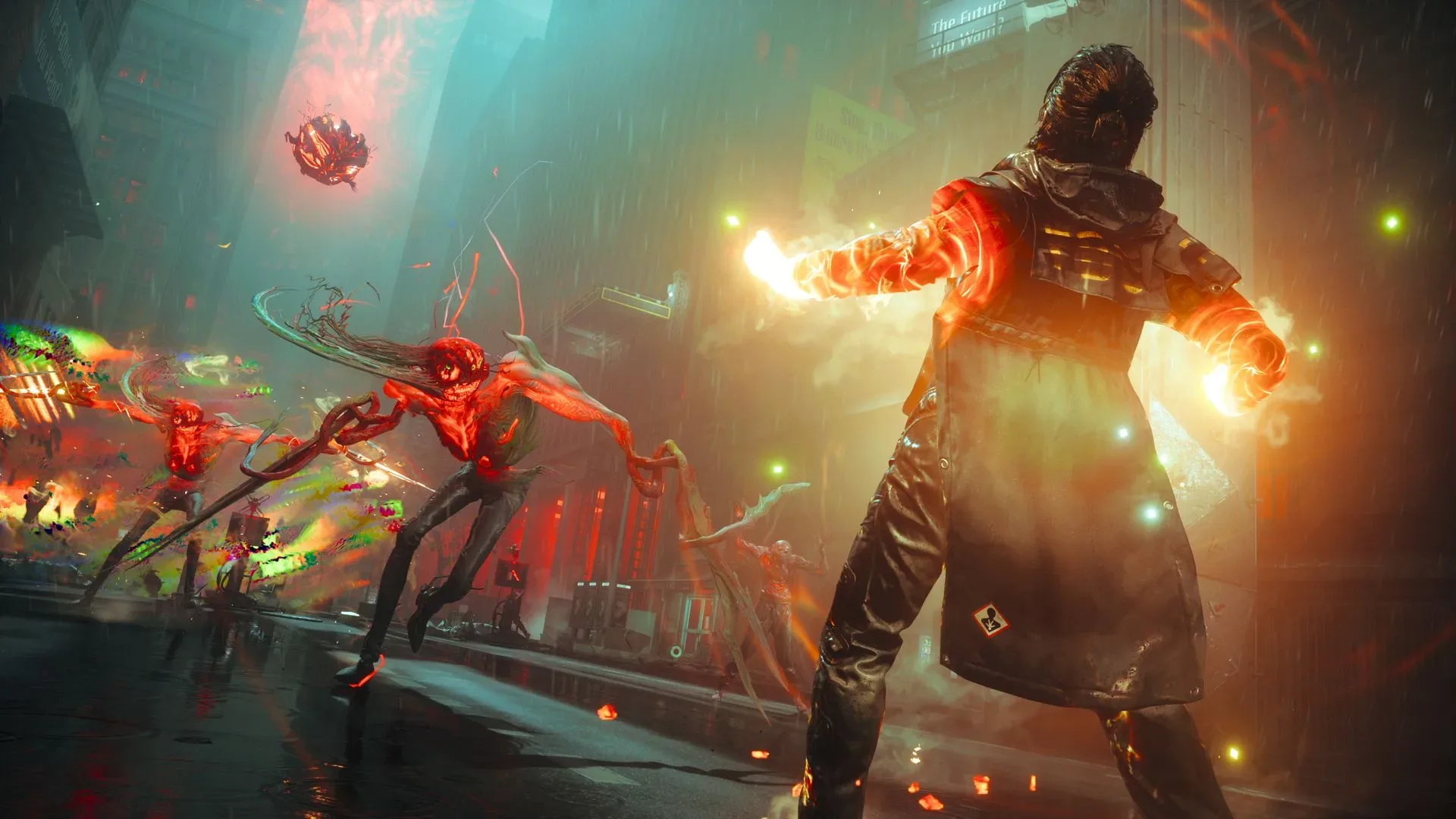
Control Resonant’s open zones are filled with environmental details that establish its fictional New York City, and the theater is one piece of that larger construction. The game’s setting gives a paranormal frame to familiar urban spaces. That is fertile ground for a Lynch tribute: his work often finds unease not in a distant fantasy world, but in the places people assume they understand.
The David Lynch nod also points to an important tension in this style of storytelling. Surrealism can create distance, making reality feel dreamlike, comic, or terrifying. But the best use of it can sharpen human feeling rather than obscure it. The Gordon Cole scene is remembered precisely because it takes an eccentric character from an intensely strange series and gives him an unambiguous moral position.
Control Resonant’s marquee channels that same juxtaposition. The sentence sounds like an occult threat until its history comes into view. Then it becomes a demand for empathy. Both readings can coexist, and that coexistence is why the detail belongs in a paranormal game rather than feeling pasted on from another medium.
There is a broader practical lesson for players and critics in details like this: not every reference is merely trivia. Tracking an allusion back to its original context can change what a game object says. In this case, the key is not just identifying Twin Peaks. It is understanding why this exact line, from this exact exchange, was chosen over the countless other strange, funny, or frightening pieces of dialogue associated with Lynch’s work.
For more discussion of how games and their surrounding industries frame the choices that shape player experiences, visit our look at the questions facing Blizzard’s fan event.
An homage that keeps its purpose intact
Control Resonant’s theater sign works because it does not dilute the phrase into a generic spooky slogan. It preserves its wording, links Remedy’s paranormal fiction to a major influence, and retains the substance that made the original scene meaningful to many people. The tribute recognizes David Lynch’s impact on surreal horror and storytelling, but it also recognizes the compassion embedded in one of his most quoted lines.
That is a high bar for a small environmental detail. It needs to be legible as atmosphere, meaningful as a reference, and sensitive to the real-world resonance carried by the words. The marquee achieves that balance through restraint. There is no need to overexplain the allusion inside the game world; the phrase has enough power to do the work on its own.
In a city full of paranormal signals, a theater telling passersby to fix their hearts may be one of Control Resonant’s most human ones.