Choosing solar panels for a home can look deceptively simple: find the module with the biggest wattage number, cover the roof and wait for the utility bill to become a historical artifact. In reality, a solar installation is a system decision rather than a panel-shopping contest. The panel type matters, particularly on a roof where skylights, vents or chimneys have already claimed valuable sunny space. But household consumption, shading, roof orientation, installation costs and the value a utility assigns to exported electricity can matter just as much.
For most conventional pitched roofs, monocrystalline panels are the starting point because they generally generate more power per square foot than older polycrystalline models. That advantage is meaningful when usable roof area is constrained. It is not, however, a shortcut around comparing complete proposals. A higher-efficiency module may be useful, but it does not by itself reveal what the home will produce over a year, what the project will cost, or whether it will keep essential devices running in an outage.
Start with the objective, not the panel label
There are two broad reasons homeowners consider solar, and they can point toward different equipment choices. One is reducing the amount of electricity bought from the grid over time. The other is maintaining at least some power during an outage. Those objectives can overlap, but they should not be treated as identical.
A rooftop array intended primarily to lower bills should be sized and evaluated around expected household use, local sunlight conditions, roof layout and the local treatment of surplus generation. A system designed around resilience has an additional question: what needs to remain powered? Keeping Wi-Fi and a few kitchen appliances active is a much narrower target than attempting to run everything in a house.
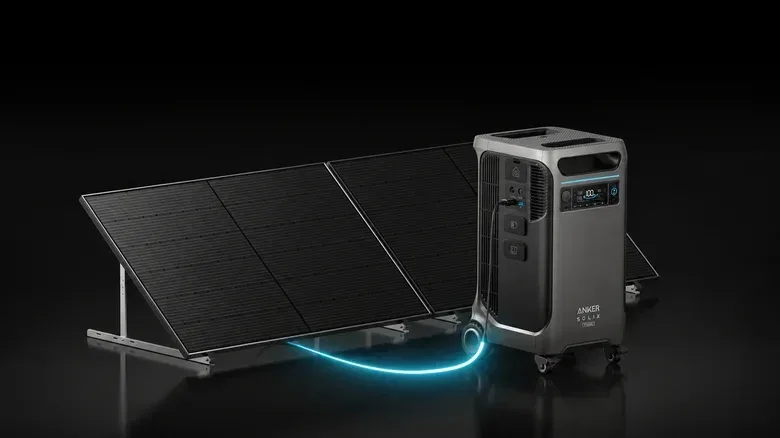
That distinction prevents a common misunderstanding. Solar panels generate electricity when conditions allow; a plan for power during an outage depends on the wider system and on the loads a household wants to support. If backup is the main need and a permanent rooftop installation feels disproportionate to the job, a portable power station paired with compatible solar panels may be the more direct option for a limited set of appliances.
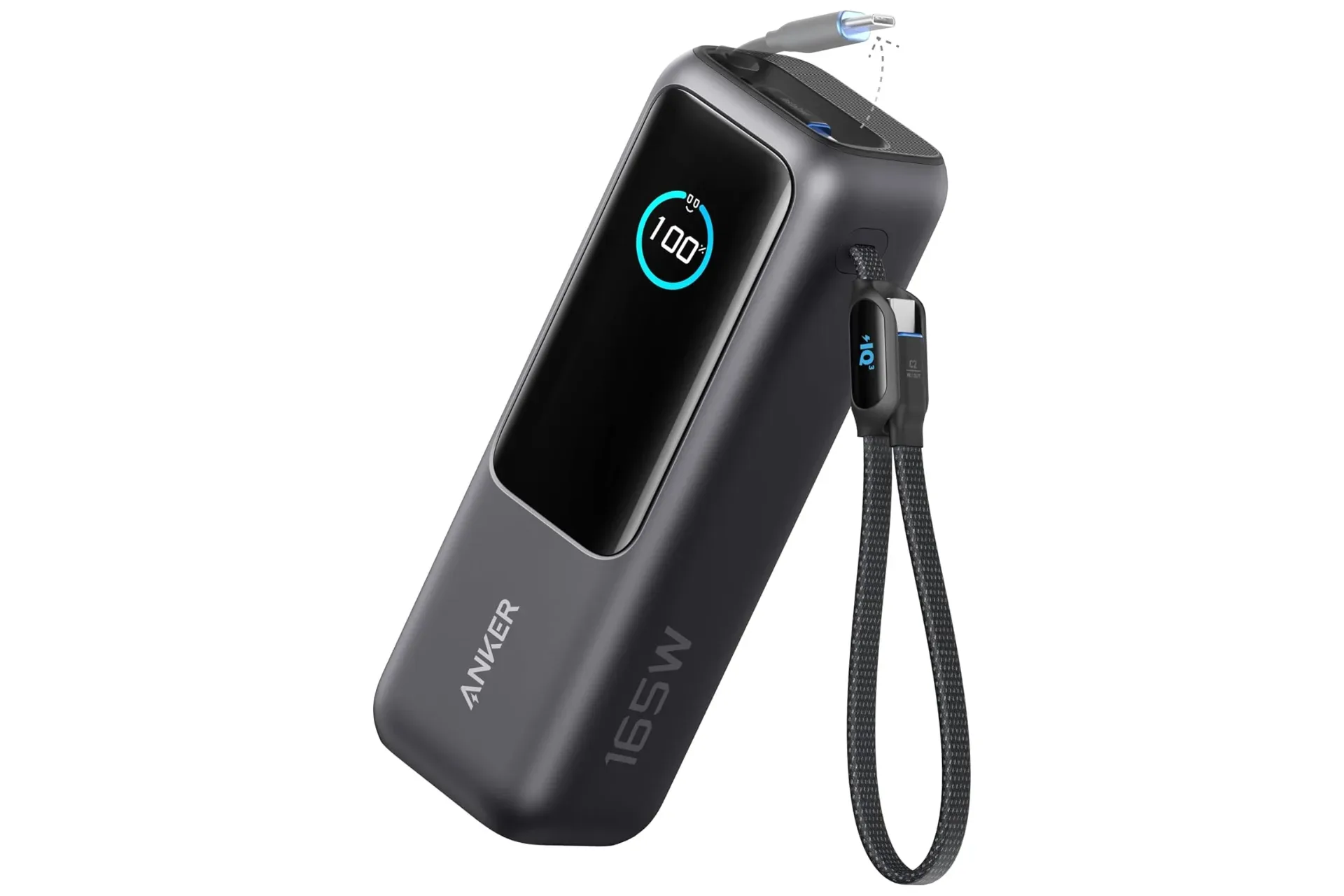
That portable category includes products from Anker SOLIX, Jackery, BLUETTI and EcoFlow. It is also worth separating a solar-capable power station from a compact device charger: capacity, output and intended use are not interchangeable. For an example of the latter category, see this look at an Anker 25,000mAh power bank designed for handheld devices.
Why monocrystalline is usually the default for a roof
Monocrystalline panels use solar cells made from a single crystal of silicon. Their practical attraction is power density: they tend to deliver more output from a given roof area than polycrystalline alternatives. Where the clear, productive parts of a roof are broken up by obstructions, that efficiency can be the difference between fitting the desired system size and falling short of it.
Polycrystalline panels can be less expensive in places where they remain available, but they generally require more area to reach comparable output. That trade-off may be acceptable only if a roof has ample usable space and the total installed-price difference remains compelling. On a cramped roof, a lower module price can become less persuasive when more surface is required for the same intended generation.
Thin-film panels are made from thin photovoltaic layers rather than the conventional crystalline approach. Some can be light or flexible enough for unusual mounting situations. That does not automatically make thin-film the better residential answer: for a standard pitched roof, it is rarely the first option. The appropriate technology is tied to the mounting situation, not just the fact that a panel can make electricity.
Efficiency and wattage are related, but they are not the same comparison
Two numbers appear constantly in solar proposals: watts and module efficiency. Wattage is the panel’s rated power figure. Module efficiency describes how effectively the panel turns the light falling on its surface into electricity under its stated rating conditions. Neither number, viewed alone, establishes annual output for a particular address.
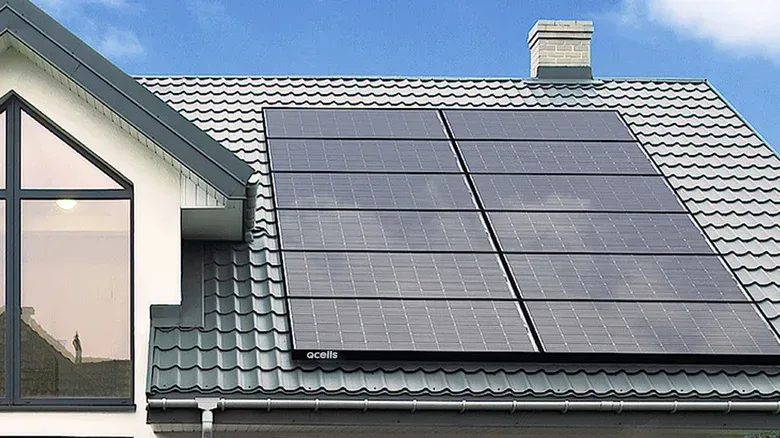
The difference becomes clearer with two current product examples. Qcells’ n-type Q.TRON BLK M-G2+ is listed at 440W and 22.5% module efficiency. Tesla’s residential module is listed at 420W and at least 20.5% efficiency. Those figures demonstrate that residential modules can differ on both measures, but they cannot settle which is better for an individual roof without panel dimensions, layout and site conditions. Comparing a 440W panel with a 420W panel without accounting for physical size is not an apples-to-apples judgment about roof-space efficiency.
The same warning applies to marketing built around a single technology term. Modern monocrystalline products may use cell designs identified as TOPCon, HJT or PERC. These approaches seek to improve cell performance, but the acronym is not a complete buying verdict. The useful question is whether the complete panel and proposed system produce a favorable annual-energy estimate and overall value for the home.
- TOPCon is one of several modern cell-technology labels used in monocrystalline panels.
- HJT is another cell approach intended to improve overall performance.
- PERC is also a cell-technology term found on modern monocrystalline products.
- Bifacial panels can collect reflected light from the rear as well as light from the front, but their advantage depends heavily on mounting and the surrounding environment.
These labels can be useful context. They should not displace the bigger comparison: projected energy, all-in cost, equipment scope and warranty protection.
A roof’s real-world conditions change the answer
Solar output is not determined by sunlight alone. Panels become less efficient as they get warmer, so a high rating on paper does not lock in a specific result through every season and weather condition. Shading and orientation can also make a substantial difference to yearly production.
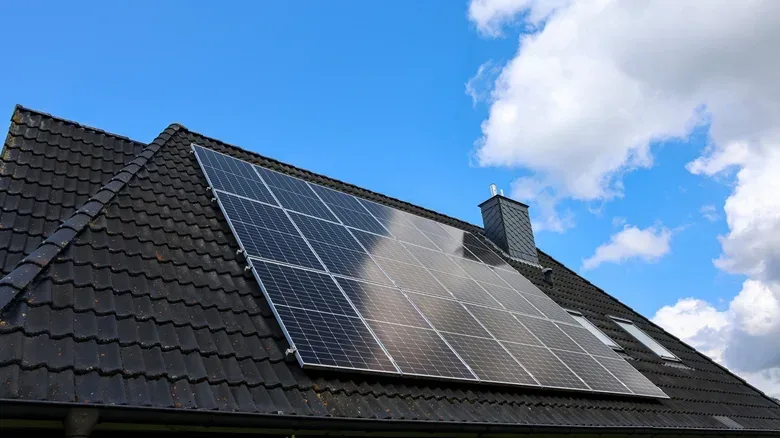
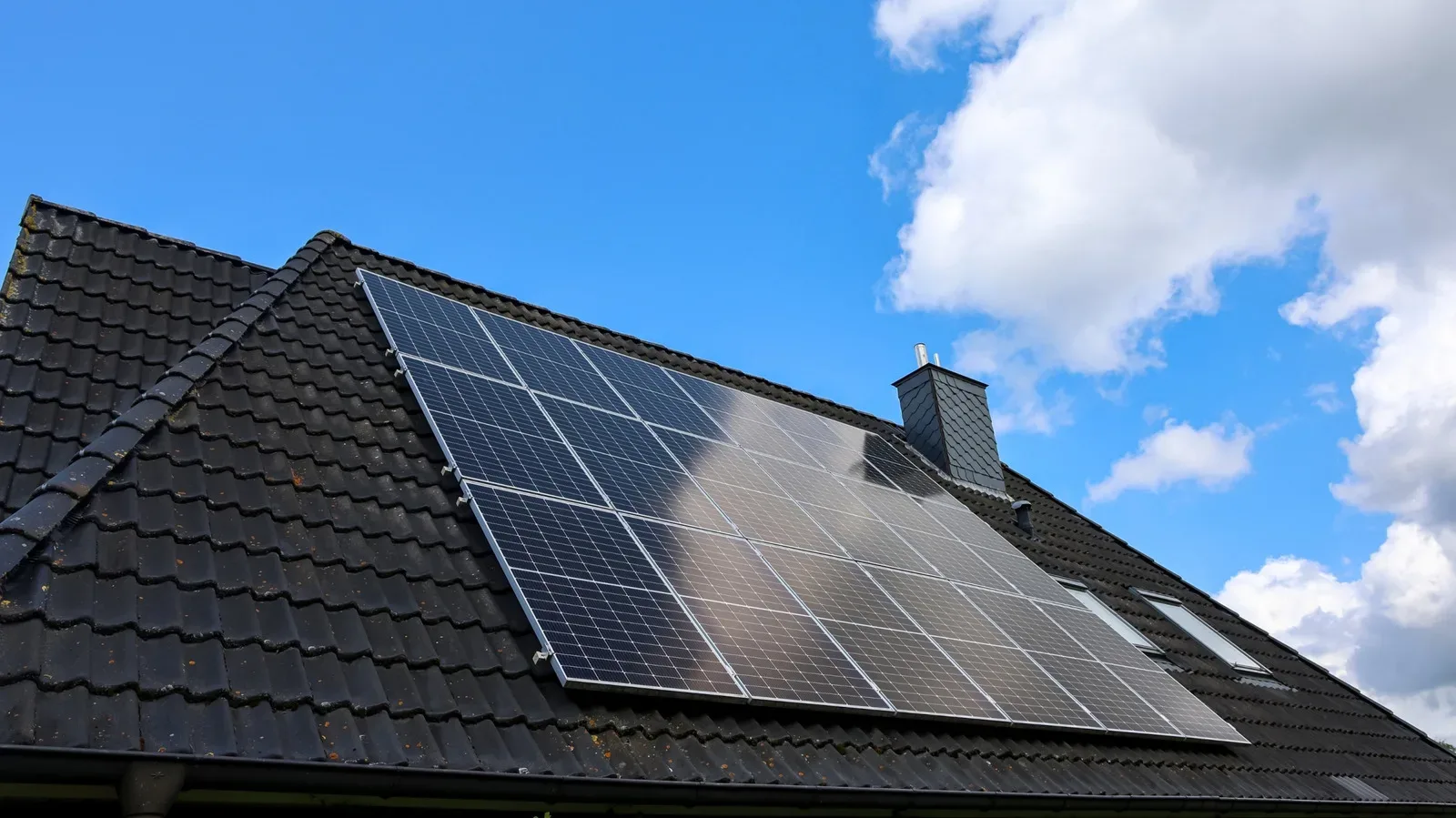
That is why roof planning matters before chasing an especially high-efficiency module. A chimney, vent or skylight is not merely a layout nuisance; it can limit access to the roof sections receiving the best light. Shade can similarly change the expected output enough that an installer’s production model deserves close attention. Homeowners should ask how the quoted annual estimate accounts for the actual roof rather than assuming the module’s printed capacity will translate directly into household energy.
Bifacial modules add another layer of site dependence. Their rear side can capture reflected light, but the benefit is shaped by how the panels are mounted and by the environment around them. It is therefore not safe to assume that the word “bifacial” guarantees a major output advantage on every rooftop. A proposal should explain why that design is expected to help in that particular installation.
Sizing a system: the 20% buffer is a planning tool, not a universal rule
One suggested starting point is to aim for roughly 20% more generation capacity than a home’s normal energy use. The purpose of this buffer is to accommodate dimmer days. It is a useful rule of thumb, not a substitute for examining consumption patterns, roof constraints and the local value of excess electricity.
The practical implication is that “covering 100% of usage” may not mean selecting modules whose simple rated capacity appears to match a household’s needs. Output varies with warmth, shade and panel orientation, while electrical use can also vary. At the same time, building more capacity only makes financial sense when it works with the household’s consumption and the utility’s treatment of exported energy. If surplus power receives limited value, extra production may change the economics differently than it would under more favorable terms.
A good discussion with an installer should therefore move beyond module count. Ask what annual electricity production is projected, what assumptions drive that projection, and how the system size relates to the household’s typical use. The answers should make clear whether the proposal is designed for bill reduction, a generation buffer, a backup objective, or some combination of those priorities.
Compare quotes by annual production and total cost
The most reliable way to compare two solar quotes is not to crown the proposal with the largest panel wattage. Compare their projected annual electricity production against their total cost. A quote is an installation package, and the panels are only one component.
Inverters, mounting hardware and labor all belong in the calculation. So do permits, inspections, roof work, warranty coverage and any other included project costs. A lower-looking panel price does not necessarily mean a lower system price once those elements are included. Conversely, a more expensive module may make sense when limited roof area makes its power density valuable, but that value needs to show up in the system’s expected annual performance and overall economics.
For broad context, the reported average cost of a U.S. residential solar installation was $3.36 per watt in the second quarter of 2026. That is an average, not a promise for any specific home. Project complexity, roof needs, permits and selected equipment can all shift a proposal. One 5.1kW installation, including permits and inspections, cost just over $24,000—another reminder that headline per-watt figures are only a starting reference.
In the United States, the federal residential clean energy tax credit ended for installations completed after December 31, 2025. State and local incentives may still be available, so incentives should be checked locally rather than assumed from a national rule that no longer applies to later completed installations.
A quote-review checklist
- Compare the projected annual electricity production, not only the listed panel wattage.
- Confirm how shading, orientation and roof layout were incorporated into the estimate.
- Check every included cost: panels, inverter, mounting hardware, labor, permits, inspections and needed roof work.
- Identify the panel model, its dimensions, rated wattage and module-efficiency figure.
- Read the performance warranty alongside the upfront price.
- Ask what the system is intended to do during an outage and which loads that plan is designed to support.
- Verify applicable state and local incentives independently.
Performance warranties deserve more attention than they get
Solar panels typically lose output gradually rather than abruptly failing after only a few years. That makes a performance warranty central to the value conversation. The purchase is not just about day-one output; it is also about the expected long-term decline in generation and what protection applies if performance does not meet the warranty’s terms.
Reading that coverage does not mean a buyer can predict every future outcome, but it prevents a decision based entirely on the initial hardware number. Since installation involves substantial non-panel costs—labor, mounting equipment, inverters and permitting among them—the long-term performance of the full system is more relevant than a brochure’s most prominent figure.
The short version is straightforward. Monocrystalline panels are generally the strongest default for homeowners who need the greatest output from limited conventional roof space. Yet the best installation is the one whose estimated annual generation, roof fit, total installed expense, warranty and backup plan match the household’s actual priorities. The panel is important; the system around it is what turns a specification into useful electricity.