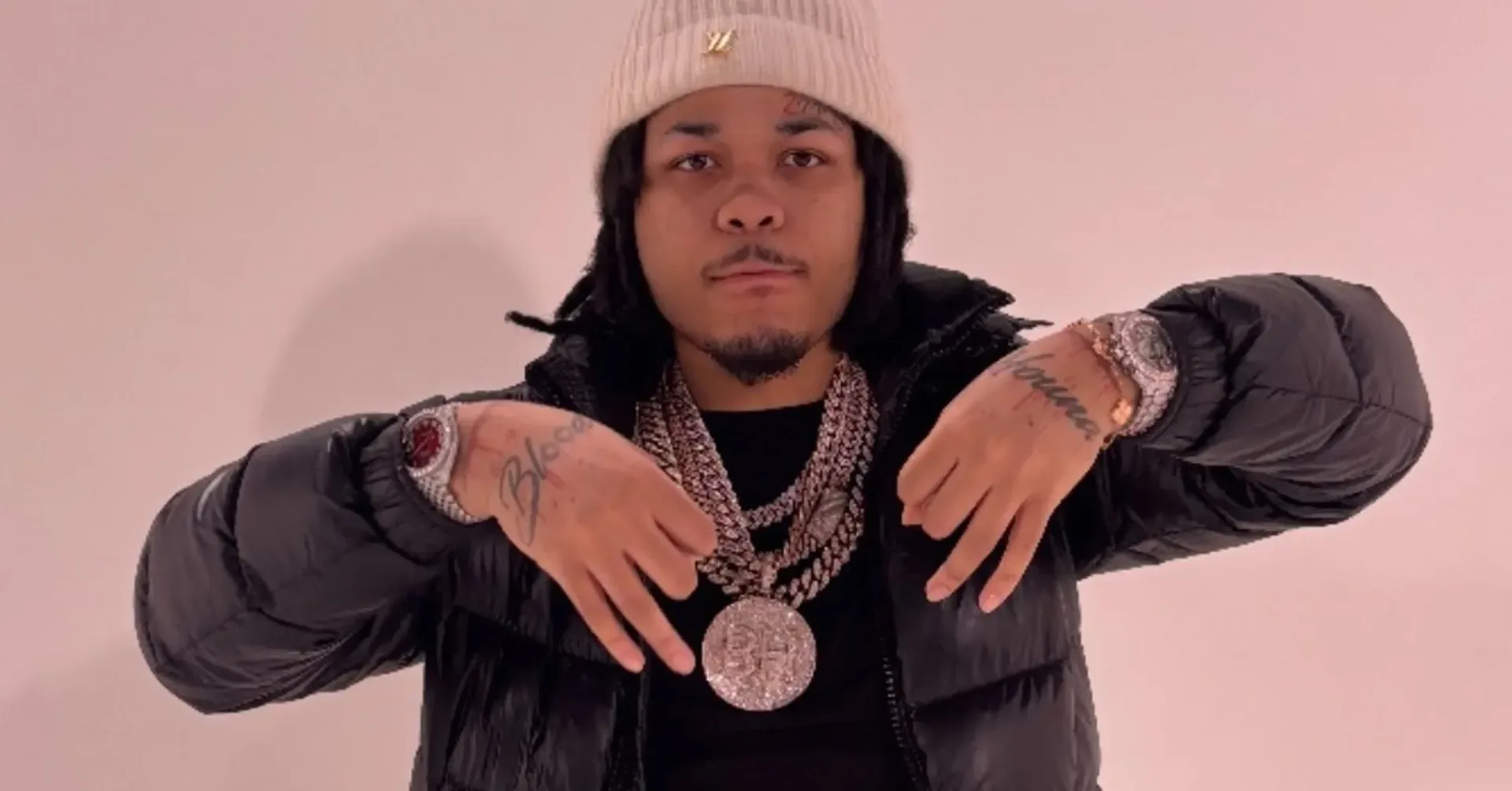
A Chicago jeweler who uses the Instagram handle @thevvsking has apologized and removed a social-media video showing jewelry said to belong to the late rapper BloodHound Q50. The post, which depicted the cleaning of a bloodstained chain and Rolex watch, prompted strong backlash online following Q50’s death in a shooting.
BloodHound Q50, a Chicago rapper, was killed during an ambush at a gas station. Surveillance footage reportedly showed multiple men arriving at the location and firing at his vehicle. Law enforcement’s investigation remains ongoing, and the supplied information does not establish who was responsible or a motive for the shooting.
The jeweler addressed the reaction in an Instagram post on Thursday, September 17, saying the original video had been deleted and acknowledging that its impact did not match the intent behind it.
“I want to sincerely apologize for the insensitive post I made earlier,” the jeweler wrote. “I posted a piece that was brought into our store without fully considering the circumstances surrounding it or how the post could come across, especially given the tragic situation involved.”
He said the store had not faced a situation like it before and had initially wanted to share the experience with followers. But the statement did not frame that unfamiliarity as an excuse. Instead, the jeweler explicitly accepted responsibility for putting the material online.
“There was no intention to disrespect the person who lost their life, their family, or anyone affected by what happened,” he wrote. “But intention doesn't change impact and I take full responsibility.”
On the following day, @thevvsking also posted video of Q50 at the store with a message memorializing him: “Long Live My Brotha, LLQ50.”
Why the video drew such a severe response
The backlash was rooted in more than the presence of expensive items. A chain and watch can be personal possessions, status symbols and recognizable parts of an artist’s public image. In this case, however, viewers were confronting those items in direct proximity to a recent, violent death. The visible blood transformed what might otherwise be ordinary jewelry-maintenance content into material tied to a family’s loss and an active homicide investigation.
“Insensitive” is the key word in the jeweler’s apology. It recognizes that social-media posts are not experienced solely through the poster’s stated purpose. A business may see an unusual object brought through its doors; mourners and fans may see a person’s final moments or their aftermath turned into content. Those are fundamentally different frames, and the latter was amplified by the timing.
The distinction between intent and impact is not merely public-relations language here. Intent describes why someone says they acted. Impact describes what audiences reasonably felt or understood after the action. The jeweler’s statement concedes that even absent an intention to insult Q50, his relatives or people affected by the shooting, the video caused hurt and offense. Deleting the post was the immediate corrective action described in his apology.
Jewelry, visibility and a difficult line
Custom jewelry is deeply embedded in hip-hop’s visual culture. Pendants, chains and watches can convey affiliation, achievement, personal style and generosity between artists. That wider context helps explain why jewelry can draw considerable attention online, though it does not make every image of it appropriate to share. For a more conventional example of artist-branded jewelry being publicly celebrated, see the report on Drake’s matching pink OVO owl pendants for Stunna Sandy and Sexyy Red.
The circumstances around Q50’s belongings were plainly different. Blood on an item is a reminder of physical violence, not simply a sign that a piece requires cleaning or restoration. When a death is fresh and an investigation has not reached a public resolution, posting such images can also invite audiences to infer details that have not been verified.
That is especially important in online spaces built around short clips and rapid reaction. A video may circulate much farther than its original account’s followers, stripped of explanation but retaining its most shocking visual detail. The result can be renewed distress for people close to the victim while also encouraging commentary that treats tragedy as spectacle.
What remains unknown in the killing
There has been extensive discussion among fans trying to piece together what happened to BloodHound Q50. The available account notes that theories and conspiracies spread on Reddit in the aftermath of the ambush. Those posts should not be treated as evidence.
A conspiracy theory, in this context, is an unverified explanation that attempts to identify participants, motive or a broader plot without confirmed factual support. It can be tempting to treat a fast-moving stream of posts, clips and alleged connections as a collective investigation. But volume and repetition do not convert a claim into verified information.
The confirmed baseline supplied here is narrower: Q50 was shot and killed at a gas station; surveillance footage reportedly showed multiple men pulling up and shooting at his vehicle; and Chicago law enforcement is still investigating. There are also public comments from people described as close to the tragedy, including a woman alleged to have been in the car at the time of the shooting and Q50’s mother. Their existence does not answer unresolved questions about the case.
Keeping that boundary clear matters for two reasons. First, murder investigations can be compromised in the public imagination when rumor is presented as fact. Second, friends and family are often forced to process grief while strangers build narratives around incomplete information. The jewelry video controversy shows a related problem: material connected to a violent death can circulate before the people most affected have space to mourn outside the attention economy.
The practical lesson for businesses handling personal property
The incident also illustrates why businesses that handle personal possessions need a careful standard for social posting. A piece may arrive legally at a store and still be unsuitable for promotional or novelty content. The concern becomes even sharper when the item is connected to a recent death, an apparent crime scene or identifiable grief.
- Pause before posting: Unusual or visually dramatic property may have circumstances the business does not know.
- Consider the human context: An item associated with an injury or death is not just a striking visual.
- Ask whether consent and privacy have been meaningfully considered: A customer bringing in an item does not automatically resolve the concerns of every person affected by its history.
- Avoid implying knowledge: Businesses should not encourage viewers to draw conclusions about an active criminal investigation from material they handle.
- Correct promptly when harm is clear: Removing the content and acknowledging the problem are more meaningful than arguing with people explaining why it was painful.
@thevvsking’s statement follows several of those steps after the fact: the video was removed, the post was called insensitive, responsibility was accepted, and condolences were offered. Whether the apology satisfies everyone affected is for those people to decide. What is clear is that the jeweler recognized a line had been crossed.
For now, the central story remains the killing of BloodHound Q50 and the unresolved investigation around it. The response to the jewelry video is a reminder that, amid public mourning, the most compelling content is not necessarily content that should be shared.