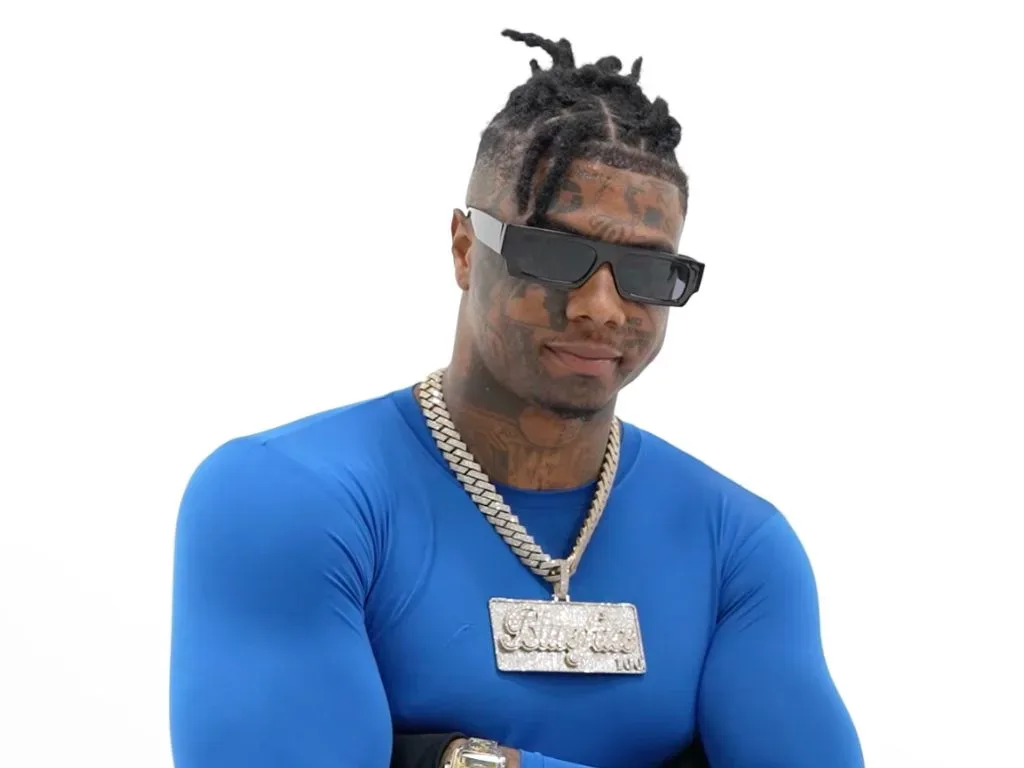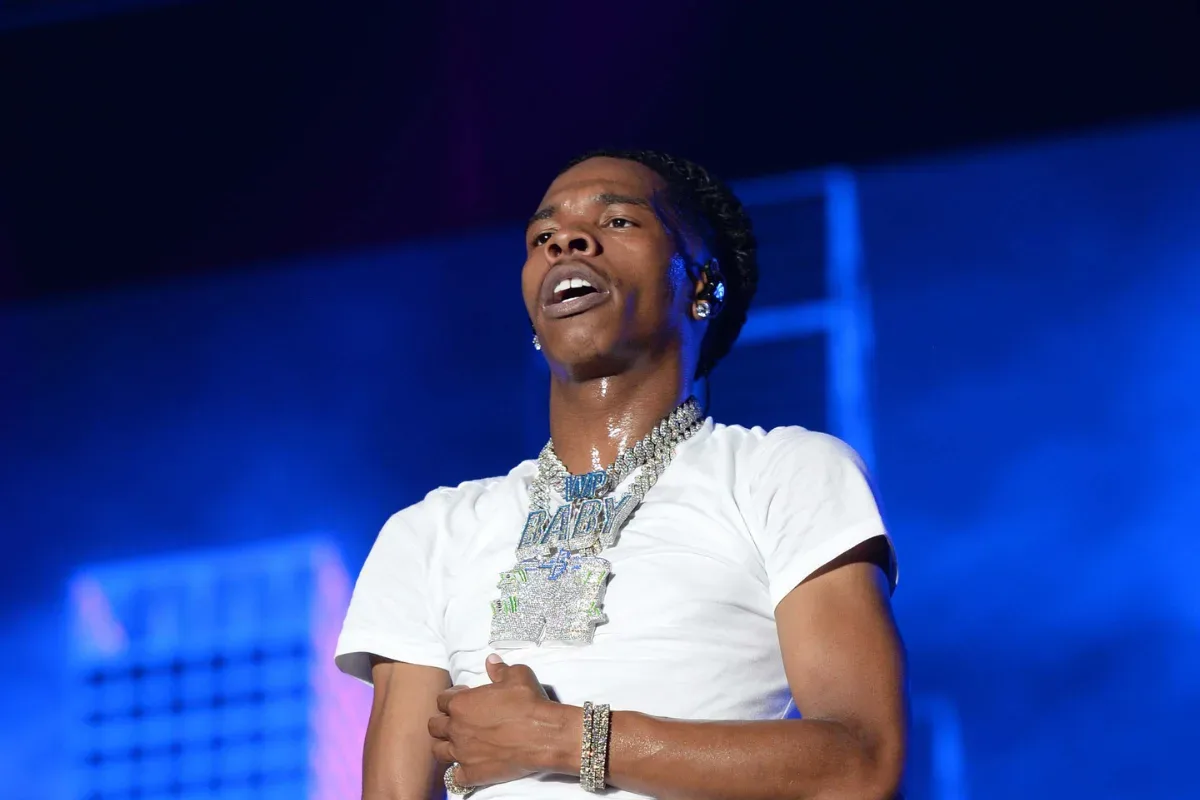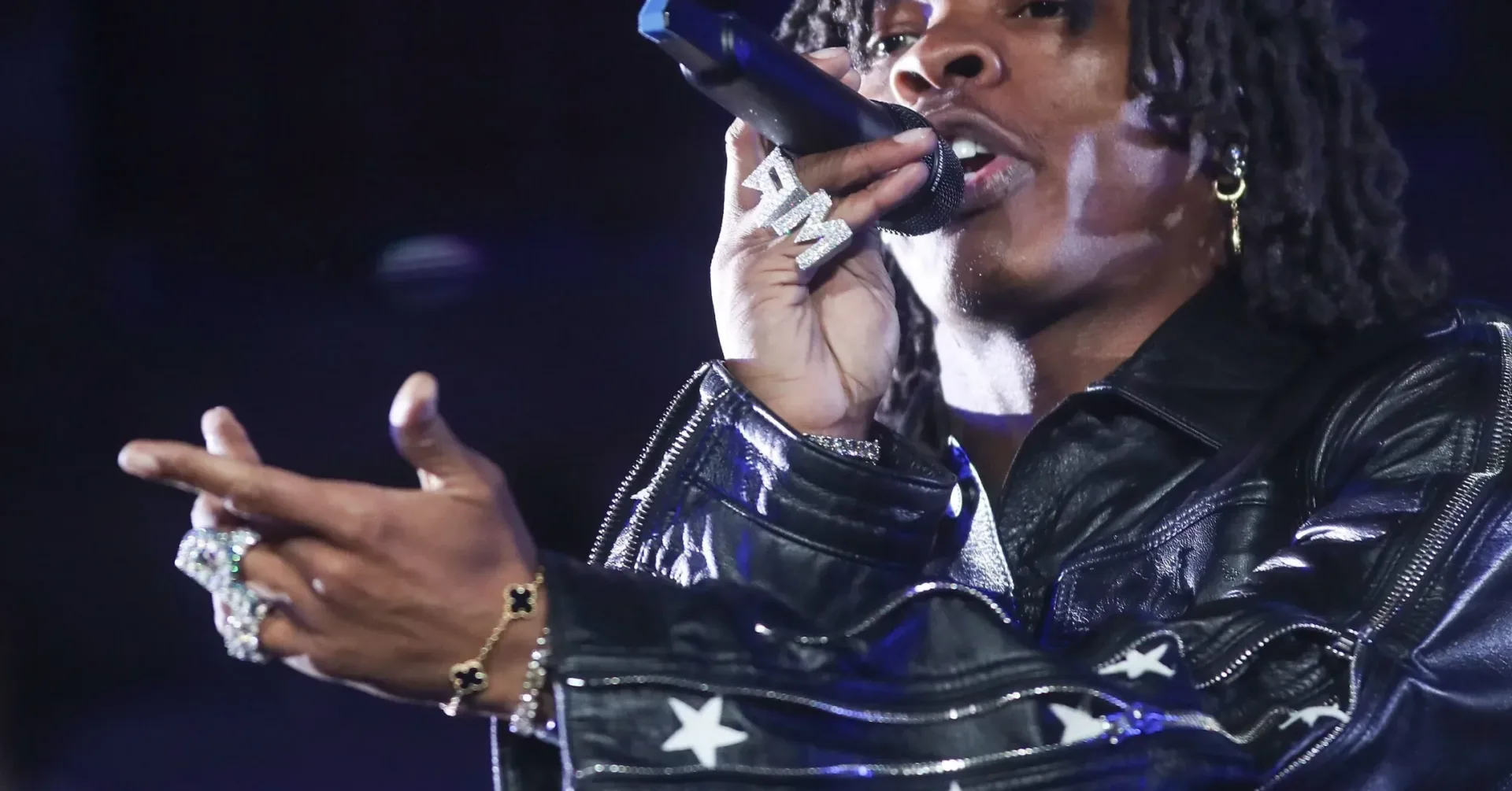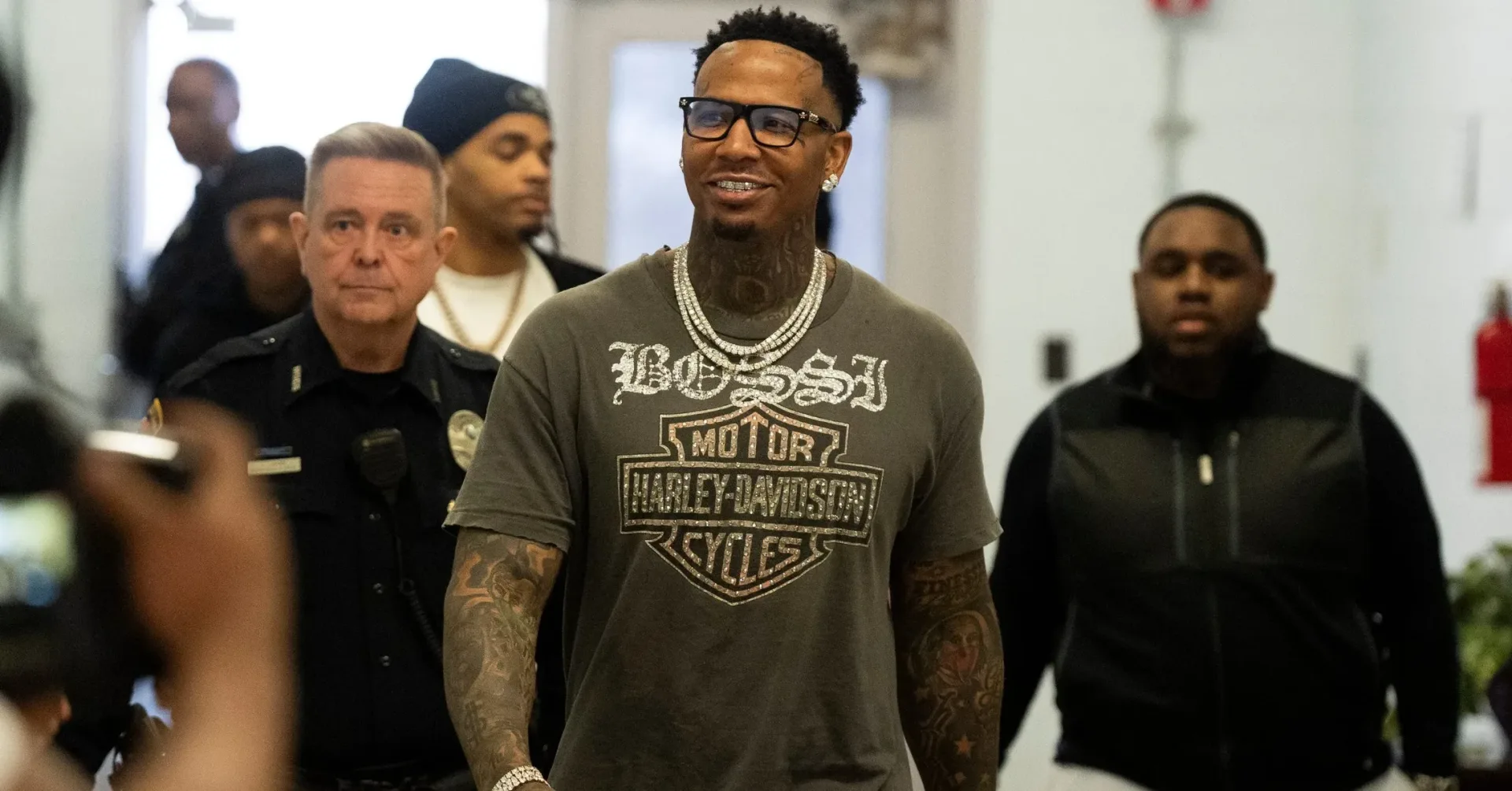
A small social-media exchange between Moneybagg Yo and Lil Baby has sparked speculation that there may be friction between the two collaborators. The available posts do not establish a full-fledged feud, and neither artist appears to have explicitly named the other in a detailed public statement. Still, the sequence has drawn attention because it began around an outfit post and jewelry that observers thought resembled Lil Baby’s own chain.
The initial interaction was brief. Lil Baby commented, “Long chain or don’t bang,” on a Moneybagg Yo post. Moneybagg Yo replied, “I see why.” On their own, short comments like these can be difficult to interpret. They can be playful, competitive, dismissive, or aimed at an audience already familiar with an off-screen context. The surrounding reaction is what turned the exchange into a possible dispute rather than a simple comment section moment.
Afterward, Moneybagg Yo shared an Instagram Story featuring cash and jewelry while speaking broadly about people who condemn certain behavior while remaining close to people they criticize. He also discussed what he characterized as selective confrontation: seeing many people do something, then choosing one person to call out or take shots at. He did not directly identify Lil Baby in that message.
What is actually clear — and what remains speculation
The public record described here supports a narrow set of facts: Lil Baby made a comment on Moneybagg Yo’s post, Moneybagg Yo responded, and Moneybagg Yo later posted a wider message about principles, relationships, and people picking their battles. It does not confirm the reason for the exchange, whether the chain itself was the core issue, or whether the two artists are in a sustained personal or professional conflict.
That distinction matters. Social platforms turn concise remarks into material for fast interpretation, particularly when the people involved have high profiles and audiences accustomed to reading subtext into captions, emojis, comments, and Stories. A chain can function as more than a fashion accessory in that environment: it may signal status, a recognizable personal look, affiliation, or simply the artist’s chosen styling. But similarity alone does not prove imitation, hostility, or ownership of a particular style.
The phrase “taking shots” is common shorthand for a perceived indirect criticism. In practical terms, it means the audience believes one public remark is aimed at a particular person even when that person is not directly named. The limitation is obvious: indirect language preserves ambiguity. Viewers can connect the dots, but they cannot reliably know whether the dots were meant to connect without a direct clarification.
Why the jewelry angle attracted attention
The apparent trigger was an outfit display that included a chain observers considered similar to Lil Baby’s. Jewelry is a highly visible part of rap’s visual language, especially online, where a close-up of a pendant or a chain can become the focal point of a post. The conversation around it was therefore less about an ordinary wardrobe overlap and more about the meaning fans may attach to distinctive accessories.
Yet the public information does not establish that Moneybagg Yo intended his jewelry to resemble Lil Baby’s, nor that Lil Baby’s comment was a definitive accusation. “Long chain or don’t bang” is a compact line, and its tone is open to competing readings. It could be a joke, a critique, a claim of influence, or simply a phrase meant to provoke a response. Moneybagg Yo’s answer did not settle the matter either.
That uncertainty is the story’s central feature. The exchange is notable because it is visible, not because its meaning has been conclusively explained. Treating it as confirmed “beef” would go beyond what the posts demonstrate.
The collaboration history makes the tension noteworthy
Even with the uncertainty, people have a reason to notice a possible rift: Moneybagg Yo and Lil Baby have worked together on several songs. Their shared catalog includes “All Of A Sudden,” “U Played,” and “No Sucker.” Those records provide a concrete connection between the artists beyond the current social-media moment.
Collaborations matter because they change the stakes of online friction. A disagreement between artists with no shared musical history may remain a passing comment-thread spectacle. When artists have released songs together, listeners naturally wonder whether the relationship could affect future music, appearances, or plans that have been discussed publicly. In this case, the pair had at one point teased the possibility of a joint project.
There is no confirmation that the teased project has been canceled, delayed, or altered. It would be premature to treat the recent posts as a final answer on that front. But the exchange does create a reasonable question for listeners: whether this is momentary posturing that fades quickly, or a signal that their creative partnership has changed.
Indirect posts can create an audience-driven storyline
Stories and comments are particularly effective at producing rapid narratives because they provide limited context. A comment invites replies and screenshots; a Story can feel more immediate and personal, particularly when it follows closely after another public interaction. Once followers start reading a sequence as a dispute, every additional post can be treated as evidence, even if it was not meant as a response.
That does not mean the audience is always wrong. Artists do sometimes use indirect language intentionally, whether to keep a dispute private, maintain plausible deniability, or let a message travel without a formal statement. But ambiguity also creates room for overreach. Broad statements about loyalty or morals can arise from many situations that outsiders do not see. In this instance, Moneybagg Yo’s message can be placed next to the earlier comment, but it cannot be definitively decoded from the available material.
For fans, the useful approach is to separate chronology from conclusion. The chronology is straightforward: an outfit post generated a Lil Baby comment; Moneybagg Yo replied; Moneybagg Yo then shared a broader message. The conclusion — that both men are actively feuding over a chain — remains unverified.
What to watch next
The clearest way to resolve the uncertainty would be a direct statement, a subsequent exchange that names the other artist, or evidence that the pair continue collaborating as normal. Until then, there is little basis for declaring a major falling-out. The visible material supports interest and discussion, not certainty.
It is also worth remembering the music at the center of the attention. Their past songs demonstrate that Moneybagg Yo and Lil Baby have established chemistry on record, which is why even a few pointed-looking remarks can prompt questions about a future joint release. Whether the apparent tension is serious, temporary, or misunderstood, neither artist has supplied enough direct context to settle it.
For now, this is best understood as an unresolved social-media moment involving two artists with a real collaborative history — not a confirmed end to that history. Readers interested in another recent rap-industry discussion can also see Blueface’s comments about DDG and a 90-day streaming run.