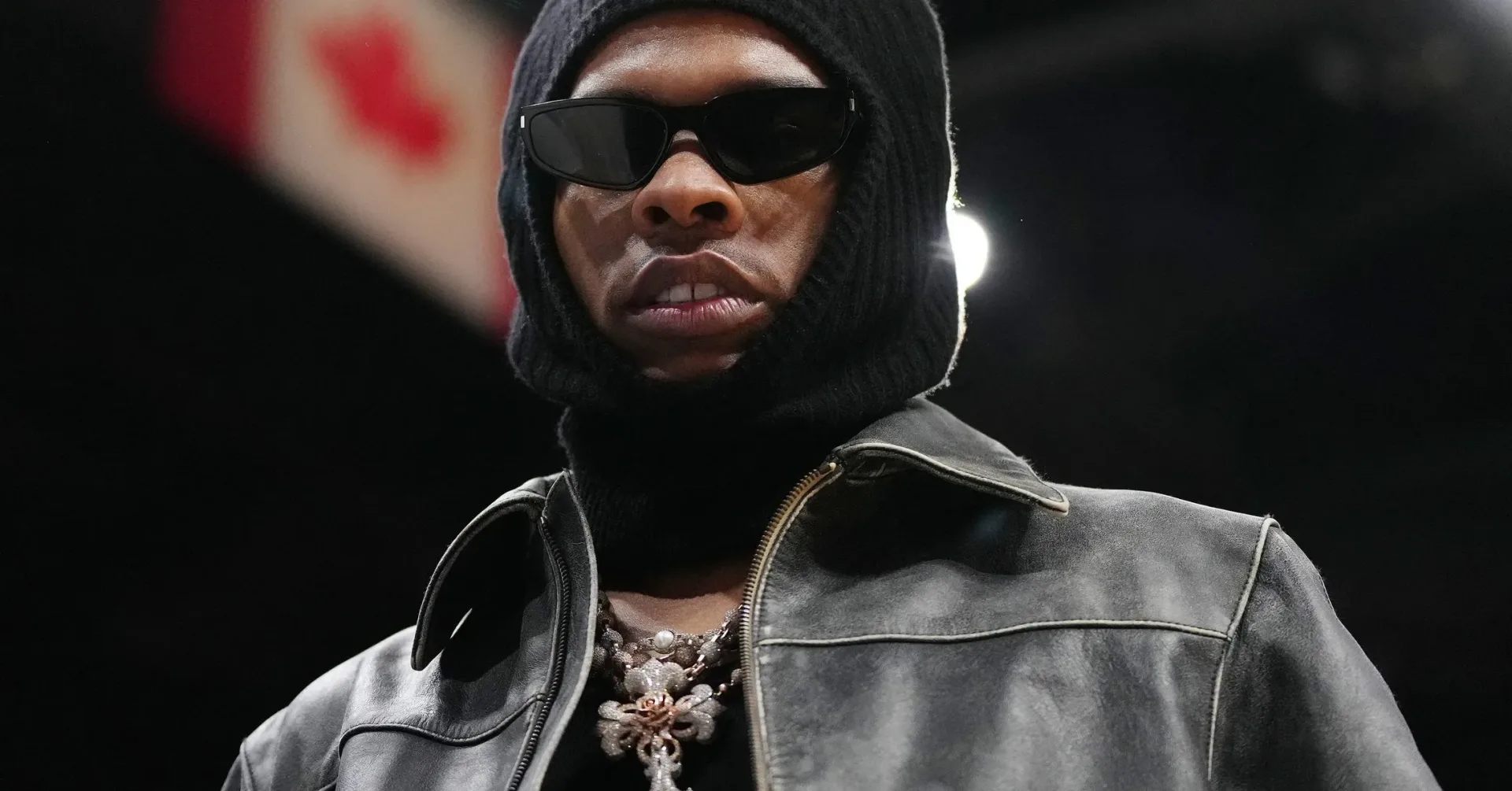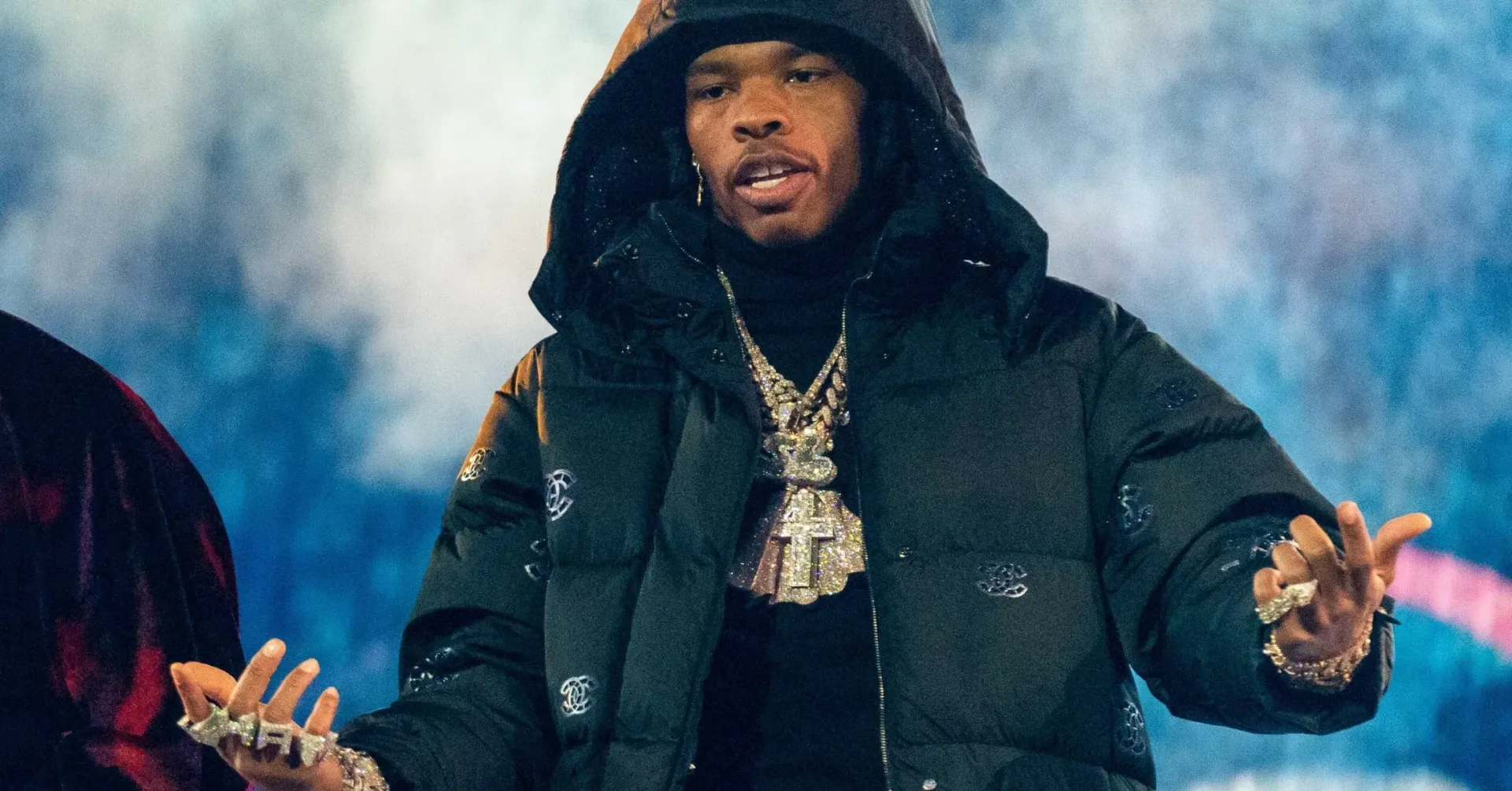
Lil Baby is pushing back on one of the most persistent judgments attached to any major artist: the claim that they have “fallen off.” Discussing his career and the upcoming album Fresh on a recent music podcast appearance, the Atlanta rapper argued that the conversation itself misses a key distinction. In his view, artists whose momentum has truly faded often no longer inspire this level of public scrutiny at all.
“Chill... I’m on that level. ‘Baby fell off.’ What?” he said, before expanding on the point: “The people that it applies to, you don’t hear it about... It applies to a lot of people. That’s the cycle of it. The cycle that I’m on, the level that I’m on, it’s not a lot of people that are on that level.”
It is a familiar argument, but one with an important twist. Lil Baby is not merely denying criticism. He is framing the intensity and persistence of that criticism as evidence that listeners still regard him as an artist whose position matters. The negative label, in that reading, is less a final verdict than an argument happening because expectations remain unusually high.
What “Fell Off” Usually Means — and Why It Is So Loose
In rap discourse, “fell off” is a broad and subjective phrase. It can refer to perceived changes in music quality, commercial performance, public visibility, influence, or simply the feeling that a listener preferred an earlier period of an artist’s work. Those are not interchangeable measurements, and the phrase frequently bundles them together as though they were one fact.
Lil Baby’s response focuses on attention rather than attempting to settle every possible metric. His point is that artists who are genuinely absent from the conversation do not become recurring topics of debate in the same way. That does not automatically disprove criticism of his recent work or career trajectory, but it does explain why he sees the label differently from people using it as a dismissal.
The practical implication is that a high-profile artist can be judged against a much narrower standard than a peer. For an artist operating at the level Lil Baby describes, the question online is often not whether the music remains successful or whether an audience remains. Instead, it becomes whether each release matches an earlier peak, a fan’s preferred era, or an imagined version of uninterrupted dominance. Those standards can make ordinary career fluctuation look more dramatic than it is.
That pressure is part of the “cycle” Lil Baby referenced. Music audiences constantly reassess artists, particularly when an act has already reached a major level of recognition. Praise may establish a benchmark; subsequent releases are then evaluated against it. The conversation can become self-perpetuating because every response to the criticism extends the life of the criticism.
Fresh Will Arrive Under a Loaded Narrative
The immediate context for Lil Baby’s comments is Fresh, his upcoming album. The project gives the larger debate a clear focal point: listeners will likely treat it as more than a set of songs, using it to either reinforce or reject the story that has grown around his career.
Related coverage includes Lil Baby Pushes Back on ‘Fell Off’ Narrative Ahead of Fresh.
That is the difficult part of an artist confronting a narrative before a release. A statement can clarify how they see the situation, but it cannot control how the public applies that framing afterward. Some fans have defended Lil Baby or expressed sympathy for the level of attention directed at him. Others have cited issues they believe complicate his position, including sales discussions and the dispute involving Gunna.
Neither reaction is surprising. Online arguments about status tend to absorb several subjects at once: music, personality, alliances, numbers, visibility, and fan loyalty. But these are separate questions. An interpersonal conflict is not a direct musical assessment. A sales discussion does not, by itself, establish artistic decline. And ongoing name recognition does not require everyone to agree about the music. Keeping those distinctions clear makes the conversation more useful than reducing everything to a two-word verdict.
For Lil Baby, the release of Fresh is therefore poised to become a test in the public imagination, whether or not he accepts the premise. His comments indicate that he does not view the current chatter as proof he has been pushed aside. He sees it as a consequence of still occupying a rarefied level where people expect a response, a reset, or another defining moment.
The Gunna Rift Remains Part of the Conversation
Lil Baby also addressed the tension around Gunna, a former collaborator. Their falling-out followed Gunna’s plea deal in the YSL RICO case, a legal context that has fueled substantial public discussion around the relationship between the two artists.
When asked about the dynamic, Lil Baby emphasized discretion over internet spectacle. “Whether I like them or they like me, it’s like, we all going to be on that personal vibe,” he said. “We can not like each other but we going to play it cool for y’all.”
He further described an “unspoken” approach in which disagreements are handled away from the public eye: “We got a problem? We can handle our problem off the Internet, in person, just us.” Lil Baby added that he would rather keep a dispute personal because the people involved are “really like the ones who hold it down for the town.”
His comments do not announce a reconciliation, nor do they define the current status of the relationship beyond his preference for private handling. What they do provide is a clearer statement of approach. Rather than turning the disagreement into a continuous public performance, Lil Baby says he favors a boundary between a personal problem and the audience watching it unfold.
That boundary is especially notable because public rap disputes can quickly become content ecosystems of their own. Posts, responses, theories, and fan allegiances can make a conflict feel larger and more permanent than the original parties may wish to present. Lil Baby’s comments reject that model without pretending the personal dimension has disappeared.
Relevance, Criticism, and the Cost of Being Discussed
There is a difference between being relevant and being insulated from criticism. Lil Baby’s remarks do not ask listeners to stop having opinions; they challenge the meaning assigned to those opinions when they become a dominant career narrative. His central claim is that a constant “fell off” discourse can be a strange form of confirmation: people do not repeatedly debate the standing of an artist they consider entirely inconsequential.
Still, visibility is not purely an advantage. Sustained negative attention can distort the way a new project is received, especially when listeners arrive prepared to search for proof of either decline or comeback. It can also turn nuanced reactions into sides. A listener may enjoy some music while thinking a prior run was stronger, but the online version of that view is often flattened into a declaration of total defeat or unconditional defense.
The situation surrounding Lil Baby also demonstrates why career narratives should be treated as narratives, not immutable facts. They are assembled from selective memories, changing expectations, interpersonal headlines, fan rivalries, and every new piece of data that gets pulled into the argument. The story can become much larger than any one song or album.
There is recent context for fans following Lil Baby’s plans as well: he previously discussed how Meek Mill was included in the original conception of The Voice of the Heroes. That kind of behind-the-scenes reflection is a reminder that public narratives rarely capture the full set of artistic relationships and decisions behind a record.
For now, Lil Baby’s position is direct. He does not accept the claim that he has fallen off, and he believes the ongoing fixation on that claim reveals the scale at which he is still being judged. With Fresh ahead, the next phase of the conversation will likely center on the music itself—but it will arrive amid expectations already shaped by the debate he is challenging.