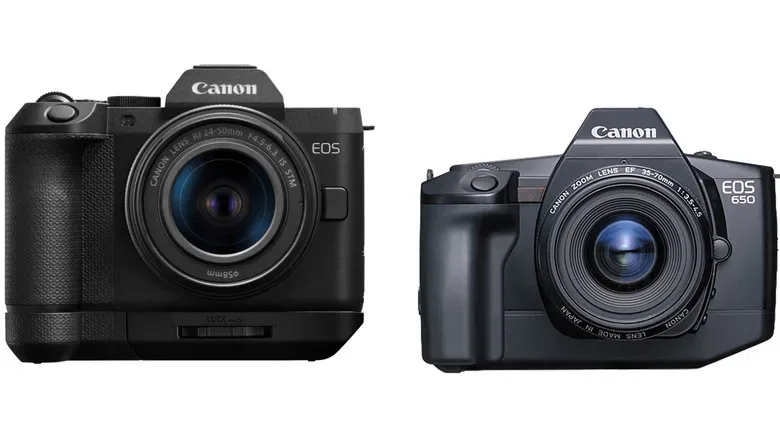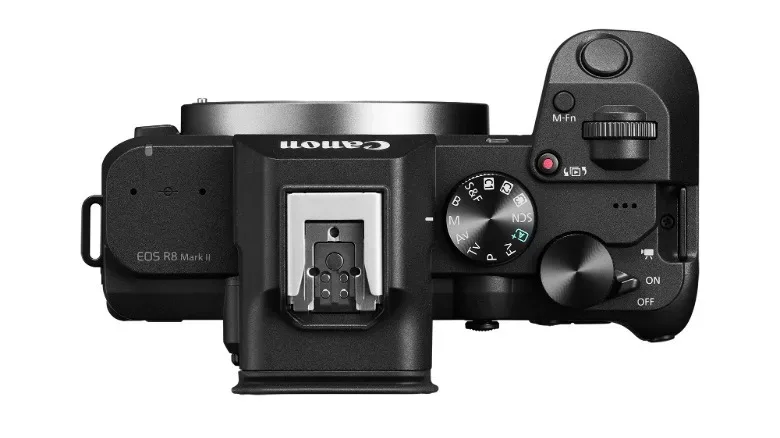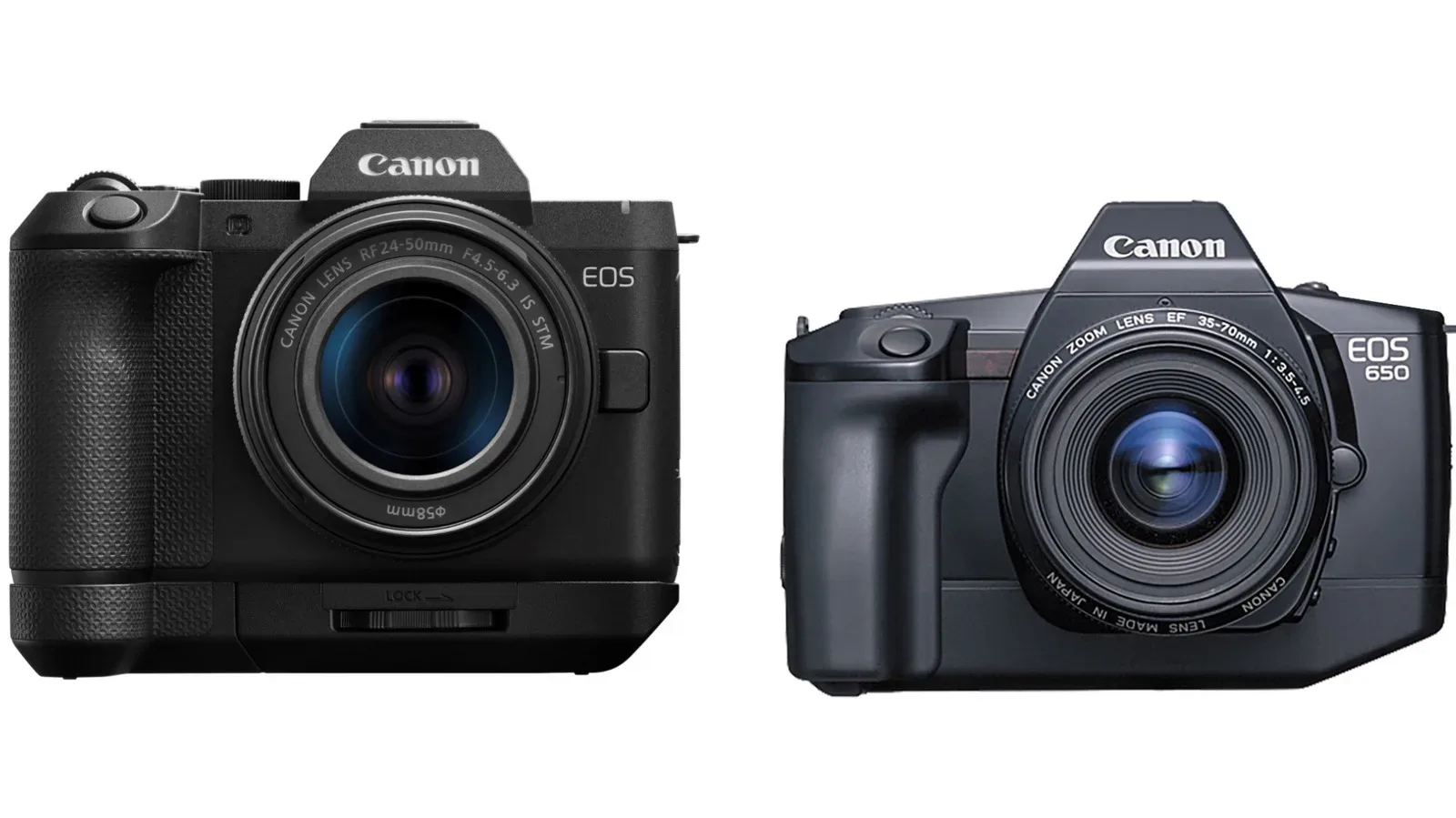
Canon’s EOS R8 II is a substantial rethink of the company’s entry-level full-frame mirrorless formula. It keeps a 24-megapixel full-frame foundation, but replaces the original R8’s rounded exterior with a more squared-off design influenced by Canon’s older EOS 650 film SLR. More importantly, the new body addresses several practical gaps in the prior model: it gains a dedicated autofocus joystick, 5-axis in-body image stabilization, faster burst shooting and a more ambitious autofocus package.
The result is a camera that uses retro styling as more than a surface-level costume change. The design reference is clear in the body shape, optional grip arrangement and shutter-area layout, yet the EOS R8 II remains a much larger and distinctly modern camera rather than an attempt to recreate a film SLR. Its appeal will rest on whether those modern upgrades make the $1,899 body feel like a convincing step up in a category that is increasingly difficult to describe as inexpensive.
A film-camera silhouette, adapted for mirrorless priorities
The EOS 650 influence appears most clearly in the EOS R8 II’s less swoopy, more angular silhouette. With Canon’s optional EG-E2 Extension Grip attached, the camera’s right side takes on an angled corner and a more horizontal shutter-button area reminiscent of the earlier SLR. That is an aesthetic nod, not a claim of like-for-like dimensions or operation: the R8 II is substantially bigger and technologically far removed from its inspiration.
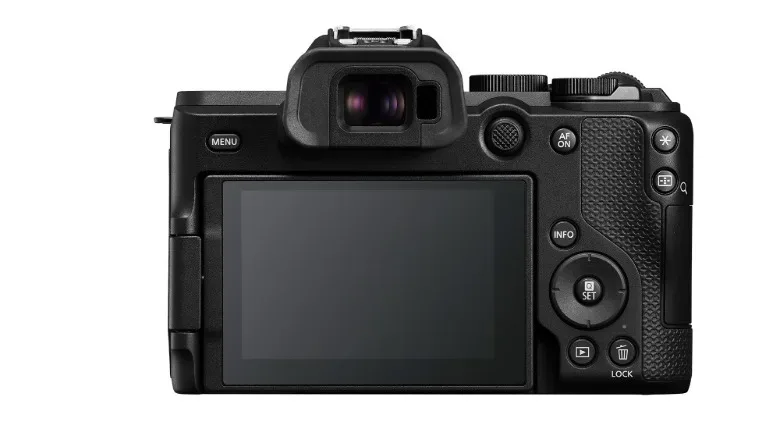
There is also a functional control change that may matter more than the styling. The R8 II includes a joystick for moving the autofocus point, a control absent from the earlier R8. On a camera built around fast subject recognition and full-frame coverage, direct control over the focus area can be more useful than it sounds. It gives photographers a physical way to reposition a selected autofocus point rather than relying exclusively on touch controls or menus.
That addition reflects a broader change in intent. The R8 II is still positioned as entry-level in Canon’s full-frame range, but its controls and speed target users who want more immediate handling for moving subjects. Retro details may catch attention, but the more consequential story is Canon bringing features usually associated with a higher tier into a lighter body.
What 40 fps and pre-continuous shooting actually mean
Canon rates the EOS R8 II for up to 40 frames per second when using its electronic shutter with continuous autofocus and auto-exposure. An electronic shutter records an image without mechanically moving shutter curtains for each frame. That can enable extremely rapid bursts, and continuous autofocus means the camera is intended to keep adjusting focus as a subject changes distance. Continuous auto-exposure similarly updates brightness decisions across the sequence.
For action, animals and fleeting expressions, the benefit is not simply producing a mountain of near-identical files. A high capture rate provides more positions within a brief movement, making it more likely that a photographer catches the precise gesture or moment they wanted. Canon also says the R8 II can sustain larger bursts than its predecessor: 58 percent more JPEG images and 30 percent more RAW images.
The distinction between those formats is important. A JPEG is a processed, compressed image designed for convenient sharing and smaller storage needs. A RAW file preserves substantially more sensor data for later editing, but typically takes more space and requires post-processing software. A larger RAW burst capacity is particularly meaningful for photographers who want latitude to adjust exposure, color or other image properties after the shoot.
Related coverage includes Canon EOS R8 II Brings EOS 650-Inspired Style to a Faster Full-Frame Body.
The camera also gains pre-continuous shooting, which can retain up to 20 frames—equivalent to half a second—before the shutter button is fully pressed. This is a response to human reaction time. If a bird takes off, a player changes direction or a candid moment begins just before the operator commits to the shot, the pre-press buffer can preserve images from immediately before that full press. It does not predict an event; it records while the shutter control is already being engaged, then makes those preceding frames available when a photo is taken.
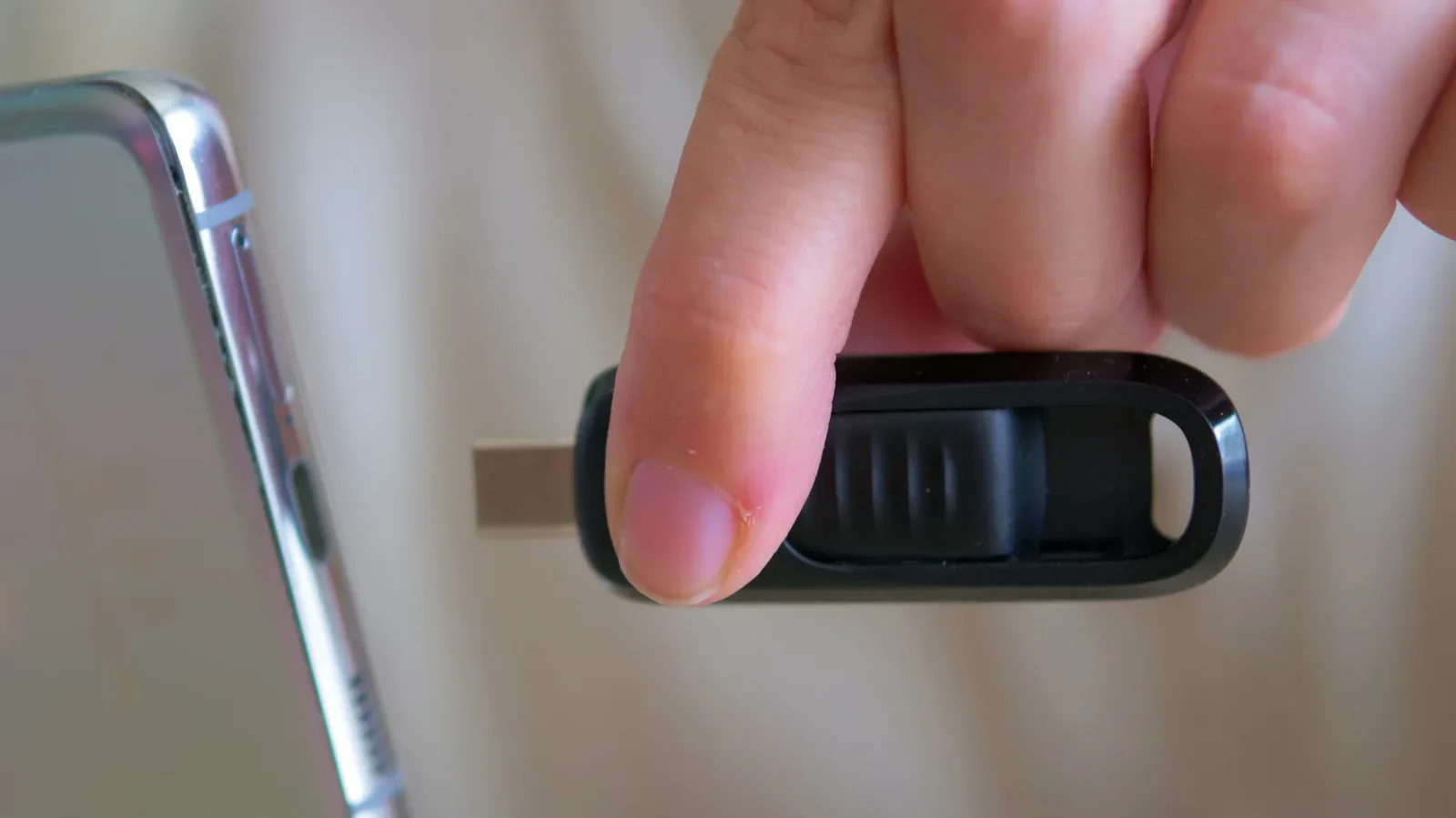
That combination of 40 fps capture and a pre-shutter buffer is potentially valuable, but it also turns card choice and file management into real considerations. The EOS R8 II has one UHS-II card slot. UHS-II is a high-speed SD-card interface, and fast media is relevant when a camera is asked to write long bursts of large image files. Buyers planning to use the speed features extensively should account for storage capacity, card performance and a reliable workflow for moving footage and photos off the card. The broader lesson is familiar across creator hardware: connectors alone do not establish performance, as the practical differences in USB-C and USB-A storage speeds also demonstrate.
In-body stabilization changes the low-light equation
The original R8 lacked in-body image stabilization, often shortened to IBIS. The R8 II adds 5-axis stabilization, rated for up to 7.5 stops of shake reduction when paired with supported lenses. In straightforward terms, stabilization counteracts small involuntary movements of the camera during an exposure. The five axes refer to several kinds of rotational and shifting movement that can produce blur when shooting handheld.
A “stop” is a photographic measurement that represents a doubling or halving of light. Canon’s 7.5-stop figure is a stabilization rating rather than a promise that every handheld shot will be sharp at every setting. Actual results depend on the lens, the photographer’s movement, the subject’s movement and shooting conditions. A person or animal moving through the frame can still blur even if the camera itself is held perfectly steady.
Nevertheless, IBIS has clear everyday implications. It can support slower shutter speeds for static scenes, potentially reducing the need to raise ISO in dim settings. ISO is the camera’s sensitivity setting; increasing it can make an exposure brighter, but can also carry image-quality trade-offs. Stabilization can additionally smooth handheld video. Canon calls the R8 II the lightest full-frame camera with 5-axis stabilization, at 1.2 pounds or 546 grams, which makes the feature notable for people prioritizing a compact full-frame kit.
There is an intentional trade-off in the package. The LP-E17 battery is rated for 340 shots in power-saving mode, and the rear display and electronic viewfinder are relatively basic for the broader class. The camera has a 3-inch, 1.62-million-dot vari-angle rear screen and a 2.36-million-dot electronic viewfinder. A vari-angle screen can be moved and oriented for high, low or forward-facing compositions, which is useful for both stills and video, but its resolution is not the sole measure of a camera’s practical usability. Battery expectations, meanwhile, deserve special attention from anyone attracted by lengthy high-speed sessions or video use.
Autofocus expands beyond simply finding a face
The EOS R8 II uses Canon’s Dual Pixel CMOS AF II system, with 100 percent coverage and recognition/tracking for people, animals and vehicles. Autofocus coverage describes how much of the frame can be used for autofocus operation. Full-frame coverage matters because subjects do not always stay politely near the center of the composition; it gives the system scope to detect and follow them closer to the edges.
Subject tracking means the camera attempts to maintain focus on a recognized target while that target moves around the scene. Canon says tracking is more tenacious than on the original EOS R8. As with any automated focus system, that is a performance claim rather than an assurance that it will solve every complicated scene. Overlapping subjects, obstructions and erratic motion are inherently demanding situations. Still, the stated people, animal and vehicle coverage gives the R8 II a broad starting point for common action and event photography.
One higher-tier feature is the ability to register particular people for tracking, a capability otherwise associated here with the EOS R6 III. This is more specific than generic face detection. Where a group includes multiple recognized faces, registering an individual gives the camera a means to prioritize that person. That could be relevant for repeat coverage of a particular performer, family member or subject, although the usefulness will naturally depend on the situation and setup.
The autofocus improvements apply to video as well as still photography. That continuity matters for creators who alternate between photographs and clips, because they do not have to approach moving subjects as if they are using two entirely separate camera systems.
Video capabilities remain robust, with modest change elsewhere
Canon has not radically rewritten the R8 II’s video specification. It records 4K at 60p oversampled from the sensor’s full 6K width, plus uncropped 1080p at 180 fps. Oversampling involves drawing on more image data than the final output resolution requires, then reducing it to the chosen recording resolution. In principle, that process can help deliver detailed 4K footage. “Uncropped” 1080p means the camera uses the full stated image area rather than narrowing the field of view through a crop.
The 180 fps Full HD option is intended for slow-motion capture when interpreted at a lower playback frame rate. Canon also provides a separate Slow & Fast mode, though a mode name should not be mistaken for a substitute for deliberate choices about shutter speed, movement and playback timing. The practical draw is flexibility: creators have 4K 60p for high-resolution footage and a much faster 1080p setting for motion-focused clips.
Internal video options include 10-bit 4:2:2 recording with Canon Log3, using HEVC or AVC codecs at bit rates up to 250 Mbps. These are technical terms with workflow consequences. 10-bit recording retains more tonal gradations than 8-bit recording, which can be useful in color correction. 4:2:2 describes chroma subsampling, or how color detail is recorded relative to brightness detail; it is commonly valued when footage will receive more serious color work. Canon Log3 is a log profile meant to preserve a broader-looking tonal range for later grading, rather than delivering a fully finished appearance straight from the camera.
HEVC and AVC are video compression codecs. Codec choice can affect compatibility, file efficiency and editing demands, while bitrate is the amount of data assigned to each second of video. Higher data rates can preserve more information but require more storage and can create heavier files. These options make the R8 II capable of a more deliberate video workflow, but they also mean that shooting settings should fit the user’s editing hardware, storage and delivery needs.
Additional creative tools include Positive Filmtone, Negative Filmtone and Night Scene looks, along with an A+ Automatic Exposure setting that includes a blurred-background option for movies. These are convenience-oriented image choices rather than replacements for lens selection, subject distance or lighting. A blurred background is fundamentally tied to depth of field, and a setting can guide results without abolishing the physical limits of the scene.
Price, kit choices and the decision in front of buyers
The EOS R8 II is available to pre-order for $1,899 as a body, with shipping scheduled to begin in late October. Canon will also sell it with an RF24-50mm F/4.5-6.3 IS STM lens for $2,099. The EG-E2 Extension Grip costs $100, while the new Speedlite EL-5 Ver.2 flash is priced at $379.
The pricing is a reminder that “entry-level” now describes placement within a manufacturer’s lineup more than an automatically low barrier to entry. The body’s feature list is unusually focused: a retro-influenced exterior is paired with concrete operational upgrades, including the joystick, 40 fps electronic burst rate, pre-continuous capture, subject tracking and IBIS. Conversely, prospective buyers should weigh the single card slot, basic display and viewfinder specifications, and 340-shot power-saving rating against the way they actually shoot.
For someone moving from a camera without stabilization, the addition of IBIS may be the headline change. For someone shooting action, the autofocus, speed and buffer improvements may carry more weight. Video-focused users get powerful recording modes and improved tracking, but should assess whether their storage and post-production setup suits 10-bit, 4:2:2 and Log3 files. The EOS R8 II’s defining pitch is not nostalgia alone; it is a light full-frame body that applies a classic visual cue to a notably more capable set of modern tools.