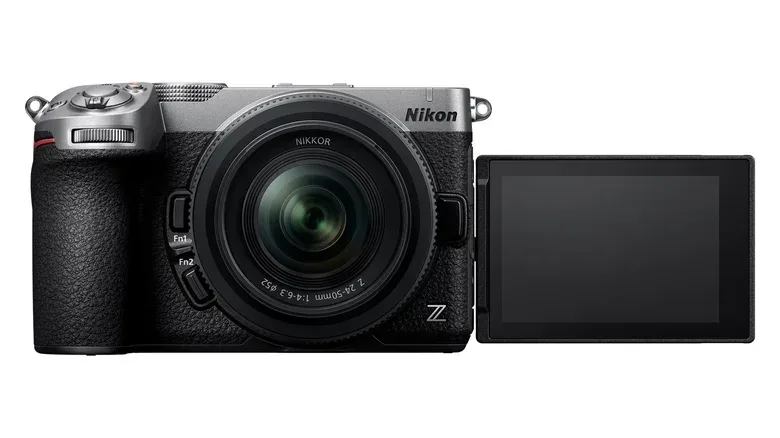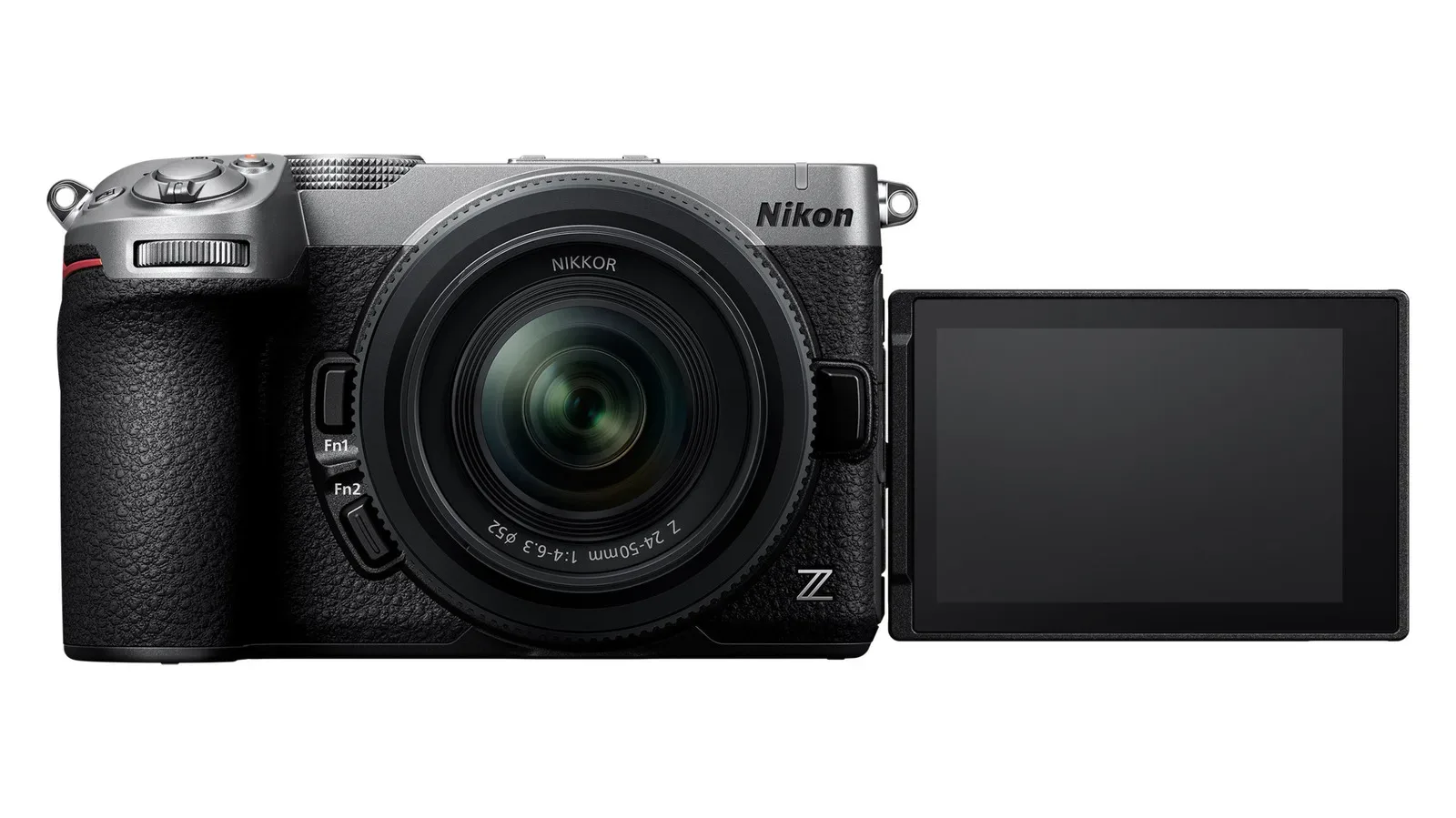
Nikon’s Z5 IIC takes an unusually direct route to making a full-frame mirrorless camera more attainable: it removes the electronic viewfinder. That change leaves the new 24-megapixel model dependent on its rear display for composing images, but it also cuts size, weight and cost while preserving much of the Z5 II feature set—including internal N-RAW video, in-body image stabilization and subject-detection autofocus.
The body-only Z5 IIC is available to preorder for $1,400. A bundle with Nikon’s Z 24-50mm f/4.3-5.3 kit lens is listed at $1,700. For creators weighing a first full-frame camera, the headline is not simply that this is a cheaper body. It is that Nikon has kept a set of tools normally associated with more ambitious photo and video work, while choosing a compromise that will be painless for some users and decisive for others.
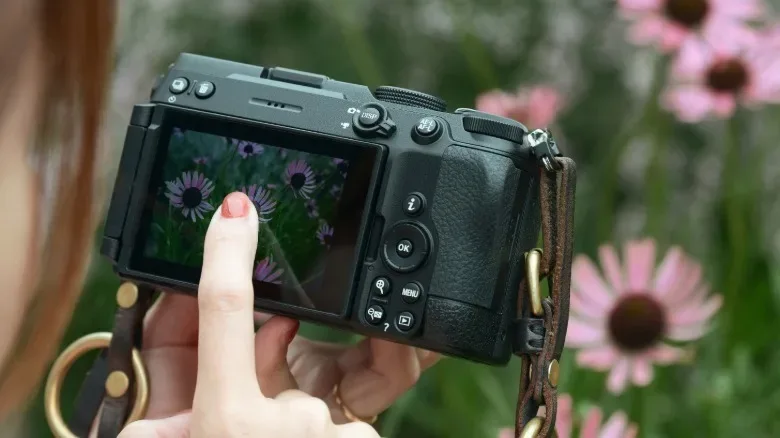
The missing EVF is the entire point—and the main caveat
An electronic viewfinder, commonly shortened to EVF, is the small screen a photographer looks through at eye level. In a mirrorless camera it shows a live digital view from the sensor, rather than the optical image delivered by a DSLR’s mirror and prism. It can be extremely useful for shooting in bright daylight, bracing a camera against the face, or working quickly when a rear screen is awkward to see.
There is no EVF on the Z5 IIC. Nikon’s savings here are tangible: electronic viewfinders are costly hardware, and the compact model weighs 537 grams, compared with 700 grams for the Z5 II. That is nearly a 25% reduction. The “C” in the name stands for compact.
This does not mean Nikon has made a tiny control-free body. The Z5 IIC still has a full-sized grip and a useful selection of manual controls. It does, however, lose the Z5 II’s joystick and some additional buttons. That matters because physical controls can make rapid changes to autofocus points, exposure settings or menus less disruptive. The trade-off is particularly relevant for photographers used to working with a camera raised to the eye. They should treat the absent viewfinder as a workflow decision, not a minor bullet point.
For people who already frame everything from a rear monitor—particularly solo video creators—the design has a clearer upside. The Z5 IIC uses a fully articulating 3.2-inch, 1.04-million-dot touch display. A fully articulating screen can face forward, making it possible to check framing while standing in front of the camera. It can also be positioned at angles that are more practical for low or high shots. Nikon is offering a silver-and-black version in addition to the body’s broader compact-minded pitch.
Video specifications lean strongly toward vlogging and learning filmmaking
The Z5 IIC records 4K video at up to 30 frames per second using the full width of its 6K sensor data, then reducing that image to 4K. This process is called supersampling. In simple terms, the camera starts with more image information than the final 4K file requires, which can help produce a detailed result.
It can also record 4K at 60 fps, although that mode applies a 1.5x crop. A crop means the camera uses a smaller central portion of the sensor, so the field of view becomes tighter with the same lens. It is not inherently a bad mode, but it changes lens planning. Someone accustomed to a wide shot at a given focal length will see a narrower frame at 4K/60p. The camera also offers 1080p recording at 120 fps, a setting suited to slow-motion playback.
The standout specification at this price is internal N-RAW recording with N-Log support. RAW video retains more flexible image data than a conventional compressed delivery file, allowing greater latitude when adjusting a shot’s color and exposure in post-production. Log recording is designed to preserve a wide range of brightness information in a flatter-looking image, which is then graded later. Neither format automatically makes footage cinematic, and both ask more of editing, storage and color work. But their inclusion makes the Z5 IIC a potentially useful learning platform for creators who want room to develop beyond quick, ready-to-post clips.
H.265 recording is supported as well. H.265 is a more compressed video codec intended to keep files manageable while retaining good quality. For straightforward projects, it may be a more practical choice than RAW. The meaningful point is choice: the camera can accommodate a simpler compressed workflow or a more involved one built around RAW and log material.
Tools that solve practical solo-shooting problems
Nikon has added several features that specifically address common creator tasks. A front-facing REC light lets a presenter know when recording is active. Its product review mode is intended to move focus from the presenter to an object held up for the camera, then back again. That is an especially recognizable requirement for product explainers, collectibles coverage and hands-on demonstrations. A carefully framed miniature-painting or display-piece video, for example, benefits from reliable focus shifts more than from a large feature checklist; see how close presentation can matter in this miniature paint demonstration story.
The Z5 IIC also includes 15 scene modes covering subjects and environments including portraits, pets, food, night landscapes and twilight scenes. These are automated shooting presets intended to steer the camera toward settings appropriate to a type of scene. They may be most useful to new owners still learning exposure decisions, rather than to users who prefer complete manual control.
Other production aids are more technical. A waveform display represents image brightness across the frame, giving a videographer a way to judge exposure beyond what a screen’s apparent brightness suggests. Focus peaking overlays highlights on areas that appear sharply focused, which helps when focusing manually. Zebras add striped overlays to areas reaching a chosen brightness threshold, warning that highlights may be nearing or reaching clipping. Nikon also includes imaging recipes, with some originating from cinema-camera company RED, for users who want predefined looks.
Autofocus, stabilization and burst shooting broaden the appeal
The Z5 IIC uses the same video autofocus system as the Z5 II. Nikon says subject detection covers people, animals, birds, vehicles and fish. Fish detection is the memorable entry on the list, but the broader value is that the camera is designed to recognize several kinds of moving subjects rather than requiring the user to place focus manually for every shot.
Its in-body image stabilization is rated for up to 7.5 stops of shake reduction. Image stabilization counters small camera movements, helping users obtain steadier footage and potentially use slower shutter speeds for still images. A “stop” is a doubling or halving of exposure, so the rating indicates a substantial claimed correction range. Real results will still depend on shooting technique, lens choice, subject movement and the situation, but stabilization is a particularly consequential inclusion in an affordable full-frame body for handheld creators.
For still photography, the camera offers bursts of up to 14 frames per second in RAW and JPEG with continuous autofocus. Continuous autofocus means the system continues trying to track focus as a subject or camera position changes. It can reach 30 fps in electronic-shutter mode, but that top rate is JPEG-only. RAW files retain more editing flexibility, while JPEG files are processed in-camera and generally ready to share with less work.
The expanded ISO range reaches ISO 64,000. ISO is a camera’s sensitivity setting: higher values can make shooting in low light possible, but can also introduce more visible image noise. The specification signals low-light ambition, though it should not be read as a guarantee that every ISO setting will suit every output or lighting condition.
Where Nikon’s cost cutting is most visible
The viewfinder is the defining omission, but it is not the only reduction versus the Z5 II. The Z5 IIC has one SD UHS-II card slot rather than two. UHS-II is a faster type of SD-card interface that can be helpful for demanding stills and video capture. A single slot is workable for many creators, but it removes an option some photographers use for immediate in-camera backups or for separating file types across cards.
There are also fewer physical controls, including the absent joystick. Again, neither compromise necessarily disqualifies the camera. The right question is whether the intended work is screen-led and deliberate, or whether it demands redundancy, eye-level framing and frequent tactile setting changes.
- Best fit: creators who film themselves, need a forward-facing display, want full-frame imaging and value internal RAW video, stabilization and a lower carry weight.
- Potentially less suitable: photographers who rely on an EVF in outdoor light, users who want dual-card redundancy, or anyone who expects a dedicated joystick and a denser set of direct controls.
- Workflow consideration: 4K/60p has a 1.5x crop, so lens choice and desired framing should be considered before assuming every video mode delivers the same angle of view.
Nikon’s Z5 IIC is therefore not merely a stripped-down Z5 II. It is a distinct compact proposition built around the rear screen. At $1,400 body-only, its combination of a 24MP full-frame sensor, articulating display, N-RAW and N-Log recording, subject detection and up to 7.5 stops of stabilization makes the trade-off unusually focused. The camera removes a major photographic interface, then directs the resulting savings toward a lighter body and video-oriented capability. For the right creator, that is a sensible exchange; for a viewfinder-first shooter, it is likely the one compromise that no spec sheet can soften.