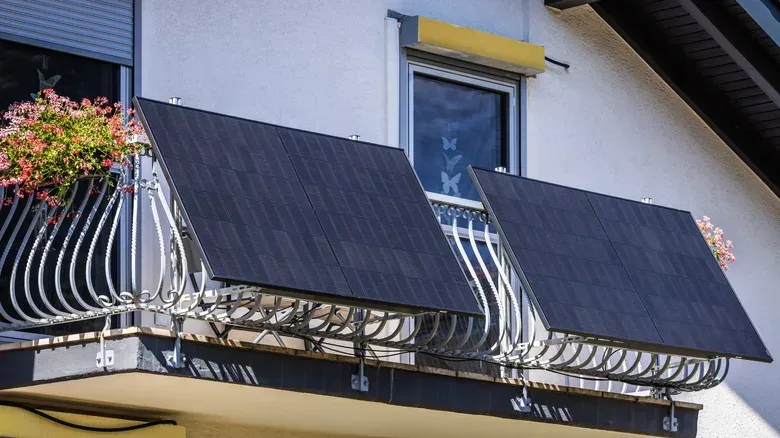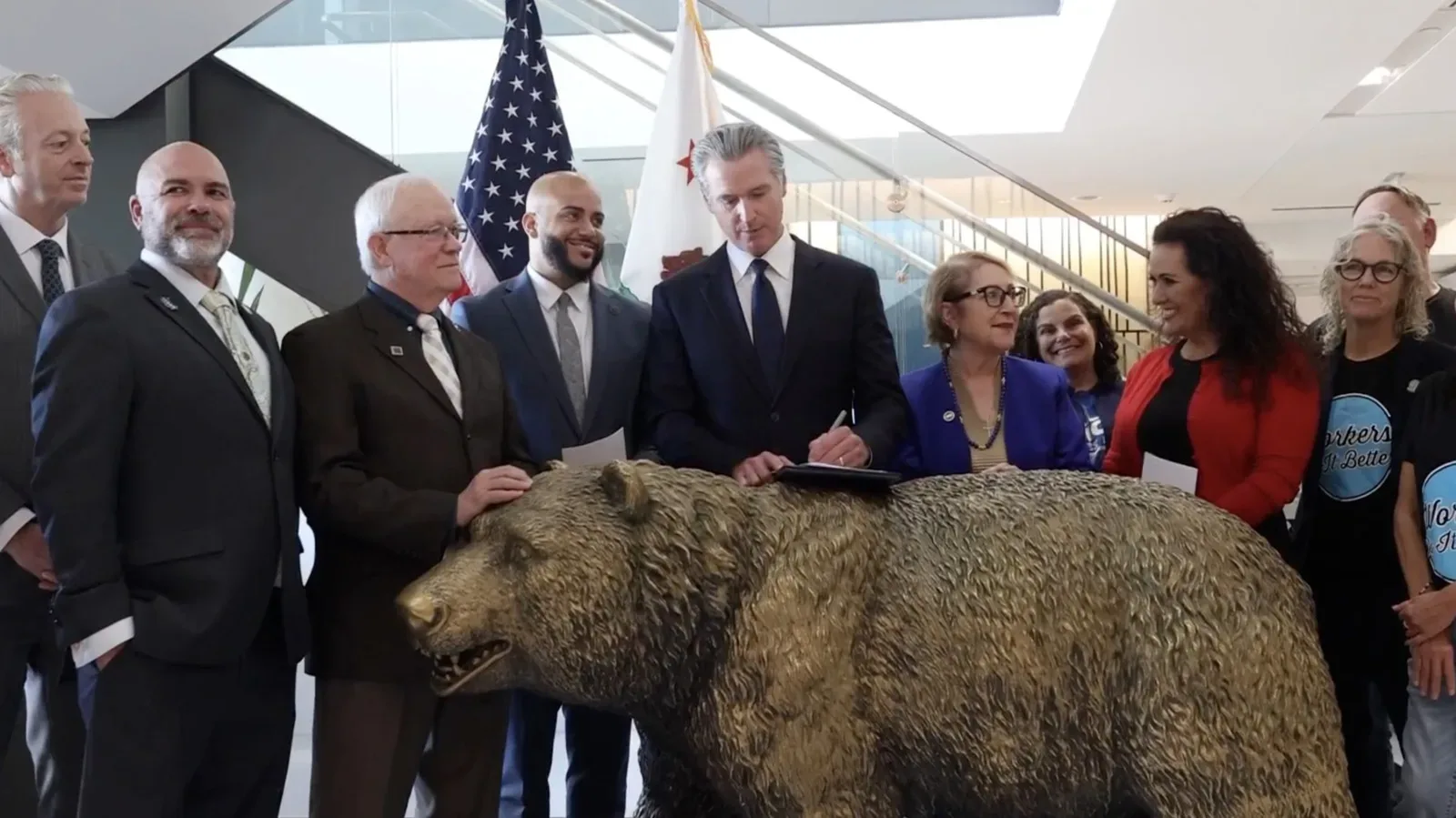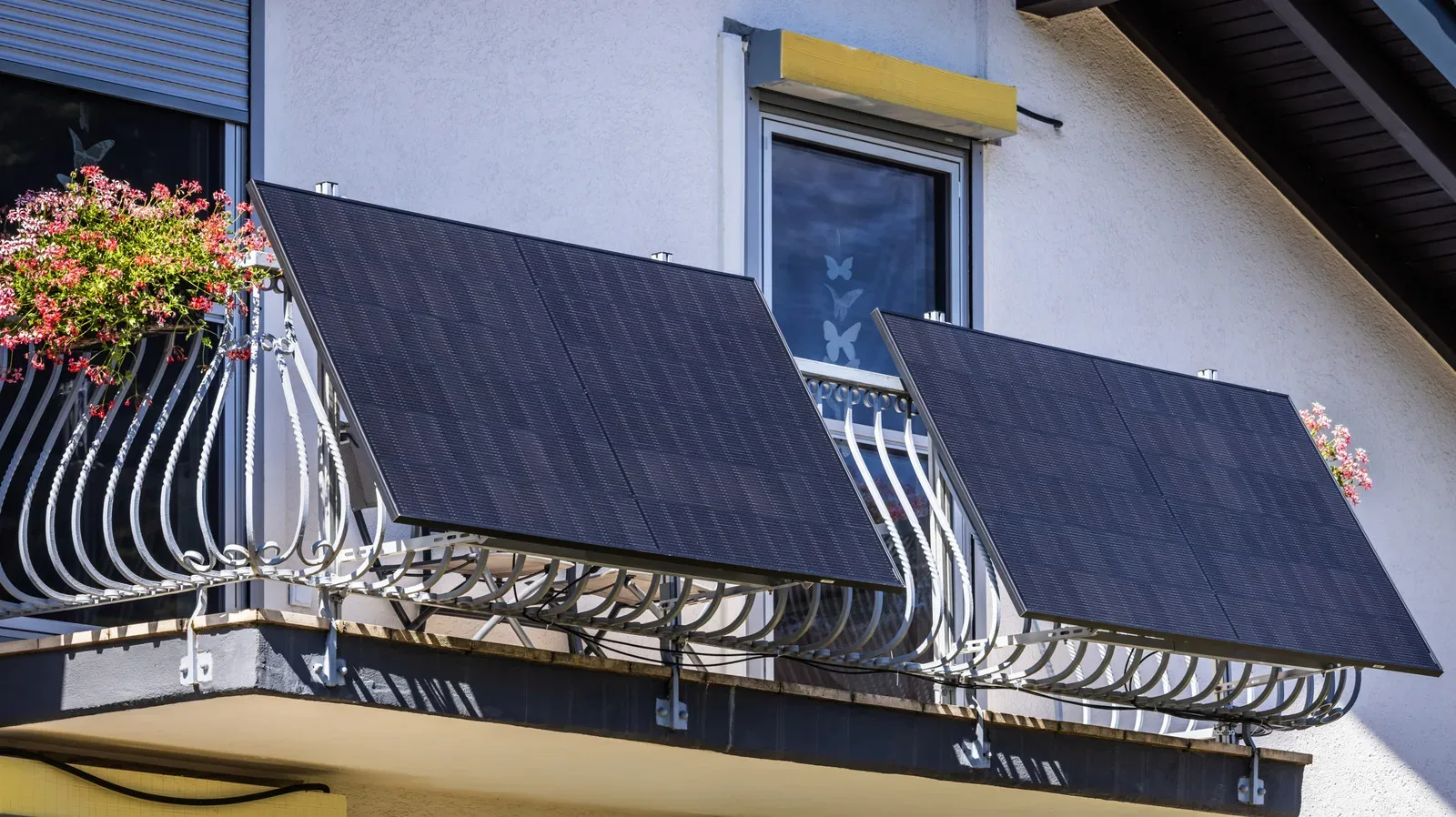
California is preparing to allow a smaller, more accessible kind of home solar setup: plug-in systems often described as balcony solar. The state’s Plug and Play Solar Act was signed by Governor Gavin Newsom on September 30 after receiving overwhelming bipartisan support. It takes effect on January 1, 2027.
The headline is simple enough to sound like an instant win for apartment dwellers and people shut out of conventional rooftop solar. A panel, a compact inverter and, potentially, a battery could let a household produce some of its own electricity without committing to a full rooftop project. But the California law’s early reality will be more complicated. Systems are capped at 1,200 watts, must satisfy outside safety certification requirements, and may require a specialized plug-and-receptacle arrangement that brings an electrician back into a process marketed as plug-and-play.
That does not make the law meaningless. It makes it a meaningful new legal opening with a limited first wave of compatible hardware. For Californians interested in cutting some daytime electricity use, the important thing is not merely that the law exists; it is whether a specific product is certified and whether the required electrical connection works for their living situation.
What California has approved
California joins nine other US states that have approved plug-in solar installations. The new law permits installations up to 1,200W. That is a very different scale from a conventional rooftop solar installation, which can exceed 6,000 watts.
A 1,200W cap is not a replacement for a large residential array intended to cover a substantial share of a home’s overall consumption. The stated practical framing is more modest: enough capacity to run a refrigerator and several small appliances. In other words, this is best understood as a way to offset part of a household’s demand rather than a tiny device that makes a residence electrically independent.
The limit broadly matches the approach in many other states, although Colorado allows up to 1,920W. The California figure establishes a ceiling for this category of installation, so shoppers should be especially wary of assuming that every system marketed as plug-in solar elsewhere will qualify in the state.
The law also removes a hurdle associated with rooftop solar: plug-in systems will not need to be registered with utilities in the way rooftop installations do. The process described for the new framework is simple, free and subject to immediate approvals. That streamlined approach is central to the appeal. Traditional solar can involve more equipment, a more involved installation and utility-facing paperwork; this legislation is aimed at a smaller, standardized alternative.
Balcony solar, translated from the product label
A typical balcony solar kit contains at least one solar panel and a microinverter. Solar panels generate direct current, or DC. Homes use alternating current, or AC, so the microinverter’s task is to turn the panel’s DC output into 120V AC electricity appropriate for the household electrical environment.
Some systems can also include a battery backup. That matters because panels generate electricity when there is sunlight, while a household may want to use stored energy later in the evening. A battery is therefore an optional part of the setup rather than something inherent to every balcony solar kit.
Compared with rooftop solar, the attraction is lower complexity and the possibility of self-installation. Such kits are usually presented as products that connect through a standard AC socket. That distinction helps explain why advocates see them as potentially useful for renters: renters commonly do not control a roof, and may have far less ability to authorize a major electrical or construction project.
It is also why the exact safety rules matter so much. A system that needs a nonstandard connection and professional electrical work can still be useful, but it does not offer the same low-friction proposition as a kit that can simply be placed, connected and operated without alterations.
The certification rule is the immediate bottleneck
California is requiring UL certification or an equivalent outside safety certification. At present, the relevant plug-in solar standard identified for this purpose is UL3700, and the available list of certified products is short.
Safety standards can sound like dry paperwork, but the protections described by UL3700 are directly relevant to a device that produces electricity and connects to a residence. The standard addresses accidental contact with hazardous electrical components, overload protection and preventing electrical current from flowing in the wrong direction. Those are foundational safeguards, not cosmetic product labels.
The catch is UL3700’s defining connection requirement: a uniquely configured, non-NEMA plug-and-receptacle system. NEMA refers to the familiar standard patterns used for many electrical plugs and receptacles in the US. A non-NEMA arrangement is not simply the ordinary outlet connection consumers may picture when they hear “plug-in.”
That rule may require a certified electrician for many installations. It is a major practical limitation, particularly for renters. An electrician-installed connection can involve landlord permission, building rules and electrical access that not every tenant has. So while the law creates a path for a renter-friendly category of solar product, the first compliant options may not be universally renter-simple.
The policy creates permission for small-scale solar, but certification and connection requirements will determine how easy it is to use in practice.
Do not buy a kit solely because the law is coming
The clearest consumer takeaway is patience. California’s law takes effect in 2027, but a prospective buyer should not treat every existing balcony solar listing as California-ready. A product needs to meet the state’s certification expectations, and the connection requirement may affect both installation cost and feasibility.
There are currently only a handful of UL3700-certified products, including products from Hoymiles, APsystems and Mango. The Environmental Working Group, which sponsored the bill, expects two more companies to receive approval by the end of the year, with products reaching shelves not long afterward in 2027. That expectation is encouraging, but it remains an expectation rather than a guarantee of broad selection on day one.
A sensible pre-purchase checklist follows directly from the policy:
- Verify the certification: Look for UL3700 or an equivalent certification that satisfies California’s rule; do not infer compliance from general safety language.
- Confirm the connection method: Find out whether the product uses the required specialized plug and receptacle and whether a certified electrician is needed.
- Check the 1,200W limit: The total planned installation must remain within California’s cap.
- Assess rental and building constraints: Tenants may need approval even if the state law permits the equipment category.
- Set realistic expectations: A 1,200W system is a partial-demand tool, not a full rooftop substitute.
- Consider whether evening power matters: A battery backup may be relevant for households that want to use solar-produced energy after sunlight hours.
These points are less glamorous than a claim of “solar in a box,” but they are what separate a promising legal change from a purchase that actually fits a home. The same kind of practical thinking matters whenever compact consumer technology meets real household infrastructure—much as portable, power-hungry tech shapes the conversation around a face-mounted Steam Deck-style headset.
Why utilities fought the measure
Major California utilities including PG&E and SDG&E opposed the bill, citing safety concerns. They also argued that the technology could push them to raise prices, shifting extra costs onto customers who do not have a solar option.
That opposition highlights the wider policy tension around distributed energy. At the household level, a small solar system is about lowering the amount of grid electricity a participant buys during productive periods. At the utility level, widespread adoption raises questions about safety, grid management and who ultimately pays for the shared system. The supplied arguments do not resolve that debate, but they explain why the law’s technical restrictions are not incidental details.
The 1,200W cap and outside certification requirement can be read as guardrails in that larger argument. They keep the newly allowed category bounded: small installations, recognized safety requirements and a defined connection standard. That may constrain convenience in the early market, but it also establishes a framework in which more products can seek qualification.
What to watch through 2027
The next milestone is not another abstract promise; it is the arrival of additional certified products. More approved manufacturers could give consumers meaningful choices and potentially make balcony solar more practical in California. Product innovation may also help make systems closer to the genuinely plug-and-play experience the name suggests.
Until then, the law should be viewed as a start rather than a finished consumer ecosystem. California has cleared a legal path for systems up to 1,200W and reduced the utility-registration burden attached to rooftop solar. Yet the certified equipment pool remains limited, and the specialized receptacle requirement may be the central real-world barrier for many households.
For people who can accommodate that connection and find compliant hardware, balcony solar could become a relatively affordable way to offset some daytime power use. For renters in particular, the potential remains notable—but access will depend on certified products, installation needs and the permissions of the buildings where they live.