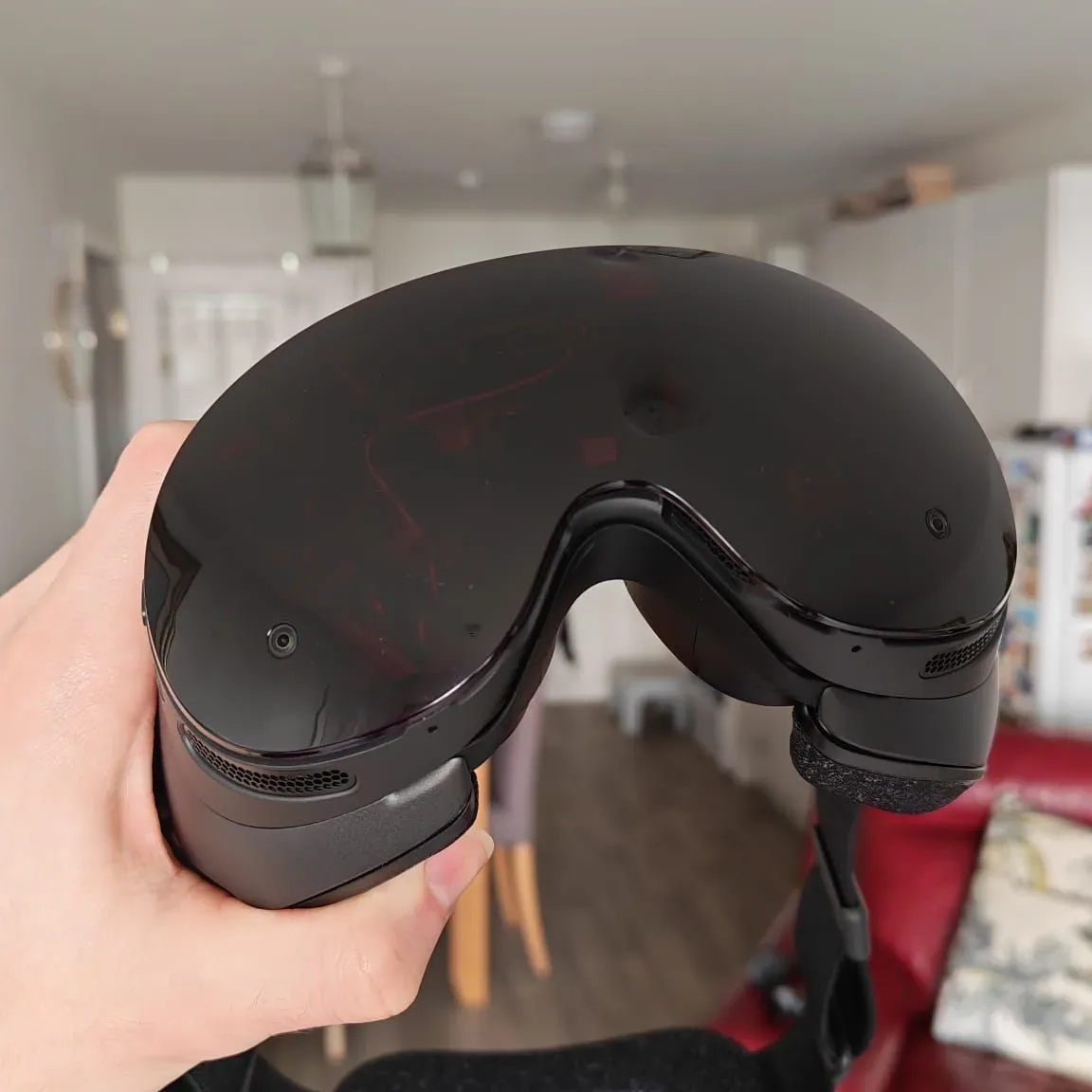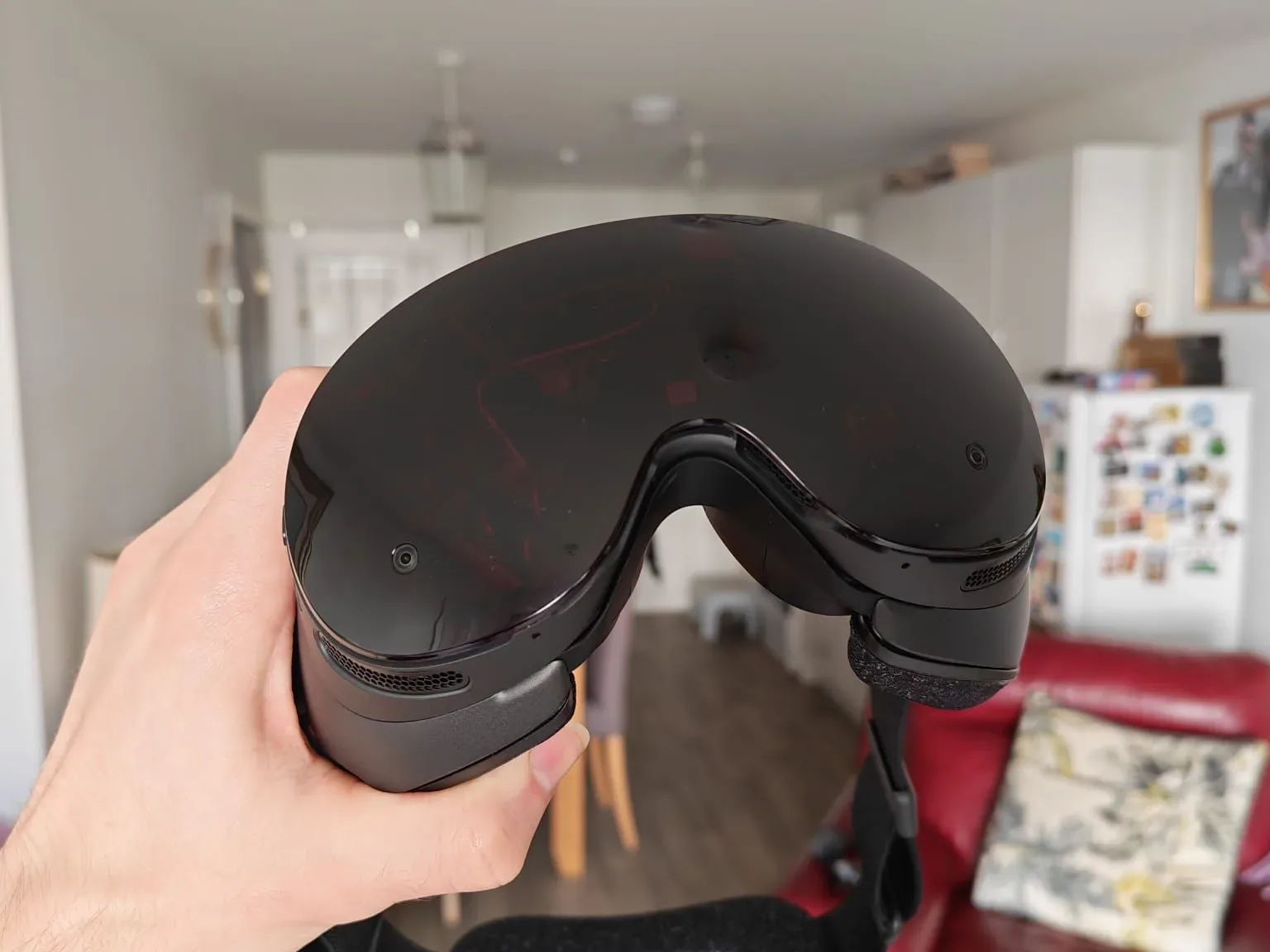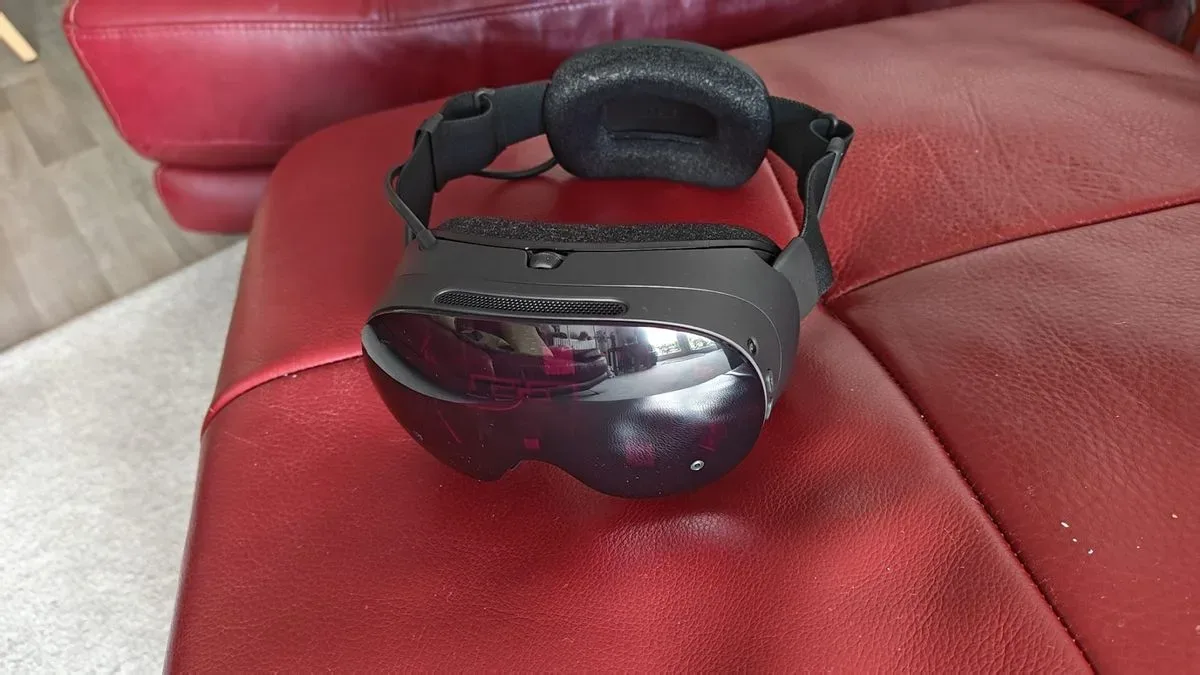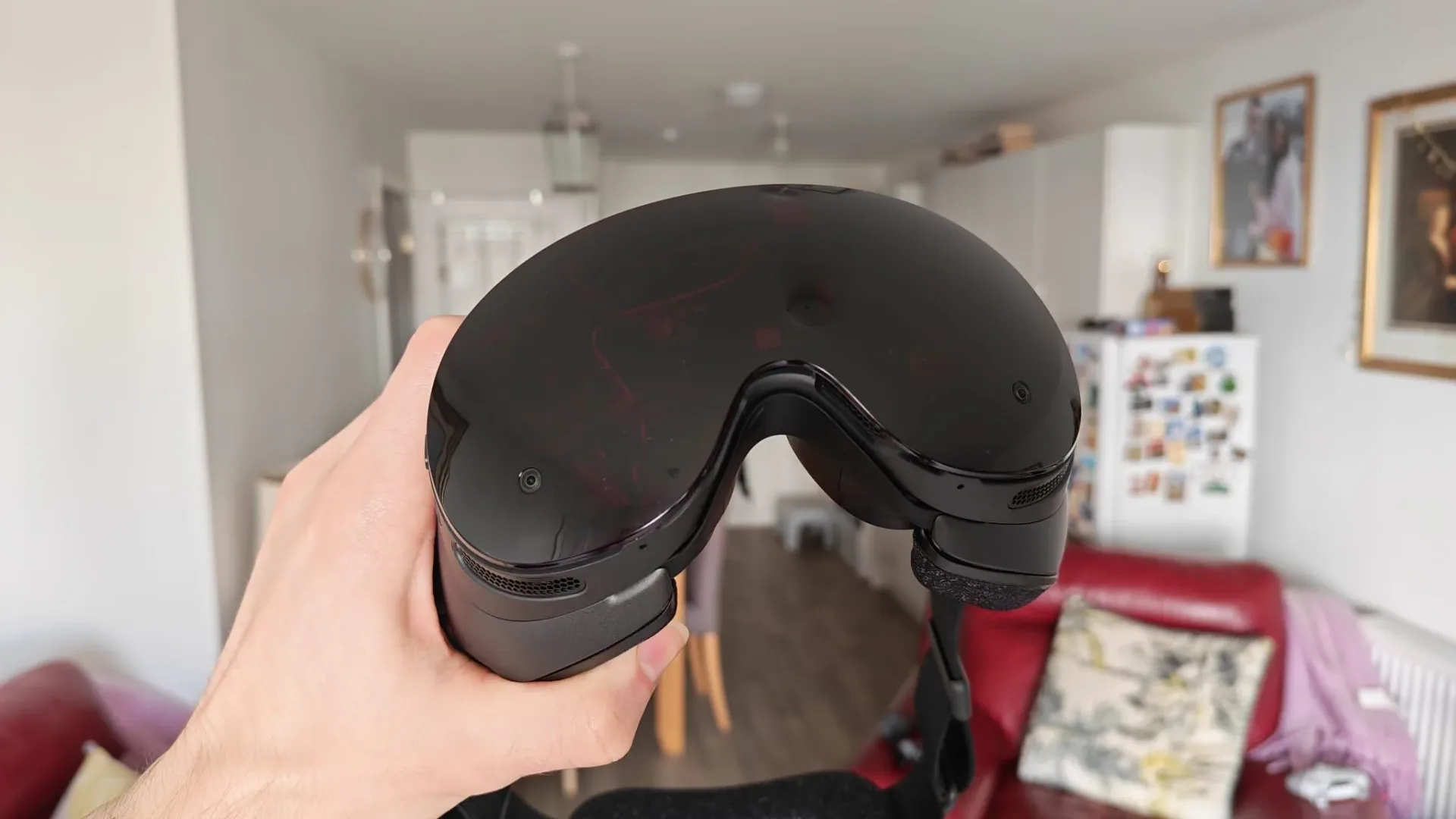
Valve’s Steam Frame has a straightforward but potentially consequential pitch: it is a VR headset that may also serve as a portable Steam PC with a huge virtual display. An early evening spent playing Big Walk away from a gaming PC puts that idea into sharper focus. The headset reportedly ran the game natively at low settings, accepted a Bluetooth controller without noticeable latency, and supported a multiplayer session lasting from roughly 9 p.m. until 12:30 a.m.—with one major, very handheld-like interruption for charging.
That is not enough to settle a review, establish broad compatibility, or prove how the hardware handles demanding new releases. It does, however, identify a much more practical use case than the usual image of room-scale VR: taking a familiar Steam library to a place where there is no gaming setup at all.
For players whose multiplayer plans are often threatened by travel, family visits, cramped temporary accommodation, or simply not having their desktop PC nearby, that distinction matters. A headset that can natively run selected conventional PC games in a virtual cinema-style view could be less of a novelty peripheral and more of an alternative form factor for Steam gaming.
A social session became a meaningful portability test
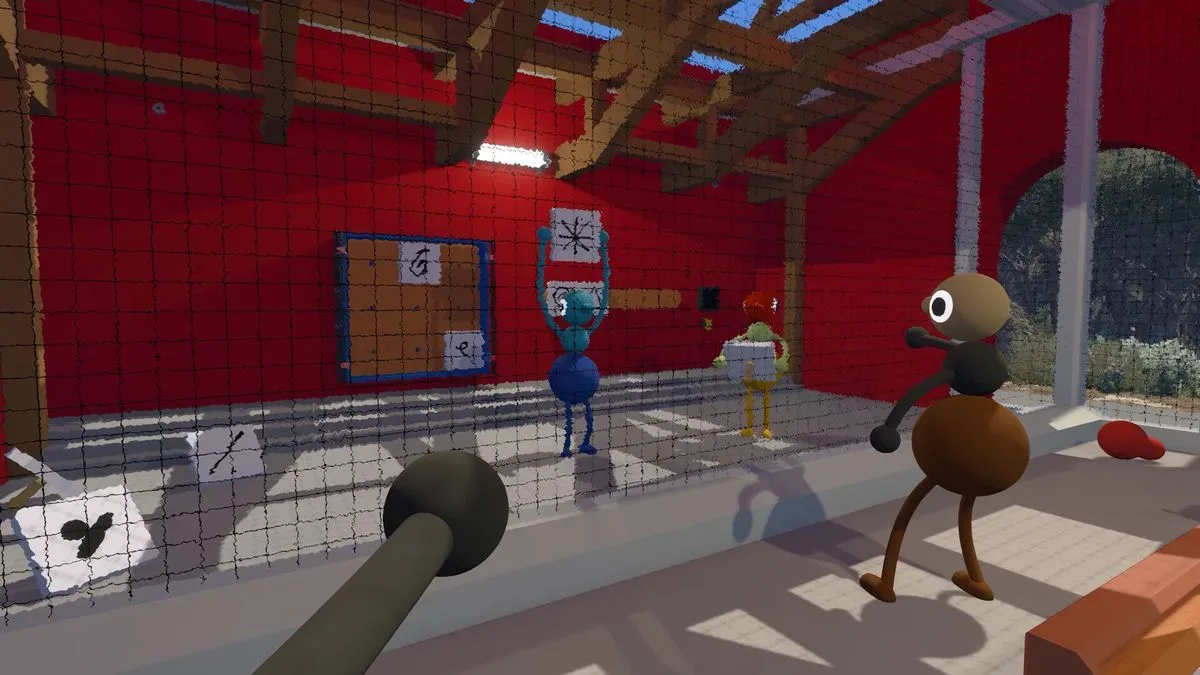
The setup was appropriately ordinary. While staying away from home in Edinburgh, with no gaming PC available, the player connected Steam Frame to Wi-Fi, paired a controller over Bluetooth, and joined two friends in Big Walk. The game’s proximity chat—voice communication determined by the relative position of players in the game world—was particularly important. It meant the group could communicate without depending on a separate voice-chat app.
That last point is not trivial. Multiplayer gaming on portable hardware is rarely only about whether a game launches. It also depends on the less glamorous parts of getting together: network connection, controller support, voice communication, battery planning, comfort over several hours, and whether the player can stay connected long enough for the evening to feel normal rather than improvised.
In this instance, the game reportedly ran flawlessly at low settings, despite being described as a title that can place enough demand on hardware for the PlayStation 5 to stutter at times. The Bluetooth controller was said to work without latency, and the headset fit required only a couple of adjustments during the session. Those are encouraging observations, but they should remain framed as a single use case with one game, one network environment, and low graphical settings—not as a blanket performance guarantee.
The large caveat arrived after about an hour: Steam Frame needed to be plugged in because of battery drain. That compromises the fantasy of uninterrupted, completely untethered evening-long gaming. Yet it does not erase the broader benefit. Handheld PC owners already routinely manage charging during longer sessions; a headset that becomes a plug-in-at-the-sofa device after its initial wireless stretch can still be valuable when the alternative is having no access to a capable Steam machine at all.
The key feature may be a virtual screen, not virtual reality
VR hardware is often assessed primarily through its native VR games, tracked controllers, motion interaction and display technology. Steam Frame’s potentially wider appeal lies elsewhere: using the headset as a personal, oversized virtual screen for ordinary games. The comparison is to PSVR 2’s Cinematic mode, where a PS5 game can appear on a virtual display rather than needing to be designed as a VR game.
Related coverage includes Steam Frame's Big Walk Test Highlights Its Potential as a Portable Steam PC.
In practical terms, this is not the same thing as turning Hades, TowerFall Ascension, or Big Walk into VR titles. The player is still using a standard gamepad and looking at a flat game image inside the headset. The advantage is the feeling of playing on a large private display without transporting a television, monitor, dock, or laptop. For a late-night session in a living room or spare room, that can be an unusually neat solution.
This also changes how Steam Frame should be compared. Against dedicated VR headsets, it has to compete on comfort, display quality, VR software and price. Against handheld PCs, it is being asked a different question: can it run enough of a player’s existing Steam library, far from a desktop, in a sufficiently convenient package? The answer from this test appears to be yes for lighter games, with considerable boundaries around battery life and raw performance.
Those boundaries deserve emphasis. Steam Frame is not described as having the most powerful processor or best battery life, and the headset does not use Micro-OLED panels. Micro-OLED is a display technology associated with very small, high-density screens, the sort that can be useful in headsets where the panel sits close to the eyes. The absence of that technology does not prevent the virtual-screen concept from working, but it means the product should not automatically be treated as an image-quality leader.
Likewise, “native” play is an important technical distinction. It means the headset runs Steam games on its own hardware, rather than merely displaying video streamed from another PC or cloud service. Streaming can be extremely useful, but it brings dependencies: a host computer, a subscription in some cases, service support, and network quality. Native play is the reason Steam Frame can resemble a wearable Steam Deck in this specific scenario.
Indies look like the sensible target, while AAA expectations need restraint
The early results point toward a familiar portable-PC pattern. TowerFall Ascension and Hades were reported to run beautifully, alongside the low-settings Big Walk session. These are the kinds of games a player might sensibly prioritize on mobile hardware: responsive, relatively compact experiences that work naturally with a controller and do not necessarily demand cutting-edge graphics hardware.
By contrast, the latest high-demand AAA releases are expected to struggle. “AAA” is industry shorthand for large-budget, major-publisher releases that commonly make heavy demands of a CPU, graphics processor, memory, storage and battery. That does not mean every big game will behave the same way, nor does it establish a tested list of supported titles. It means prospective buyers should not assume Steam Frame has the headroom of a full desktop gaming PC simply because it provides access to Steam.
That expectation-setting is central to the device’s appeal. Steam Deck succeeded without competing at the top of the PC performance ladder; its strength was the ability to bring a broad PC library into places where a conventional PC did not fit. Steam Frame’s proposition appears adjacent to that one, except the display travels with the player as well. The trade-off is obvious: the display is worn on the face, which makes fit, comfort and charging much more important than they are on a handheld.
For shoppers already browsing PC games suitable for less demanding mobile play, these Steam sale picks are a useful reminder that a game library’s value is not measured only by its newest graphical showcases. A headset-PC hybrid does not need to conquer every release to make existing purchases more accessible.
The price argument depends on which shelf Steam Frame belongs on
Steam Frame is listed at £899 / $1,059, which is undeniably expensive. Compared strictly with VR headsets, it sits above the $599 Meta Quest 3, while the Quest 3S is presented as a more affordable option. Those headsets can reach similar large-screen outcomes through tools and services such as Virtual Desktop, Xbox Cloud Gaming, or Steam Link.
But those routes are not identical to the reported Steam Frame experience. Virtual Desktop and Steam Link are methods for showing content from another computer on a headset. Xbox Cloud Gaming, as its name suggests, runs games remotely in cloud infrastructure and delivers a video stream. All can be compelling, but their value rests more heavily on a reliable network and, in some configurations, access to other hardware.
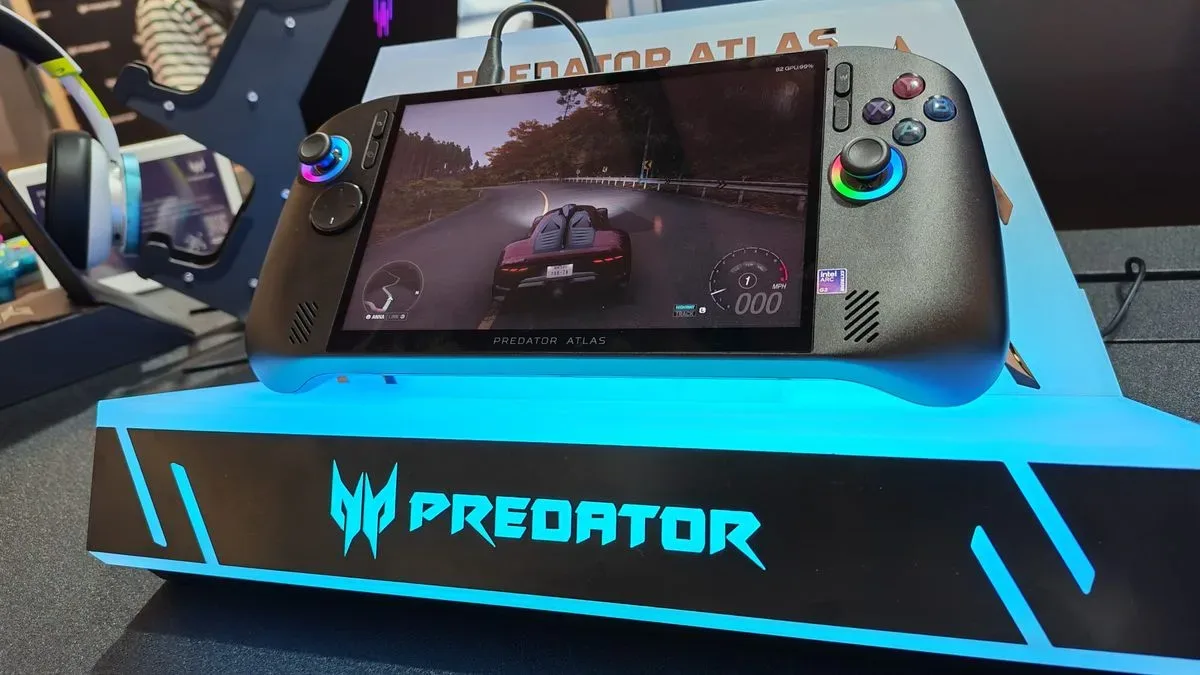
Steam Frame’s argument is that it can execute Steam games locally. Put next to current handheld PCs, the cost looks less isolated. The Acer Predator Atlas, cited as an example of a handheld using Intel’s newer graphics chips, is said to cost the same as or more than Steam Frame at $1,300. That does not establish that performance is comparable; benchmark testing would be needed for that. A benchmark is a repeatable test designed to compare performance under controlled conditions, and none is available here to resolve the question.
Still, the comparison clarifies the product category. Buyers should not only ask whether Steam Frame is a better VR headset than a Quest 3. They should ask whether it is worth paying for a VR headset and a portable native Steam machine in one device. For someone who primarily wants standalone VR games, a lower-cost headset may make more sense. For someone who already has a sizeable Steam library and frequently wants a personal big-screen setup away from home, Steam Frame’s unusual combination could carry more weight.
Discord remains the uncomfortable practical gap
The successful Big Walk session also exposed a limitation that could affect many other games. Discord reportedly could not be made to work on Steam Frame, and its desktop mode is not exactly the same as Steam Deck’s. Since Big Walk includes proximity chat, the group did not need Discord. Many online games do not provide an adequate built-in alternative.
This is the sort of issue that can matter more than frame rate to a group of friends. A game may be playable, look good on a virtual screen and support a paired controller, but it is much less useful for a social night if everyone’s established voice channel cannot come along. It is reasonable to hope that support improves, but it should not be treated as solved until it actually works.
There is a wider lesson in the Steam Frame test. Hardware versatility is not only a specification-sheet claim. It is the ability to reproduce the small habits of PC play—joining a call, connecting a controller, signing in to Wi-Fi, finding power, and settling in for several hours—without making the player regret leaving home. Steam Frame appears to have made a strong first case for that with modest Steam games and built-in game chat. Battery limits, uncertain performance in demanding titles, and missing Discord functionality ensure the case is not complete.
For now, its most persuasive identity is not necessarily “the next essential VR headset.” It is a premium portable Steam device whose screen happens to wrap around the user’s field of view. For the right library, the right game night, and a nearby power outlet, that may be a genuinely useful twist on PC gaming.