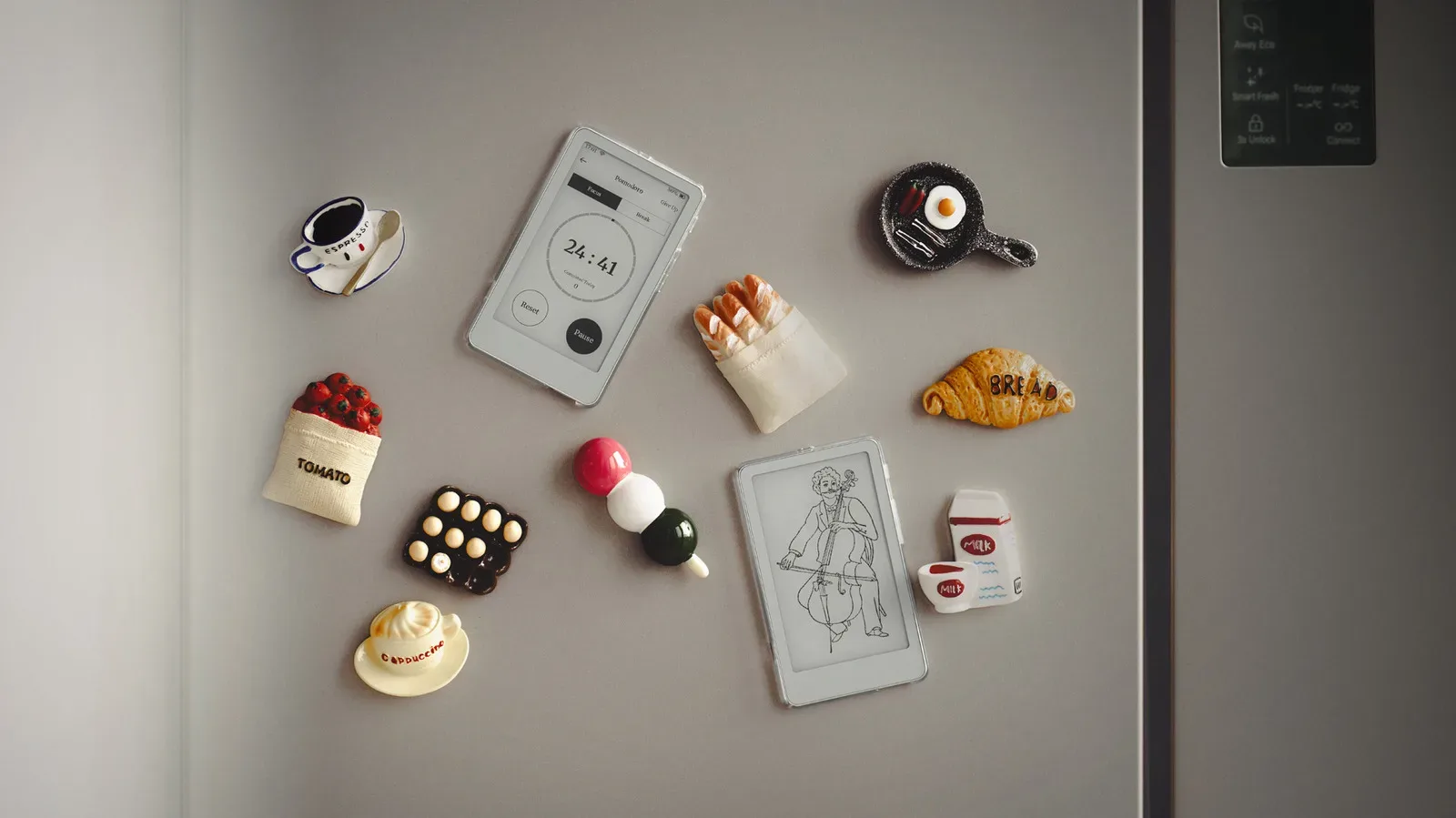
There is something almost mischievous about making an eReader the size of a playing card. Boox has opened preorders for the Picco, a tiny monochrome ePaper reader built around a 3.94-inch display and a stated weight of roughly 58 grams. It starts at $100 and is expected to begin shipping in November.
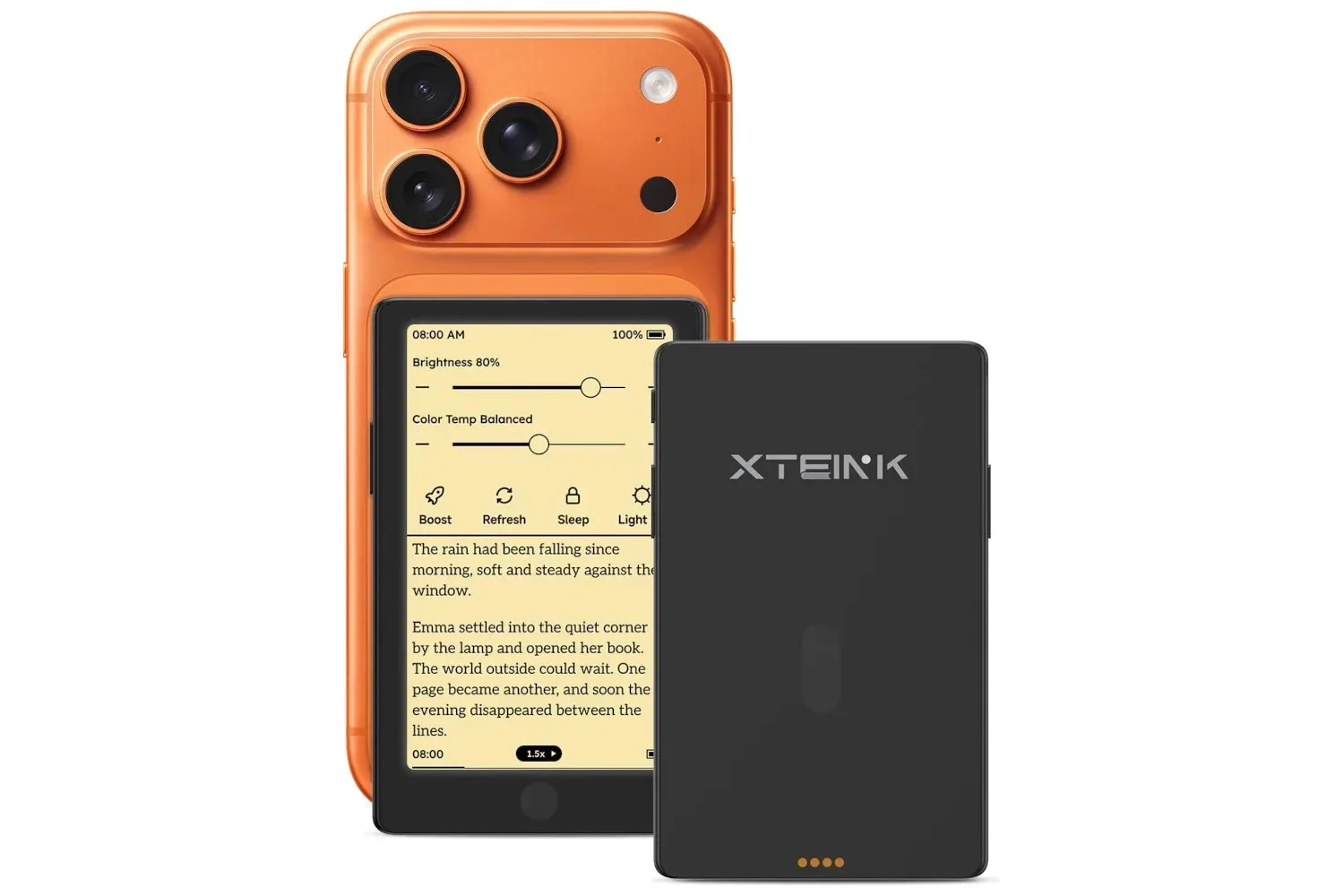
The headline feature is unquestionably scale. Most reading devices make their case through a screen large enough to recreate a comfortable page; the Picco heads in the opposite direction. Its body is described as being about the size of a standard playing card, turning the product into less of a small tablet and more of a dedicated pocket reading object. Boox is also bundling a magnetic ring case that lets the Picco attach to the back of a smartphone, giving the idea an unusually literal interpretation of “take a book with you.”
That compactness does not mean Boox has made the Picco input-free. The device includes physical page-turn buttons as well as touchscreen controls, and it supports four-way screen orientation. Its front light can be adjusted between warm and cool settings. On paper, that is a focused but meaningful control set for a reader designed around quick, mobile use rather than a full-size display experience.
A pocket-size reader with deliberately modest ambitions
The Picco’s 3.94-inch display is monochrome ePaper at 235 PPI. PPI, or pixels per inch, measures pixel density: the figure describes how tightly pixels are packed into the panel rather than the panel’s physical size. Here, the stated specification sits alongside the more important practical point: this is a notably small screen. The Picco is not trying to make a long novel look like a printed paperback page. Its appeal is having a dedicated reading screen in a form that does not require reserving space in a pocket, bag, or hand.
That creates an obvious trade-off. Less screen area means less text can be visible at one time, so readers should expect more page turns than they would on a larger eReader. Boox’s inclusion of page-turn buttons looks especially sensible in that context. Touch controls offer flexibility, while buttons provide a direct way to advance through a book without relying solely on taps. Neither control method cancels out the other; together they make the small format less dependent on any one way of holding the device.
Four-way orientation is another small but useful detail. It means the Picco can be used in multiple rotations rather than dictating a single upright position. On a device this compact, orientation flexibility may matter for how comfortably someone can position the buttons or fit the reader alongside a phone and case.
The adjustable front light is similarly practical. “Warm” and “cool” refer to the color character of the light illuminating the screen: warm light has a more amber appearance, while cool light appears whiter. The Picco gives users a way to change that lighting to suit their surroundings or preference. The supplied details do not establish battery life, charging behavior, waterproofing, file support, wireless features, or software capabilities, so those are areas prospective buyers will need to verify independently rather than infer from the device’s small size or ePaper panel.
Storage is unexpectedly expansive
Boox says the Picco comes with a 16GB microSD card and supports storage expansion up to 2TB. That maximum is striking next to the device’s physical dimensions. The included card establishes that removable storage is part of the package, while the 2TB ceiling creates room for a much larger library than the tiny reader’s body might suggest.
Related coverage includes Boox Picco Preorders Open for Card-Sized eReader.
Storage capacity is not the same thing as confirmed content support. The information available identifies the microSD capacity and maximum expansion, but does not specify ebook formats, document formats, audiobook support, library-service integration, storefront access, or how files are transferred. Still, expandable storage is a tangible proposition for readers who prefer to keep their files with them rather than treating a small device as a narrowly limited sampler.
There is also a nice symmetry to the design. The Picco is physically constrained in the place where it must be—the display and chassis—but potentially generous in the place where it does not have to be: library capacity. A reader may need to accept smaller text or more frequent turns on a 3.94-inch screen, yet they are not necessarily accepting a small collection.
The magnetic phone case is the key to the concept
The magnetic ring case may be the Picco’s most revealing accessory because it explains what kind of product Boox is pursuing. Attaching the reader to the back of a smartphone is not merely about storage; it turns the phone into a transport companion while allowing the reading task to remain on a separate monochrome ePaper screen.
That is a compelling distinction for anyone who wants a compact dedicated reader without adding another loose object to a bag. The case is intended to keep the Picco readily available rather than buried among everyday carry items. It also makes the Picco feel less like a replacement for a phone and more like a specialized extension of one.
There are sensible practical questions left open by the available specifications. The description does not say whether the ring case fits every phone or case arrangement, how the magnetic attachment is implemented, or whether the setup affects access to a phone’s cameras, controls, charging hardware, or other accessories. Those are not minor details for a product whose portability pitch depends so strongly on living beside a smartphone. Buyers should examine compatibility information before treating the case as an automatic fit for their own setup. The broader lesson resembles the one behind the compromises that phone cases can introduce around device hardware: an accessory can be useful precisely because it changes how a device is carried, but that change deserves scrutiny.
Boox Tiles begins with an unusual form factor
The Picco is Boox’s first product under what it calls Boox Tiles, a label for more unusual or creative shapes beyond the company’s typical tablets and eReaders. The stated aim is to bring ePaper technology into more parts of daily life. That description is broad, but the Picco supplies a clear first example of the approach: take the basic reading-device function and prioritize an extreme level of portability.
It is too early to read an entire product strategy into one device, and no other Boox Tiles products are identified here. But the Picco’s design suggests that the category is defined less by raw specifications than by placement and purpose. A conventional eReader asks how much reading surface a person wants to carry. This one asks how little space a dedicated reader can occupy before it stops being practical.
That framing gives the Picco a particular audience. It may appeal to people who already carry a smartphone everywhere but want reading separated from the same device that handles messages and other attention-grabbing tasks. It may also appeal to readers who want a second, ultra-portable reader rather than a substitute for a larger eReader. Conversely, people who prioritize seeing more text on a page, reading large-format material, or minimizing page turns may find the compact display less attractive. Those are implications of the stated dimensions, not claims about any particular person’s experience.
What is confirmed before November
- Preorders are open.
- The Boox Picco starts at $100.
- Shipping is expected to begin in November.
- It has a 3.94-inch monochrome ePaper display rated at 235 PPI.
- It weighs about 58 grams and is described as roughly playing-card sized.
- Controls include a touchscreen and physical page-turn buttons.
- The screen supports four-way orientation.
- The front light offers adjustable warm and cool settings.
- A magnetic ring case is included for attaching the Picco to the back of a smartphone.
- It comes with a 16GB microSD card and supports expandable storage up to 2TB.
The Picco’s pitch is refreshingly specific: it is a reader that aims to be present without becoming another bulky item to carry. The small display will be the central decision point, because it is both the reason the product exists and the biggest departure from familiar eReader expectations. But with page buttons, touch input, orientation options, adjustable lighting, bundled magnetic carry hardware and considerable expandable storage, Boox has paired that intentionally tiny panel with features that acknowledge how a device like this will be used.