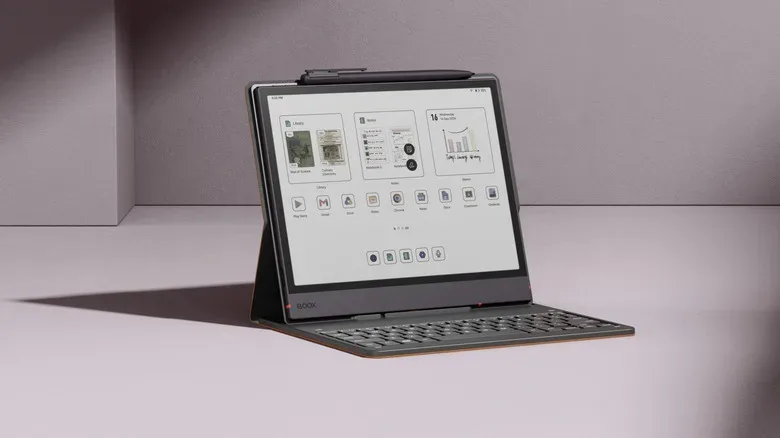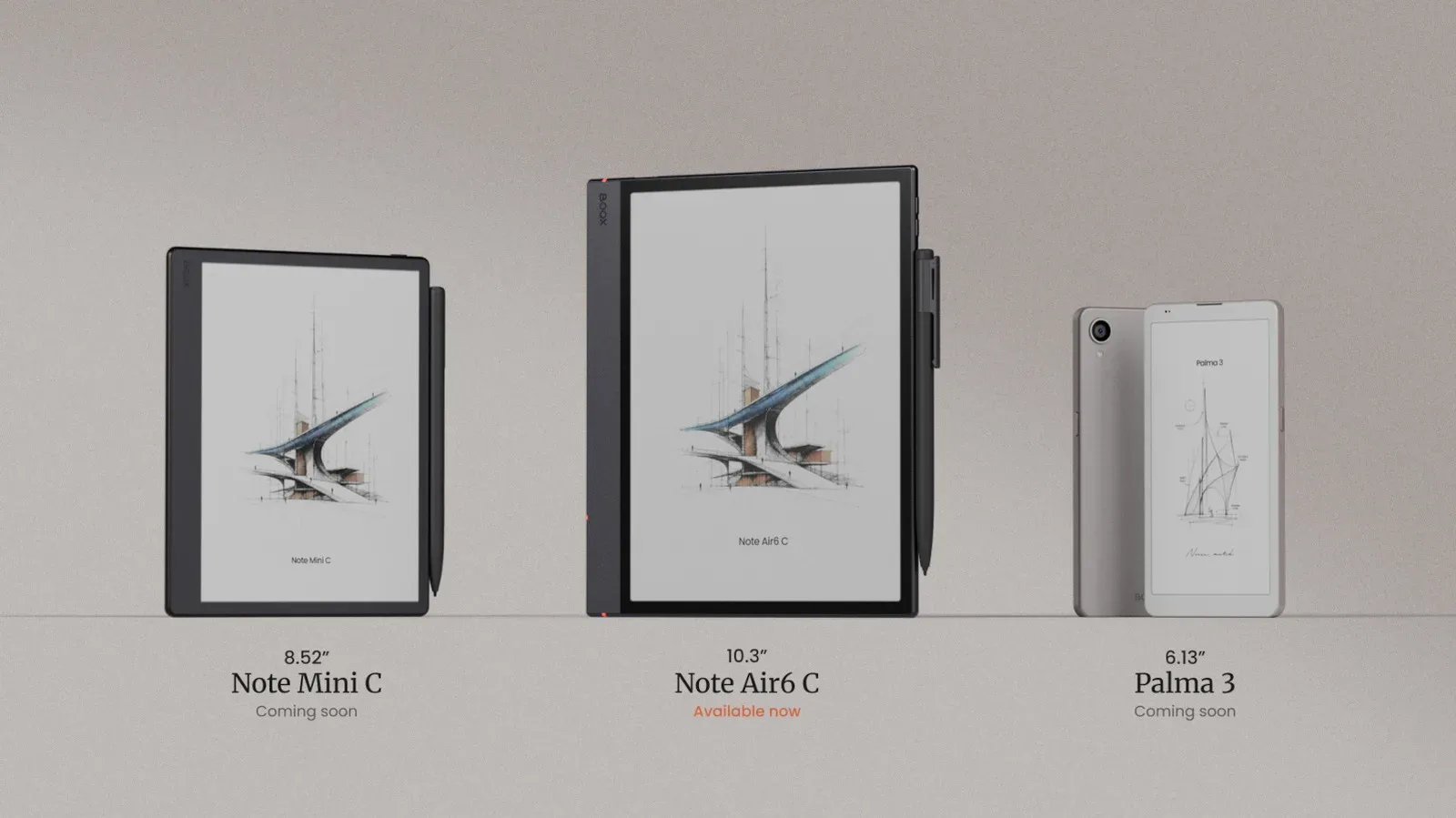
Boox has introduced the Note Air 6C, a refreshed 10.3-inch color E Ink tablet that puts its biggest emphasis on a familiar limitation of the category: speed. The company says an upgraded processor reaching up to 2.9GHz delivers a 45% increase in processor speed over the Note Air 5C and enables PDF page turns that are 40% faster.
That claim matters because the Note Air line is not positioned simply as a book reader. Its larger display, stylus support, Android software and document-friendly format make it a device built around reading, annotating and managing files as much as casual ebook consumption. Page changes and scrolling are small interactions, but they occur constantly while working through a long PDF, marking up notes or moving through an app. If the claimed improvement holds up across those tasks, it could make the difference between an E Ink device that feels deliberate and one that feels needlessly sluggish.
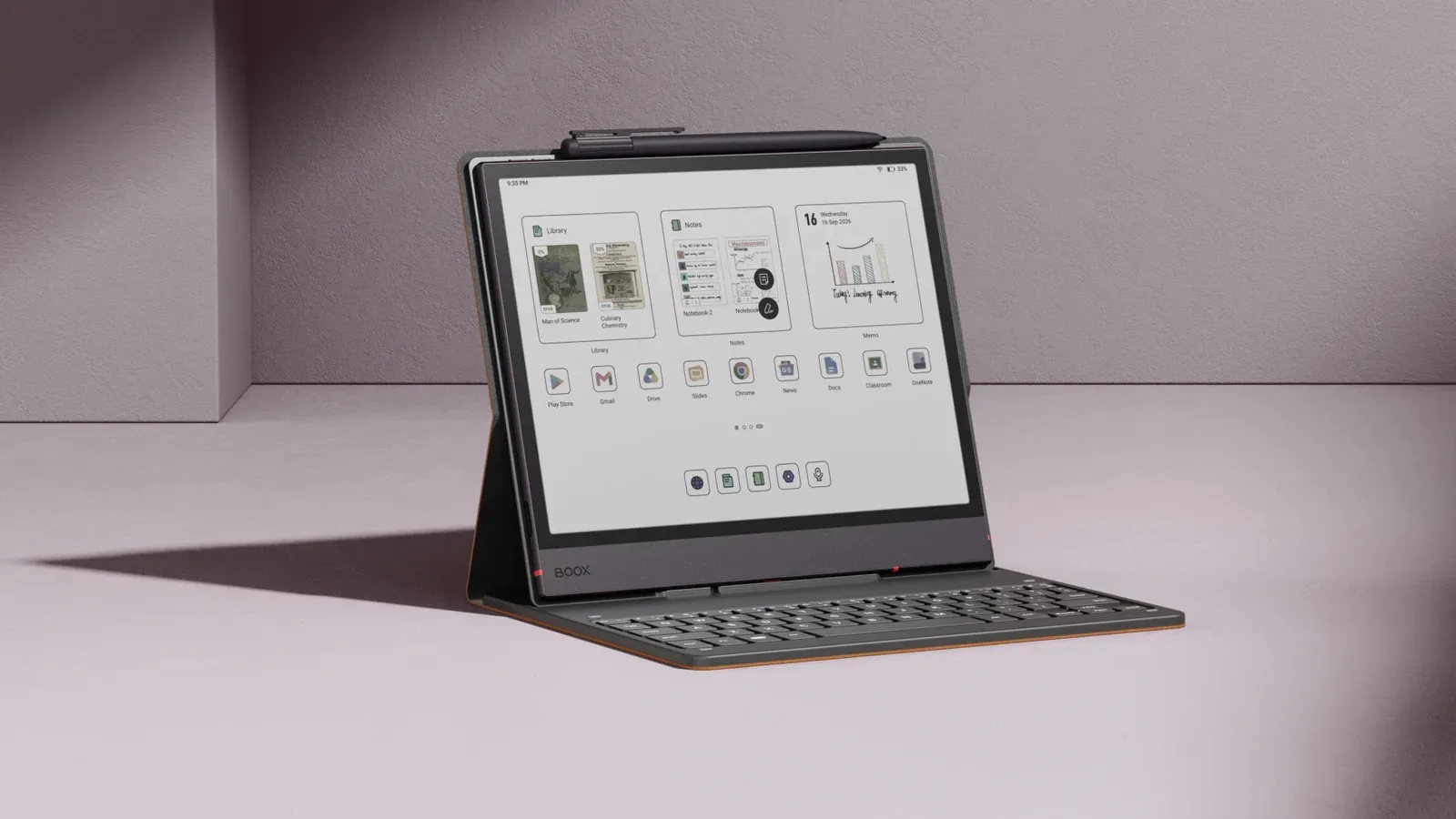
The Note Air 6C is available now at $580 in a bundle containing a folio case and replacement Pen3 tips. That is $50 more than the $530 Note Air 5C. A version bundled with a keyboard cover costs $690, with a launch-period discounted price of $657.
Why page-turn speed is the headline feature
E Ink is display technology designed to resemble ink on paper more closely than a conventional backlit tablet panel. That makes it well suited to reading and notes, but it comes with trade-offs when the image on screen needs to update. Rapid scrolling, browsing and other dynamic activity can expose those limits more readily than a static page of text.
Boox says it has also revised the Note Air 6C’s refresh mode to make scrolling, web browsing and apps with dynamic content feel more fluid. A refresh mode is the behavior that determines how an E Ink display redraws what is on screen. In practical terms, it is relevant whenever the device is asked to behave less like a fixed document and more like a general-purpose Android tablet.
There is an important distinction in the company’s stated performance figures. The 45% processor-speed increase is a comparison with the Note Air 5C, while the 40% figure specifically concerns PDF page turning. Neither number automatically describes every app, scrolling scenario or workflow. Still, PDFs are among the clearest use cases for a 10.3-inch note-focused E Ink device, so this is a more useful target than a vague promise that everything is faster.
The upgrade is therefore iterative, but pointed. Boox has kept several core specifications from the previous model while focusing on the responsiveness of the activities owners are likely to repeat: opening documents, moving between pages, navigating software and handling changing onscreen content.
Android 16 and Play Store access widen the tablet’s role
The Note Air 6C runs Android 16, moving beyond the Android 15 software on the Note Air 5C. It also has full access to the Google Play Store. That combination gives the device a substantially broader software premise than a closed reading ecosystem: it can use Android apps alongside its core document and reading functions.
That flexibility is useful, but it makes the refresh-mode claim more consequential too. A general Android app may involve feeds, menus, websites and other interface elements that change more often than an ebook page. E Ink remains a different proposition from a conventional tablet display, so access to apps should not be mistaken for a guarantee that every app will feel identical to one on an LCD or OLED device. Boox’s update appears intended to improve that gap where it can, particularly in browsing and dynamic content.
Software-version changes are also increasingly central to mobile hardware refreshes. For a wider look at how platform updates can expand device capabilities, see the latest iOS 27.2 beta language-support update. The Note Air 6C’s case is different—its key software point is Android 16 and Play Store access—but both illustrate how an operating system can meaningfully shape what hardware is able to do.
Display, memory and storage: what stays the same
The 10.3-inch screen presents black-and-white material at 300PPI and color material at 150PPI. PPI, or pixels per inch, measures pixel density. Here, the supplied specifications make clear that monochrome content has the higher quoted density, while color content is presented at half that figure. Readers whose work is primarily text, black-and-white PDFs or handwritten notes will be working with the 300PPI mode; color material has a different resolution balance.
Boox lists 6GB of RAM, unchanged from the preceding two generations. RAM is the working memory used while software is active. Holding at 6GB means the Note Air 6C’s speed story is not a straightforward memory-capacity increase. The stated performance gains instead center on the upgraded processor and the refreshed display behavior.
Built-in storage remains 64GB, with a microSD card slot available for expansion. For documents and books, which can occupy relatively little space, the included capacity may be more workable than the raw number initially suggests. The microSD slot is the key practical safeguard for people maintaining a larger library or archive rather than regularly deciding which files have to leave the device.
Pen3, audio and security details
Boox includes the Pen3 stylus with the Note Air 6C. The pen does not need charging or pairing, removing two routine tasks that can undermine the appeal of a digital writing tool. Spare tips are included in the $580 folio bundle.
The tablet also retains an adjustable front light, dual speakers and adds or carries forward a set of productivity-minded hardware details: a four-microphone array for voice recording and a fingerprint sensor integrated into the power button for secure sign-ins. The front light is particularly relevant to E Ink use because it illuminates the display from the front rather than turning the device into a conventional backlit screen. The available facts do not establish battery life, recording quality or the performance of the fingerprint sensor, so those are areas prospective buyers will need to assess separately.
The keyboard-cover bundle frames the Note Air 6C as something that can sit between a reader, note device and lightweight writing machine. It is not a claim that the product replaces a laptop or a mainstream tablet; rather, the bundle provides an input option for buyers who want typed work alongside stylus use and reading.
What the upgrade means for current Note Air owners
The most concrete comparison is with the Note Air 5C. The newer model moves to Android 16, offers a processor Boox rates up to 45% faster, and is claimed to turn PDF pages 40% more quickly. It retains 6GB of RAM, 64GB of onboard storage, microSD expansion, dual speakers and an adjustable front light. Its bundle price rises by $50, from the current $530 price of the older model to $580.
For someone already satisfied with the pace of a Note Air 5C, the unchanged memory and storage specifications mean this is not an across-the-board hardware reinvention. For someone whose frustration is delay while moving through PDFs or interacting with Android apps, the refresh addresses exactly that problem. The value proposition depends less on checking a longer specification list and more on how much those moments of waiting matter in a reader’s daily routine.
Boox has presented the Note Air 6C as a refinement of a capable color E Ink formula: the same broad note-taking and reading toolkit, now with faster stated document navigation, an updated operating system and a refresh mode designed for smoother movement. At $580 with a case and extra pen tips, it arrives as a premium, focused device rather than a budget tablet—one aimed at people who want E Ink’s reading-first approach without giving up Android’s app ecosystem.