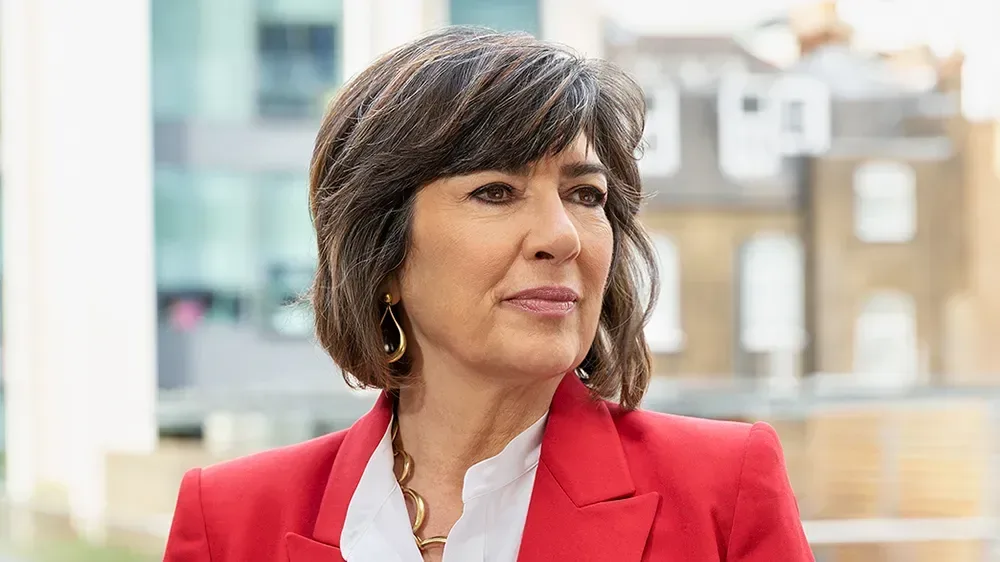
Bianna Golodryga, the global-affairs journalist and CNN anchor, may be preparing for an unusual next chapter: work with two major news organizations at once.
Golodryga announced that she is leaving CNN after nine years at the network. Separate ongoing discussions could lead to a global-affairs position at Politico and a contributor role at CBS News. The proposed arrangement remains unsettled, however, and the talks may not result in either job.
That uncertainty is the key detail. There is no completed deal, announced start date, defined programming assignment, or public confirmation from the prospective employers in the information available so far. Still, the prospect is notable because it would pair a publication focused on political reporting with a television-news contributor relationship, potentially giving Golodryga two different platforms for her international coverage and analysis.
What is reportedly under discussion
The potential Politico role would have Golodryga covering global affairs. At CBS News, she could work as a contributor. Those descriptions signal different kinds of newsroom jobs.
A global-affairs beat generally concerns international politics, diplomacy, conflict, economic relationships between countries, and the way major world developments affect audiences at home. It does not necessarily mean a single program or format; the present information does not specify whether the proposed work would be written reporting, video, interviews, analysis, newsletters, live appearances, or some combination of those formats.
A contributor, meanwhile, is usually an on-air or editorial expert relationship rather than a conventional full-time anchor slot. Contributors may appear for analysis, interviews, special coverage, or reporting tied to their expertise. The scope, frequency, exclusivity terms, and any particular CBS programs involved have not been disclosed.
The possibility of holding both positions is therefore more important than a simple outlet-to-outlet move. One role would reportedly center on global-affairs coverage for Politico; the other would potentially place Golodryga back within CBS News, where she has worked before. If finalized, the setup could allow a single journalist to operate across two editorial environments without treating one as merely a short stop before the other.
A departure after nine years at CNN
Golodryga said Thursday that she had decided to leave CNN for an opportunity she felt she could not pass up. In her social-media message, she thanked colleagues and described her CNN years as a period defined by valuable experiences, friendships, and support, while indicating that more news would be shared soon.
Related coverage includes Bianna Golodryga in Talks With Politico and CBS News After CNN Exit.
“After nine wonderful years at CNN, I’ve decided to leave for an opportunity that I couldn’t pass up,” Golodryga wrote.
Since joining CNN in 2017, Golodryga has served as an anchor for the network’s international service. She has also filled in for Christiane Amanpour and Fareed Zakaria, two prominent names in CNN’s international and global-affairs programming. Those assignments matter in evaluating the reported Politico discussions: they establish that Golodryga’s recent work has been closely tied to the subjects that the new role is said to cover.
One person familiar with the situation indicated that there may have been less room for Golodryga to expand at CNN as the network reduces the hours previously dedicated to Amanpour’s work. Christiane Amanpour also said earlier in the week that she will leave CNN next year, ending a tenure of nearly four decades across CNN and ABC News. That reported context may help explain why the timing of Golodryga’s departure has drawn attention, but it should not be mistaken for a definitive public explanation from Golodryga or CNN.
Why a two-outlet arrangement stands out
A journalist formally working with two separate news organizations has traditionally been treated as an exception, especially when the organizations may cover many of the same political or international stories. Such agreements can raise practical editorial questions: who has priority on a major story, which outlet gets a contributor’s first appearance, whether reporting can be used across platforms, and how potential conflicts are handled.
No terms addressing those issues have been made public in Golodryga’s case. Until agreements are signed and the companies explain the structure, it would be premature to assume that the roles would overlap in a particular way or that any material would be shared between them.
But the reported negotiations fit a broader shift in journalism careers. More journalists now pair a role at an established publication or broadcaster with an independent newsletter or video podcast business. The appeal is straightforward: a mainstream newsroom provides institutional reach and editorial resources, while a separate platform can offer flexibility and a direct relationship with an audience.
The Golodryga scenario is distinct from that increasingly familiar model because both prospective relationships would be with established news brands. That makes questions of independence, contracts, editorial expectations, and scheduling especially relevant. It also illustrates why a multi-platform arrangement is no longer automatically viewed as unconventional, even if it still requires careful boundaries.
For audiences, the practical effect would depend entirely on the eventual job definitions. A Politico global-affairs role could place her reporting in a political-news setting, while CBS News contributor appearances could bring her expertise to television coverage. The value of that combination, if it happens, would be the ability to reach readers and viewers through formats that do not serve exactly the same audience or moment of the news cycle.
Golodryga has balanced overlapping roles before
This would not be Golodryga’s first experience with simultaneous commitments. When she joined CNN in 2017, she also spent two years as a CNN contributor while co-anchoring CBS This Morning with Gayle King, John Dickerson, and Norah O’Donnell, alongside contributing to CBS News.
That history makes the reported talks less surprising than they might be for someone whose career had unfolded at only one outlet at a time. It demonstrates prior experience working across television-news organizations and across job titles, including anchor and contributor responsibilities.
Earlier, Golodryga worked as a news and finance anchor at Yahoo News. Before that, she co-anchored the weekend edition of Good Morning America and covered business news for ABC News. Her television-news career began in 2001, when she worked as a bureau producer from the New York Stock Exchange for CNBC.
That career path has moved across business reporting, morning television, digital news, international coverage, anchoring, and contributor work. The common thread is not simply changing employers; it is a repeated movement between formats and beats. The potential next arrangement, as currently described, would combine that flexibility with a focus on global affairs.
The wider television-news backdrop
The reports arrive during a period when television news organizations are adjusting the shape of their programming and the way audiences find it. Changes in the number of hours devoted to a veteran anchor can have consequences beyond a single show: they can alter fill-in opportunities, editorial pathways, and the amount of space available for specialized coverage.
Those changes are not unique to international news. Across television, networks continually measure the performance of traditional broadcasts alongside audiences who watch later or through other platforms. For an adjacent example of how delayed viewing can affect programming decisions, NBC recently expanded the episode order for Line of Fire after strong delayed viewing. That is entertainment programming rather than news, but the broader point is the same: distribution and audience behavior can shape what institutions choose to commission, expand, or reduce.
In Golodryga’s case, the reported move is not yet an announcement of a new show, a new desk, or a replacement for anyone. It is a set of fluid negotiations involving a journalist whose recent CNN work has included prominent global-affairs substitutions and international anchoring. The outcome could be a dual-platform arrangement, a different version of one of the jobs, or no agreement at all.
What remains to be confirmed
- Whether Golodryga will join Politico.
- Whether she will become a CBS News contributor.
- Whether both roles would proceed at the same time.
- The exact editorial and on-air responsibilities attached to either job.
- When any new work would begin.
- How exclusivity, conflicts, and cross-platform appearances would be handled.
For now, the confirmed element is Golodryga’s planned exit from CNN after nine years. The potential Politico and CBS News roles offer a plausible picture of what comes next, but they remain discussions rather than finalized appointments. If completed, the arrangement would extend a career that has repeatedly bridged broadcast, digital, business, and international journalism—and would do so through a newsroom structure that is becoming more conceivable, even if it is still far from routine.