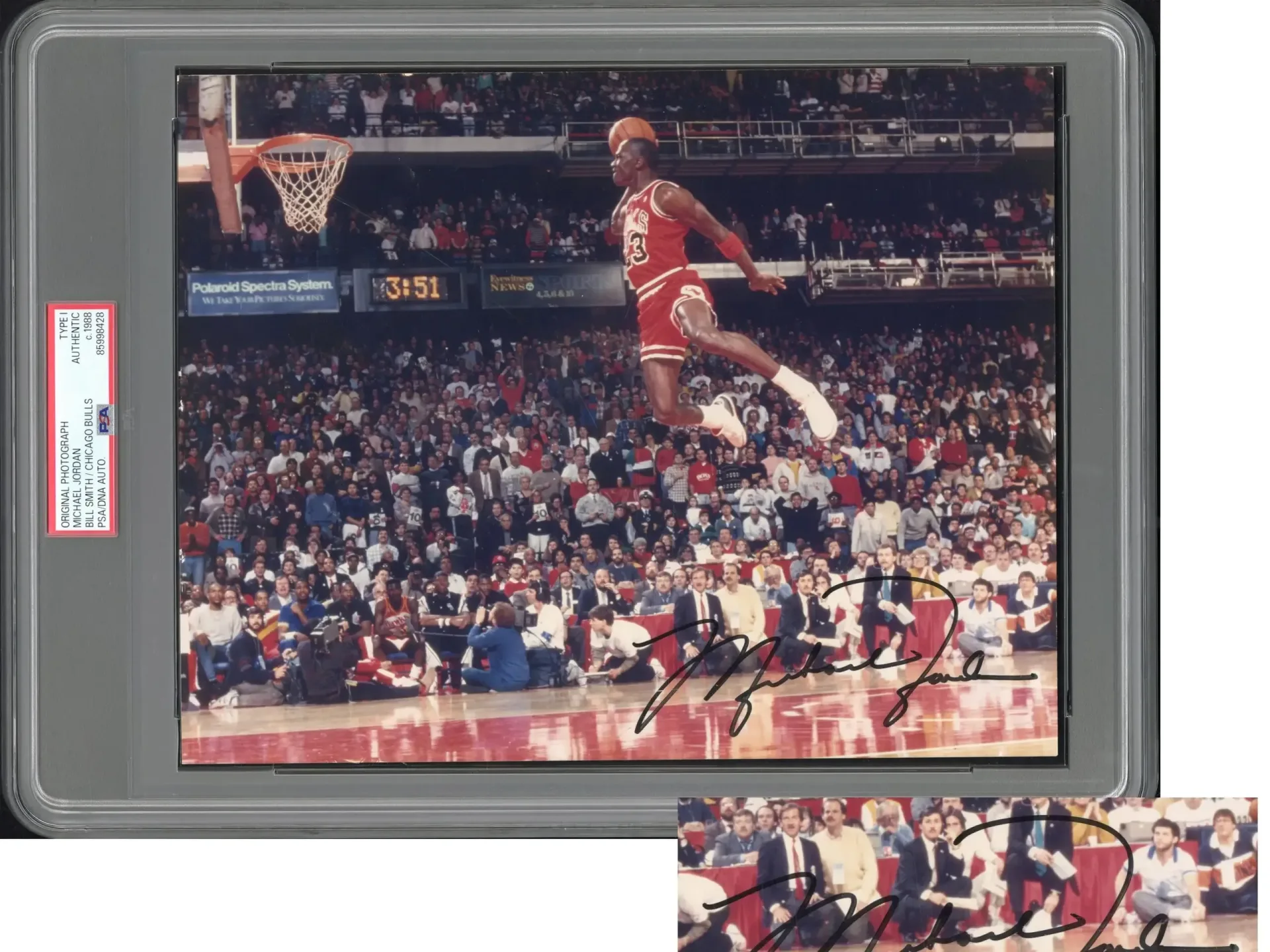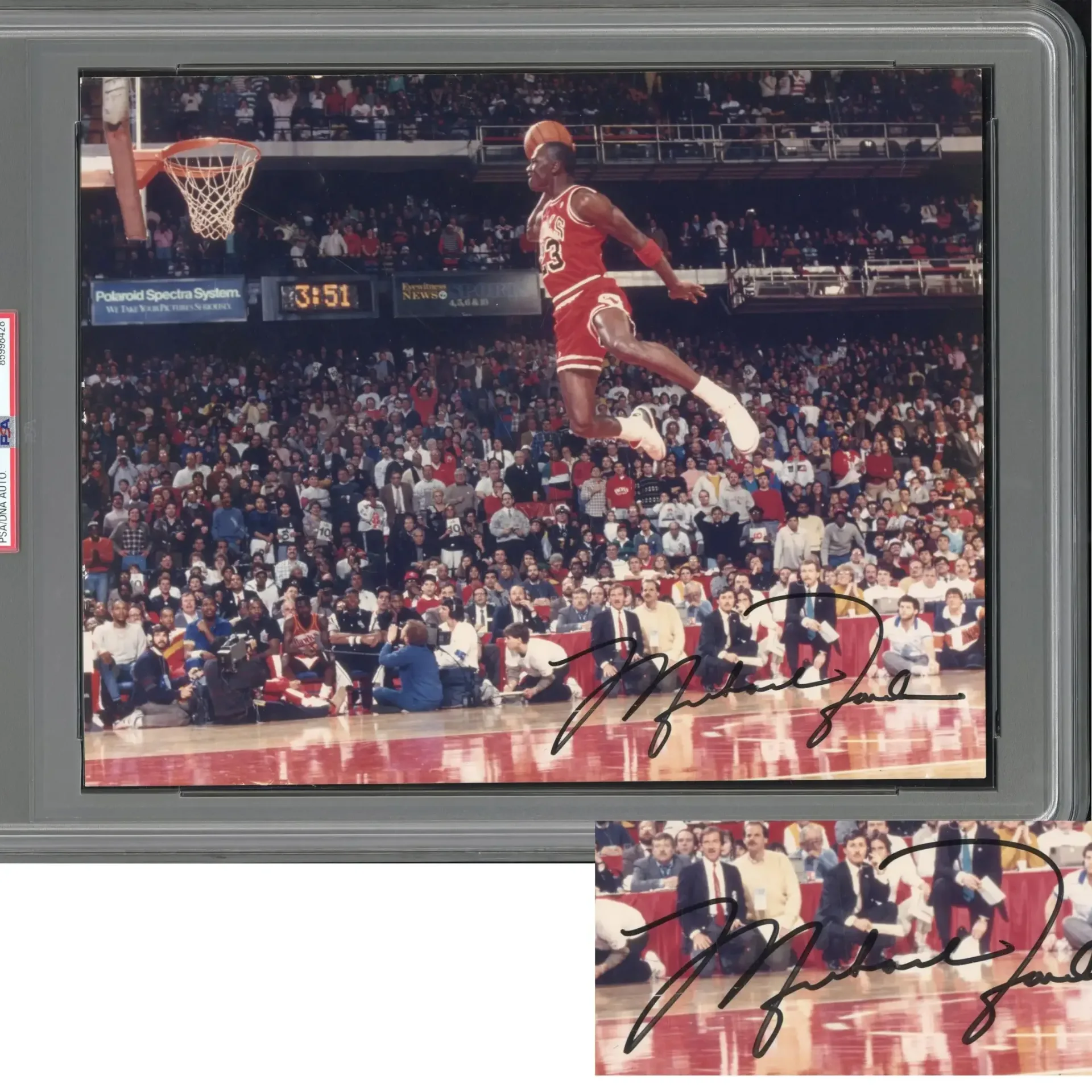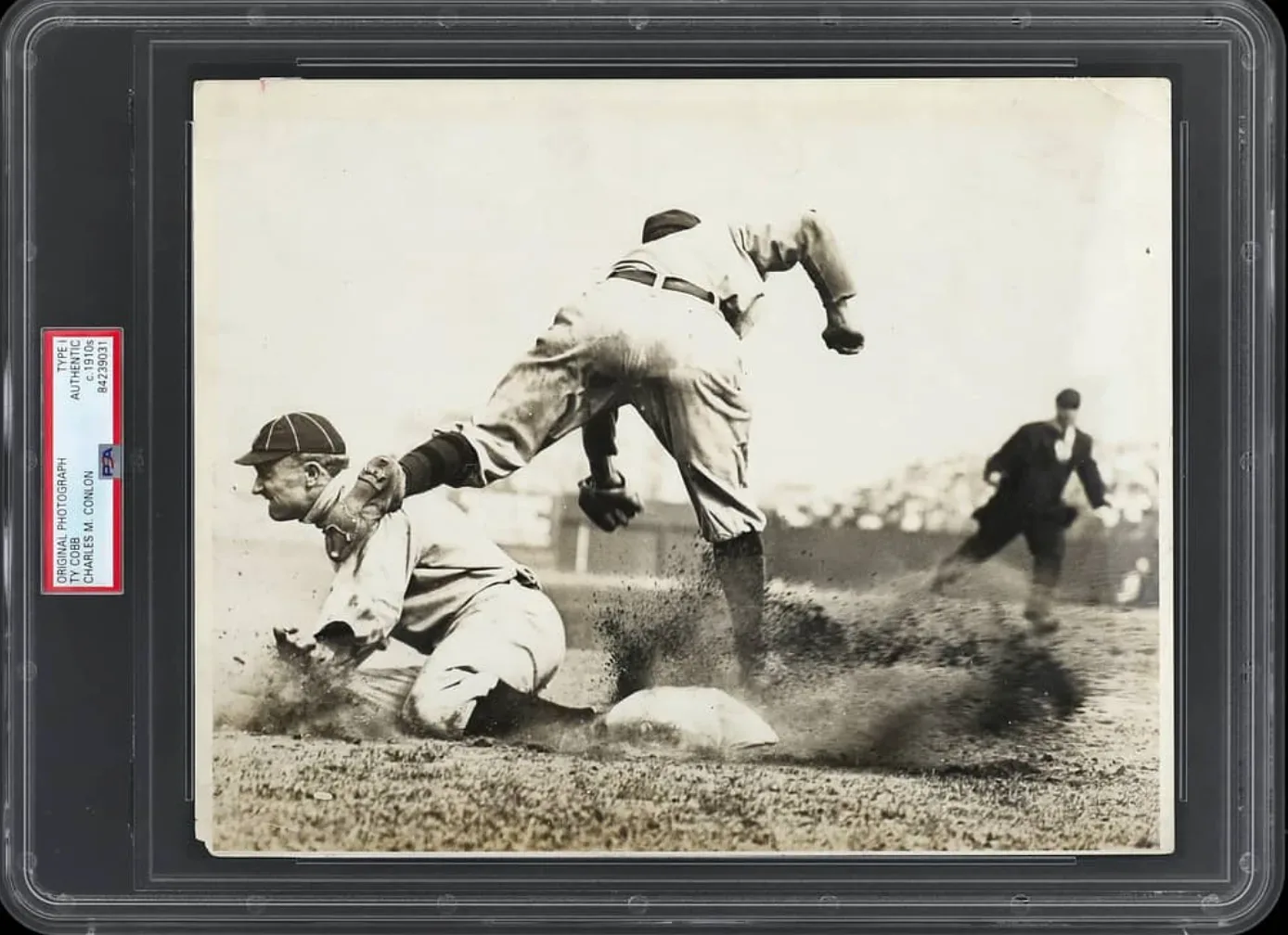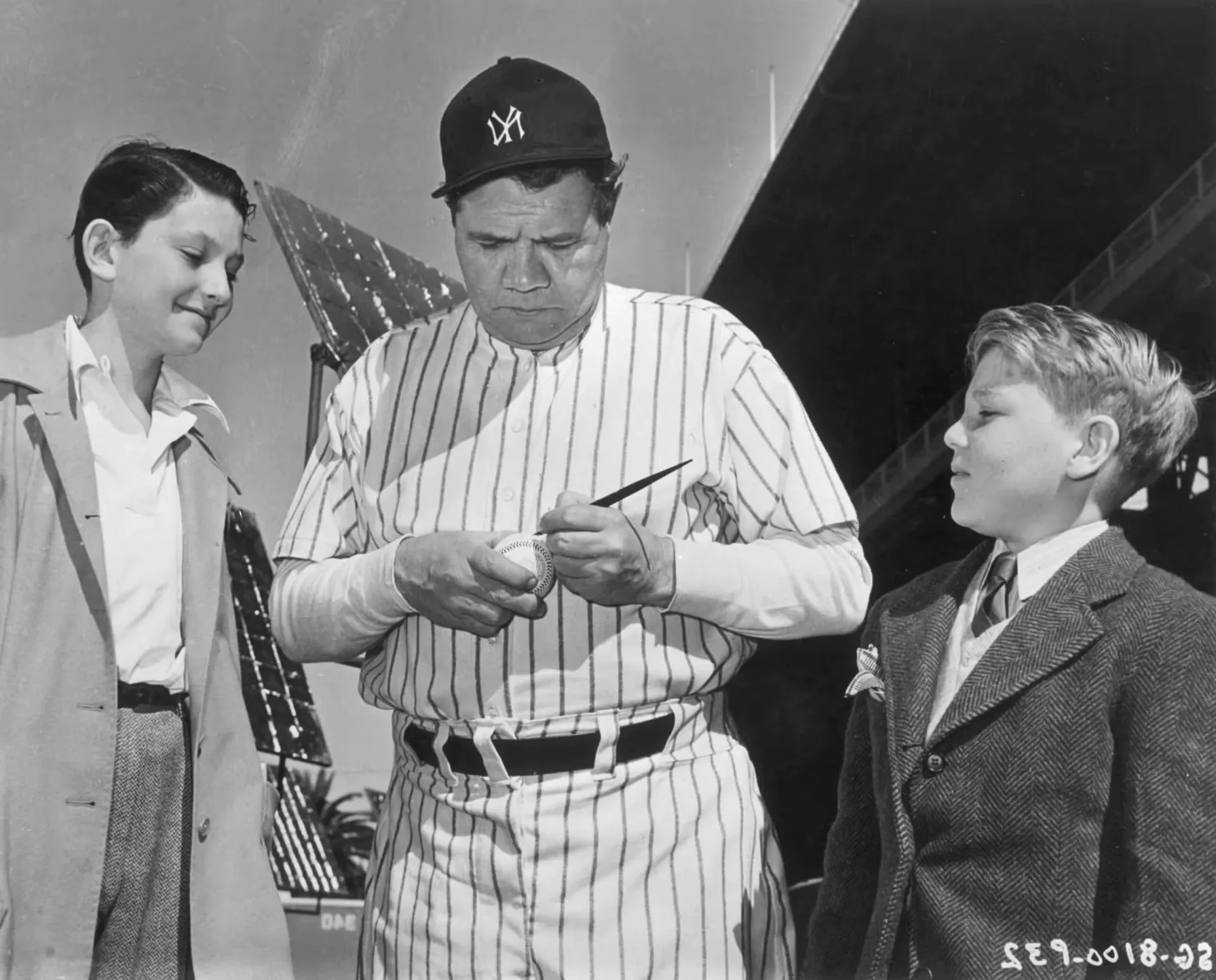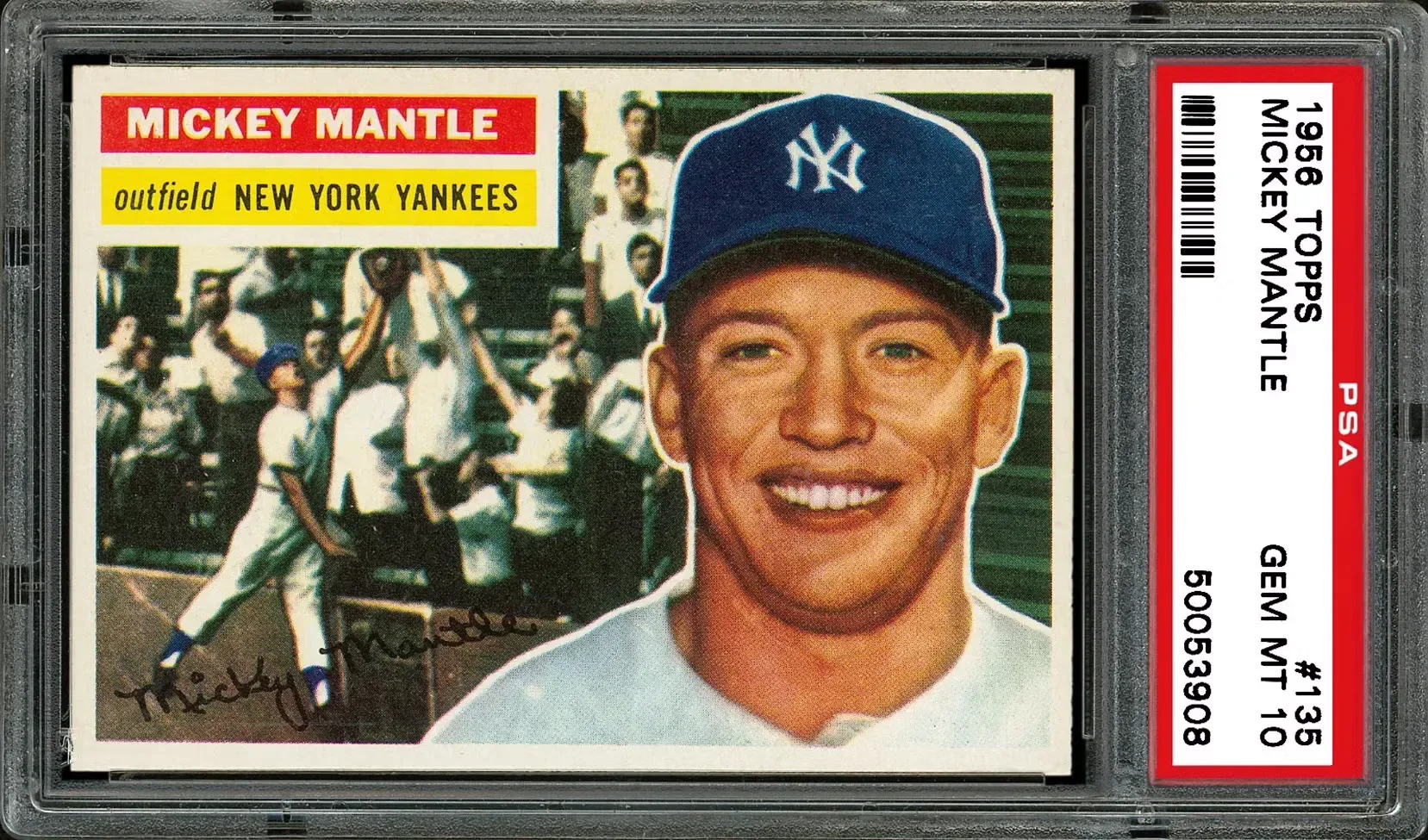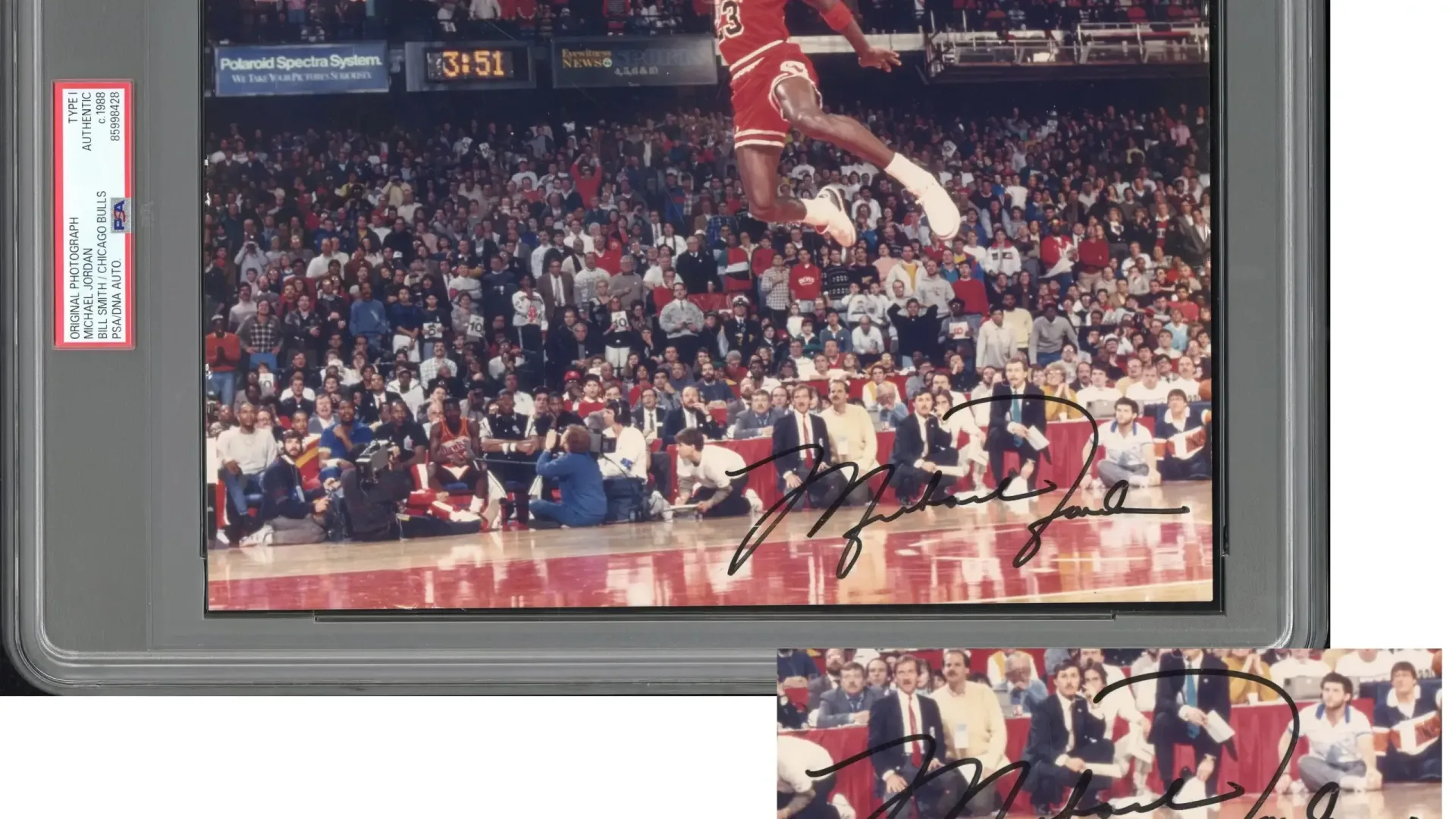
Michael Jordan’s ascent from the foul line remains one of basketball’s defining visual moments, and an original photograph connected to that flight is the headline lot in Goldin’s Fall Photography Auction. The PSA-certified Type 1 Original Photo was taken by Chicago Bulls team photographer Bill Smith, depicts Jordan during the 1987 and ’88 NBA Slam Dunk Contest era, and carries Jordan’s signature.
The auction runs through November 4 and is built around photographs rather than the trading cards, tickets, uniforms, or game-used equipment more commonly associated with major sports collecting. Its lineup spans several sports and decades, pairing globally familiar stars with images that document formative, historic, or unusually early moments in their lives and careers.
Why the Jordan image has such a powerful place in sports collecting
Jordan’s foul-line dunk is an image with an enormous cultural footprint because it turns an athletic act into an immediately readable silhouette: a player suspended in open space, ball in hand, with the basket still ahead of him. The photo is tied to the NBA Slam Dunk Contests of 1987 and 1988, events that helped cement the dunk contest as a showcase for individual imagination and elevation as much as competitive basketball.
Smith’s picture is therefore not simply a portrait of a celebrated athlete. It is a physical photographic artifact associated with a particular performance and with an enduring visual shorthand for Jordan’s career. The signed example being offered combines three collecting hooks in one object: the player, a milestone image, and an autograph.
For collectors, those elements matter for different reasons. Jordan’s autograph directly links the item to the subject. The photograph’s connection to an instantly recognizable moment makes it easy to place within basketball history. Its Type 1 designation, meanwhile, speaks to the photo itself and its standing as an original photographic item rather than merely to the fame of the picture reproduced on it.
What “Type 1 Original Photo” means in this sale
The catalog uses Type 1 or Type I terminology for several lots, including the signed Jordan image. In practical collecting terms, that language is important because the item under discussion is the physical photograph, not a later poster, trading card, magazine clipping, or modern print of the same scene.
Authentication language should always be read precisely. The Jordan photo is described as PSA-certified, while the auction listing also identifies it as a Type 1 Original Photo. Certification and an athlete’s signature are meaningful descriptive points, but they do not make every photograph of the same scene equivalent. Collectors considering original photography typically need to distinguish the particular offered print from reproductions that may circulate widely.
That distinction also helps explain why an auction focused on photography can intersect with card collecting without being a card auction. A photograph can be the underlying visual source for a familiar card issue, preserving a direct relationship with hobby history even when it was never issued in packs.
A Jim Brown photograph with a direct rookie-card connection
One of the sale’s clearest bridges between photography and trading cards is a Type 1 Original Photo that supplied the image used on Jim Brown’s 1958 Topps rookie card. The offered photo is notable not just as an image of Brown, but as the original visual material behind a specific, identifiable card.
That provenance is a different kind of appeal from an autograph or a game-used association. The photo’s relevance comes from its role in the production history of a major rookie card. For sports-card collectors, it creates an opportunity to collect an object linked to the image they already know from cardboard. For photography collectors, it gives the print a defined place in the visual record of a legendary football player.
The listing underscores a useful collecting principle: the subject of a photograph is only part of the story. The image’s use, date, original context, and relationship to another collectible can all be central to why a specific print receives attention.
Early images give the auction much of its character
Several additional lots center on sports icons at unusually early stages of their lives or careers. A September 29, 1996 Type 1 photo shows Kobe Bryant at age 18, wearing his Los Angeles Lakers uniform as an NBA rookie. The dated image places Bryant at the beginning of his professional career, long before the body of work that would make him one of the era’s defining basketball figures.
The sale also includes an Original Type 1 Photo of Wilt Chamberlain in a 1945 fourth-grade class photo. Chamberlain, then 10 years old, is shown towering over his classmates. It is a markedly different sort of sports artifact: its fascination rests less on an on-court feat than on seeing a future Hall of Famer in an ordinary childhood setting.
That contrast is one of the more interesting aspects of original sports photography. An action shot can preserve the moment an athlete became mythic; a school picture can reveal the distance between public legacy and private beginnings. Both can be historically resonant, but they do different work as collectibles.
Ali and Malcolm X, Robinson, and Pelé broaden the sale beyond basketball
The auction’s historical scope extends well beyond the NBA. An oversized Type I Original Photo dated February 25, 1964 shows Muhammad Ali and Malcolm X after Ali defeated Sonny Liston. The image is associated with the “One Night in Miami” moment, connecting a heavyweight title victory with a photograph of two consequential cultural figures together.
A 1946 Jackie Robinson Montreal Royals Type I Original Photo is another lot with a specific historical placement. Taken one year before Robinson’s 1947 Major League Baseball debut, the photograph predates the moment in which he broke baseball’s color barrier. Its importance derives from that chronology: the image records Robinson in Montreal during the period immediately before a landmark change in the sport.
Soccer is represented by a July 5, 1957 Type 1 Original Photo of Pelé at age 16, before his rookie season. The listing identifies it as the earliest Type 1 image of Pelé wearing a Brazil jersey. Early-career photographs often draw attention because they document an athlete before fame has fully transformed how the public sees them. In this case, the Brazil jersey adds another layer, tying the young player to the national team identity that became inseparable from his legacy.
Practical takeaways for photo and sports-memorabilia collectors
The lots in this auction illustrate why careful catalog reading matters in original photography. A collector evaluating an item should separate the claims being made about it: who is pictured, when the image was taken, what makes the particular print original, whether it has been certified, whether it is signed, and whether it has a known link to another piece of hobby history.
- Identify the exact object: A famous image can exist in many forms. The collecting case here is for the listed original photographs, not for every later reproduction of the same scenes.
- Read dates as context: Bryant’s 1996 rookie-year photo, Robinson’s 1946 Montreal image, and Pelé’s 1957 Brazil-jersey photo gain much of their meaning from when they were taken.
- Separate athlete appeal from image history: The Jim Brown lot is notable in part because it produced the visual used for his 1958 Topps rookie card.
- Keep certification language specific: The Jordan photo is described as PSA-certified. Buyers should avoid extending that statement beyond the specific item and designation presented.
- Consider the photograph’s story: The Ali and Malcolm X image, Chamberlain class picture, and Jordan dunk photograph each capture very different types of historical significance.
For hobbyists accustomed to cards, original photography offers a related but distinct collecting lane. Cards are issued products with established set structures; these photographs are individual physical objects tied to the making, recording, or later public life of sports imagery. Sometimes, as with Jim Brown’s 1958 Topps rookie, the two worlds meet directly.
The sale’s centerpiece returns to the simplest version of that appeal. Jordan’s dunk photograph preserves a split-second of extraordinary motion that became a lasting symbol of basketball. Its original-photo designation, PSA certification, Bill Smith attribution, and Jordan signature place additional emphasis on the particular physical item now being offered. For more sports-culture reading beyond photography, see this look at Lil Wayne’s response to NFL officiating after the Packers-Cowboys game.