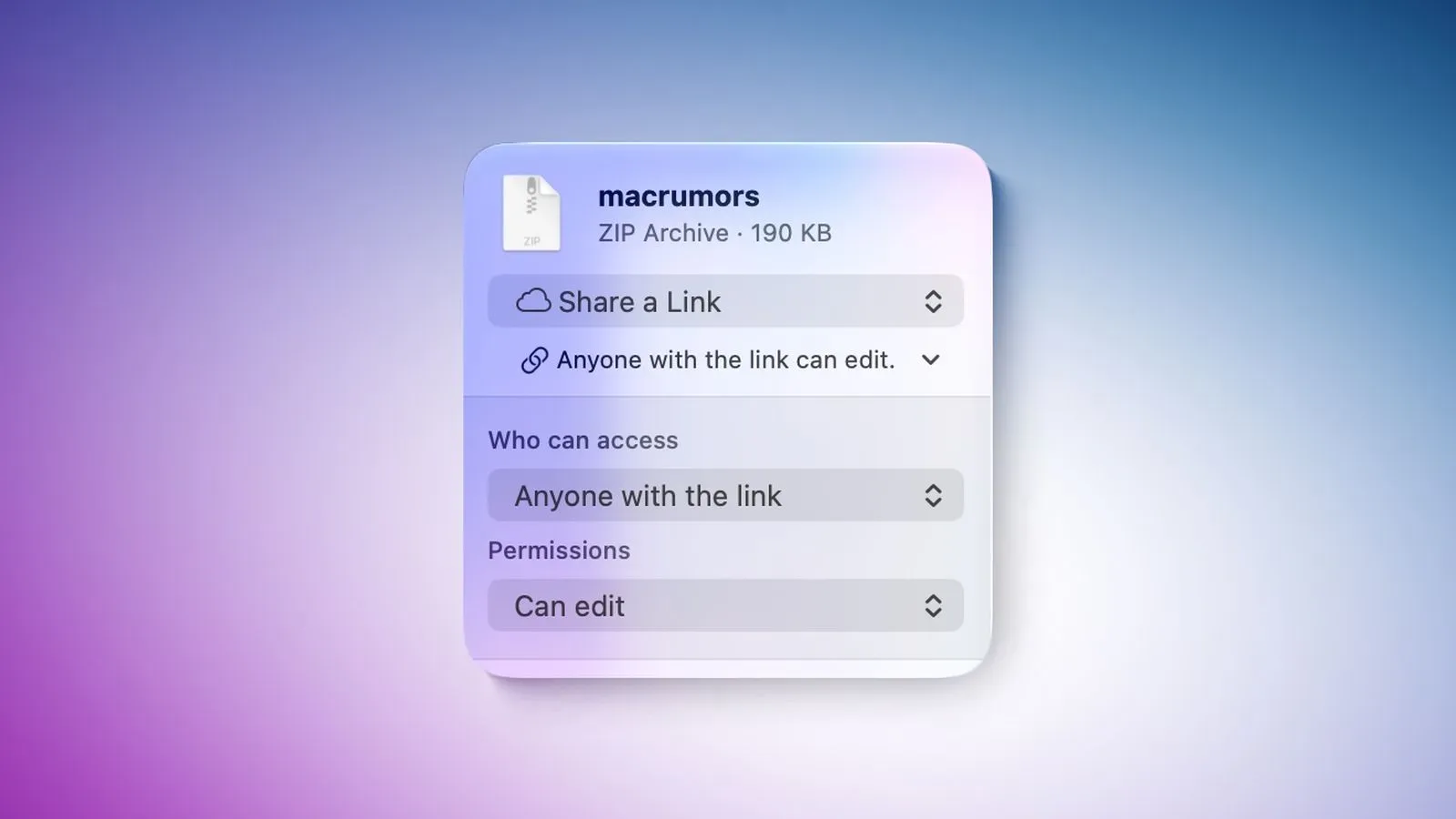
Apple says it will begin checking certain publicly shared iCloud material for harmful content with iOS 27.3, iPadOS 27.3, macOS 27.3, and visionOS 27.3. The change is narrowly tied to the way something is shared: it applies to iCloud Photos images and iCloud Drive files made available through the “Anyone with the link” setting.
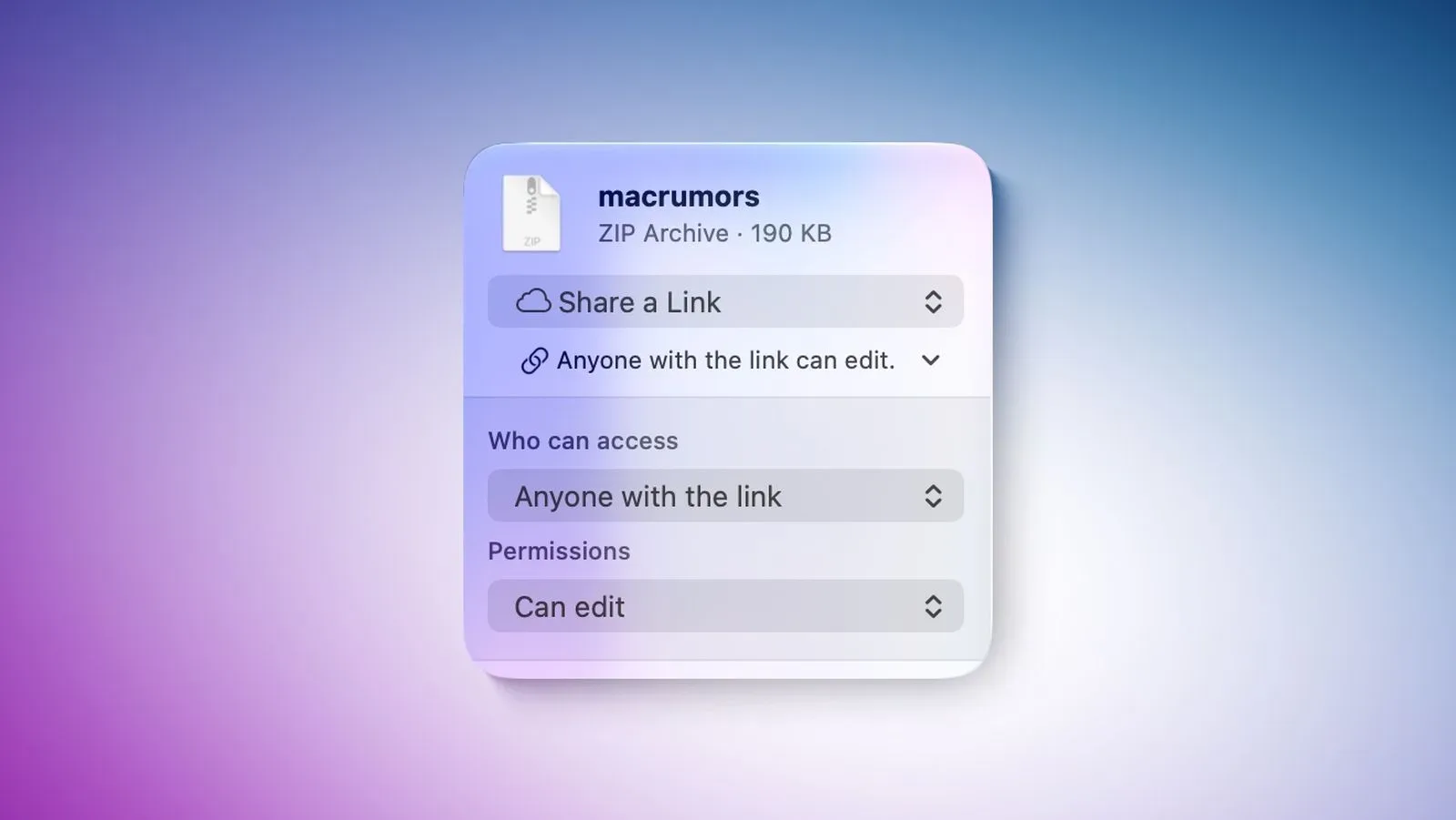
That distinction matters. iCloud offers more than one way to get a file or image to somebody else, and the policy described for the upcoming software is not a blanket statement that every item in an iCloud account will be reviewed. Apple says material exposed through an open link will be made accessible to it for a content check. Links limited to selected people are not identified as part of this evaluation, nor is the direct “Send a Copy” sharing method.
What Apple says will be checked
The affected material falls into two broad buckets:
- Images in iCloud Photos shared with an “Anyone with the link” link.
- Files in iCloud Drive shared with an “Anyone with the link” link.
In practical terms, an open-link setting means possession of the URL is enough to access the shared item. It is a useful option for distributing a large file, a folder, screenshots, a video clip, or a batch of photos without individually adding each recipient. It also changes the privacy and distribution model. A link can be forwarded, posted, copied into a chat, or otherwise travel beyond the people the creator initially had in mind.
Apple has not defined the phrase harmful content in the information provided. The company’s stated enforcement options and its reference to possible law-enforcement involvement indicate that the category could include material such as malicious files or child sexual abuse material, but the full scope has not been spelled out. That missing definition is significant: users can identify the sharing setting that triggers the check, yet they have not been given a detailed public list of every content type or technical characteristic that may result in action.
Not every sharing option is treated the same
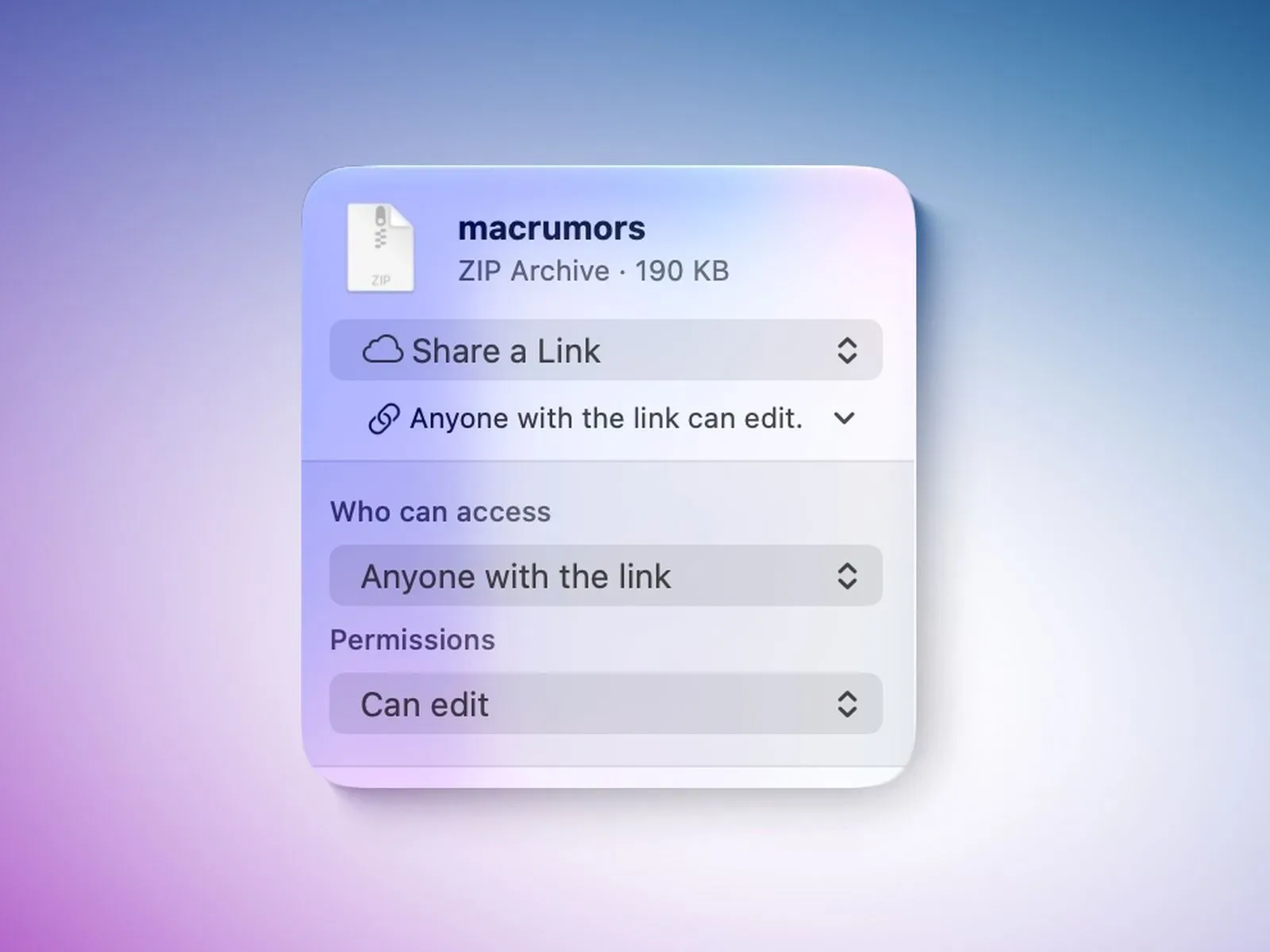
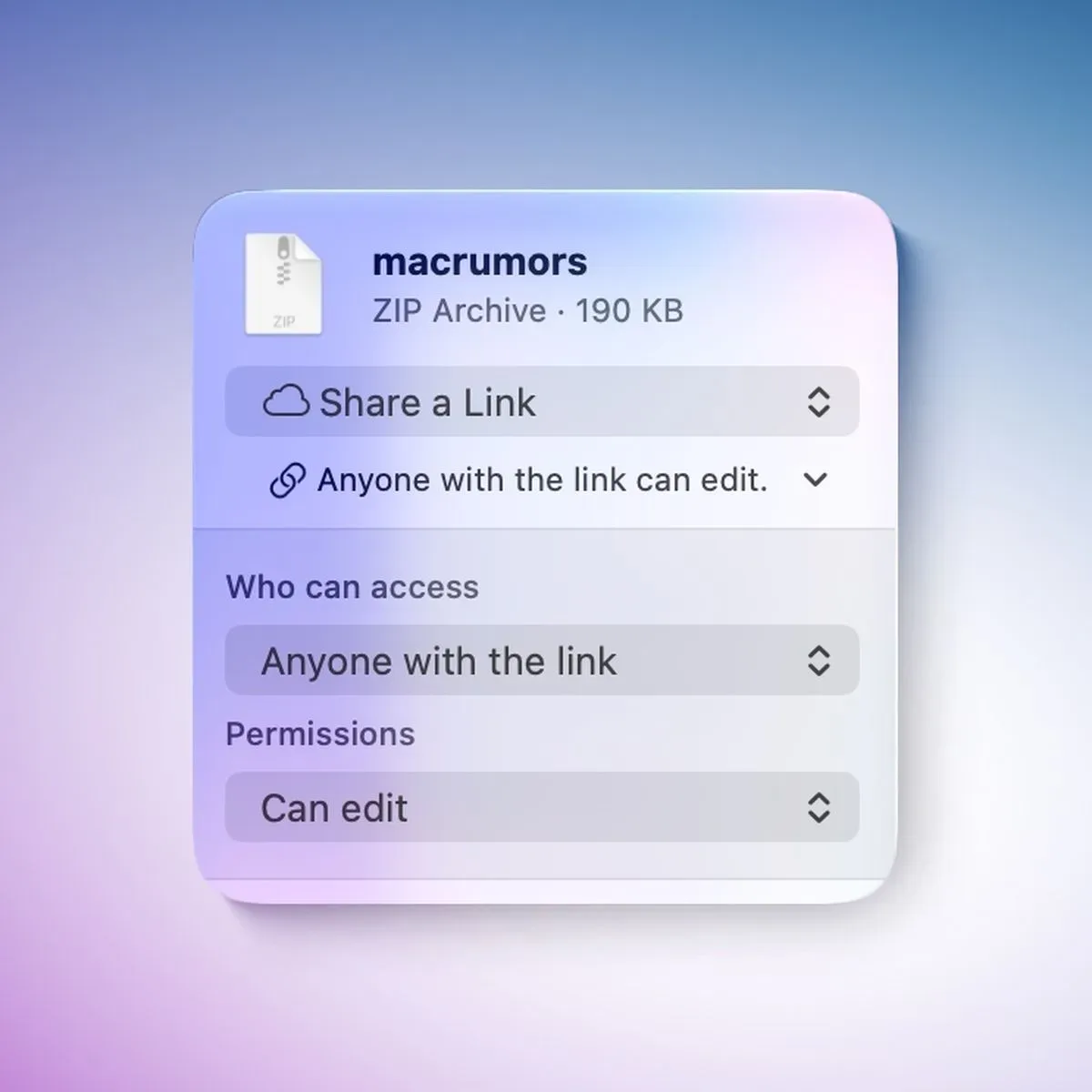
iCloud’s terminology can make the difference easy to miss, particularly when someone is focused on sending a file quickly. “Send a Copy” sends the chosen file directly. “Share a Link,” by contrast, creates a downloadable shared link. For link sharing, Apple presents a choice between access for “People you choose” and “Anyone with the link.”
Apple says only the latter will be evaluated under this policy. Put simply, the stated dividing line is not whether an item is a photo versus a document, and not whether it is stored in Photos versus Drive. It is whether the link is open to anyone who obtains it.
For people sharing game captures, project builds, mod-related documents, gameplay videos, event photos, or other legitimate large files, the immediate practical lesson is to choose the sharing method intentionally. A direct copy is one route. A link restricted to specific people is another. The open-link option is convenient when a creator wants frictionless access, but it is also the option Apple says will be made accessible for its harmful-content check.
That is a workflow consideration, not evidence that ordinary shared media will be penalized. Apple has described a policy scope and a set of potential actions, but it has not published a detailed account of how reviews will operate, how potential mistakes will be handled, or what appeals process may exist for a disputed enforcement decision.
Encryption: the key technical point
Apple states that content made available to anyone is no longer end-to-end encrypted, including when Advanced Data Protection is enabled. This is the most important technical qualification in the change.
End-to-end encryption is a security design in which the provider is not able to read the protected content in its ordinary stored form. The practical relevance here is straightforward: Apple says an item put behind an open “Anyone with the link” URL does not retain that end-to-end-encrypted status. Apple can therefore make that publicly available item accessible for the announced check.
Advanced Data Protection is relevant because it can lead users to assume every iCloud sharing arrangement receives identical encryption treatment. Apple’s statement makes clear that public availability is an exception: enabling that option does not preserve end-to-end encryption for material shared openly with anyone holding a link.
This does not mean an open link is the same as broadcasting a file to the entire internet. The link is still the access mechanism. But “anyone with the link” is materially broader than selecting named recipients, and Apple’s policy treats it as a separate class of sharing.
Potential account consequences are broad
Apple says it may move, refuse, modify, remove, or delete content it determines to be harmful. It also reserves the right to act on the associated Apple Account. The potential measures it lists include blocking or disabling an account, preventing creation of a new account using the associated email address or phone number, and involving law enforcement when necessary.
Apple says it may move, refuse, modify, remove, or delete harmful content, and may take action against the associated Apple Account or involve law enforcement where necessary.
Those are possible remedies rather than a description of a fixed penalty for every case. Still, the language means the consequence can extend beyond one file or one link. Anyone using iCloud to distribute files publicly should take that scope seriously, particularly when sharing content from groups, collaborators, or community submissions rather than material they created and reviewed themselves.
There is also an operational gap for people managing existing libraries of share links. Apple has not said whether links made before the 27.3 releases will be checked. That leaves an unresolved question for older links that may still be active, embedded in old posts, stored in messages, or used as a long-running download destination.
What remains unclear ahead of release
The versions named by Apple are currently available to developers for beta testing, with public releases expected in December. Before then, several details remain unspecified in the supplied policy description:
- Whether open links created before the updates are subject to checking.
- Apple’s full definition of harmful content.
- The technical process used for the content check.
- How users will be notified if content is restricted or removed.
- What recourse exists if a user believes a decision was incorrect.
These unknowns matter because “content check” can describe very different systems. It could involve automated signals, human review, or a combination of approaches; Apple has not provided that detail here. Likewise, the policy does not establish how quickly an item might be acted on or whether a link could be disabled while an assessment is pending. It is better not to infer those procedures from the announced rule alone.
How to think about the change now
The simplest reading is that Apple is separating private-oriented sharing from broadly accessible distribution. If someone needs to deliver a file to one person, “Send a Copy” is the direct option. If several known collaborators need ongoing access, “People you choose” limits the link to that group. If the goal is a link that can be passed around without recipient approval, “Anyone with the link” supplies that convenience, but Apple says it will no longer be end-to-end encrypted and will be eligible for a harmful-content check.
For community managers and creators, that suggests a modest but useful housekeeping step: review which iCloud links are open, whether they need to remain open, and whether the material behind them is appropriate for unrestricted distribution. It may be especially worthwhile for shared drives that receive uploads from multiple people. The policy is about iCloud Photos and iCloud Drive content exposed through open links, so careful permissions are more relevant than changing the contents of a private library.
The announcement also reinforces a broader platform lesson: sharing settings are security and privacy settings, not merely convenience buttons. A two-word permission choice can determine who can download a file, whether a provider can access it for a stated safety process, and what policy regime applies to it. That is worth remembering across cloud services and gaming-adjacent tools alike; recent platform work such as Xbox’s cloud-gaming control updates likewise illustrates how service features increasingly depend on choices made across devices and networks.
For now, the confirmed point is limited but consequential: once the 27.3 updates arrive, Apple says iCloud Photos images and iCloud Drive files shared via “Anyone with the link” will be available to Apple for harmful-content checks. Users who want to avoid that specific public-link category should use a direct copy or restrict access to people they choose, while recognizing that Apple has not yet answered every question about the new enforcement system.