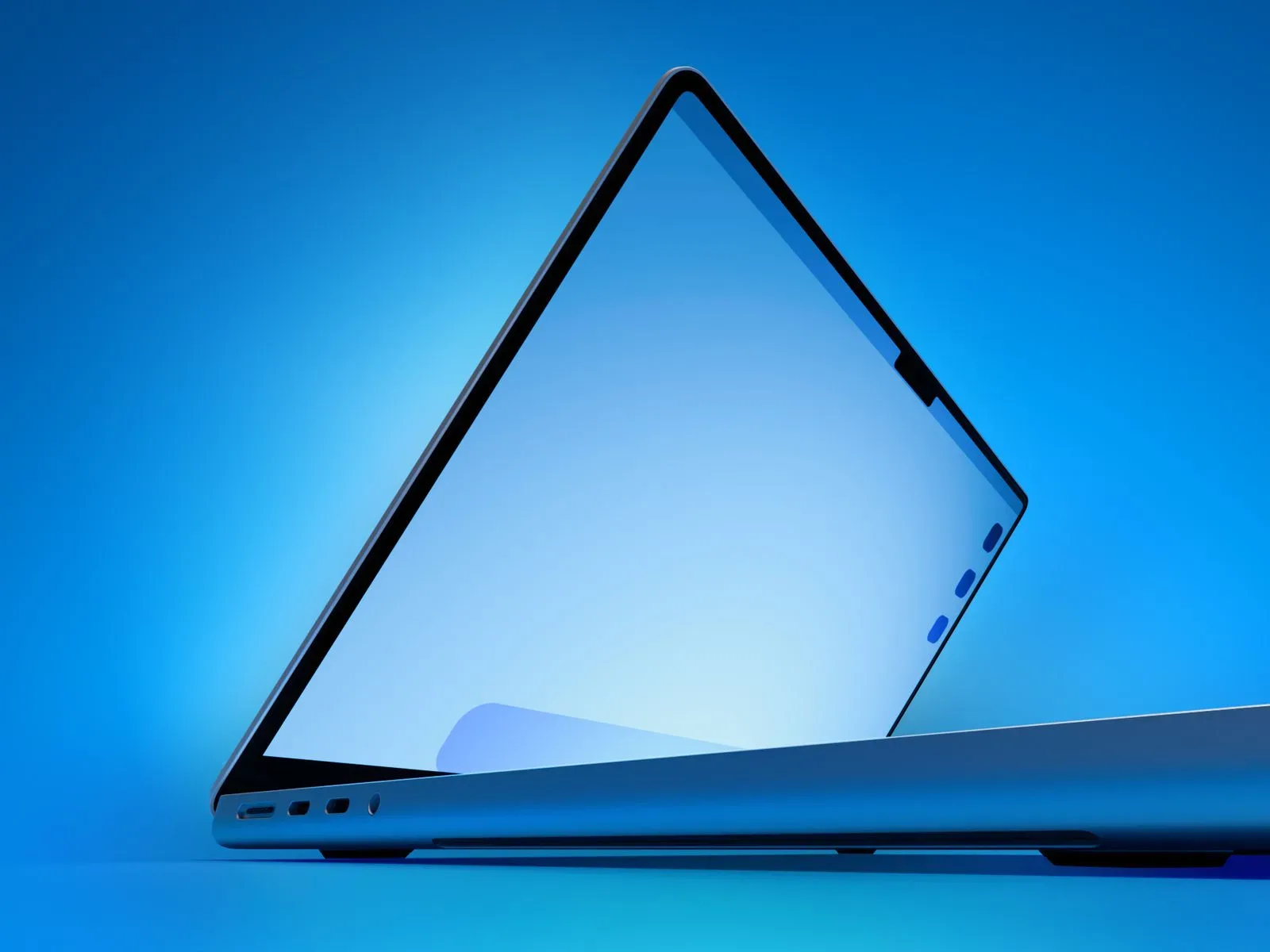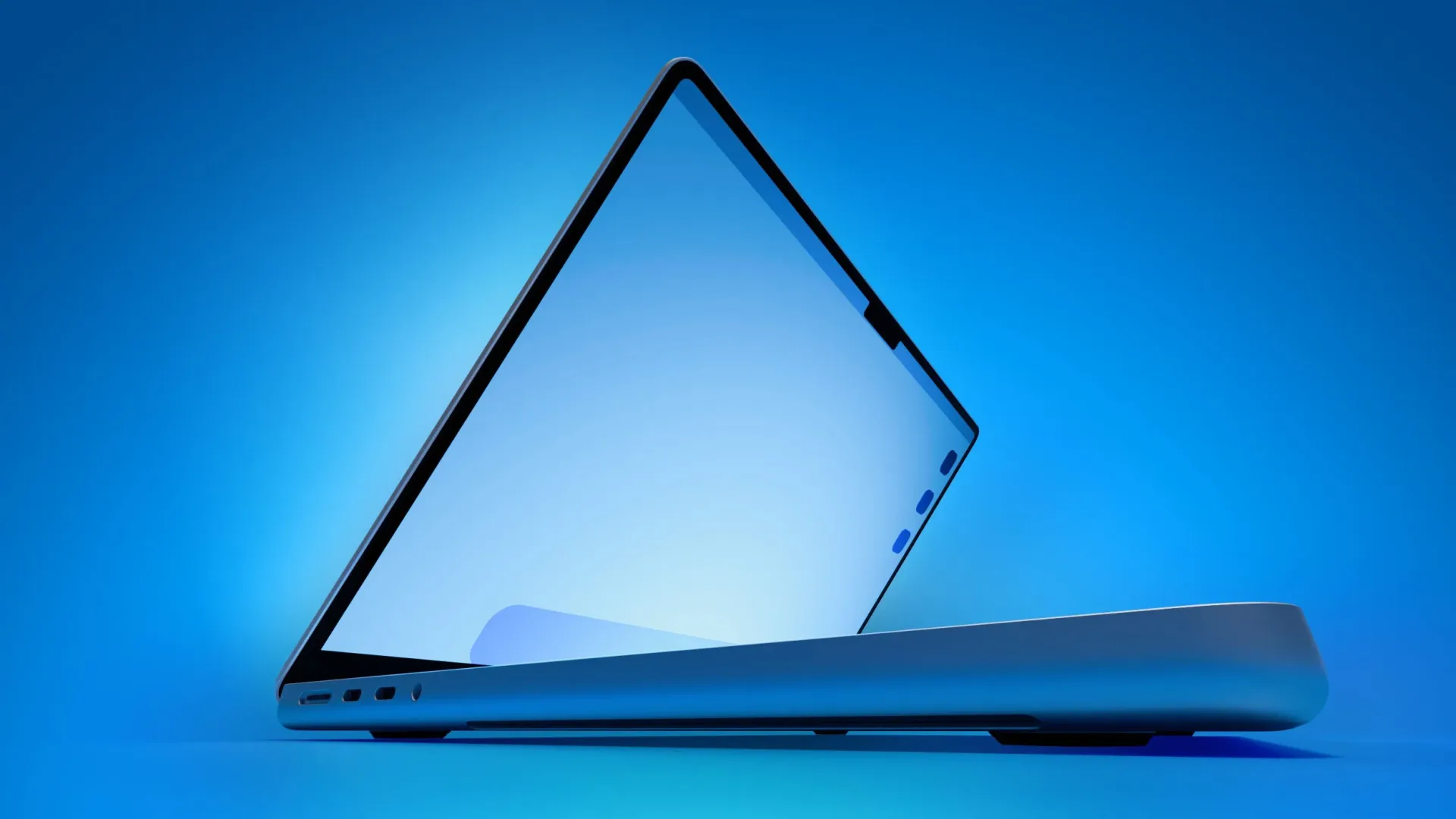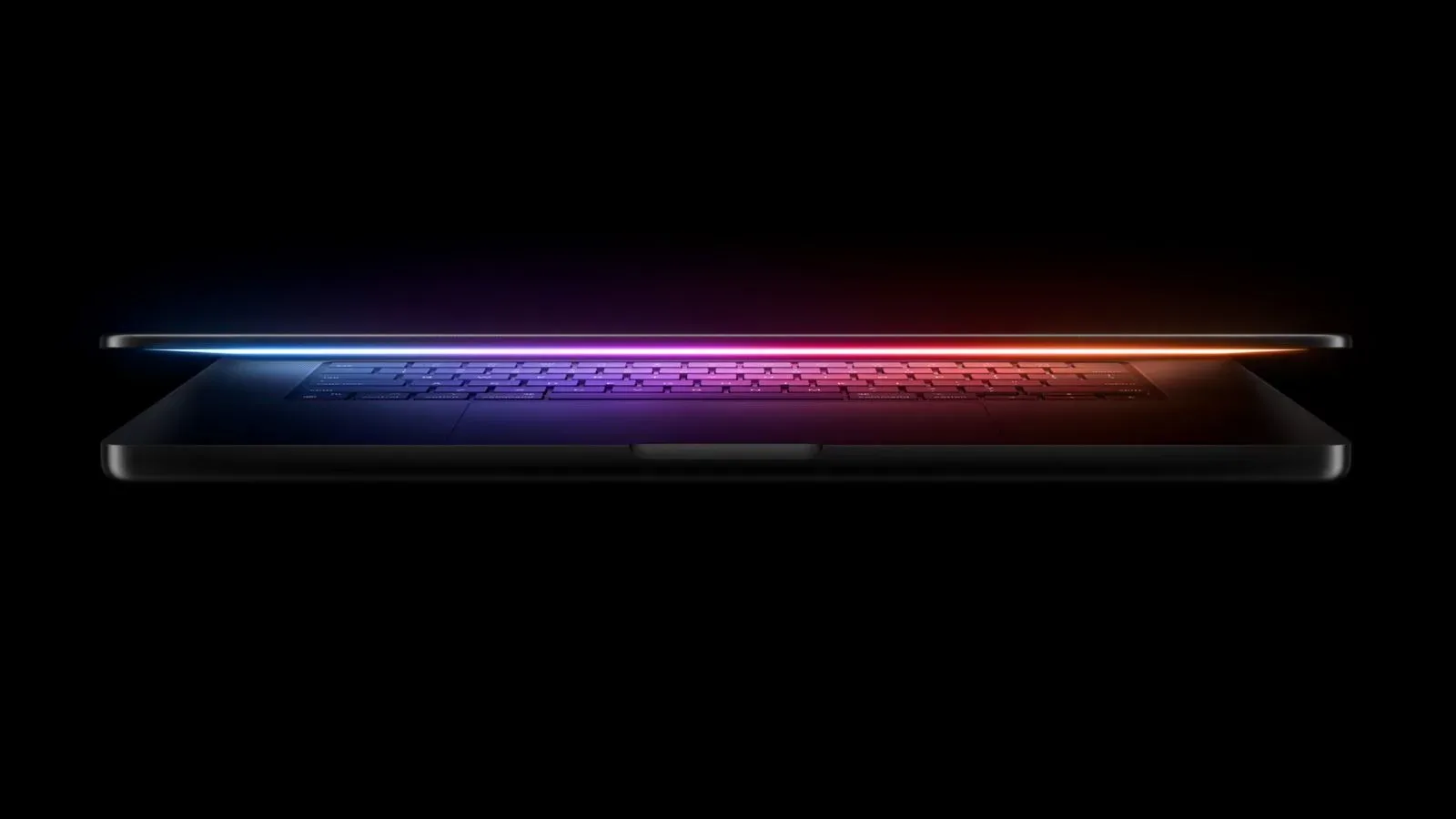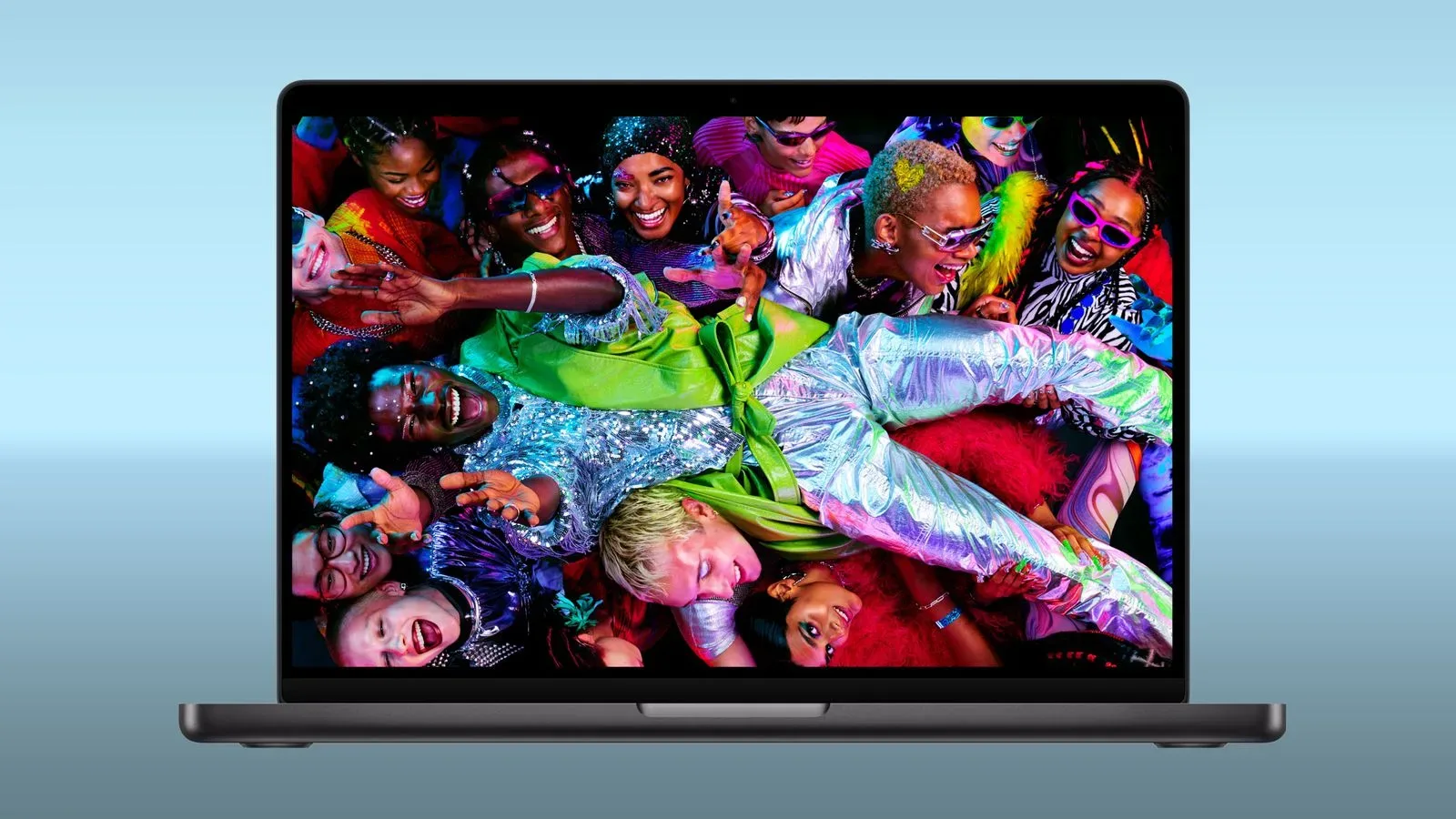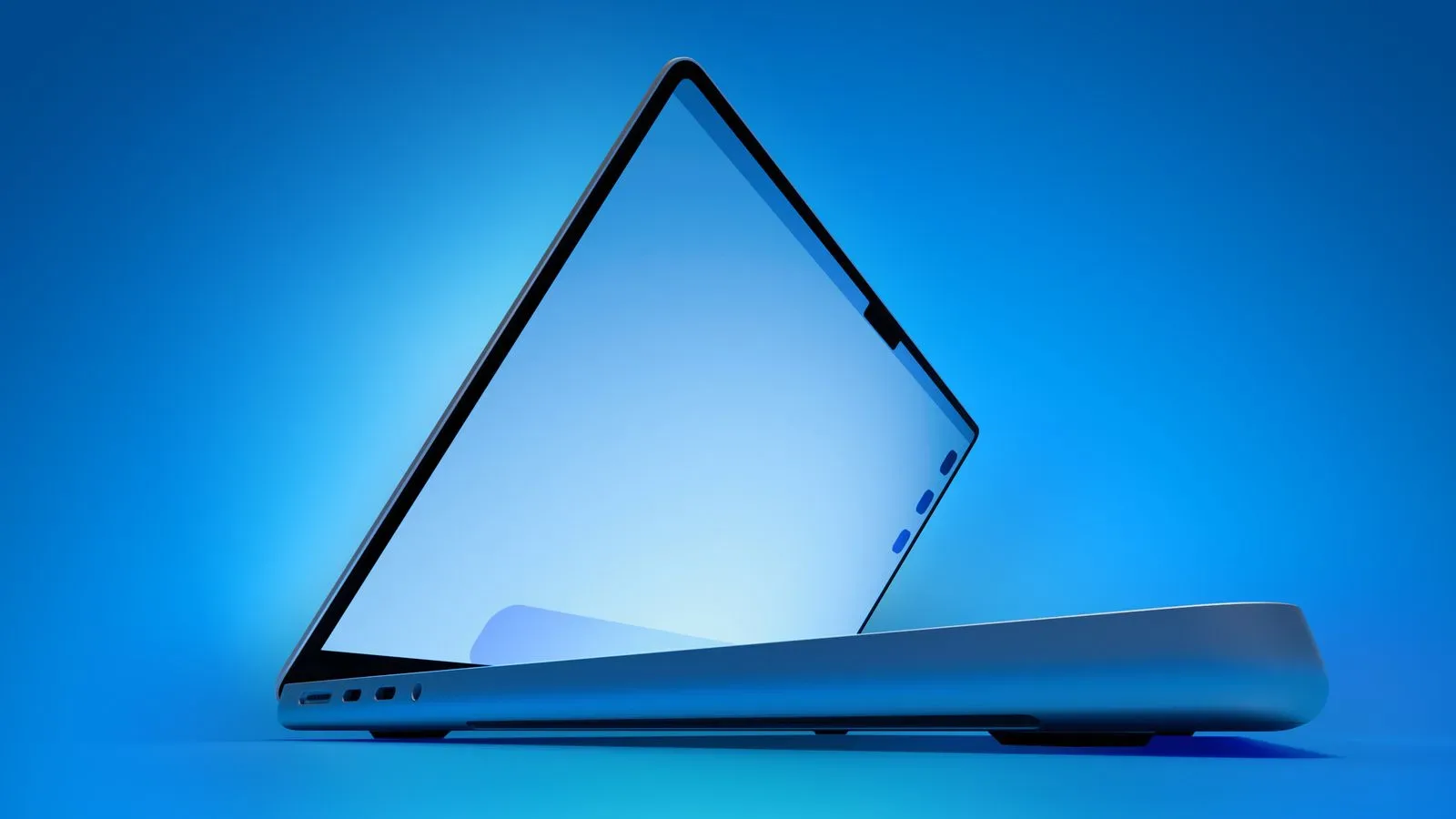
Apple may finally be ready to let MacBook Pro owners touch the screen they have been carefully not touching for years. The company is rumored to be targeting an October or November launch window for new 14-inch and 16-inch notebooks equipped with touch-enabled OLED displays.
The important qualifier, before anyone starts poking a current laptop panel with hopeful intent: this remains unconfirmed. The reported timing is described as a belief rather than a formal product announcement, and an October arrival could still slide into November. Even so, the combination of a reported software-testing build, two familiar MacBook Pro sizes and a collection of hardware details makes this more specific than the average speculative gadget fog.
If accurate, these systems would represent a substantial change to the MacBook Pro formula. A touchscreen, OLED panel, slimmer body and a possible replacement for the current display notch would make the machines visibly different before their processors ever get a chance to flex.
What is reportedly on the way
The rumored laptops are said to come in 14-inch and 16-inch versions, continuing the two-size split used by the higher-end MacBook Pro family. Their headline feature would be an OLED display with touch input.
OLED, short for organic light-emitting diode, differs from a conventional backlit display because each pixel can emit its own light. Put simply, pixels intended to look black can switch off rather than trying to block a backlight. That capability can produce deeper blacks and stronger contrast. The report does not establish resolution, refresh rate, brightness, panel durability or any other display specification, so those details should not be assumed.
Touch support is equally notable. A touch-enabled panel would let people interact directly with on-screen controls rather than relying exclusively on a trackpad, mouse or keyboard. It does not, on its own, tell us how macOS would change, which gestures would be supported, whether specific apps would receive redesigned interfaces, or whether any stylus input would be included. Those are all meaningful practical questions, and none has been answered by the current report.
The rumored feature list also includes Apple’s M5 Pro and M5 Max chips, a thinner design, and a Dynamic Island in place of a notch. “Dynamic Island” refers to the pill-shaped screen cutout and surrounding software presentation Apple uses on some of its other devices. On a MacBook, that would presumably mean a different way of accommodating front-facing hardware at the top of the display, but the report does not describe how it would function in macOS or what information it might show.
Why the October software clue matters, without making it a guarantee
One reason the launch rumor has drawn attention is the claim that Apple is testing the new laptops with macOS 27.2, which is currently in beta. That update is expected toward the end of October. A hardware reveal later in the month could therefore line up with the software schedule.
That is a useful piece of context, not a calendar invite. Testing a device with a particular operating-system version can suggest that the hardware and software are being prepared together. It does not prove a public debut on the update’s release day, confirm a retail date, or rule out a delay. The stated November possibility is important precisely because product schedules can move.
For prospective buyers, the sensible takeaway is not that a touchscreen OLED MacBook Pro is guaranteed to appear on a particular date. It is that people considering an immediate purchase of a high-end MacBook Pro may want to pay attention to Apple’s next moves, especially if display technology or touch controls are central to their decision.
A different tier than the regular MacBook Pro rumor
The touch-capable OLED machines are expected to sit above the regular 14-inch and 16-inch MacBook Pro models. That positioning matters. Rather than treating touch and OLED as a straightforward across-the-board refresh, the report suggests Apple could make the new designs a more premium option within the notebook lineup.
The regular 14-inch and 16-inch MacBook Pros are reportedly expected to move to M7 Pro and M7 Max processors next year. That creates a potentially confusing fork for shoppers: the rumored OLED touch models may use the existing M5 Pro and M5 Max chips, while later regular models could advance to a newer processor generation. There is no pricing, performance information or final product roadmap here, so it would be premature to declare one route categorically better.
Instead, the rumor points to two potentially different priorities. One buyer might value the reported OLED touchscreen, thinner enclosure and revised screen cutout. Another may care more about a future generation of silicon. Apple has not confirmed either plan, and the eventual lineup could look different from what is currently anticipated.
There is also a naming question. It is unclear whether the touchscreen systems would continue under the MacBook Pro name or take on a new label, with “MacBook Ultra” floated only as a possible example. Branding can sound cosmetic, but it often tells buyers how a company wants a product to be understood. A distinct name could emphasize that the machine occupies a tier apart from the normal Pro range. Keeping the MacBook Pro label, meanwhile, would frame the changes as an evolution of Apple’s established professional laptop.
What touch input could mean for gaming-adjacent work
A touchscreen laptop does not automatically become a gaming handheld, a console substitute or a magic shortcut to better frame rates. The reported changes are about the notebook’s display and interaction model, while the report does not describe any game-specific macOS features.
Still, touch input could be relevant to people whose gaming lives overlap with creative, organizational or casual play tasks. Touch can make direct manipulation intuitive in software built around buttons, timelines, maps, visual assets and quick selections. Whether that feels useful on a MacBook would depend on app support, screen ergonomics and the way macOS handles touch-first interactions. Those implementation details are the difference between a feature that feels natural and one that mostly gathers fingerprints.
For game collectors and retro enthusiasts who use a computer for cataloguing, capturing media or managing a broader hobby, the appeal may be easier to understand than the necessity. A touchscreen could make browsing and lightweight organization feel more immediate, but it is not a substitute for a proper controller when playing games designed around physical inputs. For phone-based Game Boy fans, a device such as the 8Bitdo FlipPad illustrates the more focused role dedicated controls can have in that particular setup.
The real test, if these Macs materialize, will be whether Apple pairs the panel with interface decisions that respect laptop use. Reaching up to a display repeatedly can be less comfortable than using a trackpad, particularly during longer sessions. Touch is most compelling when it is an optional, fast path for the moments where direct input makes more sense—not when it asks users to abandon a keyboard and trackpad that already work well.
The cellular Mac question remains wishful, for now
Another thread around the rumored models concerns cellular connectivity. Apple had previously explored the idea of Macs that could connect to 5G or LTE networks without needing an iPhone hotspot. That past interest has prompted hope that the new touch-screen laptops might contain Apple’s custom C1X or C2 modem.
However, the available information does not say that cellular support is planned for these MacBooks. It establishes only that Apple had considered cellular Macs and that some fans are hoping the touch models might be the place where such an idea appears. Hope is not a specification sheet.
For clarity, 5G and LTE are cellular network standards. A Mac with built-in support could theoretically connect directly to a mobile network instead of borrowing an internet connection from a phone. But there is no confirmation of compatible networks, regional configurations, carrier arrangements, modem selection, battery implications or even the existence of a cellular option in this rumored product generation. Until Apple says otherwise, it is best filed under “interesting possibility,” not “reason to wait.”
What has not been established
- A fixed announcement date or release date.
- Pricing or configurations for either screen size.
- Display resolution, refresh rate, brightness or touch gesture support.
- Whether a Dynamic Island-style cutout would have interactive macOS functions.
- Cellular connectivity, 5G, LTE, C1X or C2 modem support.
- Any game-focused macOS functionality.
- Whether the laptops will retain MacBook Pro branding or receive a different name.
Those gaps are worth keeping in view because the rumor contains several changes that could matter very differently depending on execution. OLED is a significant display technology, but panel quality is more than a single acronym. Touch is a major interface shift, but the value depends on software. A thinner chassis may appeal aesthetically, but the report provides no detail about the resulting trade-offs or design decisions.
The practical read on this rumor
The most grounded interpretation is that Apple may be preparing a distinct high-end laptop family or variant, one defined less by a simple processor update and more by changes to the screen, physical design and input method. The reported M5 Pro and M5 Max pairing suggests that Apple could separate display-and-design ambition from the next expected leap in its regular Pro-class chips.
That could make the proposed models especially interesting for buyers who prioritize screen quality and direct interaction, while making them less obviously essential for people who only want the newest available processor generation. It may also mean Apple is willing to make its laptop range more complicated—always a risk when the names, chips and physical features no longer all move in lockstep.
For now, October is the earliest reported possibility and November remains on the table. The touchscreen OLED MacBook Pro is still a rumor, but it is a consequential one: it suggests Apple could be preparing to rethink a core element of the MacBook experience rather than merely updating the internals.