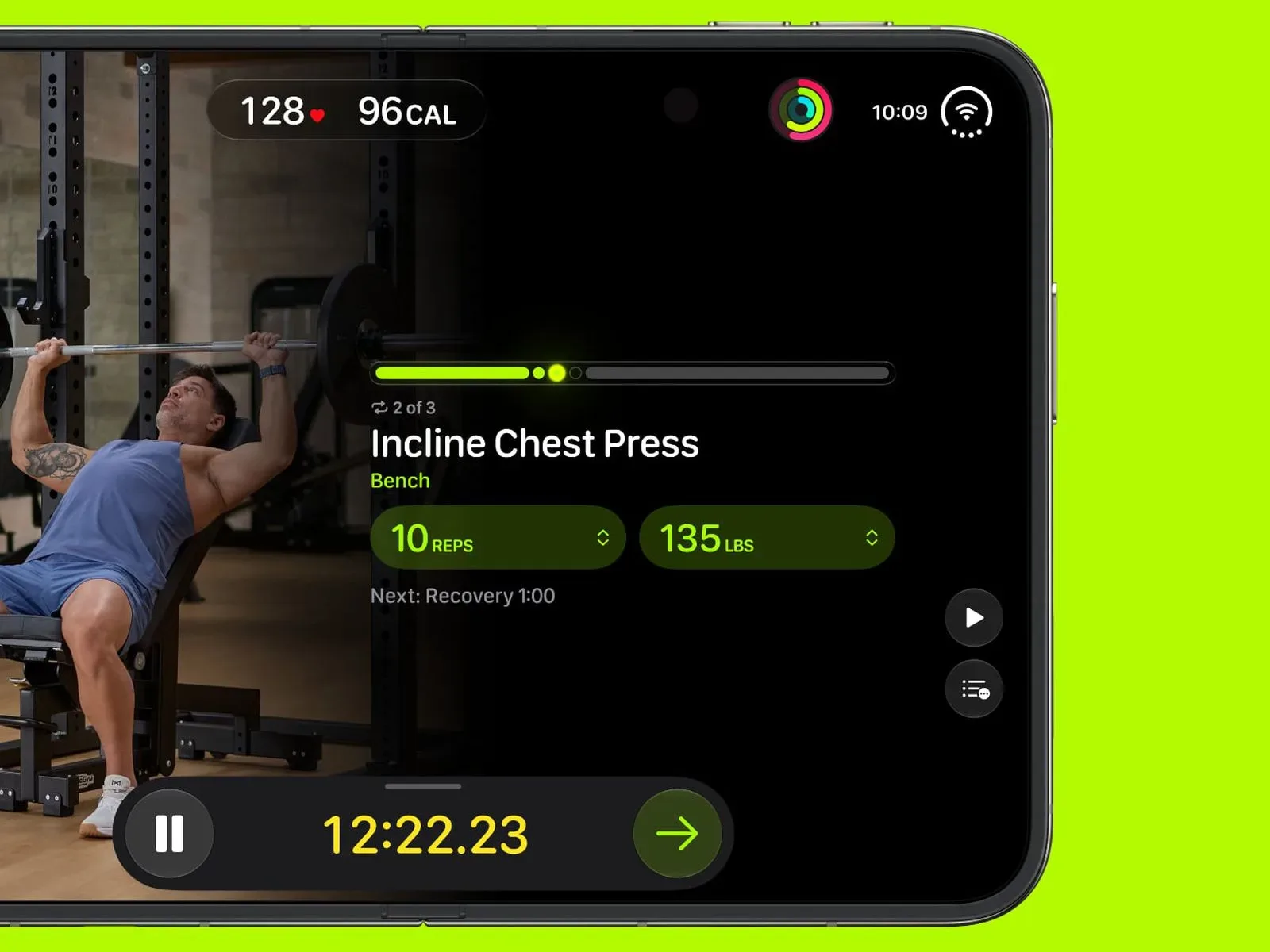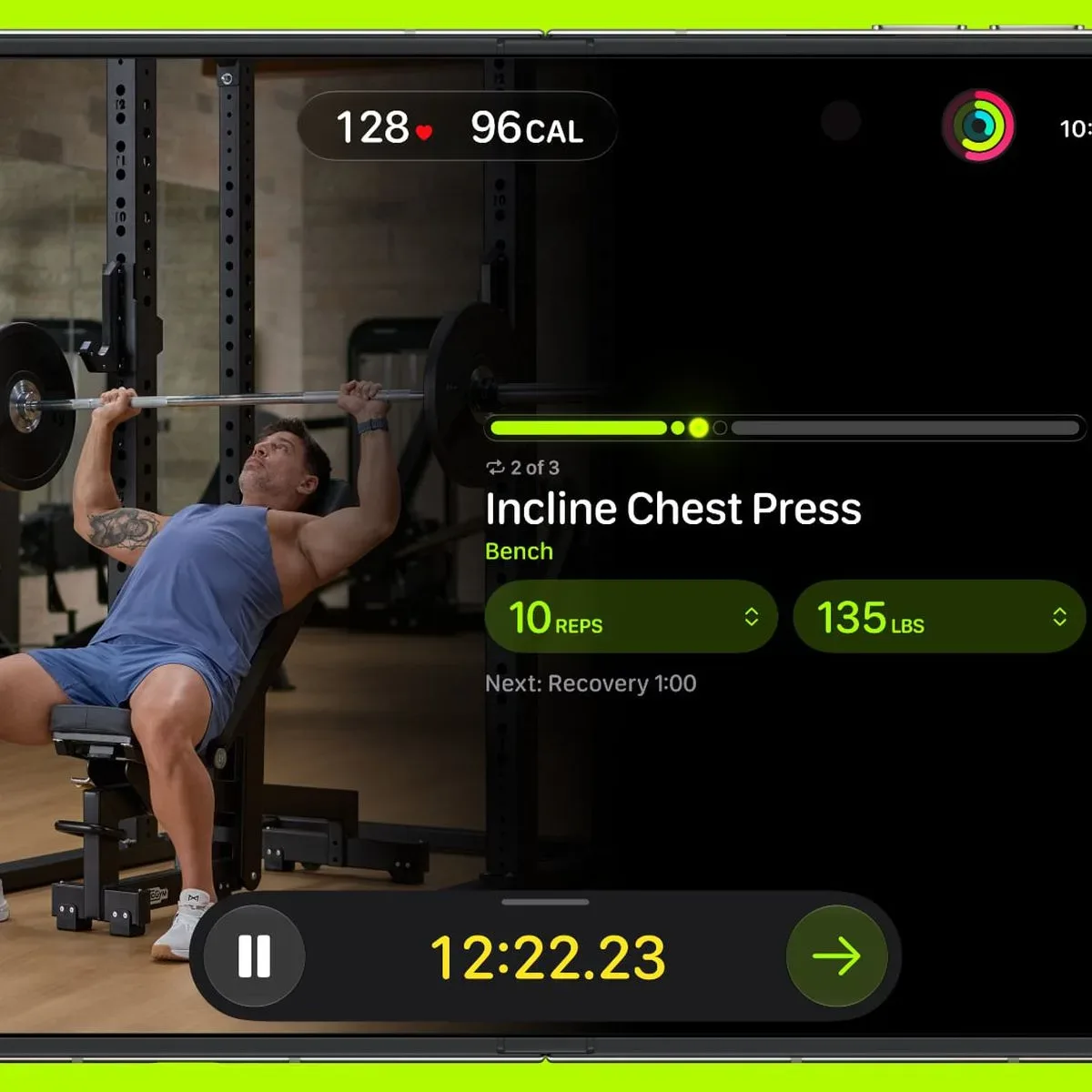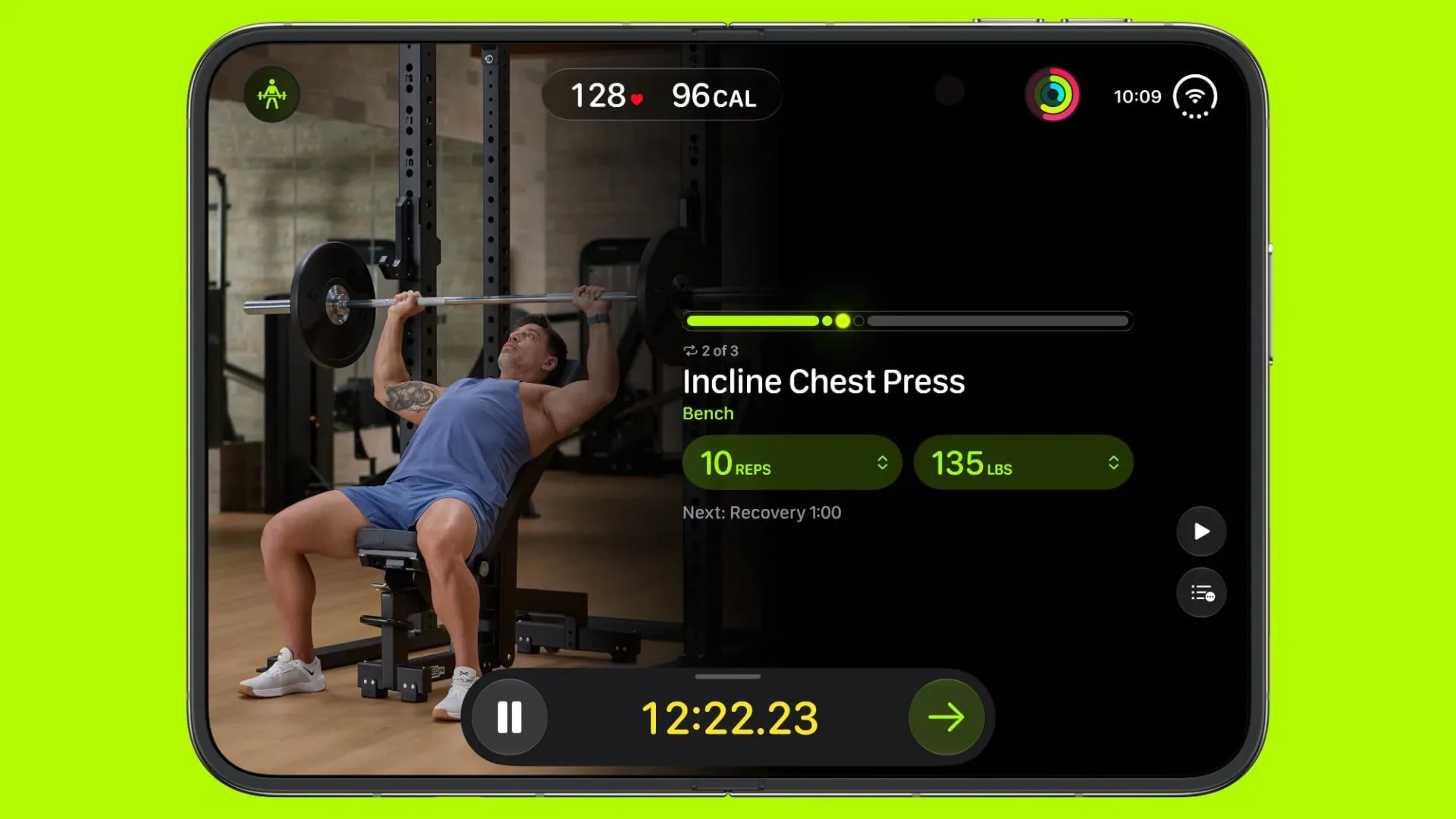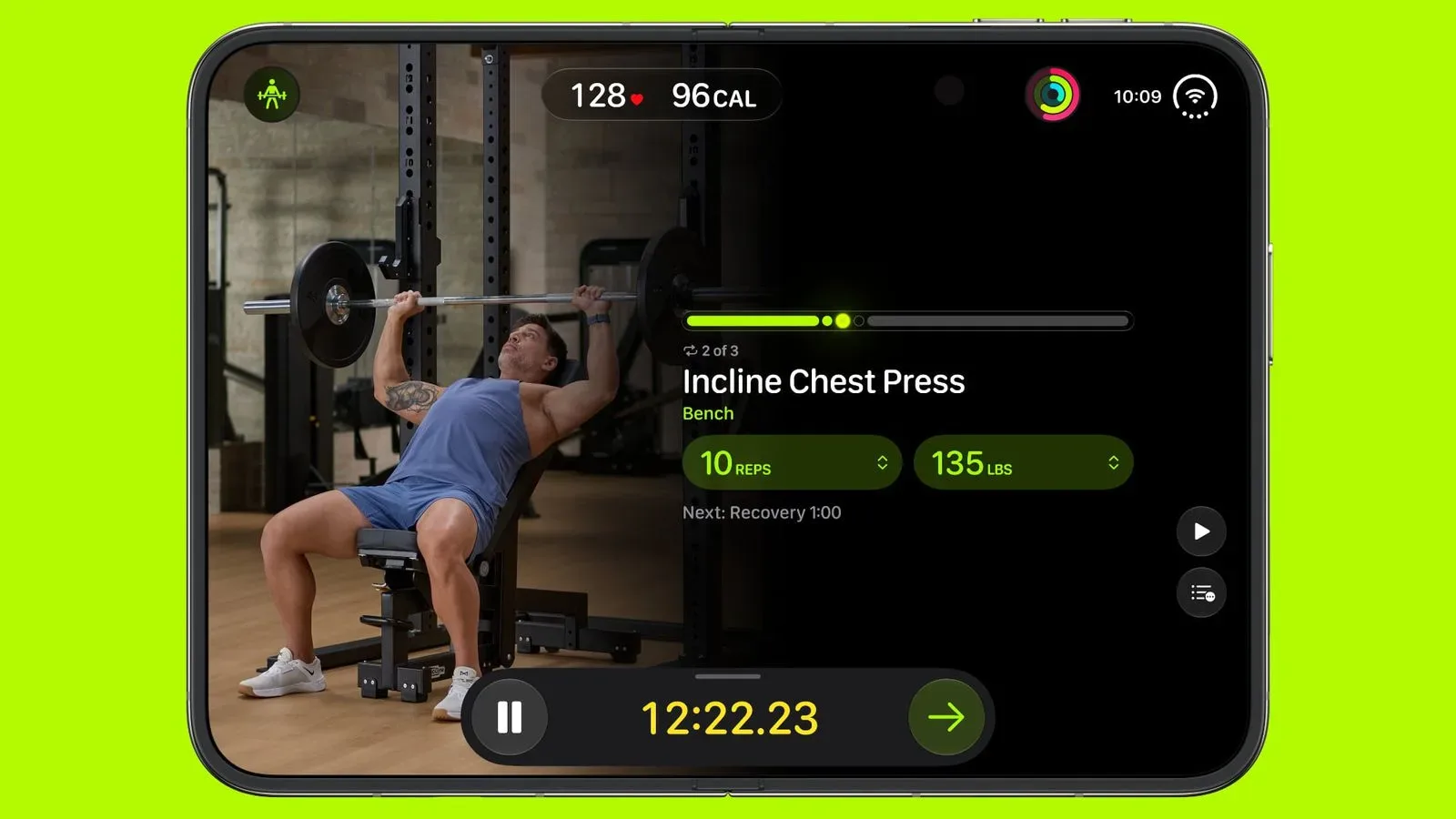
Apple Fitness+ has added Gym Strength, a customized strength-training option arriving with iOS 27.3, iPadOS 27.3 and watchOS 27.3. The new feature creates a four-week plan using the member’s stated goals, experience, available training days, preferred session length and equipment.
It is a notable shift in format for the service. Rather than simply asking a person to pick an individual workout, Gym Strength is designed to organize multiple sessions into a short training block: a structured run of workouts intended to be followed over several weeks. The plan can also be steered toward selected body areas, giving users a way to make the programme fit their own priorities and gym access.
Gym Strength is available to Apple Fitness+ subscribers on iPhone and iPad. Apple Watch users can view and log exercises, repetitions and load, while also tracking workout metrics through the watch.
What Gym Strength plans include
During setup, users choose the variables that shape the programme. Apple says the option is intended for all experience levels, with choices covering:
- Workout days
- Areas of the body to emphasize
- Session duration
- Goals and training experience
- Available equipment
Each planned workout provides exercise recommendations along with suggested reps, sets and load. Short demonstrations from Apple Fitness+ trainers accompany the exercises.
Those terms matter because they turn a broad ambition such as getting stronger into a usable session outline. A rep, short for repetition, is one completed movement. A set is a group of repetitions. Load is the amount of resistance used for an exercise. In a gym setting, that might mean a selected weight or another form of resistance. Gym Strength’s recommendations give members a framework for all three rather than leaving every decision to be made in the moment.
The trainer demonstrations are likely to be especially useful when an exercise name is unfamiliar. They are described as short videos, so they should be understood as a quick reference built into the plan rather than a claim that the feature supplies live supervision or individualized coaching. The available details do not specify the exact exercise library, the types of equipment supported, or the method used to determine a suggested load.
Weekly adaptation is the central feature
The most important part of Gym Strength is not merely that it makes a four-week schedule. Apple says the workouts in each new week adapt based on progress from the previous one. In plain terms, the programme is meant to respond as the four-week period unfolds instead of remaining fixed from day one.
That makes logging more than a record-keeping extra. If users are asked to record exercises, reps and load on Apple Watch, those entries form a practical picture of what was completed and with what resistance. The feature’s adaptive element suggests that prior-week progress has a role in shaping the next week’s workouts, though Apple has not detailed precisely how it measures progress or how substantially the recommendations can change.
That uncertainty is worth preserving. “Adaptive” does not automatically mean that every part of a plan is recalculated after every set, nor does the information currently establish that the programme can diagnose technique, recovery or injury concerns. What is clear is narrower and useful: the weekly plan is not intended to be identical throughout the four weeks when progress changes.
A more structured use of Fitness+
For a subscriber, the practical appeal is organization. Gym strength work often involves a sequence of choices: deciding how frequently to train, how long to stay, which body areas to focus on, what equipment can be used, and how much resistance to select. Gym Strength puts those choices into its initial plan-building process, then presents recommendations for the exercises themselves.
That could help people who have access to a gym but do not want to build a routine from scratch. It could also reduce the friction of a short session. Someone who selects a shorter duration is being given a plan built with that time constraint in mind, rather than needing to trim an otherwise longer workout independently. The service also accounts for schedule and equipment at setup, which is significant because a plan is only useful if it can be completed in the environment where the person actually trains.
For experienced lifters, the value may be less about being told that sets and reps exist and more about keeping a consistent four-week structure inside the Apple devices they already use. For newcomers, the combination of recommended exercise details and demonstration clips can make the first decision easier. Neither group should read the feature as a substitute for personal judgment: the supplied information does not say that Gym Strength assesses form, medical suitability or individual limitations.
How the Apple Watch fits in
Apple Watch is the logging companion to the iPhone and iPad plan view. Wearers can see exercises and record their reps and load, as well as track workout metrics. This gives the new feature a split-device setup: the plan can be accessed on iPhone or iPad, while the watch is positioned for at-the-gym viewing and recording.
That distinction could matter in everyday use. iPhone and iPad are natural places to review a programme, watch a demonstration and consider the wider week. A watch is easier to keep nearby between sets, where a member may want to confirm the next movement or enter what was completed. Apple has not provided a complete list of the workout metrics involved, so members should not assume a particular metric beyond the tracking capability stated for the feature.
The device integration also separates Gym Strength from a static written routine. A printed plan can tell someone what to do, but it cannot itself collect the exercise, repetition and load records that the Fitness+ and Apple Watch experience is built around. In this case, the record is relevant to both personal tracking and the plan’s week-to-week adaptation.
What subscribers should check before starting
Gym Strength is now available to Apple Fitness+ subscribers through iOS 27.3, iPadOS 27.3 and watchOS 27.3. The straightforward first step is ensuring the appropriate devices are updated, then checking the Fitness+ workout options on iPhone or iPad.
Before generating a plan, it is sensible to answer the setup choices honestly. Available equipment, session length and realistic training days are not cosmetic settings; they are the inputs the four-week plan uses. Selecting a schedule that is more ambitious than a person can sustain may make the programme harder to follow, while accurately identifying usable equipment should make its exercise recommendations more practical.
When it comes to suggested load, users should treat the recommendation as a starting point within the tool’s framework rather than a guarantee that one number suits every individual on every day. The supplied details establish that loads are recommended and can be logged, but do not explain the underlying model or its safeguards. Anyone with health concerns, pain or uncertainty about exercise suitability should use appropriate caution and seek qualified guidance where needed.
Why the feature may resonate with game-minded trackers
There is a small but meaningful overlap between a good training plan and the systems players often appreciate in games: clear objectives, visible progression, manageable sessions and feedback that affects the next stage. Gym Strength is not a game, and Apple has not described rewards, challenges or gamification for it. Still, a plan that adapts weekly based on logged progress gives the routine a progression loop rather than treating every workout as a disconnected task.
That same preference for structure helps explain why long-running RPGs can hold attention when their systems keep a broader journey legible; Dragon Age’s defining moments across four RPGs offer a very different example of how continuity and progression can make individual sessions feel part of something larger.
For Fitness+ subscribers, the immediate takeaway is more grounded: Gym Strength adds a four-week gym-focused planning tool that can be tailored before it begins, logged on Apple Watch while it is happening, and adjusted as prior weeks are completed. Its usefulness will depend on how well its equipment, scheduling and exercise recommendations match a member’s real routine, but the design is clearly aimed at making that routine easier to start and easier to maintain.