There are few household resources more fiercely contested than a free outlet near the couch. A phone needs power. A controller has reached its familiar one-bar emergency. Earbuds have been sitting in their case looking innocent but are somehow empty. Then a tablet appears, demanding its own cable like it has been invited to the party all along.
That makes a reported deal on the Anker Zolo 50W USB-C Four-Port Charger worth a closer look. As of September 3, 2026, a two-pack has been listed at $25, rather than that price applying to a single charger. Deal pricing can change without warning, so shoppers should confirm the listing, included quantity, and final checkout total before treating it as a permanent price.
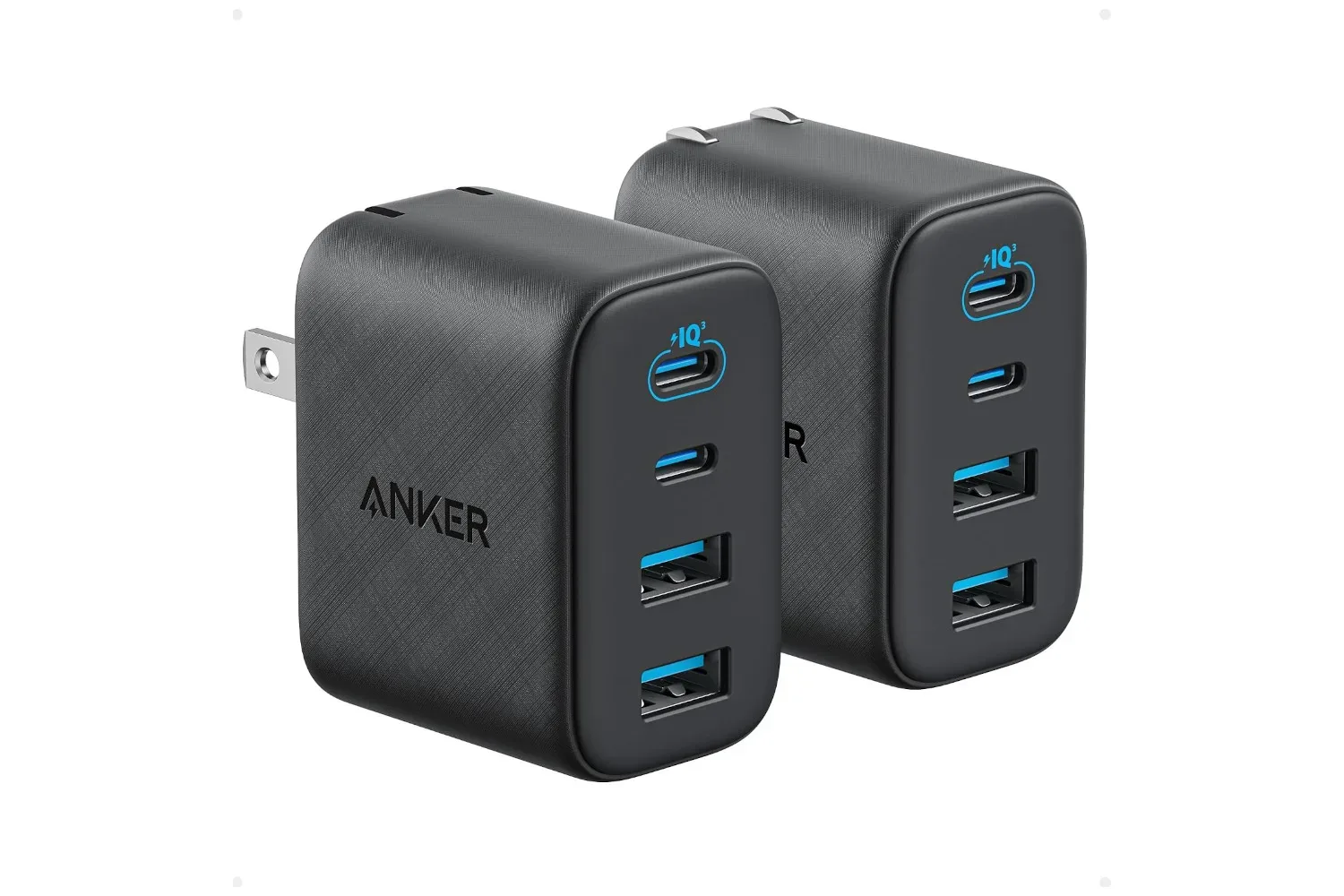
On paper, the appeal is uncomplicated: two compact charging hubs, each with four ports, can do more for a gadget-heavy room than another single-port brick ever could. It is mundane equipment, certainly, but mundane equipment is also what keeps a multiplayer session from turning into an archaeological dig through drawers full of mystery cables.
What comes with each Anker Zolo charger
Each charger is specified with four USB ports: two USB-C ports and two USB-A ports. That mix matters because USB-C is now common across newer phones, tablets, handheld accessories, and many other portable devices, while USB-A remains useful for older cables and accessories that have not yet been ceremonially retired to the cable bin.
The stated maximum output is 50W. That does not mean every connected device receives 50W at once; total output has to be shared among devices when several are connected. The exact charging speed a device reaches can also depend on the port being used, the cable, the charging protocol supported by both devices, and how the charger distributes its available power. Those are details worth checking in the product listing or manual, especially for anyone buying with a particular laptop, tablet, or high-draw handheld in mind.
Still, a 50W four-port charger is positioned for the real-world mix many people carry daily. A single unit could potentially be used to charge a phone, wireless earbuds, smartwatch, and tablet from one wall outlet, provided the cables and device requirements line up. For a gaming space, it can also simplify the usual collection of controller cables, wireless headsets, phone chargers, and portable accessories.
- Two USB-C ports: useful for newer devices and USB-C cables.
- Two USB-A ports: handy for existing legacy cables and accessories.
- 50W total output: intended to support multiple devices, with power shared when more than one is plugged in.
- Two chargers in the reported deal: allowing one to live at home and another to travel, or letting two rooms stop negotiating over the same outlet.
Why a two-pack can make more sense than one powerful brick
A high-wattage charger is useful when one demanding device needs substantial power. But a pair of modest multi-port chargers solves a slightly different problem: geography. The outlet behind the television is not the outlet beside the bed. The desk is not the kitchen counter. And a charger that stays in a travel pouch cannot also rescue a dying controller at home.
Two units provide options without requiring a single charging station to serve the entire household. One could stay on a desk for a daily phone-and-accessories routine. Another could sit in a living room, move between rooms, or go into a bag before a trip. For roommates, families, or couples, splitting the pack may be more useful than treating it as a backup purchase.
The configuration also makes sense for shared play. Couch multiplayer has enough unwritten etiquette before the battery warnings start flashing; the person whose controller dies at a decisive moment is rarely popular. Our guide to the unwritten rules of couch multiplayer may not settle every controller dispute, but a sensible charging setup can at least remove one predictable source of them.
There is another less glamorous upside. Consolidating several small chargers into one multi-port adapter can reduce outlet clutter. That does not eliminate the spaghetti of cables, because the cables remain extremely committed to their art, but it can mean fewer wall bricks competing for a power strip. It is particularly useful where outlets are difficult to reach behind desks, entertainment centers, or hotel furniture.
Port count is not the same as unlimited power
The most important expectation to set is that four ports do not magically create four independent fast chargers. The 50W rating describes the charger’s total available output. When devices are connected simultaneously, they share that capacity. A phone, watch, and earbuds may be a light and practical combination; adding a more power-hungry device can change the available charging behavior for everything else.
Prospective buyers should consider what they actually intend to charge. If the goal is overnight charging for several small devices, the four-port design may be more valuable than extreme maximum wattage. If the goal is rapid charging for a laptop while also supplying several other electronics at their fastest possible rates, the total capacity and port-level specifications deserve a more careful read.
Charging claims also live and die by cables. A USB-C cable that is old, damaged, poorly made, or built only for lower-power use may limit performance. A USB-A cable may be perfect for a controller or accessory yet irrelevant for a newer device that expects USB-C power delivery. The charger can reduce brick clutter, but it cannot turn every cable in the drawer into a high-performance cable through sheer optimism.
A quick compatibility checklist
- Identify the devices most likely to share the charger.
- Check whether each one uses USB-C or USB-A at the charger end.
- Confirm the charging requirements for any laptop or other larger device.
- Check the charger’s port-specific power information, not only its 50W total rating.
- Inspect cables for the correct connector type and appropriate power capability.
- Verify the current price and that the offer really includes two units before ordering.
Travel-friendly details could be the deciding factor
The Zolo charger is described as compact and fitted with a foldable plug. Those traits are especially relevant to travelers, because a charger is only convenient if it can join the bag without snagging on everything else inside it. A folding plug can make the shape easier to pack alongside cables, a handheld system, a battery bank, and the other small electronics that accumulate before any trip.
It could also be useful in tight spaces at home. Chargers with a larger footprint can be awkward behind furniture or in a crowded extension lead. A smaller multi-port unit offers a way to bring several charging connections to a difficult outlet, though buyers should still avoid placing any charger where ventilation is obstructed or where it can be crushed, exposed to moisture, or stressed by sharply bent cables.
For people who travel with a laptop, it is especially important not to assume universal suitability simply because a charger has USB-C and a stated 50W maximum. Some laptops require more power than that for normal charging under use, and individual device behavior differs. Check the laptop manufacturer’s recommended adapter rating and the relevant USB-C charging support before relying on this as the only travel power solution.
ActiveShield 4.0 and practical charging safety
Anker lists ActiveShield 4.0 safety technology for this model, with 24-hour monitoring while the charger is operating. That is a product feature, not a reason to abandon basic charging common sense. Use intact cables, keep the charger dry, do not cover it with bedding or clothing, and stop using equipment that becomes damaged or behaves unusually.
It is also wise to buy from a listing that clearly identifies the model and seller, particularly when a deal is unusually aggressive. The reported two-pack price is compelling because it works out to a very low cost per charger, but the checkout page is where shoppers should confirm the exact configuration. Retail offers can expire, stock can change, and similarly named chargers can have different port layouts or output ratings.
No charger is likely to become the centerpiece of a game room. That honor is reserved for the console, PC, display, collection shelf, or the snack bowl that somehow vanishes before the first match ends. But reliable access to power has a quiet importance. It keeps accessories ready, reduces outlet conflict, and gives modern device collections a little more room to function without a daily ritual of cable swapping.
At the reported $25 for two, the Anker Zolo 50W Four-Port USB Charger pack looks most attractive for buyers who need flexible, mixed USB-C and USB-A charging in more than one location. Just approach it as a time-sensitive listing rather than a guaranteed standing price, verify the specifications against the devices you own, and remember that the humble cable still gets a vote in how quickly anything charges.
Shop the products
Check current price, model and availability at the retailer.