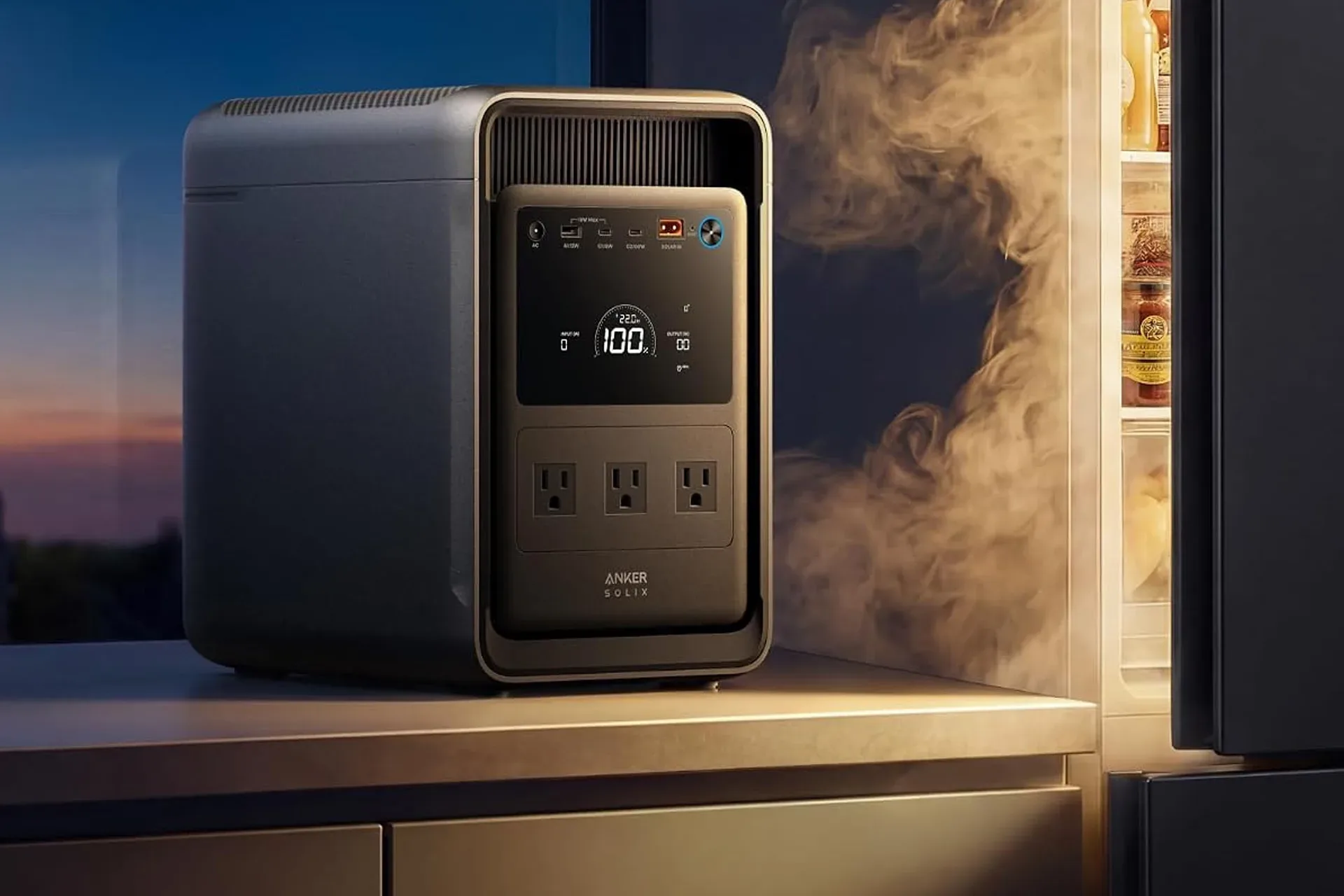
The Anker SOLIX S2000 portable power station is listed at $650, a $549 reduction from its stated $1,199 regular price. That works out to roughly 46% off, although discounts and stock can change, so buyers should confirm the live listing, seller and final checkout price before committing.
Portable battery stations are not only camping accessories. They can be a practical layer of household resilience when an outage threatens refrigerated food, communications, lights or essential small devices. The SOLIX S2000’s headline specifications suggest it is positioned as a relatively high-capacity backup option: Anker says it can keep a refrigerator operating for up to 35 hours, offers eight outlets across its front and back, and supports six ways to replenish its battery.
That potential refrigerator runtime is the kind of claim that needs to be read carefully. It is a useful illustration of the product’s intended role, not a universal promise for every kitchen. Actual runtime will depend on the refrigerator’s power use, how often its compressor runs, what else is connected, and the condition of the station’s battery. Still, a backup battery that can sustain a single major appliance for an extended outage can be meaningfully different from a small power bank intended only for phones.
Why a large portable battery can matter in an outage
An outage turns ordinary appliances into a prioritization problem. The key question is not simply whether a battery station has an outlet; it is whether its stored energy and available connections fit the devices a household considers most important. For many people, that begins with a refrigerator. Keeping food cold can help avoid the disruption and replacement cost that follow a prolonged loss of power.
The SOLIX S2000 is described as a 2kWh-class system. “kWh,” or kilowatt-hour, is a measure of energy: the amount of electricity a device uses over time. It is different from watts, which describe power at a particular moment. Put simply, watts help determine whether a station can handle a device’s demand, while kilowatt-hours help determine how long it can keep that device running.
That distinction is especially important for appliances. A refrigerator does not necessarily draw the same amount of power continuously; its compressor can cycle on and off. Adding other devices changes the calculation again. A station may be able to run a refrigerator for a lengthy period when it is the primary load, but runtime falls as lights, routers, phones, laptops or other equipment join the queue.
Anker says the SOLIX S2000 has a 6W idle draw and high efficiency, and claims it can operate up to 20% longer than other 2kWh systems. Idle draw is the electricity consumed by the station itself while it is on and ready to provide power. Lower idle consumption can matter over many hours because less of the stored charge is spent simply maintaining the system. The 20% comparison is a manufacturer claim, so it is best viewed as a potential efficiency advantage rather than a guaranteed result in every setup.
Eight outlets make prioritization easier, not unlimited
The unit has eight outlets in total, located across the front and back. That is useful because a blackout rarely affects just one task. A household may want to keep a refrigerator running while also charging phones, powering a router or operating a light. Multiple outlets can reduce the need to continually swap cables and chargers as needs change.
But more outlets do not create more energy. The most sensible approach is to decide in advance what gets powered first. A refrigerator may be the essential load; phones and a router may be next; everything else should be weighed against the runtime it costs. This is less glamorous than plugging in every nearby device, but it better matches the purpose of a finite backup battery.
A practical outage plan for a power station
- Identify the devices that matter most before bad weather or an outage arrives.
- Keep the station charged when it is being stored for emergency use.
- Use the refrigerator claim as a planning reference, not as a fixed runtime guarantee.
- Connect additional electronics only after considering whether their use is worth reducing reserve power.
- Check the product documentation and appliance requirements before powering equipment.
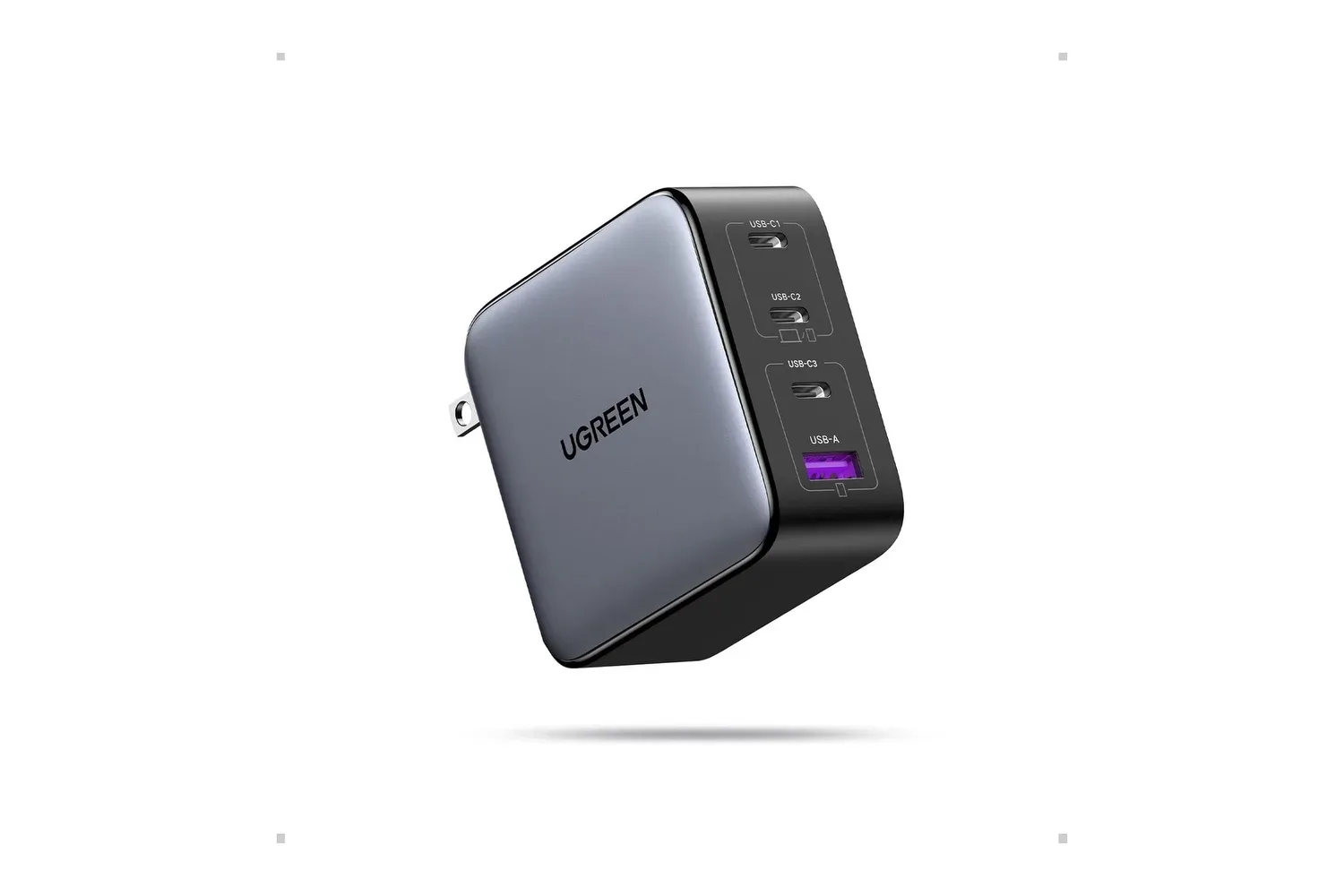
This kind of preparation is also relevant to players with handhelds, phones or laptops they use to stay connected during a disruption. The station’s role is broader than gaming, but it could provide a way to keep smaller personal devices charged while priority household appliances remain the main focus. For everyday device charging rather than blackout-scale backup, a smaller multi-port option may make more sense; the UGREEN Nexode 100W GaN charger deal covers that more compact category.
Six charging paths offer more ways to recover
Stored power is only one half of the equation. Recharge options influence how useful a station remains during a long interruption. The SOLIX S2000 supports charging from a wall outlet, a generator, an alternator charger, a car outlet, solar input, and a combined solar-and-AC arrangement. It accepts up to 400W of solar input power.
Solar input refers to charging the station using compatible solar panels. The 400W figure is an input limit rather than a statement that every solar setup will always deliver 400W. Solar output can vary, and the supplied specifications do not establish how quickly the station will recharge under any specific conditions. The practical takeaway is simply that the SOLIX S2000 is designed to accept solar charging as one of several replenishment routes.
Combined solar and AC means the unit can use solar power and wall power together. That could be relevant when wall electricity is available and someone wants to recharge using more than one supported input method. Generator, vehicle and alternator charging add other options, particularly when a conventional outlet is unavailable. Which option is most suitable will depend on the equipment a buyer already owns and the circumstances of the outage or trip.
These choices matter because an emergency battery is most valuable when it is not treated as a one-use item. A wall outlet is convenient before an outage. Solar may be relevant during an extended interruption. A vehicle, alternator charger or generator may offer alternatives in scenarios where the grid is still down. Buyers should confirm which accessories are included and which are required separately before basing a plan around a particular charging method.
Battery-cycle and lifespan claims deserve context
Anker says the SOLIX S2000 has been tested for up to 10,000 battery cycles and describes that as equating to a 15-year lifespan with frequent use. A battery cycle generally refers to using an amount of charge equivalent to the battery’s full capacity, whether that is consumed in one go or across partial discharges. Cycle ratings are useful because batteries do not retain their original capacity indefinitely.
However, a stated cycle count should not be confused with a guarantee that the unit will feel identical after 10,000 cycles or will fit every buyer’s needs for 15 years. How a battery ages can depend on usage and storage conditions, as well as how deeply and how frequently it is discharged. The supplied figures do indicate that long-term durability is part of the product’s design pitch, which is significant for an expensive backup purchase.
At the listed $650 price, the calculation for prospective buyers is less about treating the SOLIX S2000 as an impulse accessory and more about whether they have a defined use for substantial portable backup power. Someone who wants to protect refrigerated food during outages, support a small set of essential electronics, or use multiple recharging routes may find the specification set compelling. Someone who only needs to top up a handheld, phone or laptop would likely be paying for far more capacity and flexibility than necessary.
What to check before buying
- Verify the current price. The $650 figure and $549 reduction are time-sensitive listing details.
- Match capacity to the job. Consider whether the priority is a refrigerator and emergency essentials, or merely portable-device charging.
- Review the device load. Check the requirements of any appliance or electronic device intended for backup power.
- Confirm charging needs. The station supports six charging approaches, but buyers should verify what cables, panels or other accessories they need.
- Plan for real runtime. The up-to-35-hour refrigerator figure is dependent on the load and should not be used as a blanket promise.
The deal makes the SOLIX S2000 more accessible than its stated $1,199 regular price, and its combination of eight outlets, multiple recharge paths and claimed long-cycle durability gives it a clear emergency-backup focus. Its strongest use case is not powering everything in a home; it is buying time for a deliberately chosen set of essentials when ordinary power is unavailable.
Shop the products
Check current price, model and availability at the retailer.