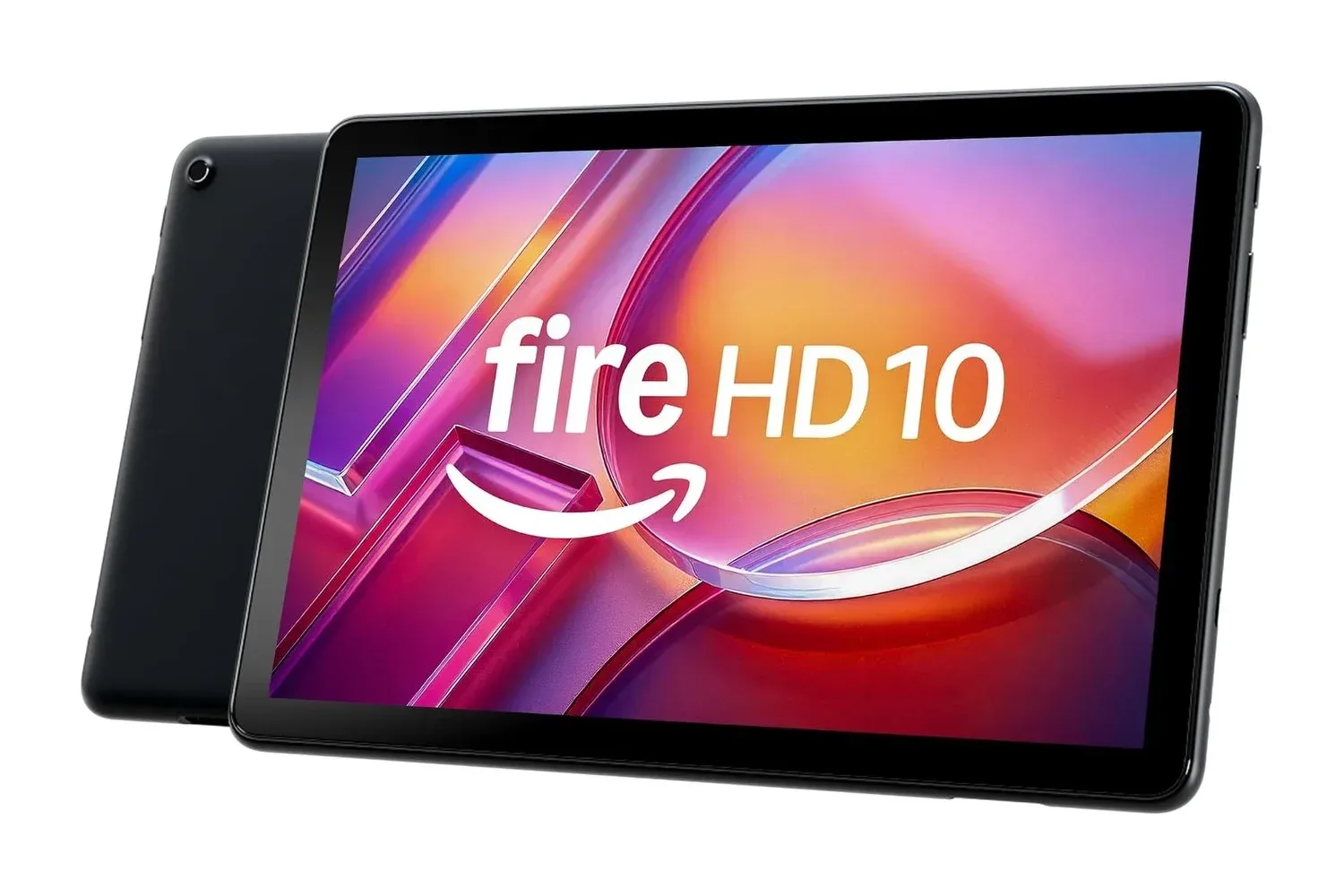
Amazon’s Fire HD 10 tablet is listed at $73, a reduction from $155 that works out to $82 off, or 53%. At that price, its appeal is straightforward: a large, portable screen intended for the everyday jobs that do not necessarily demand a premium tablet—streaming video, reading Kindle books, listening to audiobooks, casual games, video calls and browsing around the home.
The headline specification is a 10.1-inch Full HD display, described as 1080p. That means the screen is built to display 1,920 by 1,080 pixels of video content, a familiar resolution for films, shows and clips. Screen size and resolution alone never tell the whole story of a display, but 10.1 inches gives this device a substantially roomier viewing area than a phone for reading, watching a program, or sharing a video with someone nearby.
For people looking at a tablet primarily as an entertainment companion rather than a laptop replacement, the listed configuration covers several practical bases: an octa-core processor, 4GB of RAM, 32GB of built-in storage and microSD expansion support up to 1TB. Amazon also rates the Fire HD 10 for up to 13 hours of battery life. That figure should be treated as an “up to” estimate rather than a promise for every activity, since streaming, gaming, display settings and wireless use can all affect endurance.
What the Fire HD 10 is designed to do
The Fire HD 10 is positioned around media consumption and lightweight daily tasks. Its 10.1-inch screen can serve as a dedicated place for a show, a book, magazines, music and video calls without tying up a phone. It can also be a useful shared household screen: something to hand to a child on a journey, set up for a recipe, or use for an audiobook and reading session.
Amazon lists a 5MP front-facing camera for video chats and a 5MP rear camera capable of 1080p HD video. These cameras add functional flexibility for calls and quick recordings, though the supplied details do not establish how either camera performs in varied lighting. Buyers who consider camera quality a top priority should keep that uncertainty in mind rather than infer more from megapixel counts alone.
Dual-band Wi-Fi is also listed. In plain terms, dual-band hardware can connect on two common Wi-Fi frequency bands, which gives a compatible home network more options for maintaining a connection. It is relevant to the Fire HD 10’s central roles—video streaming, downloads, calls and cloud-synced reading—but a tablet’s real-world network experience still depends on the router, the internet service and local congestion.
Processor, RAM and storage explained
Three technical terms matter most when judging whether this is the right sort of budget tablet.
- Octa-core processor: This refers to a chip with eight processing cores. It is one part of what determines how responsive apps and the operating system feel. The supplied specifications describe the Fire HD 10 as able to keep multiple applications running without major lag, but they do not justify treating it as a high-end gaming machine.
- 4GB of RAM: RAM is short-term working memory. It holds data that active apps need quickly, helping the device move among open tasks. More RAM does not make every task magically faster, but it is important when a user moves between a browser, an ebook, a video service and a game.
- 32GB storage with microSD expansion: Internal storage is where apps and downloaded content live. A microSD card can expand capacity by up to 1TB, according to the listing. That could be particularly useful for downloaded media, although the source material does not specify which app content can be placed on expanded storage or what card is included. No microSD card should be assumed to come in the box.
The key distinction is that expanded storage addresses room for files, while RAM addresses the active working space used while apps are open. They solve different problems. Someone carrying many downloaded books, videos or audio files may value a microSD card. Someone expecting demanding games to behave like they do on much more expensive hardware should set expectations more cautiously.
A reading-focused option with Amazon services built in
Reading remains a major part of the Fire HD 10 proposition. Kindle books and Audible audiobooks can sync across devices, allowing a reader to stop on a phone and resume on the tablet at the same place. The larger screen may be attractive for readers who want more text visible at once or prefer magazines and illustrated material on a wider display.
Amazon’s broader ecosystem is also central to the device’s intended use. Prime members can access Prime Reading, Prime Video and Amazon Music, with the tablet providing one place to browse and use those services. Of course, Prime membership and any service availability are separate considerations from the tablet itself; the hardware discount does not mean that subscriptions or content libraries are included beyond what an individual account provides.
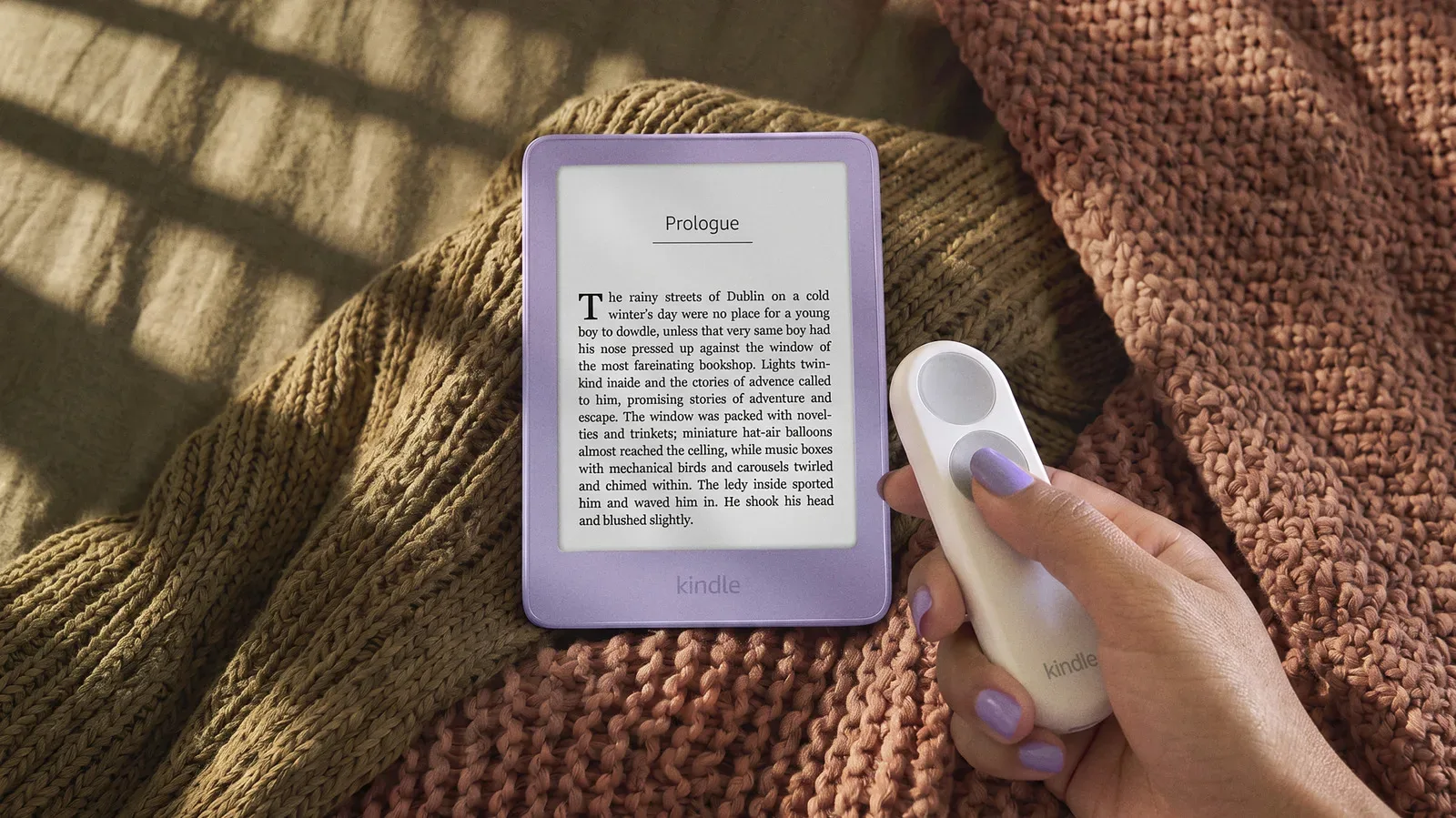
Readers who are especially interested in Amazon’s hardware approach to reading may also want to see how the company is bringing physical controls back into the conversation with its Kindle Click page-turn cover and charging stand. The Fire HD 10 serves a different purpose: it is a color multipurpose tablet, rather than a dedicated e-reader.
Built for carrying around, not just sitting on a stand
The tablet is described as thin, lightweight and ENERGY STAR certified. Its display uses strengthened aluminosilicate glass, intended to help it cope with accidental drops during normal daily use. “Strengthened” is not the same as indestructible, and no water-resistance rating or drop-height claim is supplied here. The practical takeaway is simply that the display has a stated durability measure, not that owners should forgo ordinary care or a case if they expect rough use.
Hands-free Alexa functionality is another convenience feature. The assistant can answer requests involving weather, traffic, scores and headlines, play music, and operate compatible smart-home devices. That could be useful when the tablet is functioning as a kitchen screen, bedside media device or small shared display. It also makes the Fire HD 10 more intertwined with Amazon’s voice-assistant ecosystem, which is worth considering for anyone who prefers to limit how many connected services they use.
Stylus support broadens the tablet’s role
Beyond video and books, the Fire HD 10 supports the Made for Amazon Stylus Pen, sold separately. Amazon says the pen has 4,096 levels of pressure sensitivity and can be used to write and draw in applications including OneNote.
Pressure sensitivity describes the device’s ability to register differences in how firmly the pen is pressed. In compatible apps, that can help make handwritten notes and drawing strokes feel more variable than a basic tap input. It could make the Fire HD 10 more useful as a digital notepad for lists, reminders, recipes and casual sketching.
There are two important purchasing boundaries here. First, the stylus is not included at the stated tablet price. Second, support for a pressure-sensitive pen should not be mistaken for a complete account of its drawing-app ecosystem, software features or professional-art suitability. The supplied information supports note-taking and drawing compatibility, but not stronger claims.
Who this $73 tablet makes the most sense for
At the listed deal price, the Fire HD 10 looks best suited to buyers with a clear, modest tablet job in mind. It has a large Full HD screen for media, hardware aimed at ordinary multitasking, optional storage expansion, a claimed 13-hour maximum battery figure, cameras for calls, and access to Kindle, Audible and Amazon-connected services.
- Good fit: a household streaming screen, a reading and audiobook device, a travel tablet, a casual gaming device, a video-call screen, or a low-cost digital notebook with a separately purchased stylus.
- Questions to consider: whether 32GB of internal storage will be enough without a microSD card, whether Amazon’s ecosystem matches the buyer’s preferred apps and services, and whether the intended games or workloads need more performance than the supplied specifications establish.
The 53% reduction is meaningful because it lowers the barrier to a 10.1-inch, 1080p tablet without changing what the device fundamentally is. This is an entertainment-first Amazon tablet with room for reading, calls, notes and casual play—not a claim that every premium-tablet use case has suddenly become inexpensive. For buyers whose needs line up with that focus, $73 is a notably lower entry point than the listed $155 regular price.
As with any retailer promotion, pricing and availability can change. The $73 figure, $155 reference price and 53% discount are the listed figures at the time represented by the deal information.
Shop the products
Check current price, model and availability at the retailer.