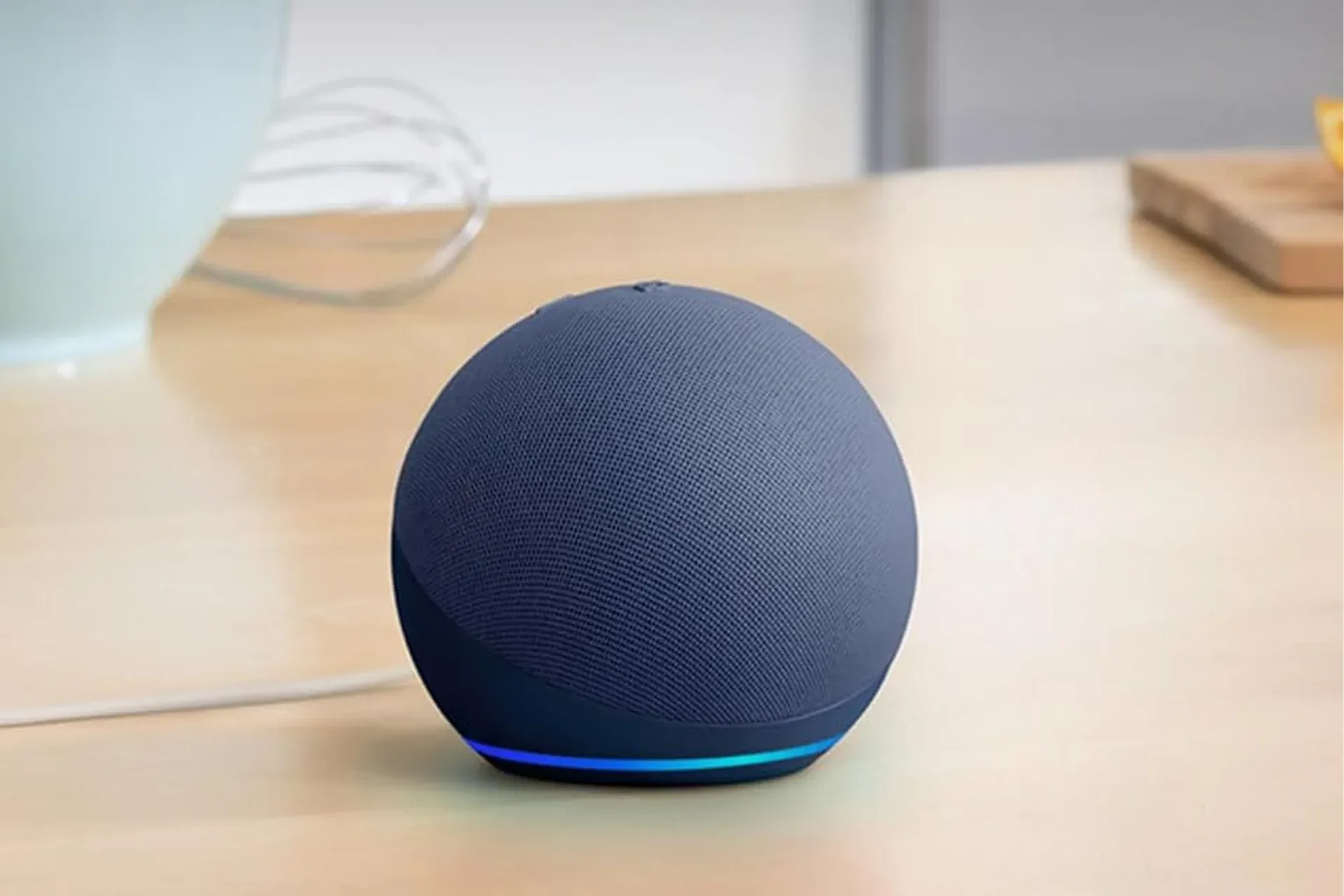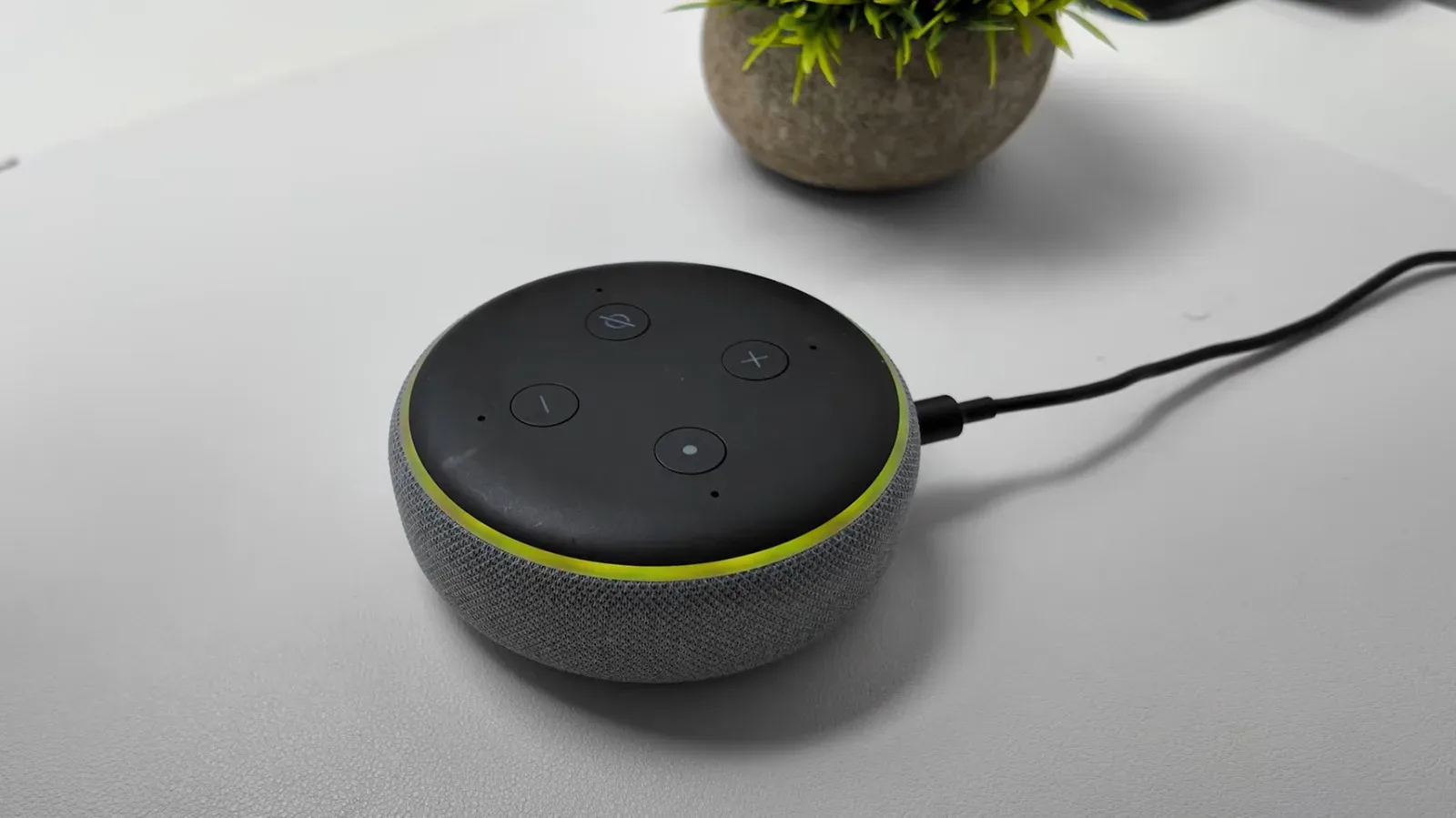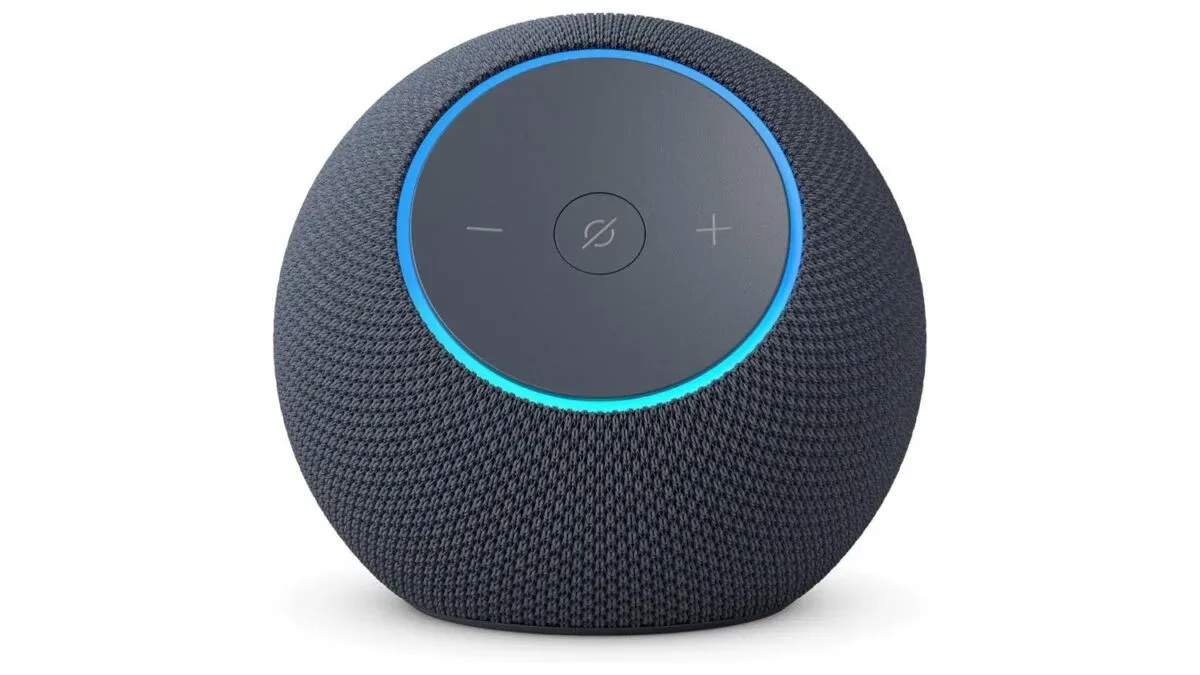
Small smart speakers have traditionally been asked to do a very particular job: set a timer, report the weather, answer a quick question, and perhaps play music that is more functional background noise than a room-filling event. The Amazon Echo Dot Max is aimed at stretching that expectation. It is currently listed for $95, down from a regular price of $120. That is a $25 reduction, or roughly 21% off.
The discount matters because the Echo Dot Max is positioned as more than a modest voice-assistant puck. Amazon has equipped it with a two-way audio system, custom silicon intended to improve Alexa interactions, environmental sensing, and an integrated smart-home hub. In other words, it is attempting to fit a broader slice of a home setup into a device small enough to live in a kitchen, bedroom, office, or wherever people tend to issue increasingly urgent timer requests.
A first two-way system for the Echo Dot line
The headline hardware change is the speaker arrangement. Earlier Echo Dot models used one driver to handle the full frequency range. The Echo Dot Max separates those duties between a high-excursion woofer for low frequencies and a custom tweeter for higher-frequency sound. This is the first two-way configuration in the Echo Dot family.
That division is important in principle because bass and treble place different demands on a speaker. A woofer built to move more air can focus on lower notes, while a tweeter can handle finer high-frequency details. Amazon says the Echo Dot Max produces nearly 300% more bass than the fifth-generation Echo Dot. The company has also integrated the audio components into the device enclosure instead of placing them in a separate internal housing, a design choice that may help explain how it pursues stronger low-end output without abandoning the compact format.
None of that means a small speaker suddenly ignores the realities of physics. It does, however, distinguish the Echo Dot Max from the kind of compact assistant speaker bought solely for alarms and simple voice controls. For households that want one unobtrusive device to handle casual listening as well as commands, the two-way system is the clearest reason to look beyond a basic entry-level model.
It is designed to account for the room around it
Speaker placement can substantially affect what listeners hear. A device on a hard kitchen counter beside tile surfaces will not behave exactly like one placed on soft furnishings in a carpeted bedroom. The Echo Dot Max uses acoustic sensing to assess its surroundings and alter its output to suit the room. The device performs that measurement internally, with no manual configuration described as necessary.
That capability is especially relevant to a speaker intended to move from room to room. A compact smart speaker often gets relocated based on convenience: first near a coffee machine, later on a desk, eventually somewhere it can announce dinner timers to everyone within range. Automatic tuning is meant to make those moves less dependent on a user diving into audio settings.
The Echo Dot Max also relies on Amazon’s Omnisense technology. Omnisense combines inputs from audio, ultrasound, Wi-Fi radar, and motion sensing to build an understanding of nearby activity. That information can support responses such as a reminder about a door left open or the activation of a routine when someone enters an area. The practical appeal here is not merely asking a voice assistant to do something, but having the surrounding home setup react to conditions it detects.
The AZ3 chip and Alexa+ angle
Amazon’s AZ3 chip manages the Echo Dot Max hardware and includes an AI Accelerator for on-device Alexa+ processing. Alexa+ is presented as the newer generative version of Alexa, built to support more natural back-and-forth exchanges instead of treating every question as a completely isolated instruction.
For a smart speaker, the value of a conversational approach is easy to understand. A person might begin with a broad request and then ask a related follow-up without wanting to repeat every detail. The intended experience is an assistant that carries the immediate context forward more naturally. How useful that is in daily life will depend on the specific task, but it is a notable part of what separates this model’s platform pitch from a speaker focused only on standard command-and-response behavior.
The AZ3 chip is also associated with wake-word detection that Amazon says is more than 50% better than prior iterations. The Echo Dot Max has a larger microphone array as well, designed to reduce ambient noise so Alexa can better hear a user while other sound, including a television, is present. Anyone who has tried to address a smart speaker from across the room during a loud scene knows the appeal of a device that does not require vocal projection worthy of a stage actor.
A hub for lights, plugs and locks
The built-in smart-home hub is another substantial part of the Echo Dot Max proposition. It can integrate supported light bulbs, wall outlets, and door locks without requiring a separate bridge for each compatible product. For someone putting together a connected-home system from scratch, that can reduce the number of boxes and accessories needed to begin controlling devices through Alexa.
It also gives the speaker a role beyond audio. A bedside placement could make it a convenient point for lights and routines, while a central living-space location could turn it into a voice-accessible control point for multiple connected devices. Omnisense extends that idea further by offering event-based responses, rather than restricting automation to a scheduled time or a spoken phrase.
Smart-home setups work best when they simplify an existing habit instead of demanding a new ritual for every lamp and lock. The Echo Dot Max is clearly geared toward that simplification: a single compact device combining audio, assistant functions, sensing, and hub duties. Buyers should still make sure that the particular devices they own or plan to buy are compatible with their intended setup, especially before assuming that a bridge can be eliminated in every case.
Music services and finishes
For music, the Echo Dot Max supports Amazon Music, Apple Music, Spotify, and Tidal. That gives it coverage across several major streaming options and makes it less of a one-service-only proposition. The speaker is offered in Graphite and Glacier White.
The audio changes are likely the largest draw for listeners who have found prior small smart speakers adequate for spoken responses but less compelling for music. Meanwhile, the hub and sensing features may matter most to people who want automation without scattering dedicated control devices around the home. The Alexa+ and improved voice-detection claims round out a package focused on making the speaker more useful when a household is noisy or when a request turns into a short sequence of related questions.
For a reminder that shared rooms can become unexpectedly serious arenas of device negotiation, our guide to the unwritten rules of couch multiplayer makes a strong case for establishing boundaries before anyone gets control of the living-room setup.
What the $95 price changes
At $95 rather than $120, the Echo Dot Max carries a lower entry cost for its combination of two-way audio, Alexa+ processing support, acoustic adjustment, Omnisense capabilities, and smart-home integration. The $25 difference will be more persuasive for buyers who were already interested in those specific features than for someone who only needs a simple alarm and occasional weather report.
Its strongest pitch is the attempt to close the gap between a compact assistant speaker and a more capable everyday room device. The woofer-and-tweeter arrangement addresses the familiar complaint that small speakers can sound thin. Automatic room tuning aims to make placement less troublesome. The microphone array and AZ3 chip target smoother voice interaction. Finally, the hub and sensor suite offer a route into lights, outlets, locks, and routines without adding a separate control bridge for each category.
Those are meaningful ambitions for a device in the Echo Dot family. The current $95 listing does not change what the speaker is, but it does make Amazon’s more fully featured compact smart-speaker option less expensive than its stated $120 regular price.
Shop the products
Check current price, model and availability at the retailer.