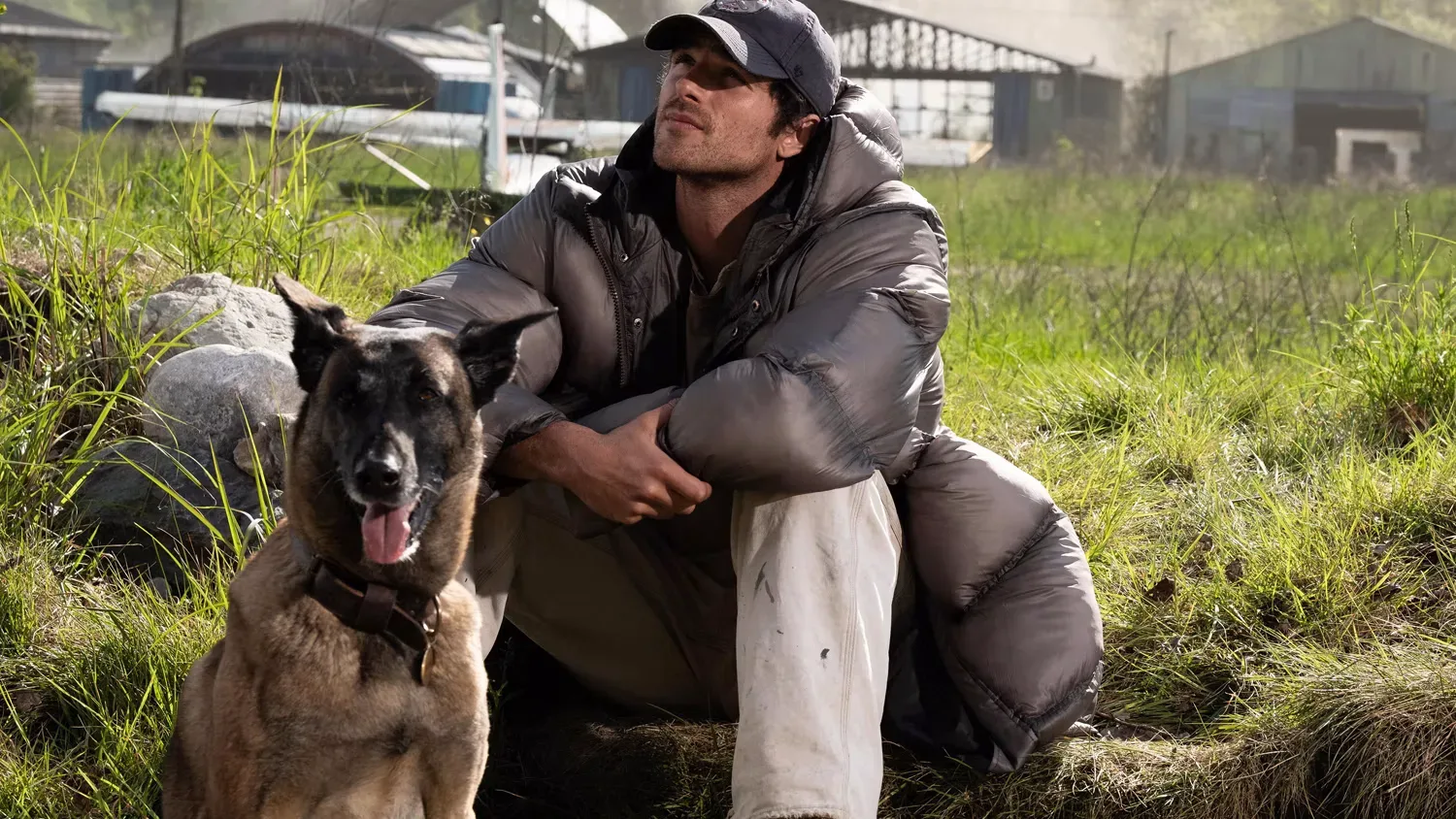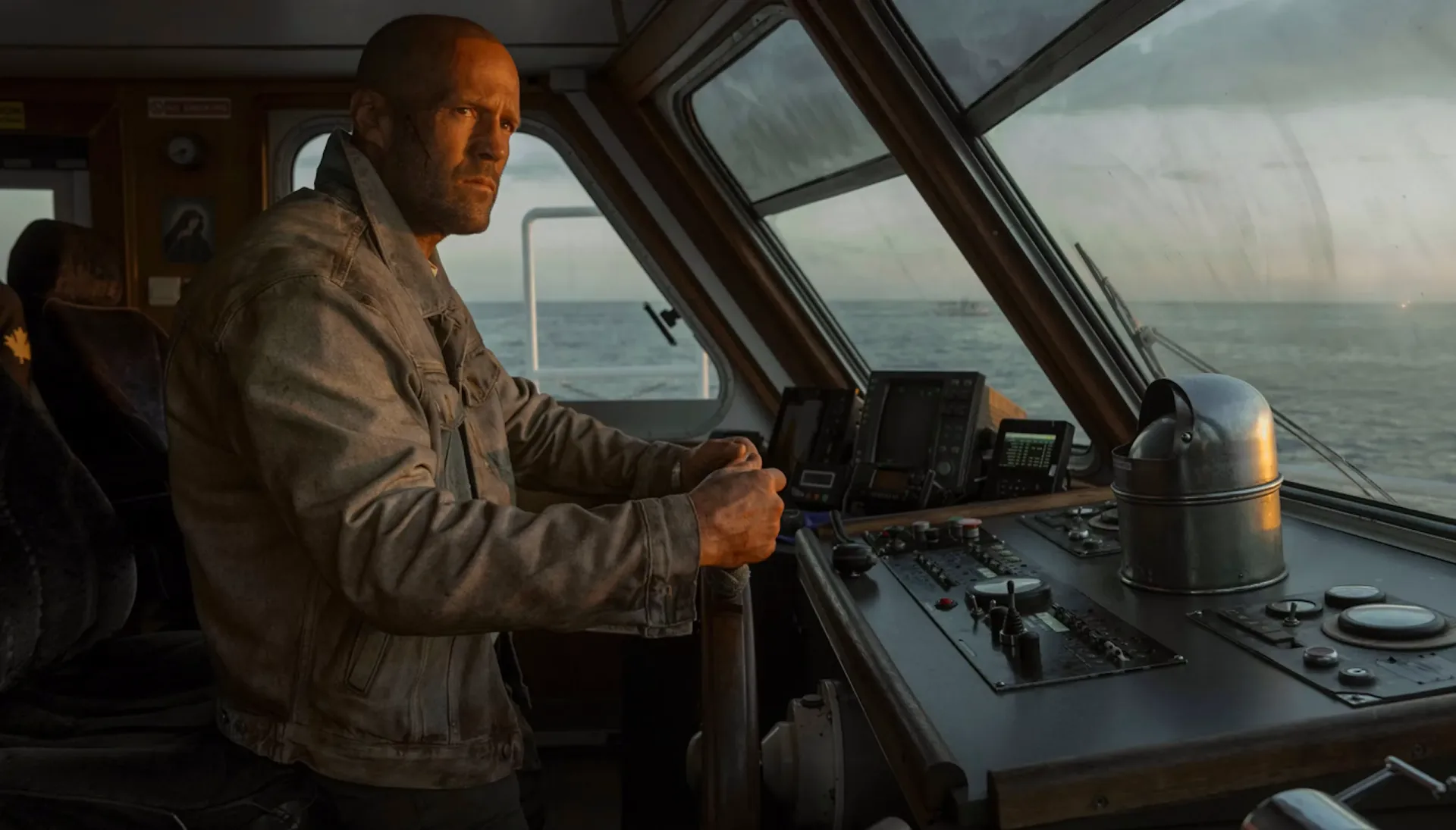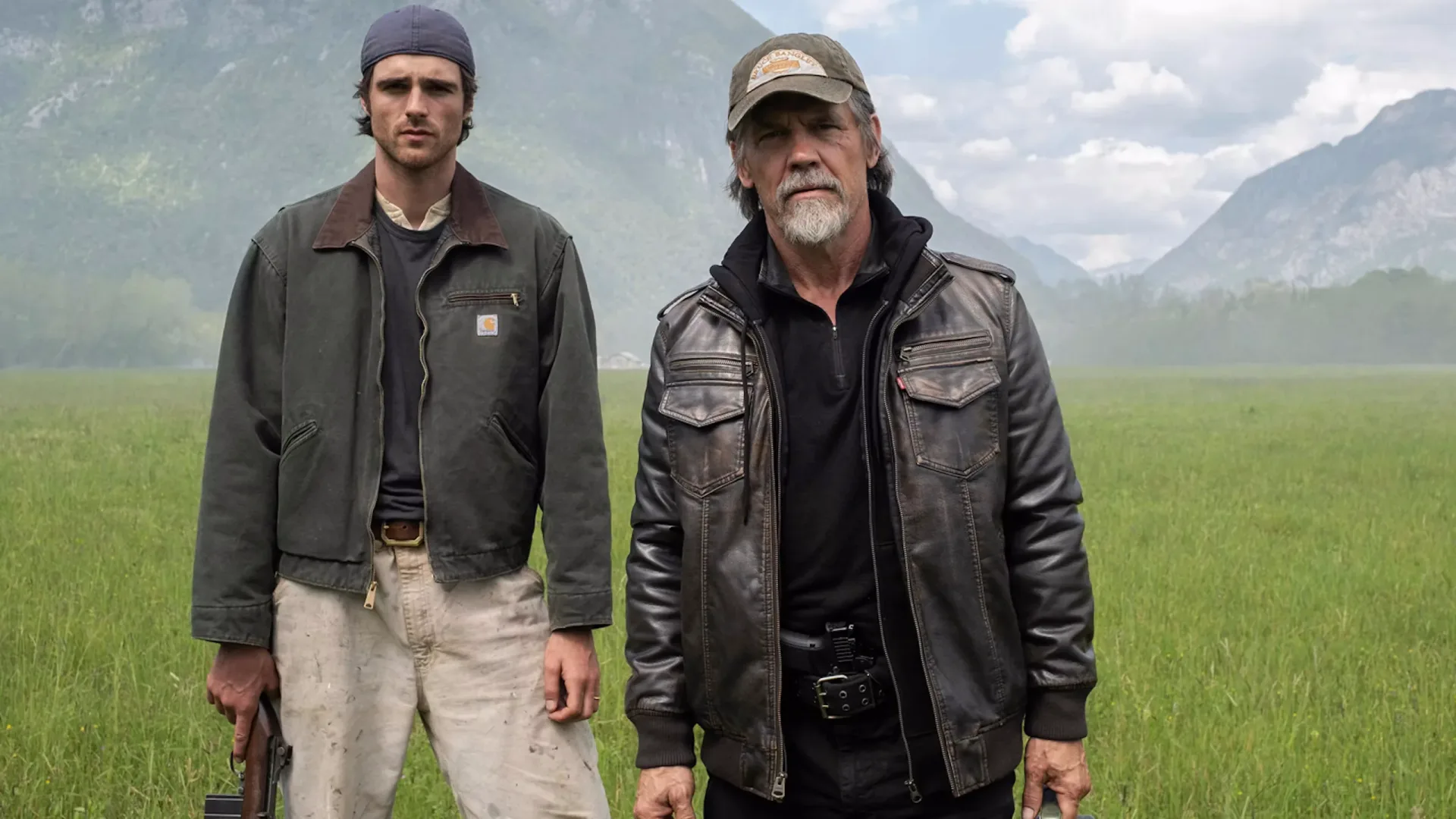
The Dog Stars has the components of a gripping survival drama: a depopulated America, a scavenger pilot, a loyal dog, armed uncertainty on the horizon, and a radio signal promising that isolation might not be permanent. Yet this is a bleak journey that too often confuses emotional heaviness with dramatic momentum.
Jacob Elordi plays Hig, an ordinary man surviving at an airfield with Jasper, his dog, and Bangley, a combative fellow survivor played by Josh Brolin. Hig flies into Denver for supplies while the threat of “reapers” — semi-feral gangs preying on others — hangs over the region and its Mennonite community. When a faint transmission from Grand Junction lures him outward, the film opens the door to new connections and dangers.
A beautiful wasteland with real menace
Ridley Scott gives the setting imposing scale. Filmed in Italy, the Dolomites provide sharp, forbidding terrain for a world emptied of people, while Erik Messerschmidt’s aerial photography makes Hig’s flights feel both freeing and ominous. The image of a lone plane moving through those mountain passes captures the film’s best tension: survival as a fragile routine suspended over a vast silence.
The cast also supplies conviction to the material’s despair. Elordi carries Hig’s exhaustion and withdrawal, while Brolin brings a hard edge to the airfield dynamic. Scott’s action staging retains urgency, especially early on, when the possibility of violence gives the story a needed pulse.
Survival without a clear direction
The trouble is that the film’s ideas about endurance, companionship and the possibility of a better life never settle into a persuasive shape. The reapers are presented as a danger, but their portrayal is too vague to make them consistently frightening. Some character decisions also undercut the sense of caution the premise requires, making the threat feel less credible than it should.
Once Hig leaves the airfield, the pace slackens considerably. His developing relationship with Cima, played by Margaret Qualley, is meant to introduce a measure of warmth and hope, but it does not receive enough dramatic development to feel fully earned. Abrupt tonal pivots further weaken the emotional throughline, including an airport sequence that seems to belong to a markedly different film.
There is a potentially resonant idea beneath the gloom: surviving is not the same as living, and a person may need connection to remember the difference. But The Dog Stars keeps circling that thought rather than deepening it. By the end, its glimmer of optimism offers a reason to continue, though not quite the transformation needed to make the preceding desolation stick.
Who it may suit
Viewers drawn to somber, actor-led apocalypse stories may find enough atmosphere in the mountain vistas, aerial sequences and committed performances. Anyone seeking a sharply defined threat, a fresh genre angle or a steadily escalating adventure may find this flight runs out of lift.