


 Juliette BinocheAmanda
 Tom CourtenayMartin
 Anna Calder-MarshallLeslie
 Florence HuntSara
 Steven CreeJonathan
 Michelle JeramDC Emma Walker
 Liani SamuelFrida
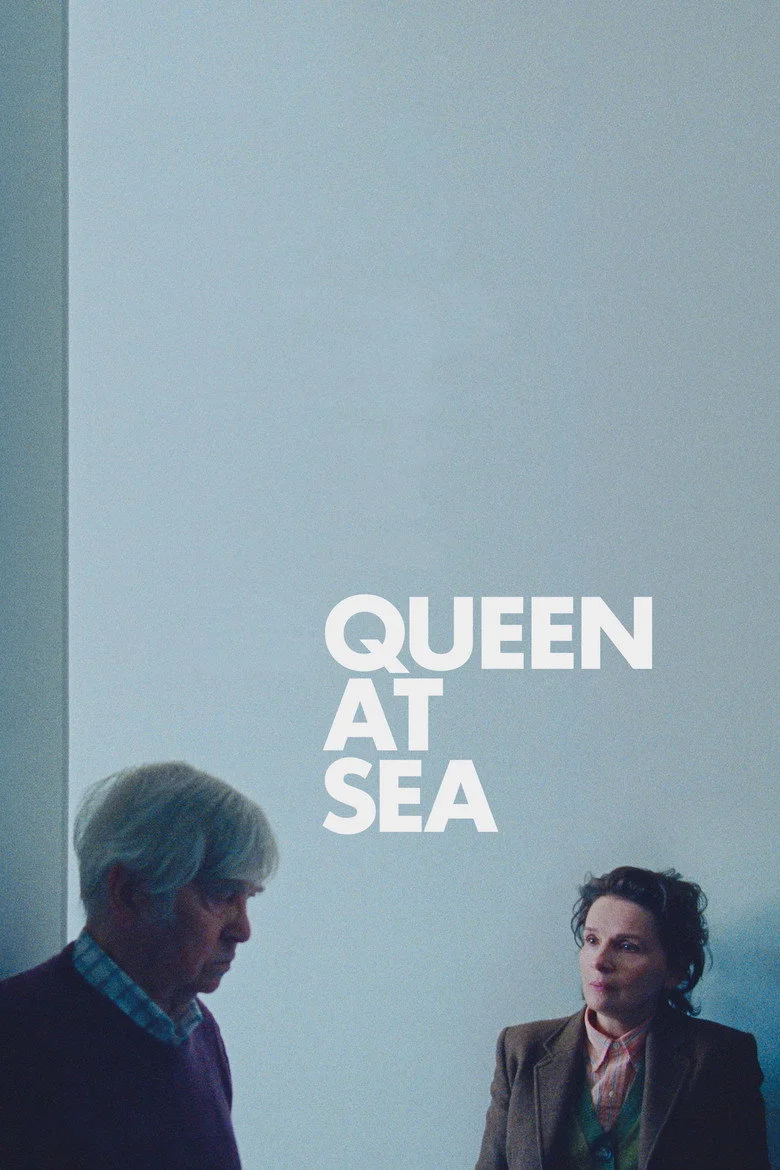
Queen At Sea begins with an image that establishes its emotional terrain with striking economy: Leslie and Martin, an elderly married couple, make their way up steps together. She holds the banister; he relies on a walking stick; both support the other. The image is tender without being sentimental, and it frames the film’s central concern before a word has been spoken. Love can remain deeply felt while practical dependence, bodily frailty and cognitive decline transform what care asks of people.
That context makes the next development especially difficult. Leslie’s daughter Amanda discovers the couple having sex in their north London home and calls the police, having warned Martin before not to do this. Leslie has advanced dementia, and the question is not treated as a simple accusation with a simple answer. The film places capacity and consent at the heart of a family crisis, while refusing the comfort of an easy moral binary. Martin’s devotion to Leslie and Leslie’s complete dependence on him complicate every institutional response; equally, Amanda’s fear that her mother cannot understand or consent cannot be brushed aside.
It is an agonising premise, but the film’s achievement is to make it part of a larger account of dementia rather than a provocative hook. The sexual-consent investigation opens onto questions of agency, dignity, disinhibition, caregiving, familial responsibility and the limits of official intervention. Can a person whose condition compromises informed consent still express a genuine desire? Who is entitled to decide what happens when the person at the centre cannot reliably articulate their wishes? And what does protecting someone look like when protection may also mean separating them from the person who provides essential care and companionship?
Queen At Sea does not presume it can settle those questions. That restraint is a major strength. Its interest lies in the unbearable uncertainty faced by people trying to act well under conditions that make a wholly good outcome feel impossible. The authorities are not reduced to blunt villains, and Amanda is not positioned as a heartless obstacle to an elderly couple’s love. The systems surrounding Leslie can be overwhelming and impersonal, but the people working inside them are presented as attempting to manage an intrinsically painful situation. The film’s tragedy comes from competing forms of care, each carrying the possibility of harm.
A drama of care, confusion and lost agency
Anna Calder-Marshall’s performance as Leslie is central to the film’s force. Leslie appears persistently confused and dependent on others to interpret the world for her. In exchanges with officials, her look toward Amanda for help makes the erosion of independence visible without turning it into a display. The performance is delicate but unsettling, conveying a person who is present and yet increasingly unreachable to the people who love her. That tension gives the film its most painful dimension: dementia is not only an illness experienced by one person, but a rupture in the ways a family can know, communicate with and recognise that person.
Tom Courtenay gives Martin a similarly quiet, affecting presence. His role must hold the possibility of devotion and the seriousness of the allegation in the same frame, and the film benefits from its refusal to flatten him into either a monster or a saint. The early image of mutual physical support matters because it makes the later separation more than a procedural development. It is a disruption to a life built around shared routines and care.
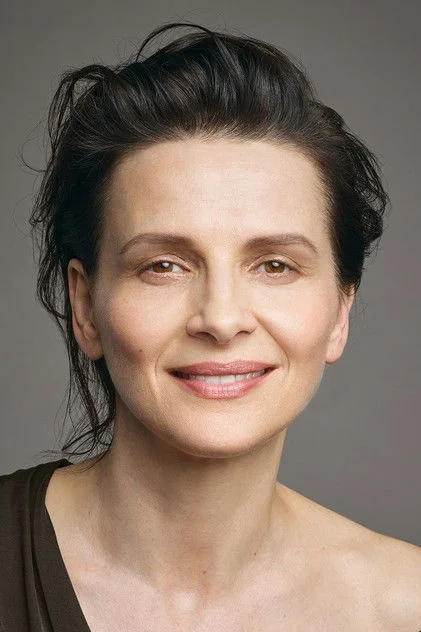
Juliette Binoche has perhaps the most overtly impossible position as Amanda. She is trying to safeguard her mother while negotiating a situation for which no response can feel sufficient. Amanda’s uncertainty over what Leslie can think, understand or want is not played as indecision for its own sake; it is the emotional reality of being asked to advocate for someone whose interior life has become difficult to read. The role also makes room for the collateral effects of caregiving. Amanda is a daughter under pressure, a mother trying to protect her own child, and a person confronting the fact that love does not grant clarity or control.
The film extends that damage outward through Sara, Amanda’s teenage daughter, played by Florence Hunt. Her adolescence is affected by the family’s upheaval, while her own romantic life gestures toward a contrasting stage of intimacy and possibility. The parallel has an intelligible bittersweet purpose: as Leslie’s world narrows, Sara’s is opening. Yet it is one of the film’s less fully integrated elements. The strand offers warmth and respite within an overwhelmingly bleak story, but it can feel more like a meaningful rhyme than an essential part of the main dramatic inquiry.
Naturalism that makes discomfort purposeful
Writer-director Lance Hammer’s approach is deliberately severe in the early passages. Fixed camera positions observe events in a cold, matter-of-fact manner, creating an uneasy sense that the audience is intruding on experiences that ordinarily remain private. Here, that discomfort is not merely an aesthetic flourish. A story about bodily autonomy, family intimacy and medical scrutiny should not be made frictionless. The style asks viewers to sit with the awkwardness of witnessing rather than retreat into a tidier, more conventionally dramatic presentation.
Cinematographer Adolpho Veloso’s work supports that controlled, observational mood. The film’s north London settings are rendered with a convincingly lived-in mixture of leafiness and suburban drabness, suitable for a drama rooted in homes, clinics and everyday administrative spaces rather than heightened spectacle. This specificity grounds the narrative. Queen At Sea is concerned with enormous ethical problems, but it locates them in rooms where people bathe a parent, answer questions from officials, wait for procedures and endure the small humiliations or heartbreaks that accumulate around serious illness.
That unflinching intimacy is one reason the film lands so heavily. A gynaecological examination and Amanda bathing Leslie are not used as sensational shocks; they belong to a wider portrayal of a life in which privacy, independence and dignity have become precarious. The film’s view of caregiving is clear-eyed about its tenderness and its depletion. Its characters do not have the luxury of abstract debate, because each decision arrives in the form of a person needing immediate help.
The dialogue and ensemble are crucial to this naturalism. The performances are restrained rather than demonstrative, and even brief appearances by police, doctors, social workers and care-home staff carry a persuasive everyday texture. The film’s attention to professional language and process helps it avoid treating the investigation as generic courtroom or police-drama machinery. Instead, bureaucracy becomes part of the subject: necessary in intention, yet capable of fragmenting lives into procedures, assessments and decisions that nobody involved can make cleanly.
Bleakness with a humane purpose
Queen At Sea is undeniably bleak, and prospective viewers should take that seriously. Its subject is not grief at a distance but the ongoing devastation of losing someone in increments while they are still physically there. The film repeatedly returns to the cost of trying to preserve Leslie’s welfare without being able to recover certainty about her wishes. Its sadness is not a decorative tone; it follows from an ethical situation in which autonomy is compromised, family members are exhausted, and institutions must act despite incomplete knowledge.
For the most part, Hammer maintains a gentle touch within that bleakness. The film is compassionate toward everyone caught in its crisis and does not pretend that compassion resolves the conflict. That is the source of its emotional maturity. It recognises that systems can dehumanise even when their workers mean well, and that relatives can make painful choices without ceasing to love one another.
Its main structural limitation arrives when the ending intensifies. After such a patient, closely observed examination of circumstances, the late rise in plot pressure feels somewhat mismatched to the film’s carefully built naturalism. The shift does not erase the power of what precedes it, but it changes the texture from considered case study to more overt dramatic mechanism. Along with the partly peripheral Sara material, it leaves the film just short of complete formal unity.
Even so, the core remains formidable. Queen At Sea earns its emotional weight through close attention to performance, behavior and impossible choices rather than through easy answers. It is a demanding watch, especially for anyone with personal experience of dementia or caregiving, but it is also a humane one. Its willingness to leave its hardest questions unresolved is not evasive; it is an acknowledgement of how little certainty this illness can leave behind.
Verdict
Queen At Sea is a compassionate, rigorously uncomfortable drama about dementia, consent and care. Calder-Marshall, Courtenay and Binoche give understated performances of great force, while Hammer’s observational style makes the film’s intimacy feel appropriately difficult. A more plot-driven ending and a not-quite-essential secondary thread slightly disturb its otherwise precise focus, but the film’s sensitivity, authenticity and moral seriousness make it a deeply affecting recommendation for viewers prepared for its heaviness.