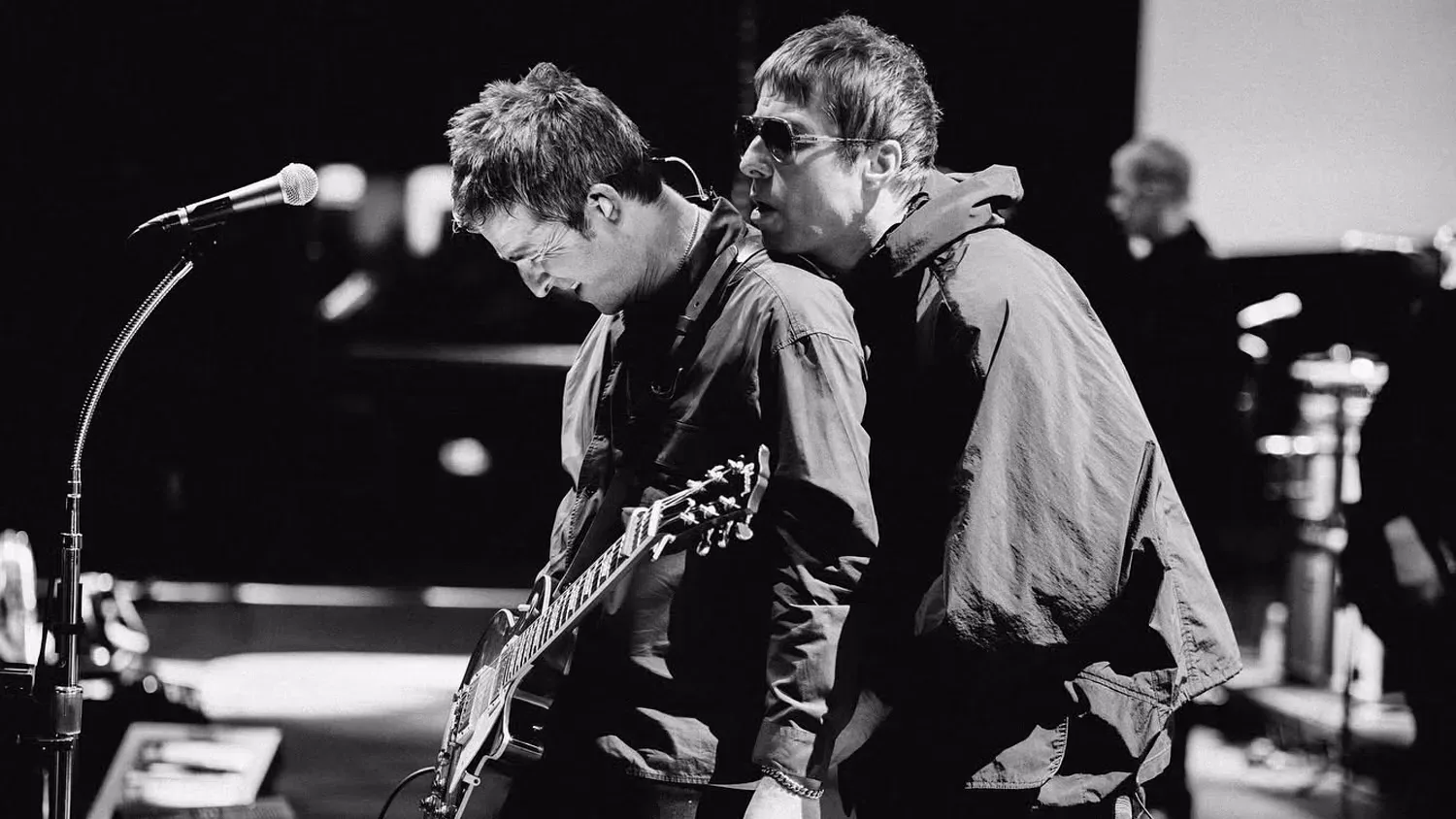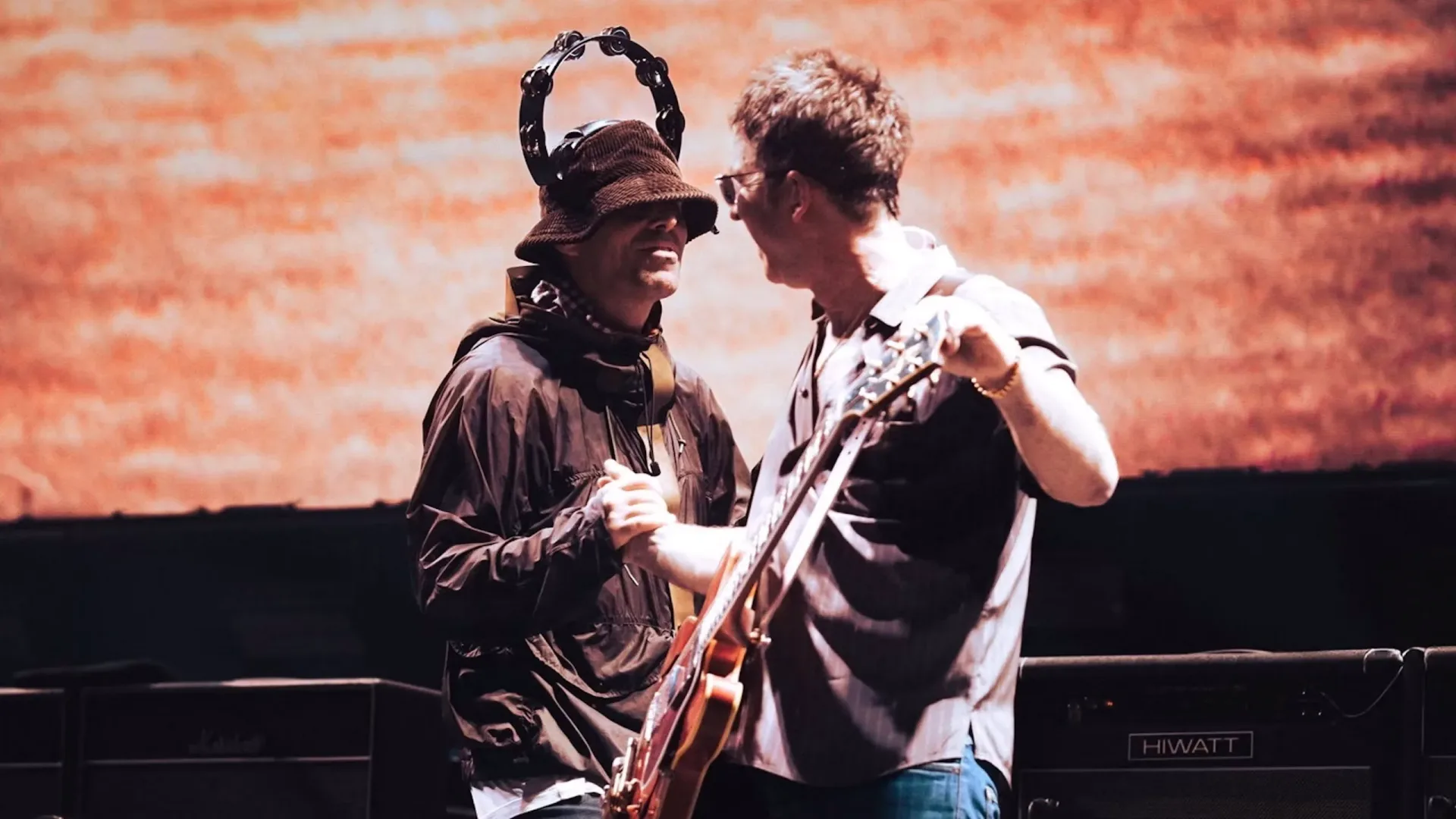
Oasis: Don’t Look Back In Anger treats the band’s Live ’25 return as more than a comeback tour: it is presented as a collective release valve. Directors Dylan Southern and Will Lovelace follow the journey from the Gallagher brothers’ early rehearsals through the final stadium performance, mixing backstage material with the ecstatic scale of a crowd singing along.
That combination is the film’s great strength. It aims for both the closeness of a rock documentary and the sweep of a concert film, and the footage apparently supports the ambition. Intimate, emotionally charged close-ups sit alongside broad stadium images built to show the sheer size of the event. The result sounds particularly well suited to a cinema crowd: a film about communal musical escape that seeks to recreate some of that communal charge in the room.
The reunion itself supplies the emotional engine. Liam and Noel Gallagher’s first joint interview in decades is a clear draw, while the rehearsal material promises a rare look at a famously fraught relationship moving back into working order. The film also widens its view beyond the brothers, meeting fans from different places and generations. That choice gives the project a useful sense of why Oasis’ return mattered to people beyond nostalgia alone.
Concert highlights, including stadium renditions of Champagne Supernova and Cigarettes & Alcohol, are framed as cathartic moments rather than simply a greatest-hits checklist. The documentary’s enthusiasm for togetherness is unapologetic, and that sincerity seems to carry it through much of its running time. For viewers who missed the shows, it offers a chance to absorb the atmosphere; for those who were there, it is positioned as an emotional souvenir with considerably more texture than a standard tour record.
There are limits to that uplift. The film’s central message about music’s power to heal and unite can become heavy-handed, especially when forgiveness is spelled out rather than allowed to emerge from the footage. Its broad cultural scope also occasionally works against the more revealing parts. Time spent on a deep-sea-diving metaphor in South Korea is suggested to be less valuable than further attention to Liam and Noel’s long-awaited conversation.
Still, those frustrations sound modest beside the scale of the access and the potency of the performances. Oasis: Don’t Look Back In Anger is most compelling when it trusts rehearsal-room tension, fan devotion and a packed stadium to make its case. It is a buoyant, lovingly assembled document of a major music event, even if not every thematic flourish lands with the same force as the songs.