
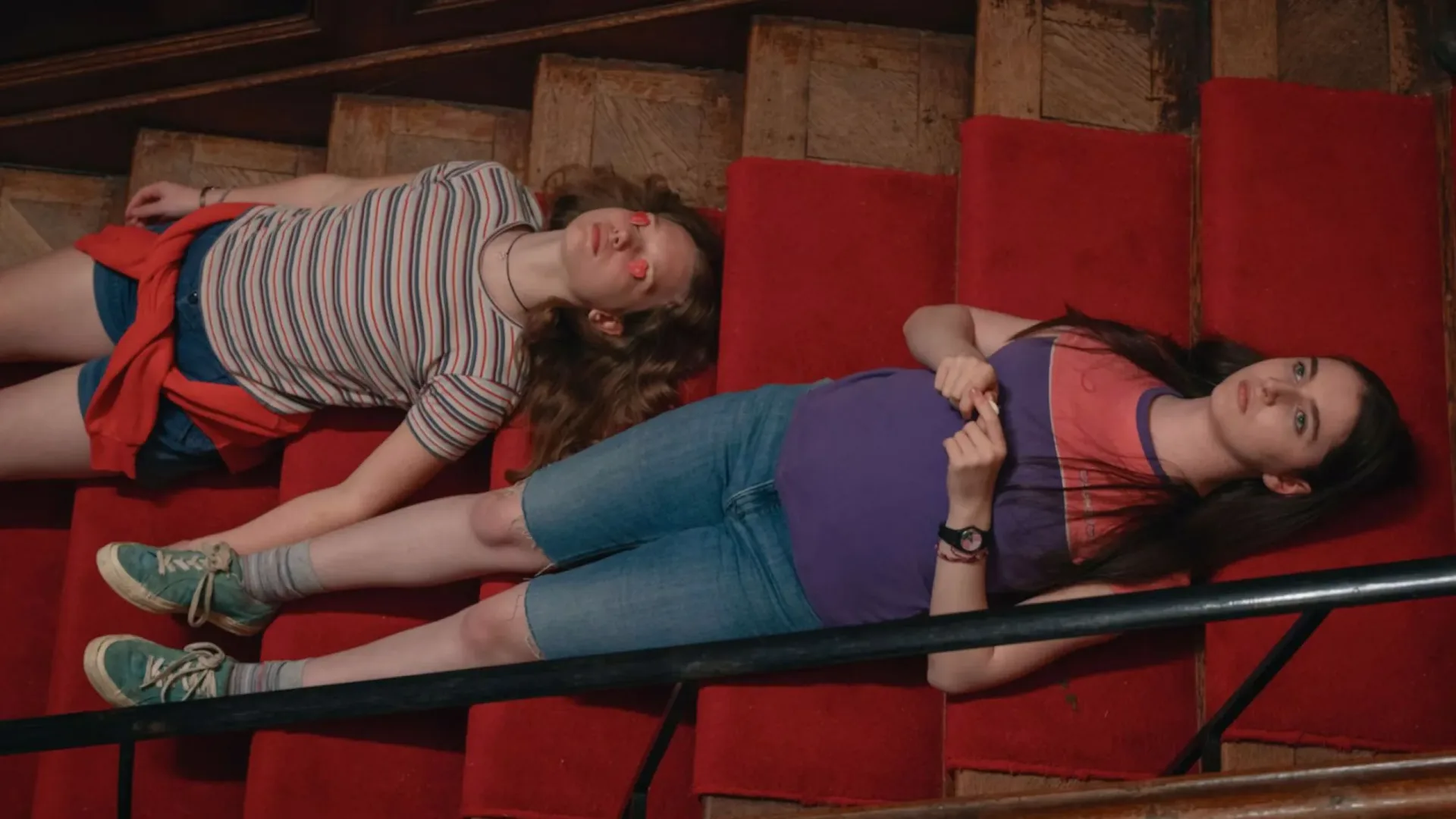
 Marni DugganFlic
 Galaxie ClearMinna
 Alice EnglertMiss Delavigne
 Aoife RiddellPhoebe
 Iyla Sundarsingh McKaigChloe
 Shvorne MarksMiss Hill
 Jairaj VarsaniLysander
 Cody MitchellDemetrius
 Laila BarwickCrying year 7
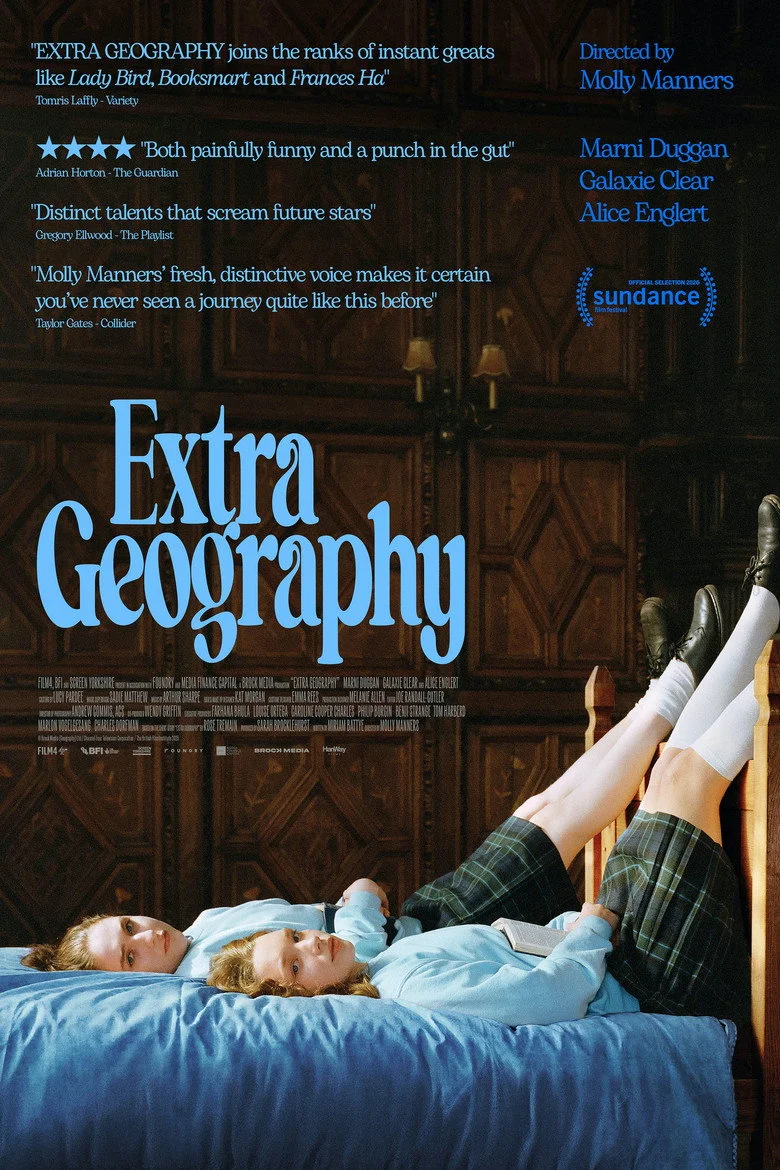
Extra Geography finds its most persuasive subject in the complicated intensity of a friendship that feels, for a time, like an entire world. Molly Manners’ directorial debut follows Minna and Flic, two boarding-school students facing adulthood, university applications and the unnerving question of what experience is supposed to mean. Their answer is a summer project: they will fall in love. It is an earnest, slightly absurd premise that gives the film its distinctive offbeat character, while also making room for the awkwardness, jealousy and longing that complicate their bond.
Adapted by Miriam Battye from a short story by Rose Tremain, the film treats teenage girlhood as a serious emotional landscape without stripping it of humour. Minna and Flic begin from a shared anxiety about the future, but their project soon exposes the differences in how they see themselves and one another. Their attention settles on their geography teacher, Miss Delavigne, yet the story’s deeper romantic charge lies in the girls’ own attachment: the need to be understood, the fear of being left behind, and the inability to neatly separate friendship from first love.
A friendship at the centre of everything
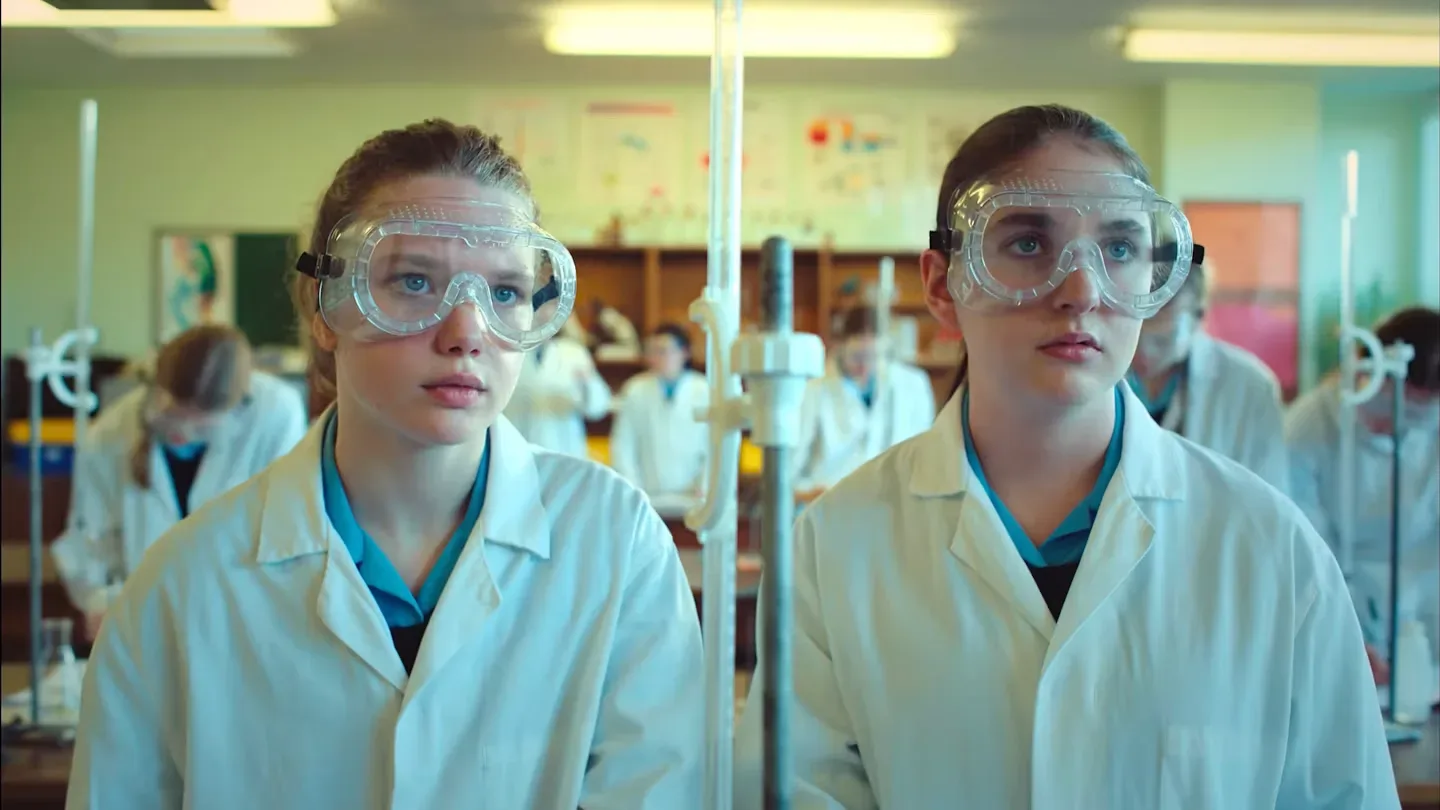
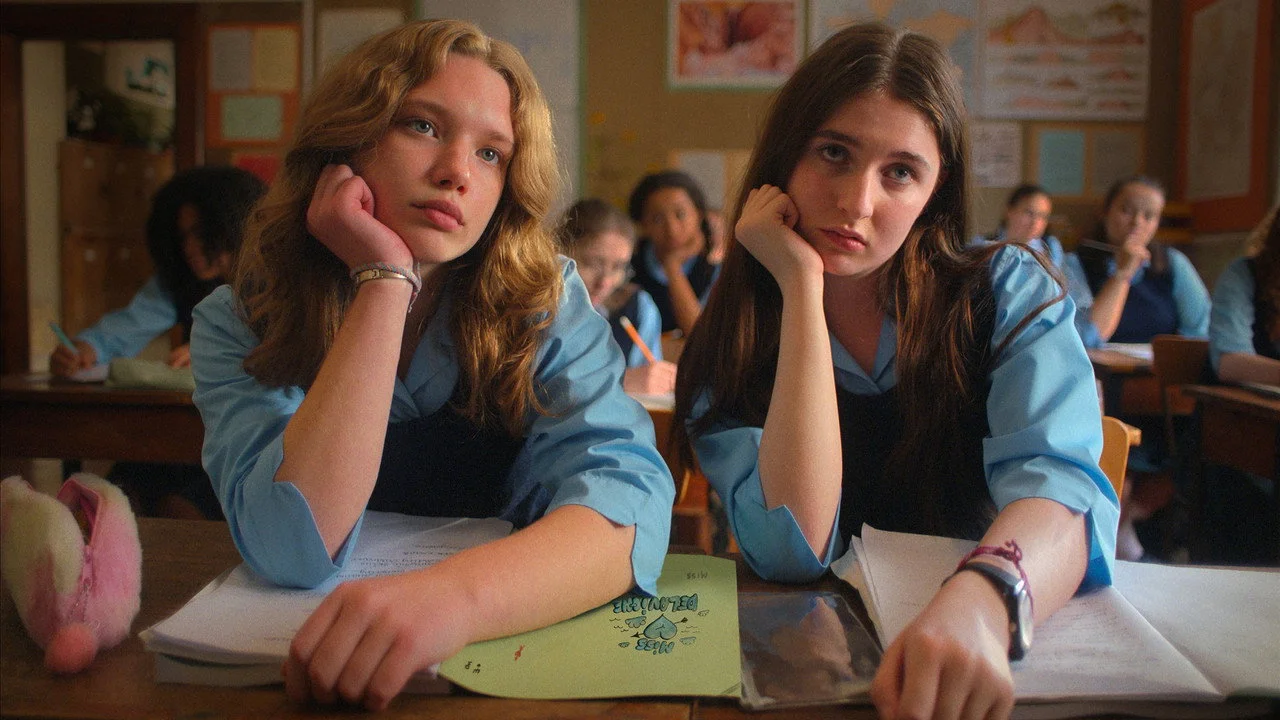
Galaxie Clear and Marni Duggan are the film’s defining strength. Clear plays Minna with confidence, while Duggan gives Flic a more timid starting point, and the contrast establishes a recognisable imbalance in their friendship. Crucially, the performances do not reduce the pair to fixed types. Their relationship feels formed by routines, private language and mutual dependence, which makes the eventual strain more affecting than the mechanics of the plot alone might suggest.
The actors capture teenage behaviour in its less flattering forms: impulsiveness, possessiveness, self-consciousness and the urge to turn confusion into a rule-bound experiment. That range is vital to the film’s portrait of girlhood. Minna and Flic are not presented as symbols of innocence or maturity; they are young people trying to acquire knowledge about love while lacking the emotional distance to understand what they are doing to each other.
The central idea becomes especially poignant as their paths begin to diverge. Minna is drawn into a production of A Midsummer Night’s Dream, playing Titania and spending time with boys from a neighbouring school. Flic, cast as a tree, responds differently, approaching love as something to study. The contrast is funny in conception but painful in implication. One friend appears to gain access to a wider social world while the other tries to make sense of exclusion through analysis. Jealousy is therefore not merely a plot complication; it is the feeling that turns their shared project into a test of whether their friendship can survive growth.
Sharp observations, uneven accumulation
Manners and Battye bring a lively sensibility to the material. Brooding desire sits beside snappy comic lines, allowing the film to acknowledge how dramatic adolescence feels from the inside without mocking its characters for feeling everything so intensely. This tonal balance helps explain the film’s charm. It can be knowingly strange, but it remains attentive to the vulnerability beneath the strangeness.
The five-act structure, reflecting Shakespeare’s play, is an ambitious organising principle. It gives the story a theatrical frame appropriate to a narrative in which performance, fantasy and social roles are all in flux. Yet the structure also highlights the film’s key limitation. Several threads compete for attention, and the sharpness present in its best observations does not hold consistently through the full 94 minutes. The result is a film with a compelling centre that can feel less assured at the edges.
This is not a problem of insufficient ideas. Extra Geography has many: academic ambition, theatrical self-invention, class difference, first desire and the changing terms of female friendship. The difficulty is that the film does not always develop these concerns with the same specificity it gives Minna and Flic’s relationship. Its narrative can feel tangled precisely because it reaches outward in several directions while the emotional core is already strong enough to demand sustained attention.
An isolated school, suspended adolescence
The boarding-school setting gives the film a notably enclosed atmosphere. Presented as an isolated, well-lit dollhouse, the school becomes a place seemingly suspended from ordinary time and place. That visual concept fits the characters’ stage of life: Minna and Flic are on the verge of departure, but still enclosed within rules, timetables and a social ecosystem that magnifies every slight.
The setting also supports the film’s beguiling imagery and its dreamy hints of sapphic longing. Rather than making a sweeping declaration about every aspect of identity, the film appears most effective when it lets uncertainty remain uncertain. The emotional texture comes from suggestion, glances and the charged proximity of two friends who do not yet possess a clear vocabulary for what they want.
At the same time, the contained setting exposes an area where the drama does not fully deliver on its own provocations. Class enters the story through the contrast between Minna’s holiday in Lanzarote and Flic’s scholarship status. This is a meaningful distinction within a boarding-school story, where belonging can be shaped by money as much as personality. But the idea is raised more compellingly than it is explored. The same is true of the film’s emerging queer themes: the suggestion of sapphic longing enriches the atmosphere, but the treatment does not fully engage the nuance that the subject invites.
These limitations matter because class and sexuality are not incidental details in a coming-of-age story about who is allowed to experiment, who feels secure, and who risks being left outside the group. Their partial development does not erase what the film achieves, but it does leave the viewer with the sense of a work that sees promising avenues without always travelling far enough down them.
First love, understood differently
The film’s most resonant insight is that first love may be inseparable from friendship, especially before its participants know how to name the distinction. Minna and Flic’s experiment with romance is outwardly directed at Miss Delavigne, but their conflict reveals that the more urgent emotional question is what they mean to each other. In that sense, the teacher functions less as a fully elaborated destination than as a catalyst for tensions already present between the girls.
This interpretation gives the title an apt emotional dimension. Geography is often about maps, borders and locations; here, the important terrain is interpersonal. Minna and Flic begin close together, but their changing interests and circumstances redraw the lines between them. The film understands that growing apart need not come from a single betrayal. It can emerge through small new allegiances, uneven opportunities and the terrifying realisation that a best friend has an inner life not wholly shared with you.
That accuracy is what makes the film’s unevenness easier to forgive. Even when the wider plotting loses some bite, Clear and Duggan keep the emotional stakes tangible. Their work gives the drama its lived-in quality and keeps it from becoming merely a whimsical school story. The film may not resolve every idea with equal force, but it locates something durable in the ugliness and tenderness of teenage attachment.
Verdict
Extra Geography is an endearing, distinctive coming-of-age drama with a particularly strong understanding of friendship as both refuge and first heartbreak. Its theatrical five-act design and growing collection of themes do not always cohere, and its treatment of class and queer desire stops short of the complexity it gestures toward. But the central performances are commanding, the school setting has a dreamlike pull, and the film’s portrait of two girls struggling to remain each other’s whole world lands with real feeling.