Georgia Oakley’s Sense and Sensibility begins from a sharp and essential pressure point: the Dashwood sisters’ future is dictated by an inheritance system built to favour sons. Elinor, Marianne and Margaret are forced out of their stately home and into a smaller Devon cottage because they lack economic security. That framing matters. It puts the sisters’ romantic prospects in their proper context, not as merely decorative yearning but as lives shaped by financial precarity and restricted choices.
It is also a promising way into a story that arrives with formidable baggage. This is the first feature-film adaptation since Ang Lee’s 1995 version, whose Emma Thompson screenplay won an Oscar. Oakley, following her 2022 drama Blue Jean, and screenwriter Diana Reid are working with unusually well-known material and a prior adaptation that remains a major reference point. Their film does not ignore that history; the difficulty is that it never fully escapes it.
The result is a handsome, intermittently affecting retelling with a clear visual appeal and a strong early emotional centre. Yet it gradually narrows its attention toward conventional romantic plotting, sacrificing the sibling relationship that ought to give the story its most distinctive force. For viewers after polished Austen scenery and a persuasive Elinor, there is plenty to appreciate. For those hoping for a version with a strong identity of its own, this adaptation feels caught between admiration for familiar period-romance traditions and the need to say something newly specific.
A compelling start built on economic insecurity
The opening emphasis on women’s lack of economic security is the film’s most purposeful dramatic choice. The Dashwoods’ eviction is not presented as a vague inconvenience: the family’s reduced circumstances arise directly from legal arrangements that privilege male inheritance. That gives the film an immediate social foundation and establishes why affection, marriage and security cannot be cleanly separated for these characters.
Daisy Edgar-Jones plays Elinor as reserved, while Esmé Creed-Miles’s Marianne is passionate and Bodhi Rae Breathnach’s Margaret is tomboyish. Those broad differences create a potentially rich family dynamic: three sisters confronting the same material problem with contrasting temperaments. The film understands the outlines of that contrast, but its later priorities do not fully develop what it opens up. The sisters’ shared displacement should supply a powerful through-line, yet the screenplay ultimately seems more invested in the individual romantic routes that follow.
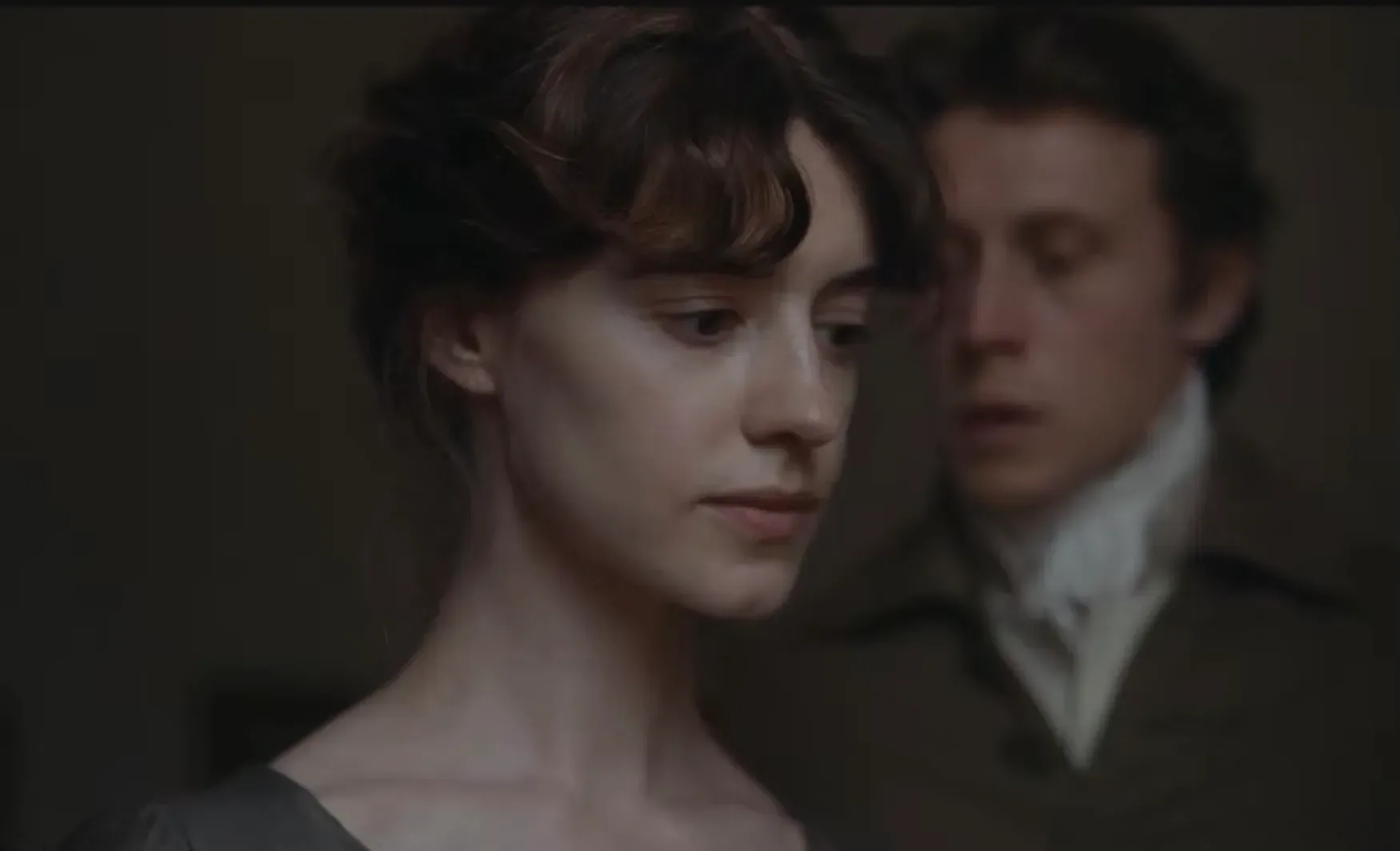
That choice makes the early scenes between Elinor and Edward Ferrars especially important. Edward, played by George MacKay, is the shy and kind brother of the scheming Fanny, played by Stacy Martin. Edgar-Jones and MacKay establish a warm, tender rapport, giving their connection an ease that helps the film settle into its emotional register. MacKay’s performance also makes Edward read as principled and loyal rather than merely passive. It is a valuable adjustment in emphasis: the character’s quietness becomes an aspect of decency, not a void the audience must work to fill.
These scenes show the adaptation at its most confident. The stakes are social and personal at once; the performances make restraint legible; and the film finds feeling without having to overstate it. Edgar-Jones is credited with holding the film together, and the Elinor–Edward material explains why. Their rapport gives the story warmth and offers a persuasive reason to invest in its romantic complications.
Beautifully made, but too visibly assembled from influences
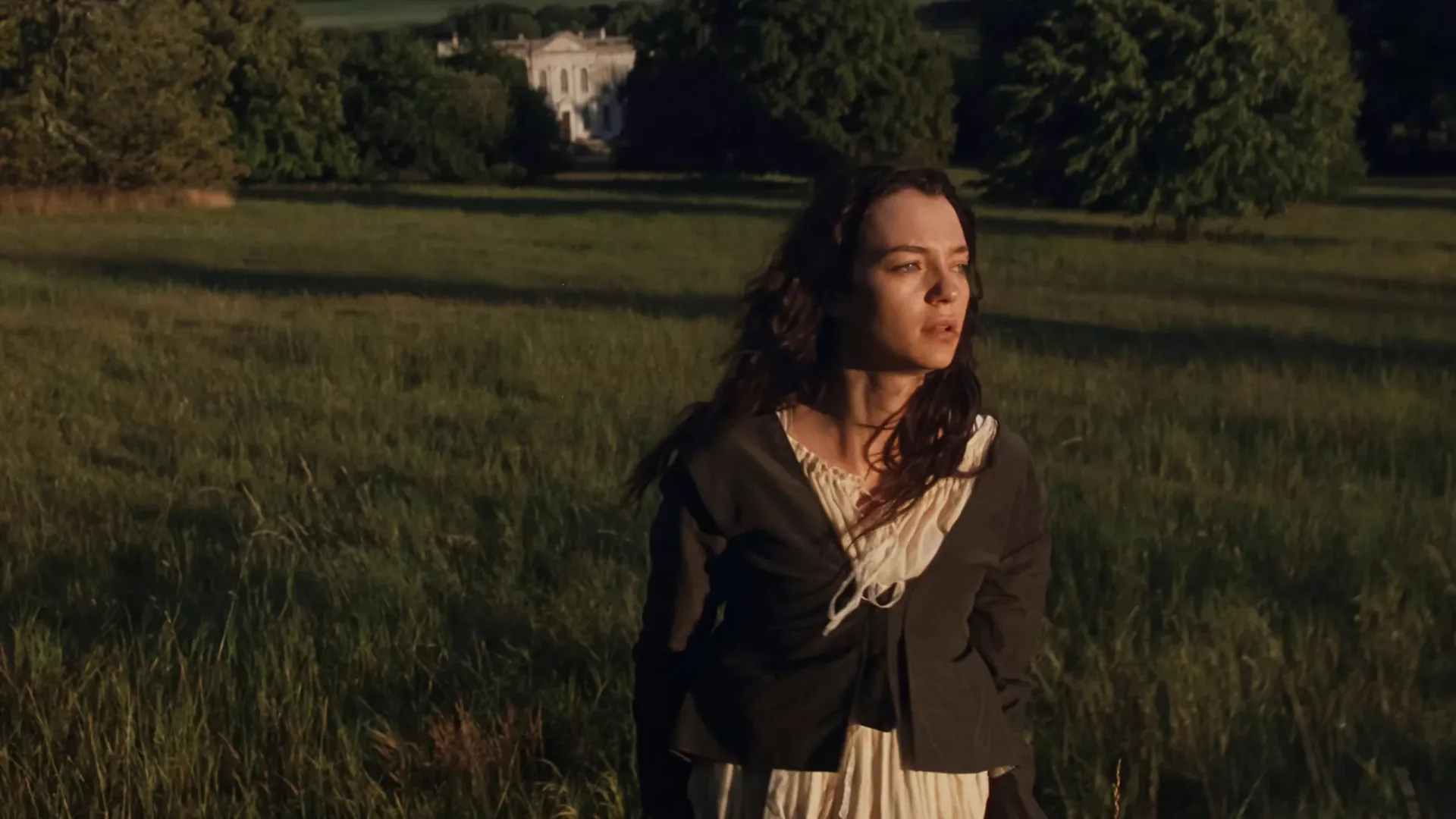
There is no question that the film makes a strong visual impression. Shot on 35mm, it captures the textures of the natural world with particular beauty, and the cinematography, costumes and production design combine into a ravishing surface. The move to Devon therefore brings a change not only in the Dashwoods’ circumstances but in the film’s visual environment, with the sisters shown amid the countryside.
Still, beauty and distinctiveness are not the same thing. The film’s visual approach is heavily indebted to Joe Wright’s 2005 Pride & Prejudice, while also making overt references to Wuthering Heights and Far From the Madding Crowd. Those touchstones place Oakley’s film within a recognisable tradition of literary period romance. The problem is less that it has influences than that the influences appear to compete with the creation of a singular identity.
That tension is central to the film’s limitations. A new adaptation does not need to discard every familiar pleasure associated with Austen on screen. It can be lush, romantic and consciously in conversation with earlier versions. But when the imagery and design chiefly recall other prestige period films, the adaptation can feel like a collection of established signals rather than an interpretation that has found its own visual and dramatic necessity. The craft is evidently accomplished; the issue is that accomplishment does not consistently become authorship.
The 35mm photography remains a genuine draw for viewers who value tactile, carefully designed period cinema. Its natural textures and the overall richness of the presentation give the film a strong theatrical-looking finish. But the appeal is primarily one of execution and atmosphere, not evidence of a fresh conceptual direction.
Romance takes over, and the comedy does not follow
After laying out Austen’s economic concerns, the film shifts toward a more straightforward romantic focus. Marianne’s move to Devon brings John Willoughby, played by Frank Dillane, into the story, while Herbert Nordrum plays the strong, silent Colonel Brandon. These relationships are integral to the plot, but the adaptation’s expanded emphasis on its central romances has a cost.
The move is described as played out, and the absence of much humour is crucial. Austen adaptations often depend on the interplay between emotional sincerity and social wit; without a sufficiently funny edge, a romance-forward structure risks becoming more conventional than revealing. Here, the film’s treatment of courtship apparently does not generate enough comic energy to offset its familiarity. The result is not simply that the film is serious. Rather, the seriousness makes the romantic machinery feel more exposed, while the early social critique recedes.
This leaves Edgar-Jones carrying much of the dramatic weight. Her Elinor is an anchor because the performance works in the film’s quieter, more tender passages, particularly opposite MacKay. But even a strong lead can only compensate so far for an adaptation whose emotional priorities become unbalanced. The film has compelling elements in place—economic stakes, an appealing central rapport, expressive period craft—but does not connect them into a fully individual whole.
The missing centre is the sisterhood
The most consequential shortcoming is the treatment of Elinor and Marianne’s relationship. Their opposing attitudes to love should make their bond a source of friction, recognition and change. Instead, that relationship feels underserved. The screenplay’s expansion of the romantic plots ironically appears to diminish the story’s real heart: the complex connection between two sisters negotiating loss, money, desire and different ideas of how feeling should be expressed.
This is more than a matter of missing a few additional scenes. The underdevelopment affects the shape of the whole adaptation. The film begins with the Dashwoods’ collective predicament, so its strongest emotional resolution ought to emerge from the family relationship that predicament tests. When the narrative gives disproportionate weight to romance, it weakens the thread that could make this version stand apart from other handsome literary love stories.
That does not erase what works. Edgar-Jones and MacKay offer the film a convincing pocket of tenderness, and MacKay’s characterisation of Edward is a meaningful strength. Oakley’s film also has real visual polish, with 35mm photography, costume work and production design that make it pleasing to look at. But these virtues coexist with a sense that the adaptation is borrowing too much of its identity and investing too little in its most distinctive relationship.
Sense and Sensibility is therefore easiest to recommend as an elegant, visually rich Austen outing with a notably effective Elinor–Edward pairing. It is less successful as a definitive new take on the material. Its opening understanding of women’s economic vulnerability points toward a more incisive film, while its sidelining of the sisters points away from the emotional core that could have made this one feel necessary.