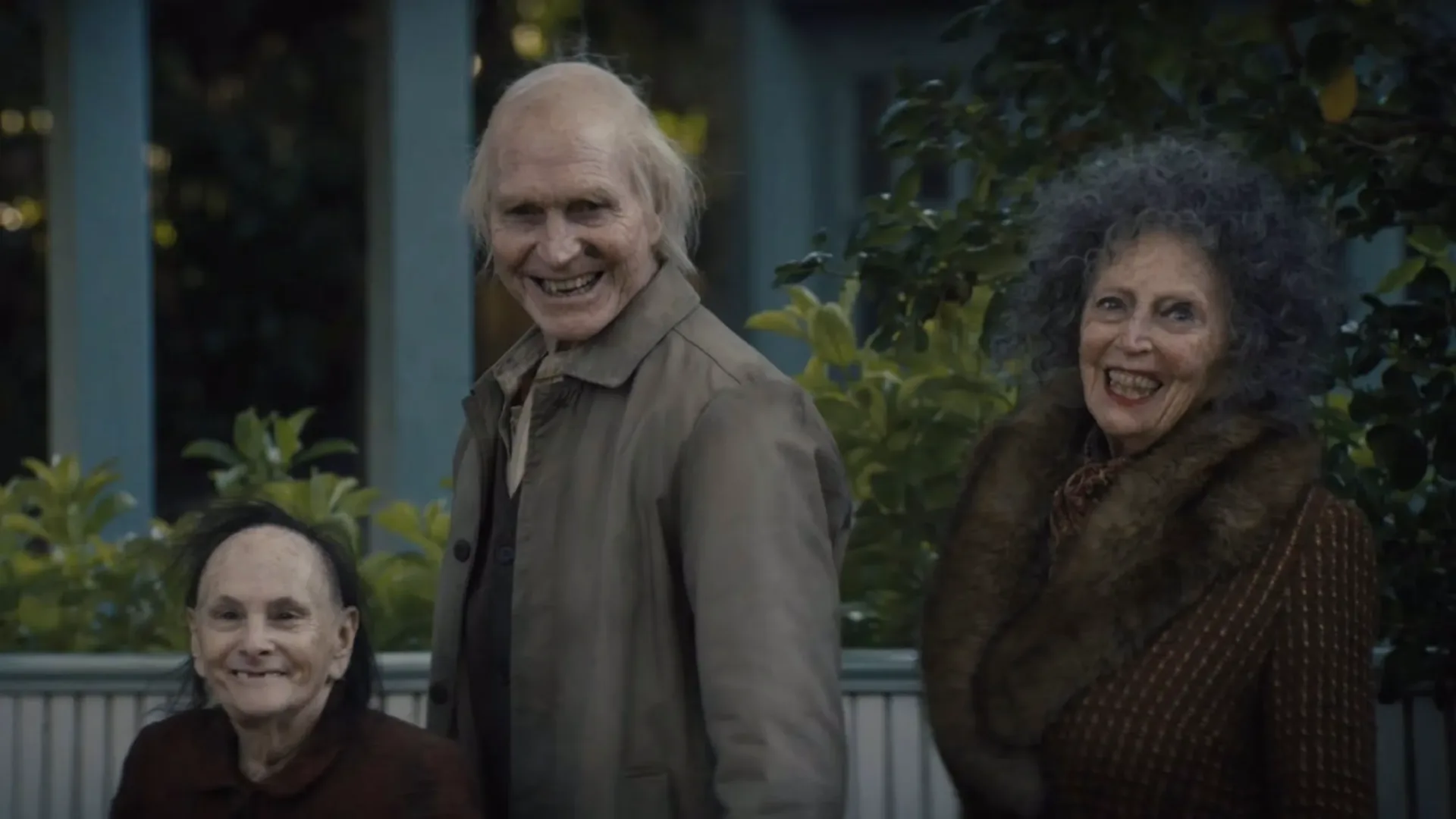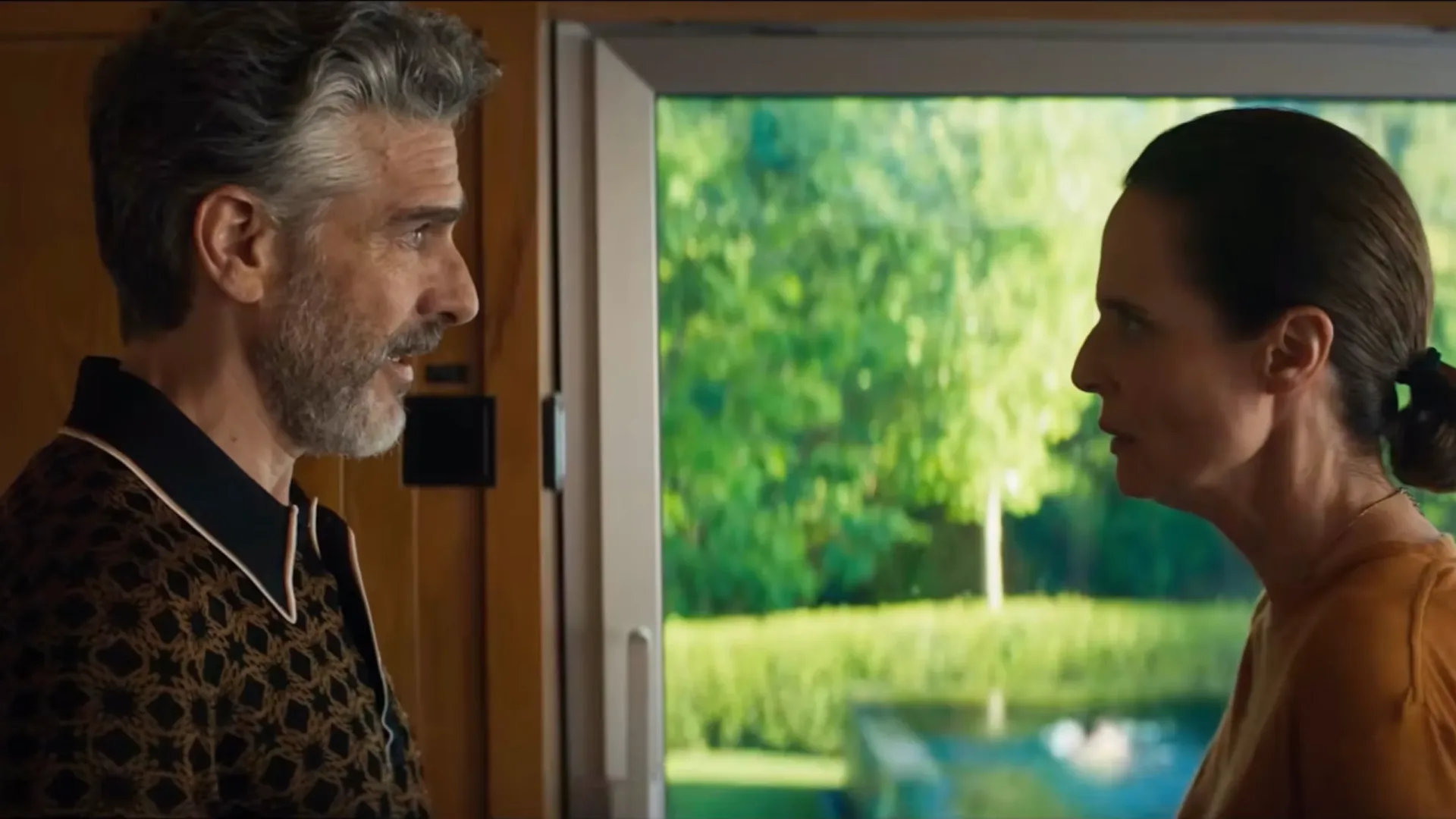
Bitter Christmas begins in 2004 with Elsa, a sometime filmmaker and commercials director whose Christmas break is derailed by incapacitating migraines. Her boyfriend Bonifacio, a firefighter and stripper, cares for her while she reconnects with friends facing private upheavals. It initially plays like an intimate, character-led drama, filled with striking people, stylish homes and conversations that feel as if they might be leading somewhere just out of view.
Then the film shifts its frame. Elsa is revealed as the invention of Raúl, a filmmaker writing a screenplay while dealing with changes in his own relationships and working life. As Raúl learns new things about the people close to him, Elsa’s story changes in response. That structure turns the movie into a knotty reflection on authorship: who gets used as material, who gets hurt when private life becomes narrative, and whether an artist can recognise their own compromises without escaping them.
A clever premise with a deliberately uneasy edge
The interplay between Raúl’s world and Elsa’s makes the film’s central idea compelling. Raúl is not simply arranging fictional events; he appears willing to reshape and exploit the lives around him to find a more dramatic story. The resulting tension gives Bitter Christmas a self-critical bite, particularly because it does not treat creative ambition as an automatic excuse for emotional carelessness.
The cast also gives the film plenty of company value. Bárbara Lennie anchors Elsa’s early sections, while Leonardo Sbaraglia carries the more overtly metafictional material as Raúl. Patrick Criado, Victoria Luengo, Milena Smit, Aitana Sánchez-Gijón and Quim Gutiérrez populate the intersecting personal dramas. The dialogue remains a considerable draw: even when scenes circle rather than advance, the conversations retain wit, texture and an inviting sense of intimacy.
When ambiguity starts to feel unfinished
The downside is that the movie’s self-examination can feel more persuasive than its dramatic shape. Its characters spend enjoyable time talking in attractive spaces, but the accumulation of incidents does not always produce a clear destination. The abrupt changes in Elsa’s plot are thematically purposeful, mirroring Raúl’s shifting emotional circumstances, yet they can make the film seem meandering rather than productively unstable.
Most importantly, the open-ended approach does not entirely resolve the conflict between life and art that it sets up so well. Leaving the boundaries blurred is an apt formal choice; leaving the story without a stronger final turn is less satisfying. Viewers who enjoy movies about the ethics of storytelling may find much to chew on, but anyone seeking a firmer emotional payoff may share the sense of drift. For another film whose energy meets an unsatisfying sense of closure, see I Want Your Sex.
Verdict
Bitter Christmas is a smart, handsomely inhabited meta-drama with lively dialogue and a bracing interest in the collateral damage of artistic creation. Its ideas remain sharper than its conclusion, however, making this an engaging but frustratingly unfocused watch.