
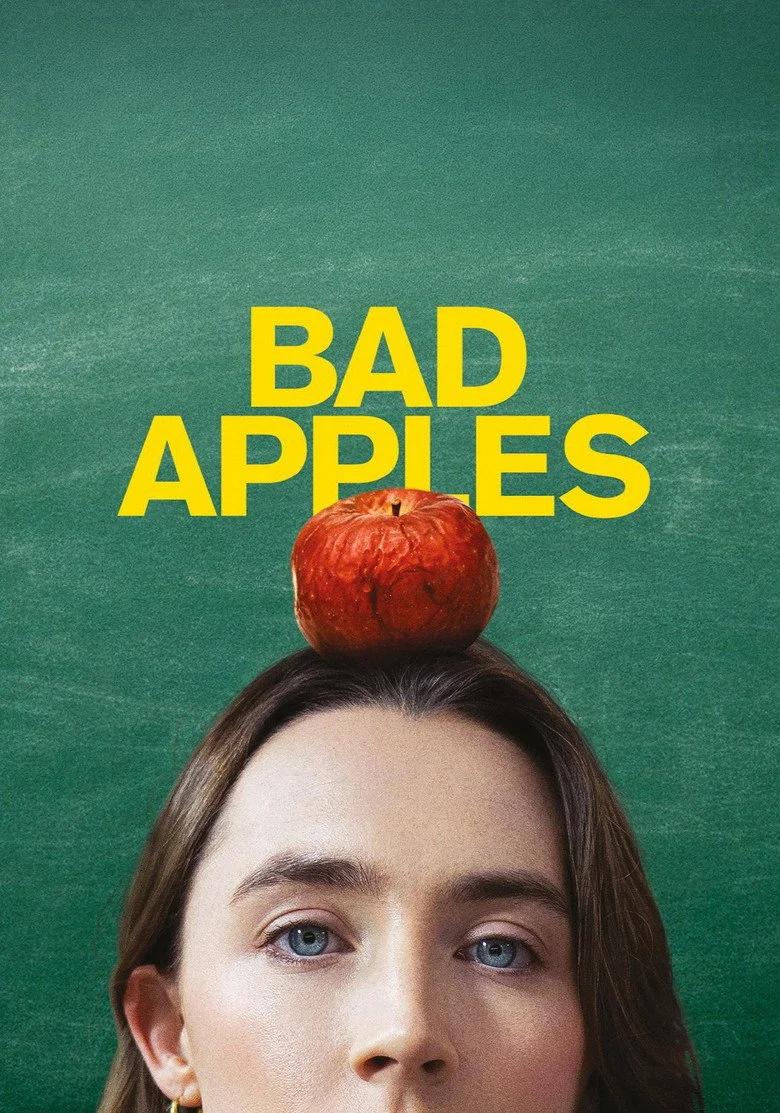
 Saoirse RonanMaria
 Jacob AndersonSam
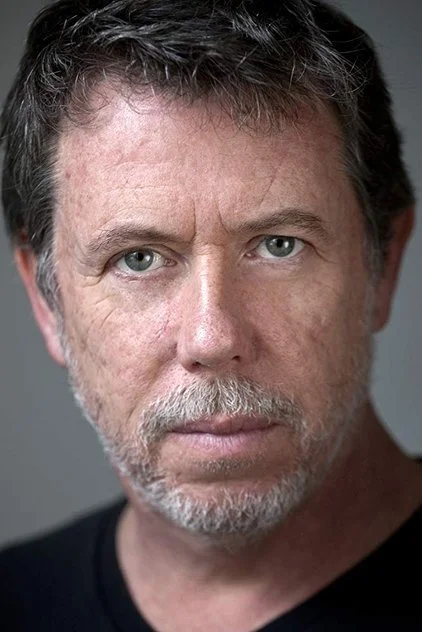 Sean GilderFrank
 Robert EmmsJosh
 Rakie AyolaSylvia
 Kerry HowardPC Williams
 Jaye JacobsKhaliya's Mum
 Kirris RiviereJamal's Dad
 Jack AshtonEddy's Dad
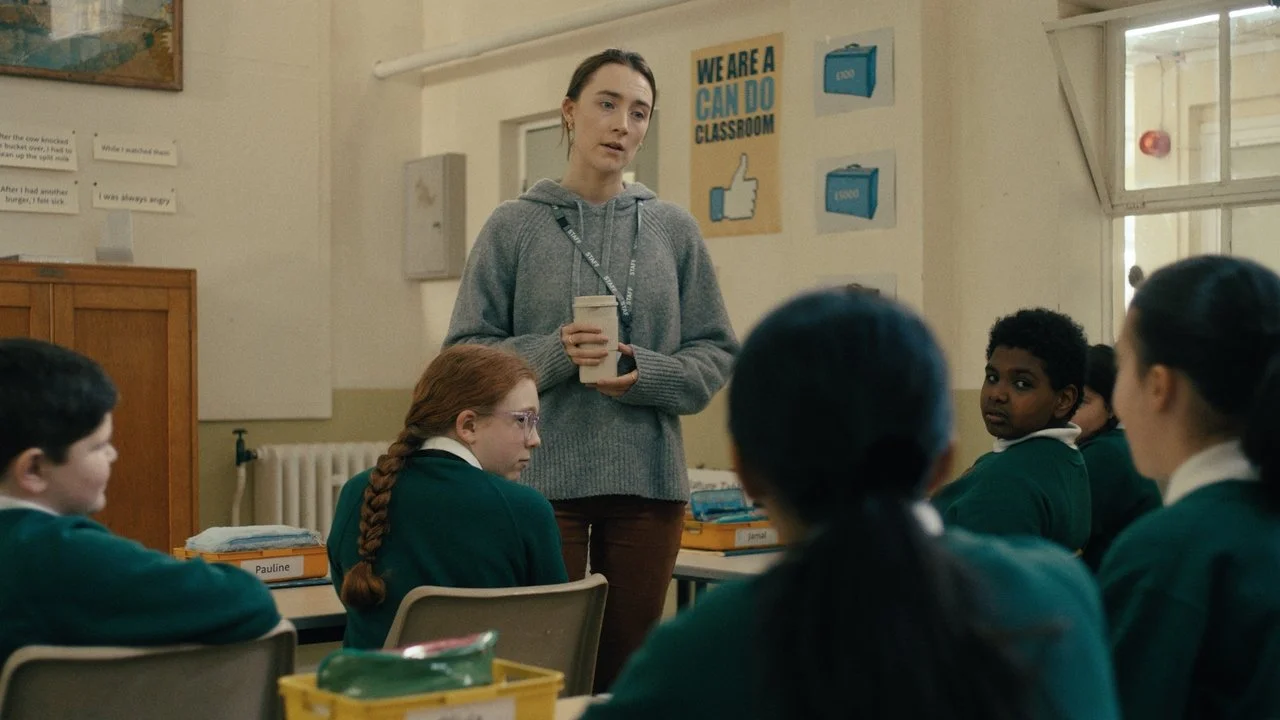
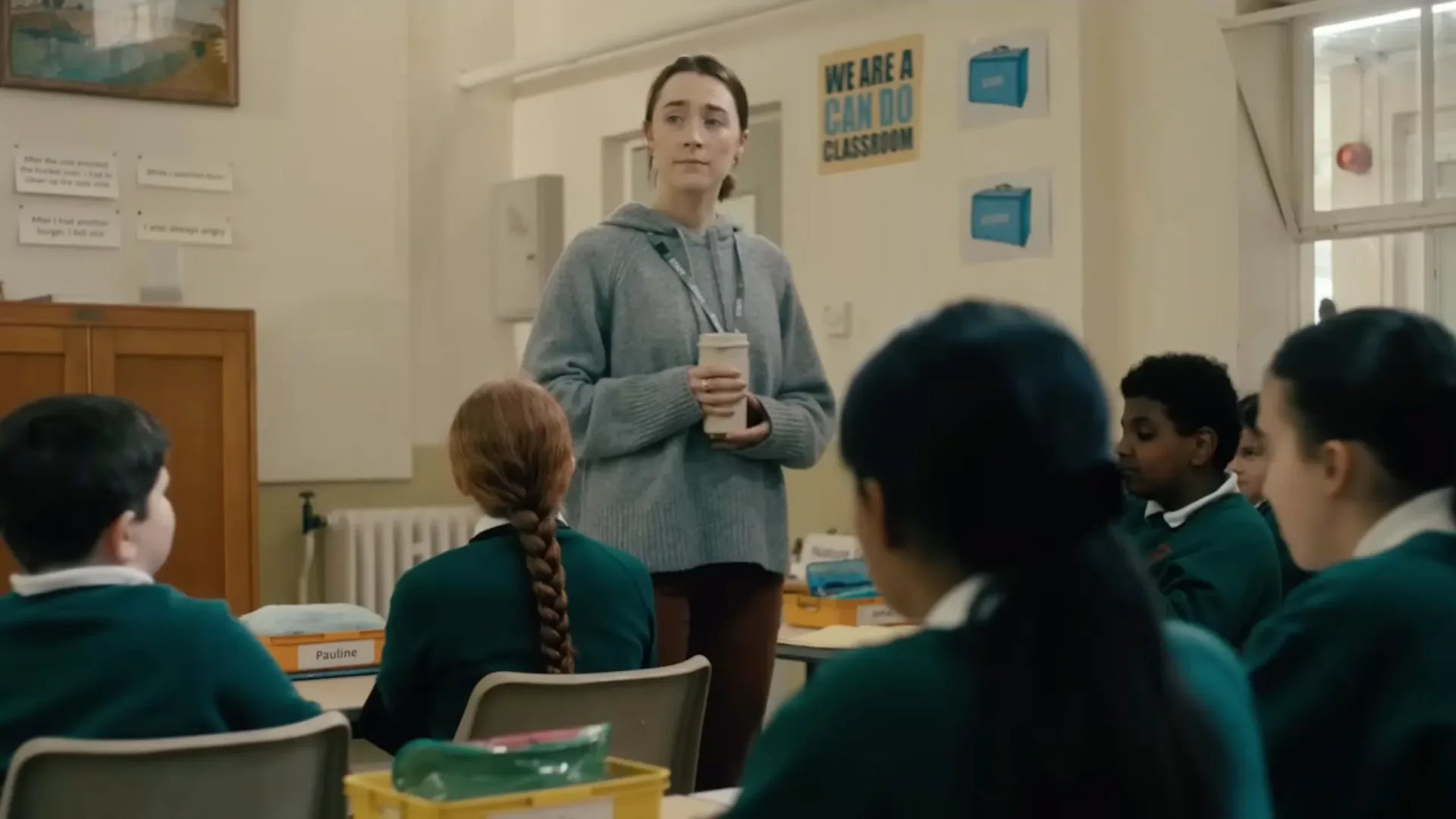
Bad Apples takes a familiar classroom maxim and pushes it toward an exceptionally dark comic extreme. Maria, a primary-school teacher played by Saoirse Ronan, wants to cultivate young minds, yet her working life has narrowed into crisis management. Danny, a violent pupil whose outbursts dominate the room, has made ordinary teaching impossible. The film’s premise becomes much more outrageous after an incident leaves another child with a broken bone, but its comic force comes from the recognisable frustration underneath: one overburdened teacher is expected to solve a problem that the adults around her would prefer not to confront.
Jonatan Etzler’s English-language feature debut frames that frustration as a biting satire of Britain’s education system. Maria is not presented as someone who begins with malice or indifference. Her hopes for her pupils are well intentioned, but Danny consumes the attention, time and emotional reserves that ought to be shared by the entire class. An unsympathetic headteacher and intrusive, demanding parents add to the pressure. The result is a story in which institutional failure is not merely background colour; it is the condition that lets Maria’s desperation grow.
That pressure ultimately leads Maria to imprison Danny in her dingy basement for private “specialised education,” an act so plainly indefensible that the film’s satirical approach has to walk a difficult line. It does so by making the surrounding response part of the joke. Danny’s absence inspires relief among pupils, staff and parents rather than serious urgency. The implication is deliberately harsh: a community finds it easier to ignore a child’s disappearance than acknowledge the structural problems that have allowed everyone to abandon him long before he vanishes.
A comic performance with real strain beneath it
Ronan is the key to making such a premise work. Her performance gives Maria a palpable mixture of frustration, exhaustion and earnestness. Those qualities do not excuse the character’s choices, and the film does not need them to. Instead, they keep Maria from becoming a mere delivery system for the plot’s bad behaviour. Even as her decisions become increasingly calamitous, her wish to do right by the other children remains legible. That human thread grounds material designed to accelerate into delirium.
The role also gives Ronan an invigorating comic opportunity outside the period settings with which she is often associated. Her control of Maria’s mounting panic appears central to the movie’s rhythm: the more extreme the circumstances become, the more valuable it is to have a performer who can register the emotional cost without flattening the absurdity. The comedy is not built on Maria treating her own situation as a lark. It is built on the collision between her sincere professional ideals and the monstrous course she takes while trying to preserve them.
Eddie Waller, a newcomer, gives Danny enough volatility to establish why Maria and the school are overwhelmed by him. Yet the character is not described as a one-note monster. A gentler side emerges beneath Danny’s rage, complicating the easy impulse to label him the sole “bad apple.” That detail matters to the film’s broader critique: the title may point toward a scapegoat, but the story’s target is a wider system of adult evasion.
Nia Brown’s Pauline creates another useful source of unease. As the teacher’s pet, Pauline’s eagerness to please becomes a threat to Maria’s already fragile plan. This is a smart comic pressure point. A child who appears perfectly manageable can be just as disruptive to a desperate adult when obedience turns into attention, curiosity or inconvenient loyalty. The supporting performances therefore do more than decorate Maria’s spiral; they keep the classroom’s social dynamics unstable.
Sharp satire, intentionally broad signals
Jess O’Kane’s script is described as razor-sharp, if unsubtle, and Bad Apples seems to embrace that lack of delicacy rather than disguise it. The apple metaphor is announced with an opening scene at an apple-harvesting plant, a gesture that makes the film’s governing idea unmistakable. For viewers who prefer satire to arrive through implication, that conspicuous signposting may feel heavy-handed. But the bluntness is consistent with a film that turns educational neglect into a chain of increasingly demented comic complications.
Its political commentary is similarly direct. Maria’s isolation, the headteacher’s lack of care, the parental pressure and the community’s readiness to look away all point toward a system that concentrates responsibility on the person least equipped to carry it alone. The film’s argument is not that Danny’s behaviour is harmless, nor that Maria’s response is acceptable. Its more provocative suggestion is that everyone’s urge to offload the problem has consequences. The satire finds its bite in refusing to let the adults’ relief read as innocent.
The joke construction sounds audacious enough to produce genuine laugh-out-loud moments. The film repeatedly chooses escalation over restraint, discovering comedy in the implausible lengths its characters will go to maintain a broken status quo. That makes the tone potentially bracing for viewers comfortable with crueler, high-pressure humour. Its subject is serious, but the approach is riotous rather than solemn, treating moral and bureaucratic failure as fuel for an increasingly chaotic farce.
Escalation is both the engine and the risk
The chief limitation arrives in the fever-pitch third act, when the story’s leaps in logic can test suspension of disbelief. This is less a small quibble than the natural risk of the whole design. Once the film has asked the audience to accept Maria’s drastic act and the town’s astonishingly passive response, each further turn has to preserve some connection to the emotional reality established early on. If the escalation outruns that connection, the satire may start to feel like a collection of provocations rather than a consequence-driven story.
Ronan’s grounding presence is what keeps that danger from overwhelming the film. Maria’s desperation supplies a credible emotional through-line even where the plotting stretches. Viewers will still need to meet the movie on its own exaggerated wavelength, particularly near the end, but the performance gives the wildness an anchor. In that sense, the film’s greatest strength and clearest caveat are closely linked: it is most alive when it goes boldly too far, even if that same appetite sometimes strains plausibility.
Bad Apples is best recommended to viewers seeking a sharply performed, darkly comic social satire rather than a realistic school drama. Its critique is broad, its metaphor is emphatic and its final stretch asks for generous buy-in. But the combination of Ronan’s sympathetic comic work, Waller and Brown’s unsettling contributions, and a premise willing to follow institutional neglect into outrageous territory makes this a lively, pointed piece of misbehaviour.