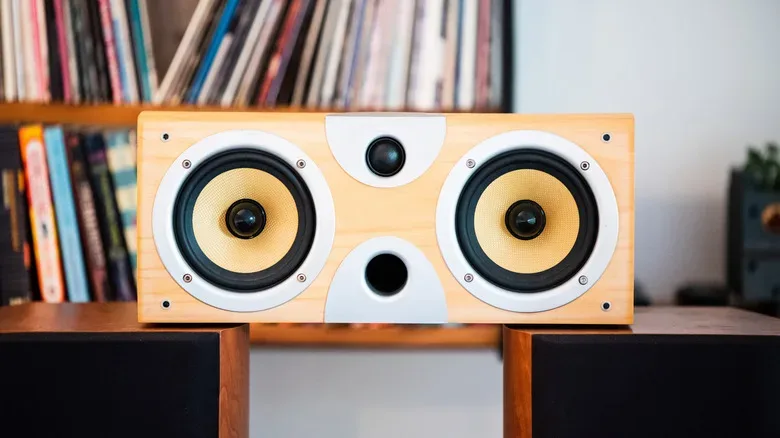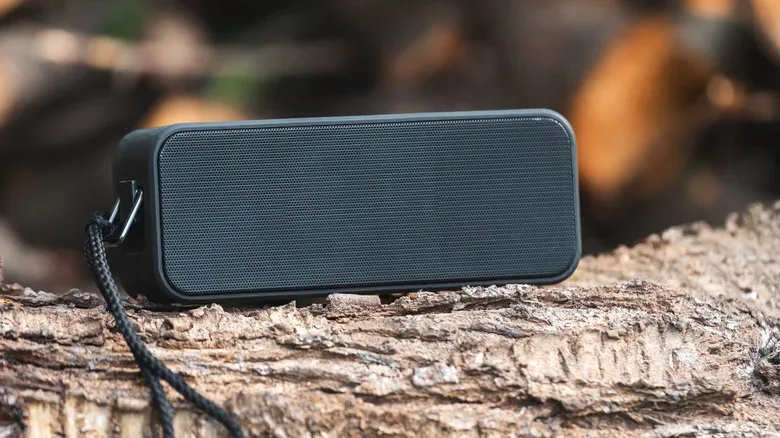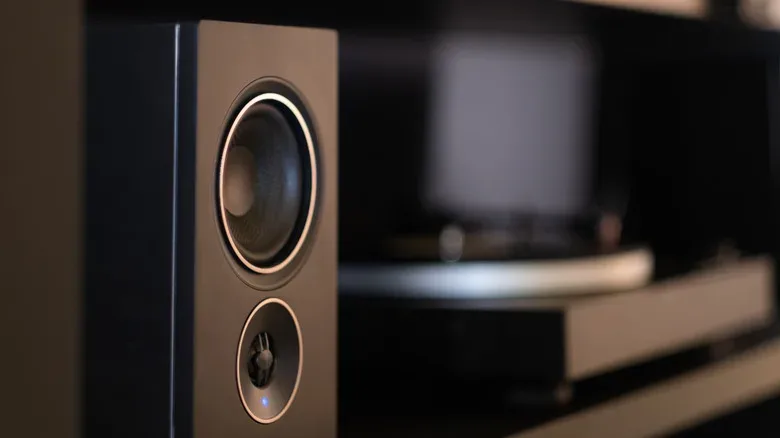
The wired-versus-wireless speaker debate gets flattened into a slogan far too often: wires mean fidelity; wireless means convenience. That is a handy shortcut, but it does not do much to help someone choosing audio for a gaming desk, television or shared living room.
A connection is only one part of the system. The speaker itself, its amplification, the recording or stream being played, and the acoustics of the room all shape the final result. A cable cannot recover detail discarded by a lossy audio file, and wireless transmission does not automatically make a speaker sound bad. For games in particular, the more useful question is not “which sounds better?” in the abstract. It is where will this speaker live, what needs to connect to it, and how important is immediate response when a game reacts to an input?
That shifts the choice from a format war into a practical setup decision. Wired gear has compelling advantages for a permanent system and for people who want to change individual components over time. Wireless gear makes placement, portability and whole-home listening far simpler, though it introduces dependence on batteries, wall power, apps, networks or compatible devices depending on the product.
First, untangle “wired,” “wireless,” passive and powered
These terms describe different things, and treating them as interchangeable creates unnecessary confusion.
Passive speakers need a separate amplifier. The amplifier powers the speakers, sending the amplified signal through speaker wire. In a traditional stereo or home-theater arrangement, that separation is the point: speakers and amplifier are distinct pieces of the setup.
Powered speakers, also called active speakers, have amplification built into the speaker system. That can reduce the number of boxes involved, but it does not mean the speakers are entirely without cables. They may still require a power connection, and a pair can still need a cable linking one speaker to another depending on its design.
Wireless speakers receive audio via Bluetooth, Wi-Fi or another wireless method. That describes how the audio arrives; it does not tell you how the product is powered. A portable speaker may run on a battery. A home Wi-Fi speaker will commonly need a power outlet even though it has no audio cable running back to the source.
In other words, “wireless” often means fewer signal cables rather than a fully cable-free room. That distinction matters when the plan is to put speakers across a room from a television or gaming machine. You may avoid routing speaker wire, but you still need to account for a nearby outlet or charging routine.
Why wired systems remain attractive for a fixed game room
The strongest case for a conventional wired system is not an automatic promise of superior music playback. It is modularity: the ability to replace or upgrade parts independently.
With passive speakers and a separate amplifier, a player building a system for the long haul can change speakers without necessarily replacing the amplifier, or change the amplifier without automatically discarding the speakers. That is valuable for a stereo system or multi-speaker home-theater arrangement expected to stay in place for years. It also makes the system less of an all-or-nothing purchase: the components can be reconsidered individually as needs change.
Wired audio also avoids Bluetooth transmission in the path between source and speaker. This matters because Bluetooth can add latency, meaning a delay between an action or source signal and the sound that follows. The amount is not fixed; it varies by the devices in use. Bluetooth Classic Audio can incur delay in part because of buffering, while LE Audio is designed to reduce latency.
Latency is especially relevant to games because game sound is expected to respond to what the player does. A delayed footstep, menu confirmation or impact effect is not merely an audiovisual mismatch; it can feel disconnected from the input that caused it. Video playback can often compensate for an audio delay by holding the image long enough to synchronize it with sound. Interactive software has a harder job, because it cannot know a player’s next action early and simply delay the world around it to hide the problem.
That does not mean every Bluetooth speaker will make every game unusable, nor does it mean every non-Bluetooth route is identical. It means Bluetooth delay belongs on the checklist when responsive game audio is a priority. A wired route removes that particular Bluetooth transmission step from the chain.
Sound quality is still a system question
The popular claim that a cable itself settles sound quality does not hold up. If the source material uses lossy compression, information has already been removed to reduce file size or data use. Changing the final connection to wired cannot reconstruct what was removed earlier. Speaker design, amplifier quality, the underlying recording and the room remain consequential.
Room acoustics deserves more attention than it usually receives in the wired-versus-wireless argument. A speaker plays into a physical space, not a vacuum. The placement restrictions caused by furniture, walls and everyday life can affect the result as much as an abstract preference for one connection method. So can the simple question of whether a speaker is positioned where people actually sit.
For a fixed gaming or television area, this points to a useful principle: do not select a wired setup solely for the word “wired.” Select it when the ability to build a modular system, avoid Bluetooth latency and commit to a stable speaker layout aligns with the room.
The unglamorous cost: speaker cables
The trade-off is visible. A straightforward stereo pair is normally manageable to wire, but surround sound requires speaker cables to reach several locations in a room. That can constrain where speakers go, demand creative cable routing, or leave the owner deciding whether wires belong behind furniture, along walls or under rugs.
This is not a trivial objection or evidence that someone is insufficiently dedicated to audio. A layout that looks awkward, creates clutter or forces speakers into poor locations is a real cost. In a shared room, cable routing may be the deciding factor long before questions of future component upgrades arise.
A wired system therefore rewards a little planning. Before treating passive speakers as the obvious upgrade, map the intended speaker positions and the routes cables would actually need to take. If the room can accommodate them cleanly, the resulting system can be flexible and durable. If it cannot, forcing the matter may create more annoyance than benefit.
Where wireless speakers make the better case
Wireless speakers solve a very direct problem: they make it easier to place sound where running audio cables would be inconvenient. The exact advantage depends on whether the speaker uses Bluetooth or Wi-Fi.
Bluetooth connects directly with devices such as phones, tablets and laptops without requiring the home Wi-Fi network. That makes it well suited to portable use. A speaker can be carried to the room where it is wanted, paired directly with a compatible device and used without building a permanent networked audio arrangement.
For gaming, that makes Bluetooth a reasonable fit when flexibility matters more than a fixed, latency-conscious system: perhaps the speaker needs to move between rooms, or it is used broadly with personal devices as well as games. The important caveat is the latency issue described above. Direct pairing is convenient, but it does not erase the potential for device-dependent delay or changes in reliability caused by distance and interference.
Wi-Fi speakers are more naturally suited to a lasting home arrangement. Compatible speakers on the same network can provide synchronized playback in several rooms, often managed through a companion app. The Denon Home 200, 400 and 600, for example, use the HEOS app for grouping speakers together or controlling rooms separately.
Multi-room playback is a different benefit from simple portability. It is useful for listeners who want audio to follow them through a home, or who want distinct control over different rooms. It does not necessarily make a Wi-Fi system the answer to every game-room problem, but it can be the deciding feature for a household audio plan that extends well beyond one screen.
Some portable designs bridge the two approaches. The Sonos Play supports Wi-Fi at home and Bluetooth for a direct connection away from home. That sort of split approach illustrates why “wireless” should not be treated as a single feature set: the useful question is what each connection mode is for and when it is available.
Wireless trades cable management for software and network considerations
Wireless products do not eliminate constraints; they move some of them. Wi-Fi speakers still require power, and multi-room features can work best when the speakers remain within one ecosystem. That can affect future purchases: adding a speaker may be simpler when it fits the same platform, while changing platforms may be less straightforward than swapping one element of a separate-component wired system.
Bluetooth also has practical limits. Range and reliability can vary with the devices involved, distance and interference. A speaker that is excellent in one spot may not behave identically in another. For a portable setup, that variability is part of the convenience trade: there is less installation, but the environment and connected device matter more from session to session.
This is why it helps to describe Wi-Fi and Bluetooth as making different compromises rather than putting them on a simple quality ladder. Bluetooth prioritizes direct, portable connections without relying on home Wi-Fi. Wi-Fi is better aligned with an installed, multi-room system, but relies on network and software behavior. Wired audio avoids the Bluetooth link and supports modular passive systems, but requires the least invisible and most physically demanding kind of planning: cables.
Lossless, high-resolution and the codec question
Bluetooth should not be dismissed as automatically low-quality. Many Bluetooth codecs use lossy compression, but Qualcomm’s aptX Lossless is designed to deliver CD-quality lossless audio when the hardware is compatible, the source is lossless and wireless conditions are suitable.
Those conditions matter. A codec is the method used to encode and decode audio for transmission, not a universal guarantee that every Bluetooth device will receive the same result. The source, sending device, receiving speaker and wireless environment all have roles. The presence of a desirable codec name alone does not settle the entire path.
Wi-Fi systems can also support lossless and high-resolution streaming. The takeaway is deliberately less dramatic than the usual wired-versus-wireless talking point: connection type alone does not determine audible quality. A well-chosen speaker in an appropriate room, fed suitable material through a compatible setup, is more informative than a label on the box.
For anyone comparing options, it is worth separating two questions that often get blended together:
- Can this setup provide the features I need, such as responsive game audio, portability, modular upgrades or multi-room playback?
- Are the actual speakers, amplification, source material and room appropriate for the sound I want?
Answering both prevents a buyer from chasing a single spec while missing the practical setup that will determine whether the speakers are enjoyable day to day.
A decision guide for gaming setups
The best fit follows the role the speakers play, not a universal hierarchy.
Choose a wired passive route when permanence and upgrades lead
A wired passive system is the stronger match for a permanent stereo or home-theater installation when cable runs are acceptable. Its key advantages are component-level flexibility and the absence of Bluetooth transmission latency. This is the route for someone who sees speakers and amplification as distinct pieces worth retaining, changing or upgrading over time.
It asks for commitment: the room needs plausible cable paths, and a surround layout needs more planning than a basic stereo pair. But where that planning is possible, the system can grow without requiring an entirely new audio setup every time one element changes.
Choose Bluetooth when mobility is the point
Bluetooth fits speakers meant to move. It connects directly with a phone, tablet or laptop and does not depend on home Wi-Fi, making it practical for flexible listening. For game use, examine latency as a first-class consideration rather than an afterthought, especially where reactions need to feel immediate.
Reliability can change with range, interference and connected devices, so Bluetooth’s biggest strength is adaptability rather than the promise of identical behavior in every location.
Choose Wi-Fi when the room is only part of the plan
Wi-Fi is better suited to several compatible speakers spread through a home, with synchronized playback and room-by-room control through an app. It makes sense when a game-room speaker is also one piece of a broader household listening arrangement.
The price of that convenience is power and platform dependence. Each speaker still needs power, and the most seamless multi-room behavior may encourage staying in one ecosystem. That is not inherently a problem; it is simply a trade-off that should be chosen consciously.
Start with the room, then compare the speakers
There is no need to turn an audio purchase into a declaration of loyalty to cables or wireless. Start with the space: where speakers can live, where power is available and whether cable routes are realistic. Then consider the job: quick-response game audio, portable use, a permanent stereo system, a full home theater, or synchronized sound in several rooms.
From there, compare the specific speakers that fit. Their design, amplification and compatibility matter. So does the quality of what is being played and the room in which it is heard. The result is a more useful rule than “wired is better”: choose the system whose compromises match the way you actually play and listen.
For a related reminder that a connector label does not tell the complete performance story, see our look at why USB-C and USB-A labels do not define flash-drive speed on their own.