There are games people love so much that their playtime becomes a tiny autobiography: a few hundred hours during university, a familiar co-op ritual, a comforting world revisited when life becomes noisy. Then there is the other kind of gigantic number on a Steam profile—the one that looks less like affection and more like evidence.
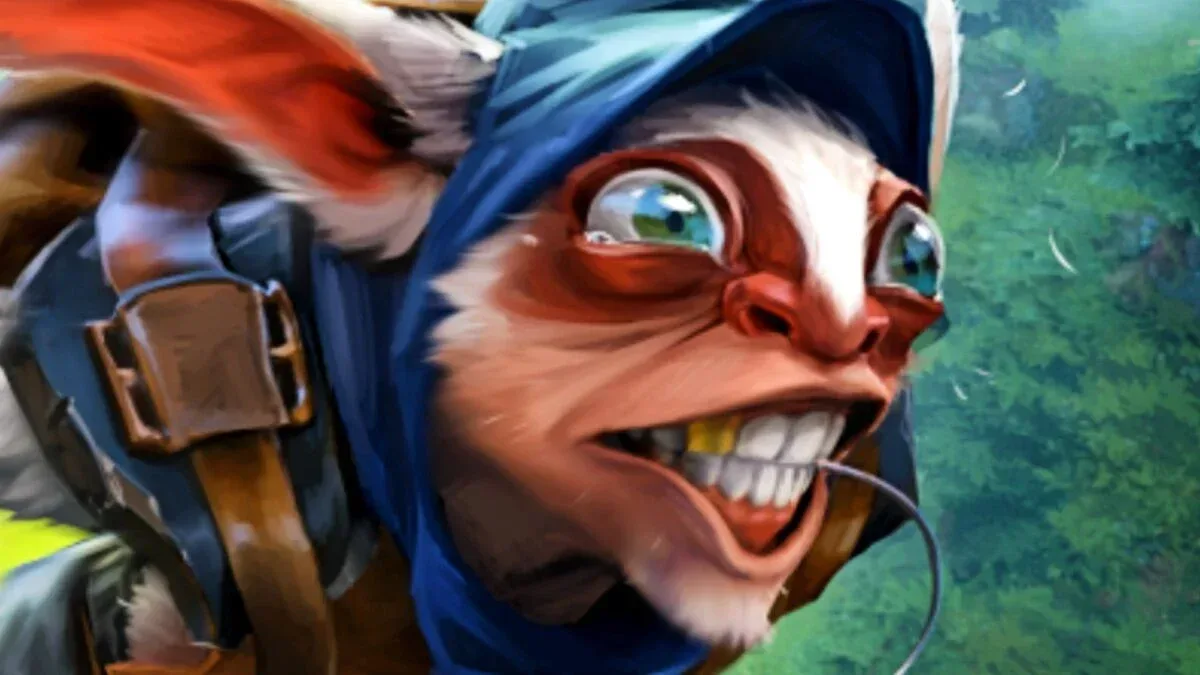
William Pugh, co-designer of The Stanley Parable and founder of Crows Crows Crows, has offered an unusually direct account of that second category. His most-played Steam game is Valve’s Dota 2, at 1,603 hours, ahead of even Team Fortress 2. Yet when asked whether that time was enjoyable, Pugh’s answer was emphatically no. His complaint is not that he failed to understand the game’s appeal. It is that he understands its grip all too well.
That contradiction is the whole story. A player can return for more than a thousand hours while sincerely believing the game has made them miserable. For anyone who has watched a friend announce they are done with a competitive online game, only to reappear in the queue shortly afterward, the logic will be grimly recognizable.
A multiplayer vocabulary of blame
Pugh’s frustration lands in the particular language of a multiplayer online battle arena, or MOBA. In this genre, teams compete through a mixture of character roles, positioning, resource choices and coordinated fights. A match does not merely ask an individual to execute their own plan; it asks several players to make compatible decisions under pressure for a sustained period.
His list of grievances is familiar to the format: teammates “feeding,” supports failing to support, carries failing to carry, poor positioning, reckless dives and bad item choices. These terms can sound like insider shorthand, but they express a simple problem. In a team game with highly interdependent roles, another player’s error can reshape the match everyone else is trying to play.
- Feeding generally means repeatedly dying in a way that gives the opposing side an advantage.
- Support refers to a role centered on enabling teammates rather than being the primary damage dealer.
- Carry describes a player or character expected to become especially decisive later in a match.
- Positioning is where a player stands relative to allies, enemies and danger.
- Diving means chasing an opponent deep into dangerous territory, often beyond the safety of one’s team.
The important part is not whether every complaint is correct in a particular match. It is that the game creates a running audit of decisions. There is always something visible to judge: who moved too far, who arrived too late, who chose the wrong item, who did not fulfill a role. The match becomes a shared puzzle, but it can also become a shared prosecution.
Pugh contrasted that environment with chess. Competitive chess can obviously provoke tension, but a mistake is not usually accompanied by a teammate telling you that you have wasted an hour of their life. In a team-based competitive game, personal disappointment is multiplied by dependence on strangers or friends. One player may feel they lost because of a teammate; that teammate may be conducting the exact same internal trial against someone else.
The five-dimensional Rubik’s cube explanation
For all the anger in Pugh’s description, he also identified the quality that helps explain why he kept returning: the concentration Dota 2 demands. He compared it to receiving a five-dimensional Rubik’s cube and spending an hour trying to solve it.
Related coverage includes William Pugh Captures the Strange Misery of Spending 1,600 Hours in Dota 2.
It is a useful metaphor because it does not describe a game that is simply difficult. It describes one that keeps presenting interacting variables. A player may need to think about their chosen role, their team’s plans, the other team’s choices, movement around the map, a current fight and item decisions at the same time. Pugh’s point is that this density can quiet everything outside the match. Whether the result is victory or defeat, an extended game has taken a sizeable block of attention and filled it completely.
That is not an endorsement of the stress. It is an explanation of the draw. Some games offer a calm escape by asking little of the player. Others offer escape by asking almost everything of them. The latter can be particularly potent for someone trying to stop their mind wandering, because there is little spare mental room left for anything beyond the immediate problem.
In that light, Pugh’s 1,603 hours are not necessarily proof that he had 1,603 hours of fun. They are proof that the game repeatedly supplied an absorbing challenge strong enough to overcome his memory of the aggravation around it. The loop is uncomfortable precisely because it can be rewarding at the level of attention and mastery while remaining unpleasant at the level of mood.
Why high playtime is not a review score
Players often use hours logged as a shortcut for value. It is an understandable metric: a game played for hundreds of hours plainly held someone’s interest longer than one abandoned after a weekend. But it is a poor measure of uncomplicated enjoyment.
Playtime can record curiosity, habit, competition, friendship, a desire to improve, the urge to recover a lost match, or the wish to prove that a failure was not representative. It can also record a game that has become part of a social routine even when the routine itself has curdled. None of those motives need cancel the others out.
Pugh’s comments give this a particularly sharp form because he says he was never especially good at the game. The frustration, then, is not only with teammates or individual matches. It includes the unnerving realization that enormous effort does not guarantee the satisfying transformation players often expect from practice. Time invested can feel like a demand for a return: improvement, rank, competence, or at least a warmer memory. A game owes none of those things.
That makes his description less a dismissal of players who do enjoy Dota 2 and more an account of a competitive-game trap. The player remembers the bad coordination and the anger, yet remembers enough of the mental lock-in to imagine one more session. The prospect is not soothing. It is compelling.
Competitive intensity is not automatically community
Pugh traces his complicated relationship with online multiplayer back through games including 2005’s Worms 4: Mayhem. His remarks on Dota 2, however, underline a basic distinction that can get lost when online games are discussed solely as social spaces: being connected to other people is not the same as feeling supported by them.
Online competition can supply camaraderie, memorable teamwork and collective learning. It can also magnify every mismatch in expectations. One player may want experimentation; another may want a clean win. One may see a risky move as exciting; another sees it as sabotage. When a match lasts a long time, each interpretation gets plenty of time to harden.
Pugh’s line that the game is powered by a desire to conquer is intentionally caustic, but it highlights the emotional stakes players can import into a match. If every error is treated as an obstacle to victory and every teammate as either the solution or the problem, the social layer becomes another system to manage. It is no longer merely a game of learning characters and making decisions. It is a game of managing disappointment in public.
The subject also intersects, at least historically in Pugh’s telling, with the wider fascination around AI competition. He referred to OpenAI’s early work involving a bot that could defeat a professional player. That reference is not evidence that competitive games are uniquely hostile, nor does it settle what AI means for games now. It does show why a dense strategy contest attracts technical interest: a game with many simultaneous variables, limited information and high-level decision-making presents an obvious benchmark. Readers following the industry’s current AI language can find a related discussion in this look at a broader generative-AI push.
The practical lesson: know what the queue is giving you
Pugh’s account does not produce a universal rule that players should quit difficult multiplayer games, or that long playtime is a mistake. It does suggest a more useful question before pressing play again: what am I actually returning for?
If the answer is focused problem-solving, there may be value in acknowledging that directly. If the answer is friends, it may help to prioritize playing with people whose expectations are compatible. And if the answer is mostly a need to erase the last frustrating loss, it is worth recognizing that a new match may offer another complex problem without providing the emotional correction being sought.
That is the bleak comedy in Pugh’s 1,603-hour Dota record. The game can occupy the mind so thoroughly that an entire hour disappears. Afterwards, it may leave a player furious at the people involved, furious at their own performance and somehow still aware of the queue sitting there, ready to offer another attempt at the impossible cube.