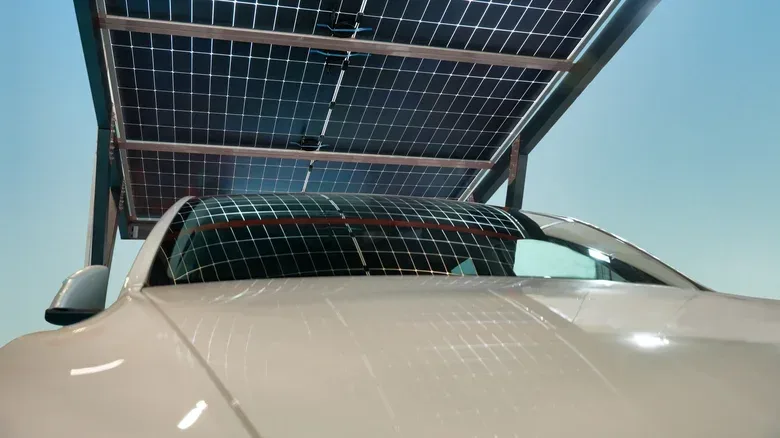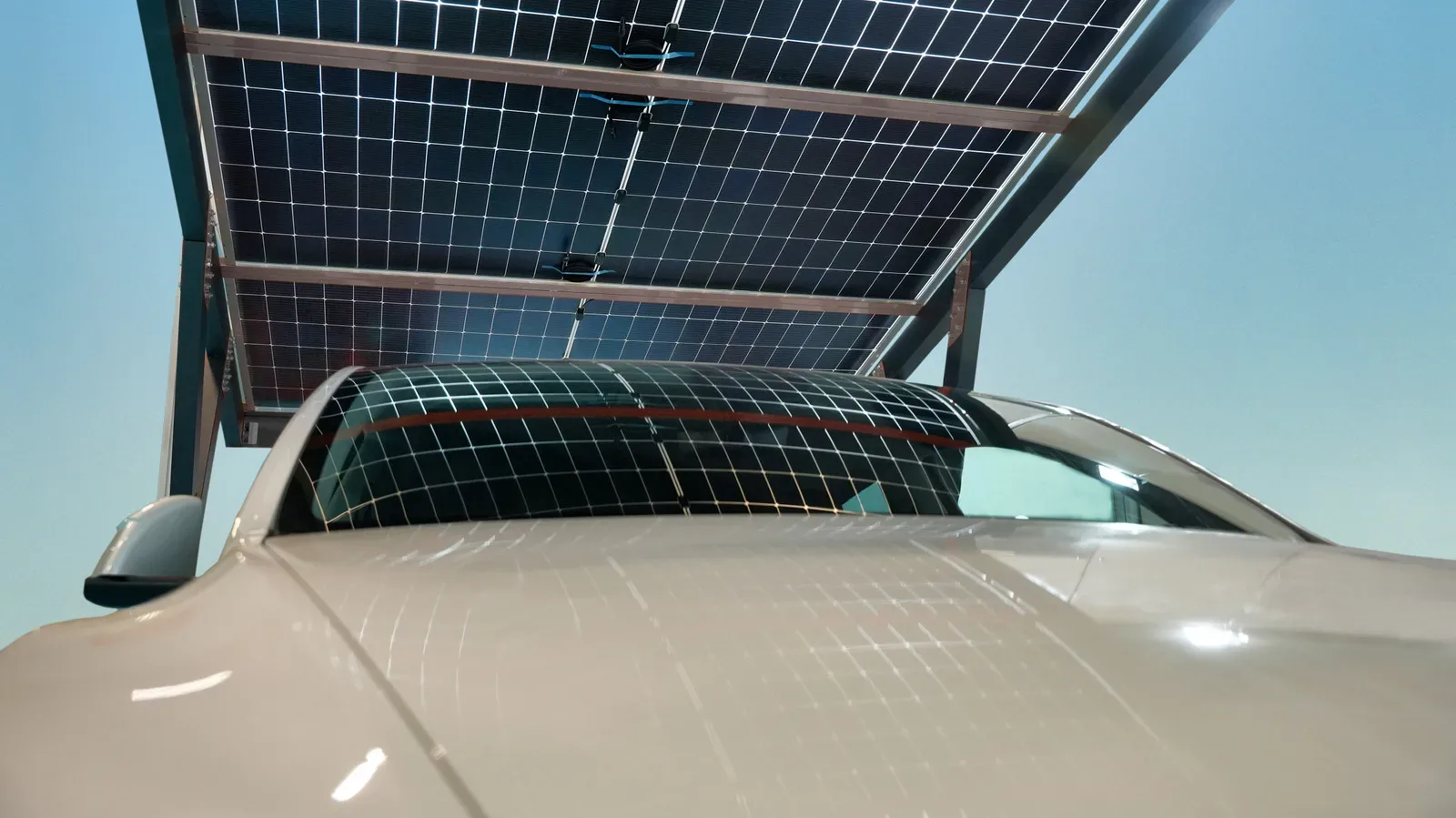
A solar roof on an electric vehicle has immediate sci-fi appeal: leave the car outside, let daylight refill the battery and spend less time thinking about plugs. The physics is less accommodating. A conventional car simply has limited horizontal surface area, while moving a modern EV requires a substantial amount of electricity. The result is that rooftop solar can be useful as supplemental energy, but it is not remotely equivalent to a dependable charging routine for the typical vehicle.
The central issue is not whether photovoltaic panels work. They do. It is whether a vehicle can carry enough panel area, collect enough sun and use that harvested electricity efficiently enough to meet real driving needs without unacceptable compromises. On a mainstream EV, the answer remains constrained by geometry and energy demand.
The basic energy math is unforgiving
The EPA estimates that the median 2025-model-year EV consumes 39 kilowatt-hours for every 100 miles. That is 390 watt-hours per mile. A watt-hour is a unit of energy: one watt of power used or produced for one hour. A kilowatt-hour, or kWh, equals 1,000 watt-hours and is the unit commonly used for EV battery capacity and home electricity consumption.
Now take an optimistic-looking rooftop example: a 400-watt solar array spread over about 22 square feet. If that array made its full rated 400 watts for four hours, it would produce 1.6 kWh before charging losses. At the median EV consumption figure, that energy works out to roughly four miles of driving.
That is the key scale mismatch. A rooftop panel rated in hundreds of watts sounds substantial in isolation, but an EV battery is asked to propel a heavy vehicle through air and over pavement. The energy required accumulates quickly. Solar can contribute, but a car roof cannot easily become the same thing as a large fixed solar installation.
The four-hour calculation is also not a promise of daily output. A panel’s rated power is measured under specified conditions, while real parking is messy. Shade, cloud cover, high temperatures and the vehicle’s angle relative to the sun can all reduce generation. A garage removes the solar opportunity altogether. In other words, a roof panel’s output is both limited and variable.
Rated power is not the same as daily energy
This distinction helps cut through some of the confusion around solar-car claims. Panel output is often expressed in watts, a measure of power at a given moment. What matters for adding battery range is energy collected over time, expressed in watt-hours or kWh. A 400W panel does not automatically deliver 400W all day; it needs sufficiently favorable sunlight, and its actual output changes with conditions.
Then there are charging losses. Electricity collected by the panels must reach the vehicle battery through associated electronics, and the simple 1.6 kWh example is explicitly before those losses. Solar range figures are most useful when they state both the measured energy delivered to the battery and the efficiency assumption used to translate that electricity into distance.
Related coverage includes Why Solar Roofs Cannot Yet Replace EV Charging.
More panels introduce engineering trade-offs
The obvious response is to fit more solar hardware. But expanding an array changes the vehicle itself. Panels, mounts and related components add weight. More mass means the electric motors must expend more energy to move the car.
A panel that rises above the body can also hurt aerodynamics. Drag is the air resistance a vehicle encounters as it moves. Higher drag generally means more energy is required at speed, reducing efficiency. That creates an awkward bargain: the car gains more solar collection area but may lose some of the driving efficiency that makes each collected watt-hour valuable.
Flush, roof-integrated panels can avoid much of the aerodynamic penalty of a raised rack or large external structure. They do not solve the equally important problem of area. A standard roof is still a standard roof. It is only so large, and the most convenient surfaces of a car are not necessarily perfectly positioned toward the sun throughout the day.
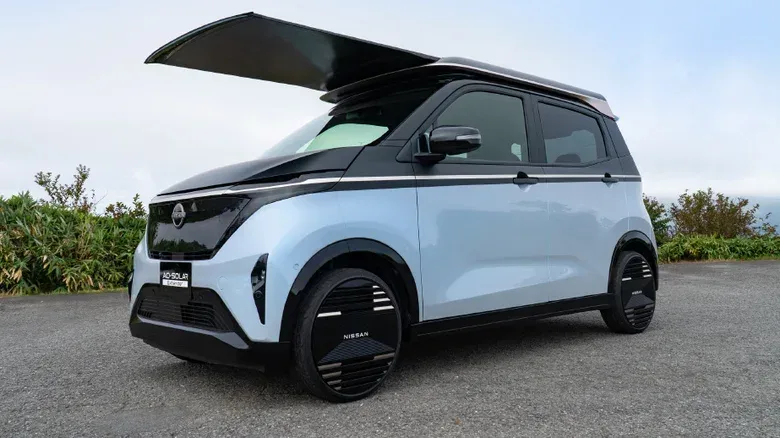
Nissan’s Ao-Solar Extender prototype for the Sakura EV illustrates one effort to handle that compromise. Its solar roof can generate up to 300W while retracted for driving. With the vehicle parked, an additional panel slides over the windshield, taking peak output to 500W. The concept makes practical sense as an approach: keep the collecting hardware compact when aerodynamic efficiency matters, then deploy more area while the car is stationary.
Even so, a retractable solution adds practical questions rather than eliminating constraints. Moving panels have to coexist with weather, parking conditions and the normal wear expected of a car. The important point is not that expandable panels are pointless; they are a sensible attempt to gather more sunlight without permanently turning the vehicle into a higher-drag shape. But the amount of harvestable energy remains bounded by the available sunlight and the available surface.
Efficiency changes the solar equation more than a bigger roof does
One route to more meaningful solar driving is not merely collecting more electricity. It is dramatically reducing how much electricity the vehicle needs per mile. Squad Mobility’s small solar EV, for example, pairs a 250W roof panel with a 794-pound city car. Its small, lightweight format points toward the fundamental strategy: solar becomes more useful when the vehicle’s energy needs are much lower in the first place.
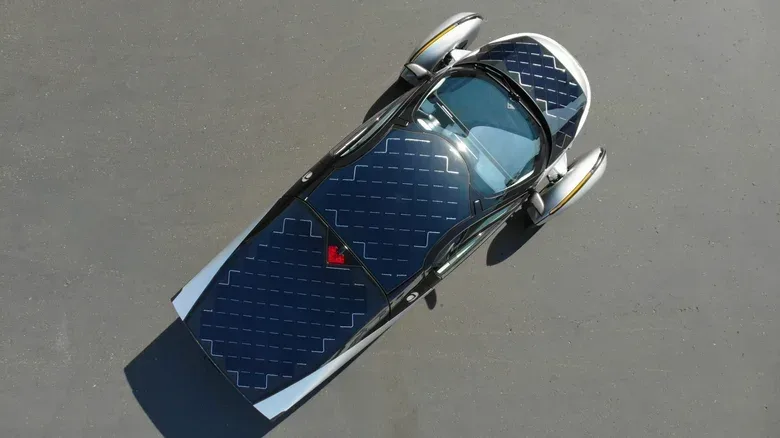
Aptera takes this concept considerably further. Its proposed EV uses a teardrop body, three wheels, two seats and lightweight composite construction rather than the layout of a typical passenger EV. Aptera is targeting 100Wh per mile—roughly one-quarter of the EPA’s 390Wh-per-mile median figure for 2025-model-year EVs.
That target matters because every kWh then represents more miles. If a vehicle truly needs only 100Wh to travel a mile, one kWh corresponds to about 10 miles in the simplified calculation. A conventional EV at 390Wh per mile gets only around 2.6 miles from that same kWh. Solar does not suddenly become unlimited, but a highly efficient vehicle makes a limited solar harvest significantly more consequential.
During July testing in Southern California, TÜV Rheinland measured 4.23 kWh delivered to an Aptera prototype’s battery with the car parked, untouched and its hatch closed. Using Aptera’s 100Wh-per-mile efficiency target, that amount of energy equates to roughly 42 miles of solar range.
That measurement is notable precisely because it describes electricity delivered to the battery, rather than only a panel’s rating. Still, it should be read carefully. The test established collected energy, not the distance the prototype actually drove on that energy. The approximately 42-mile conversion depends on achieving Aptera’s stated efficiency target. It is an energy-to-range estimate, not a measured road result.
Who could benefit from onboard solar?
The most plausible use case is a driver with a short regular commute, outdoor parking and reliably favorable weather. Under those circumstances, accumulated solar energy could reduce how frequently the car needs to be plugged in. It is best understood as a top-up that may be meaningful to a particular owner’s routine, rather than an all-weather replacement for charging.
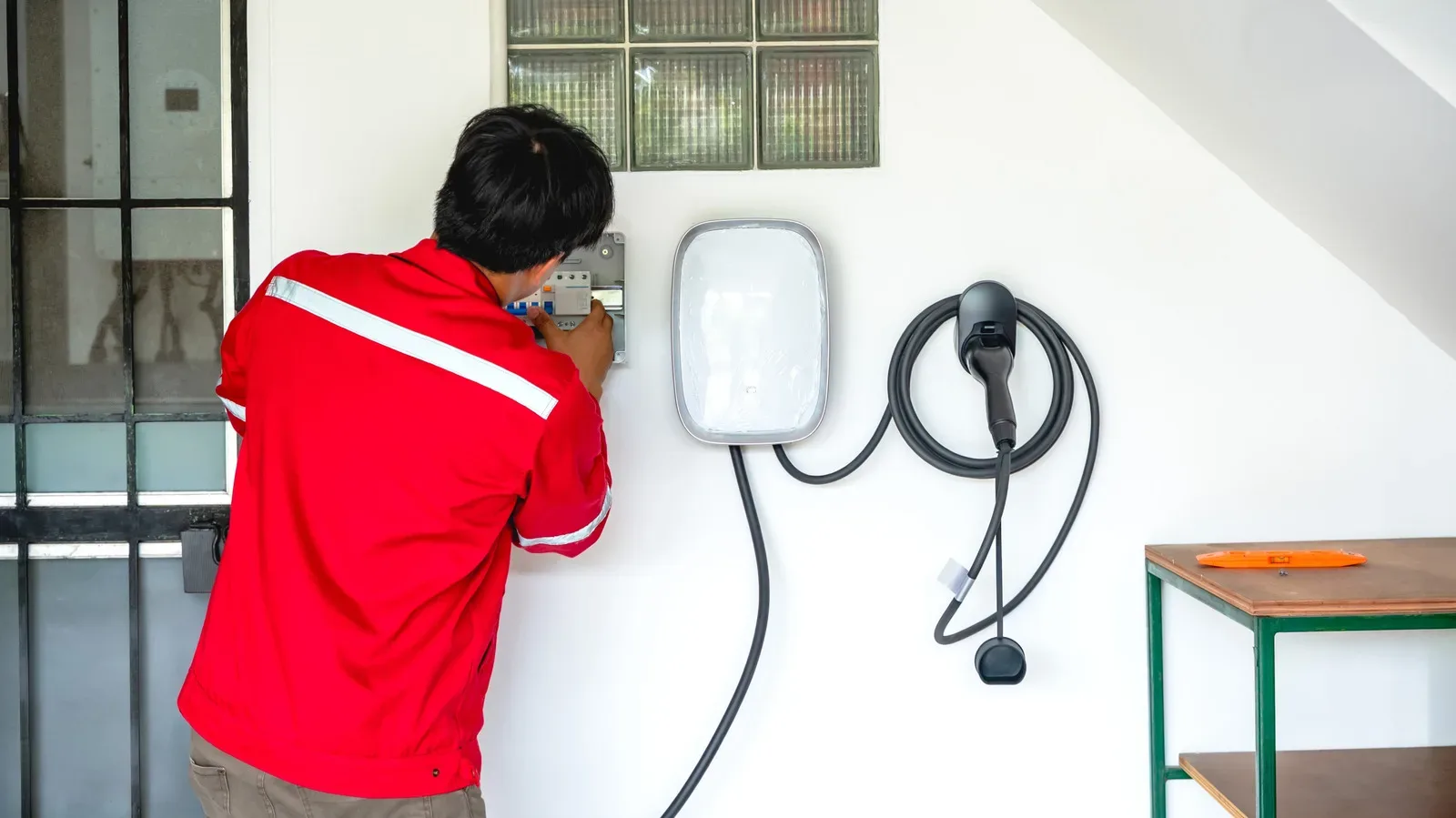
That usefulness fades quickly when the daily pattern changes. Garage parking prevents collection. Several cloudy days reduce it. A long trip demands far more energy than a compact rooftop system can replenish between stops. These are not minor edge cases; they are ordinary parts of vehicle ownership, which is why plug-in charging remains central even for a vehicle designed around solar efficiency.
It is also worth separating a solar-powered vehicle from a solar-assisted one. A vehicle may use solar electricity and meaningfully gain range from it without being able to rely on sunlight as its sole energy source. The latter claim carries a much higher burden because the system must work across weather, seasons, parking locations and driving distances.
Why rooftop solar makes more sense on an RV
RVs offer a useful contrast because their solar panels can supply equipment that does not propel the vehicle. Winnebago’s Revel Sport, for instance, has a 210W solar system intended for loads including lights, fans and refrigerators. Those uses still draw electricity, but they are not tasked with moving a large vehicle down the road.
That difference in mission is crucial. For an RV, rooftop solar can support onboard living systems and reduce demand on stored power for those functions. For an EV, the same general technology is asked to help meet the much larger and more variable energy requirement of traction—the energy used to move the vehicle. A solar roof is therefore easier to justify as an auxiliary power source than as the primary means of replenishing driving range.
There is a broader energy context here as well: electricity demand, how it is generated and where it is consumed are active infrastructure questions, including in debates around large computing facilities and local generation. A recent data-center turbine pollution case is a reminder that the conversation around electricity extends beyond the vehicle itself. Rooftop solar on cars is appealing partly because it seems to localize generation, but its practical limits mean most EV energy will still come through more conventional charging arrangements.
Promising design, unresolved production reality
Aptera’s approach shows why solar EV discussions cannot be reduced to panel wattage alone. Vehicle efficiency, weight, shape and intended use are at least as important as the solar cells. But unusual efficiency-focused designs can face difficult commercial and manufacturing paths.
Lightyear suspended production of its first solar EV in January 2023, only weeks after deliveries began. Its operating company, Atlas Technologies, entered bankruptcy days afterward. That outcome does not prove that solar-assisted EVs cannot work, but it does show that demonstrating the concept and sustaining production are separate challenges.
Aptera has not announced a final selling price for its Launch Edition, though it has cited a $40,000 target. In an October 1 SEC filing, the company said it planned to build its first 40 production vehicles by the end of 2026 and expected customer deliveries in early 2027. Those milestones remain subject to financing, supplier performance and regulatory approvals.
The realistic promise of an EV solar roof is modest but potentially useful: it can harvest otherwise unused sunlight and offset some electricity consumption. The realistic limitation is equally clear. Without radical efficiency, a much smaller vehicle, favorable parking and favorable weather, the roof does not collect enough energy to replace charging. The dream is not dead; it just comes with a battery-sized asterisk.