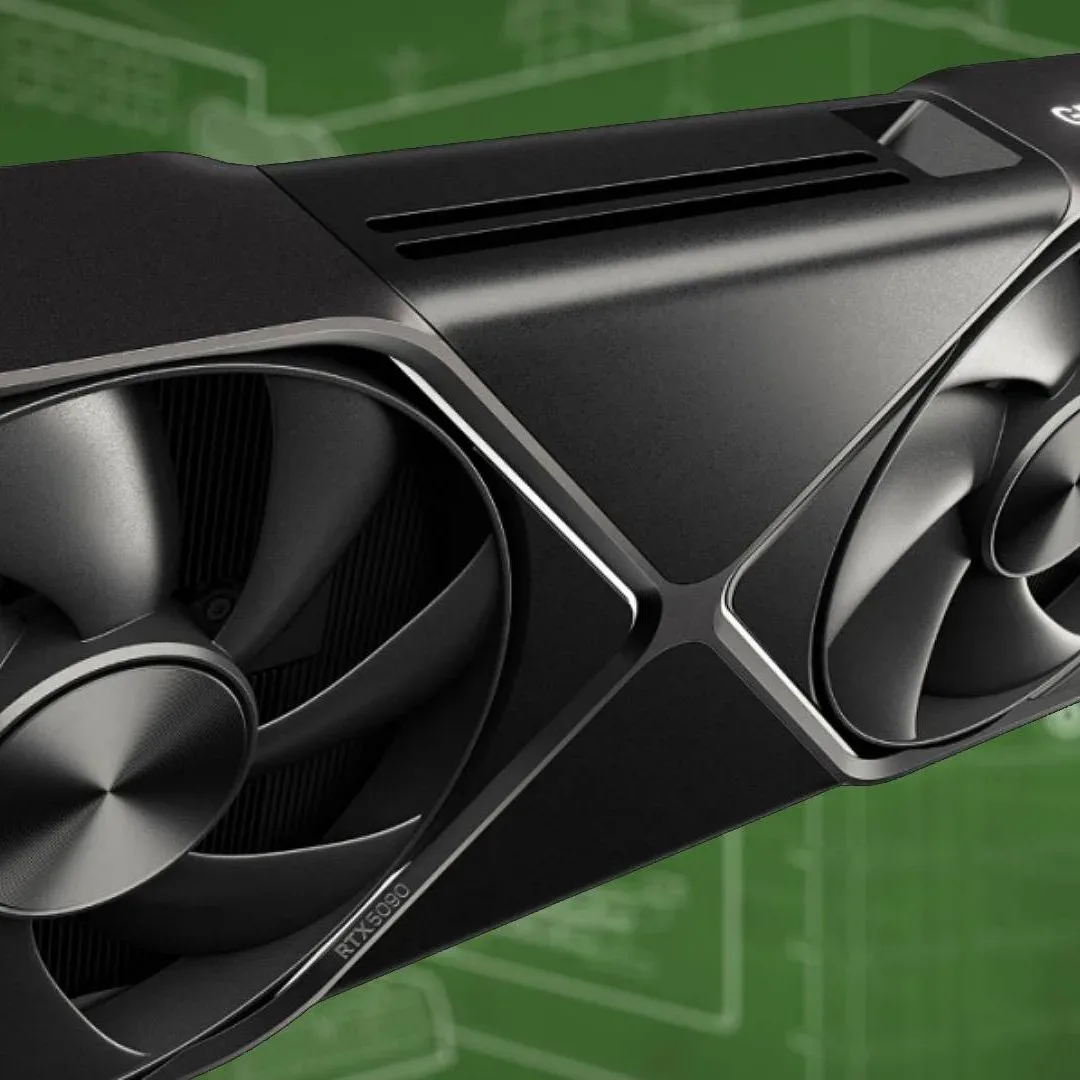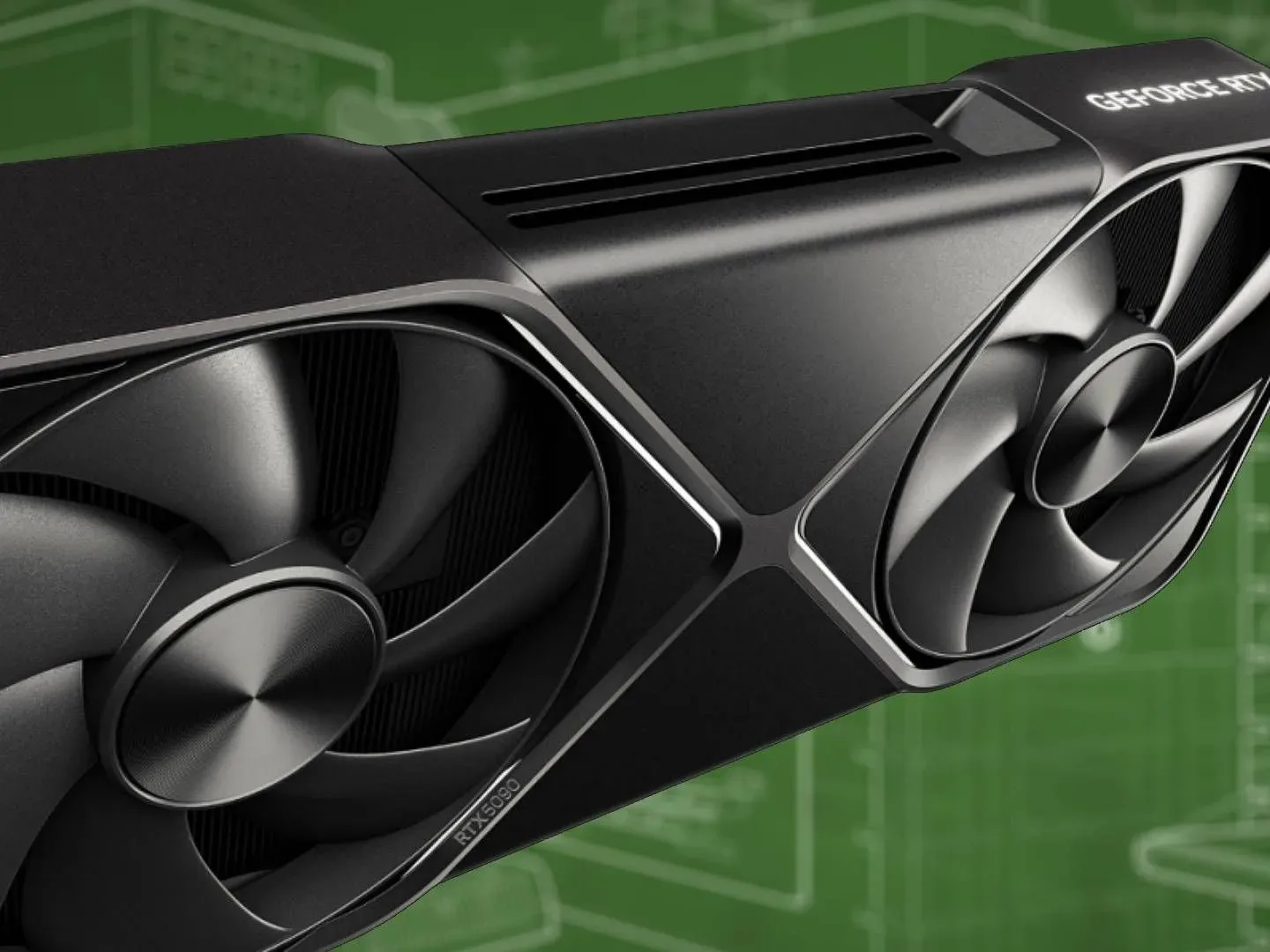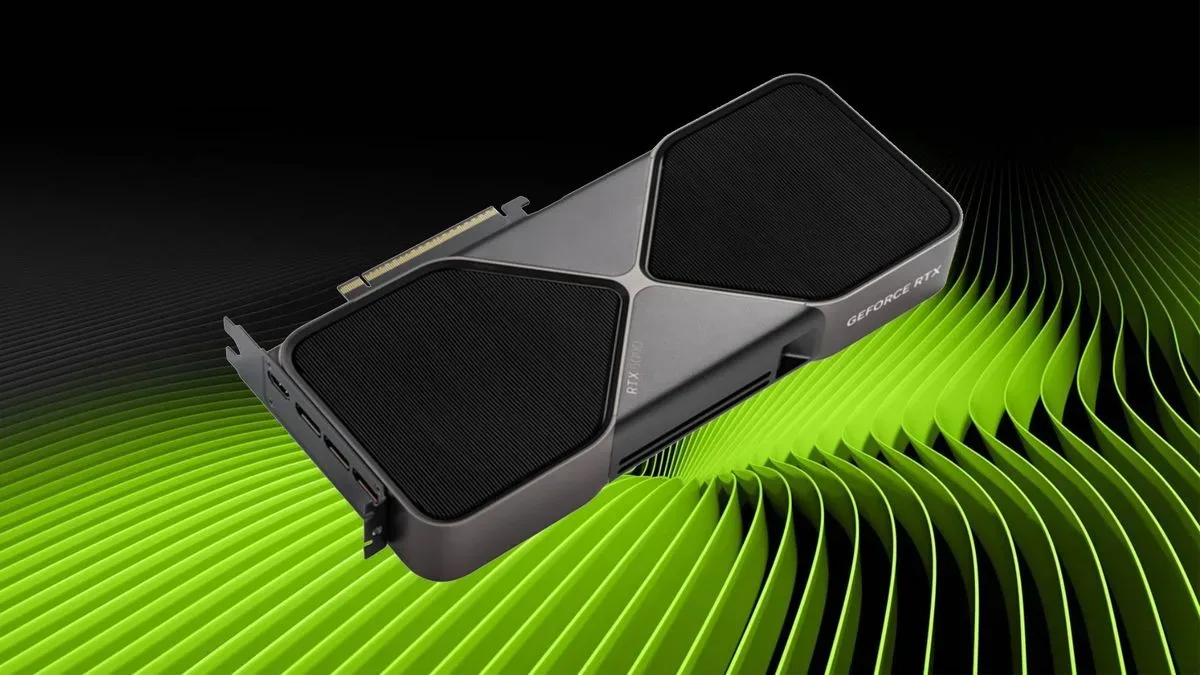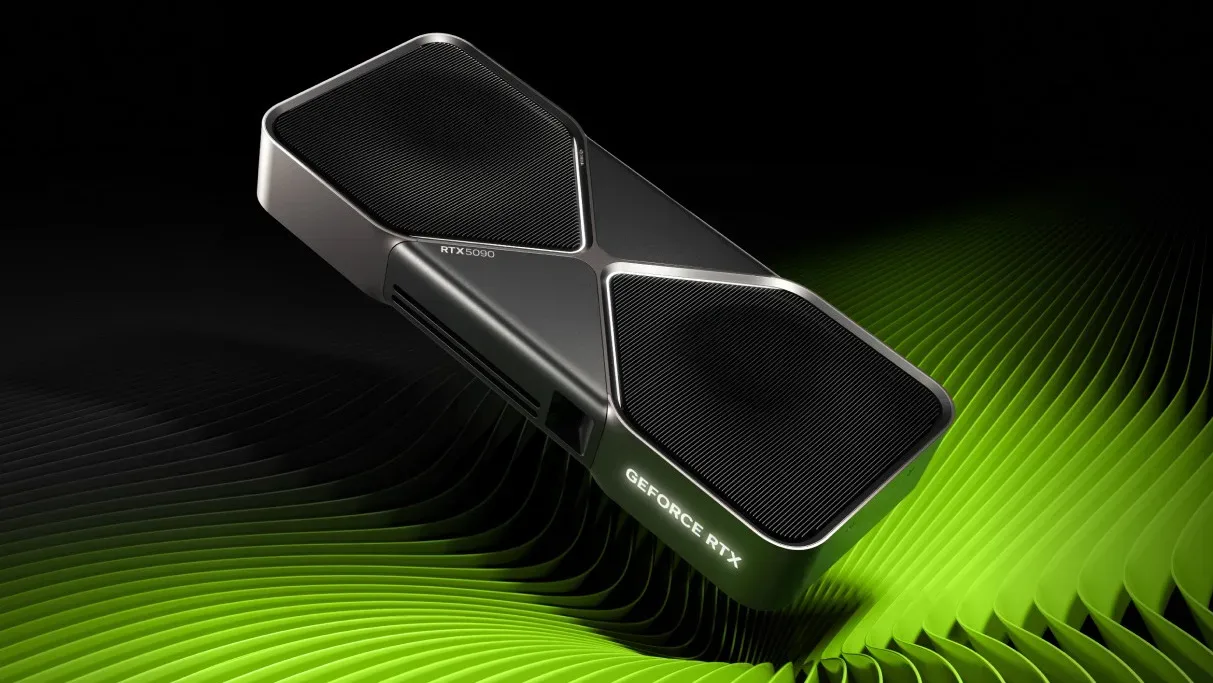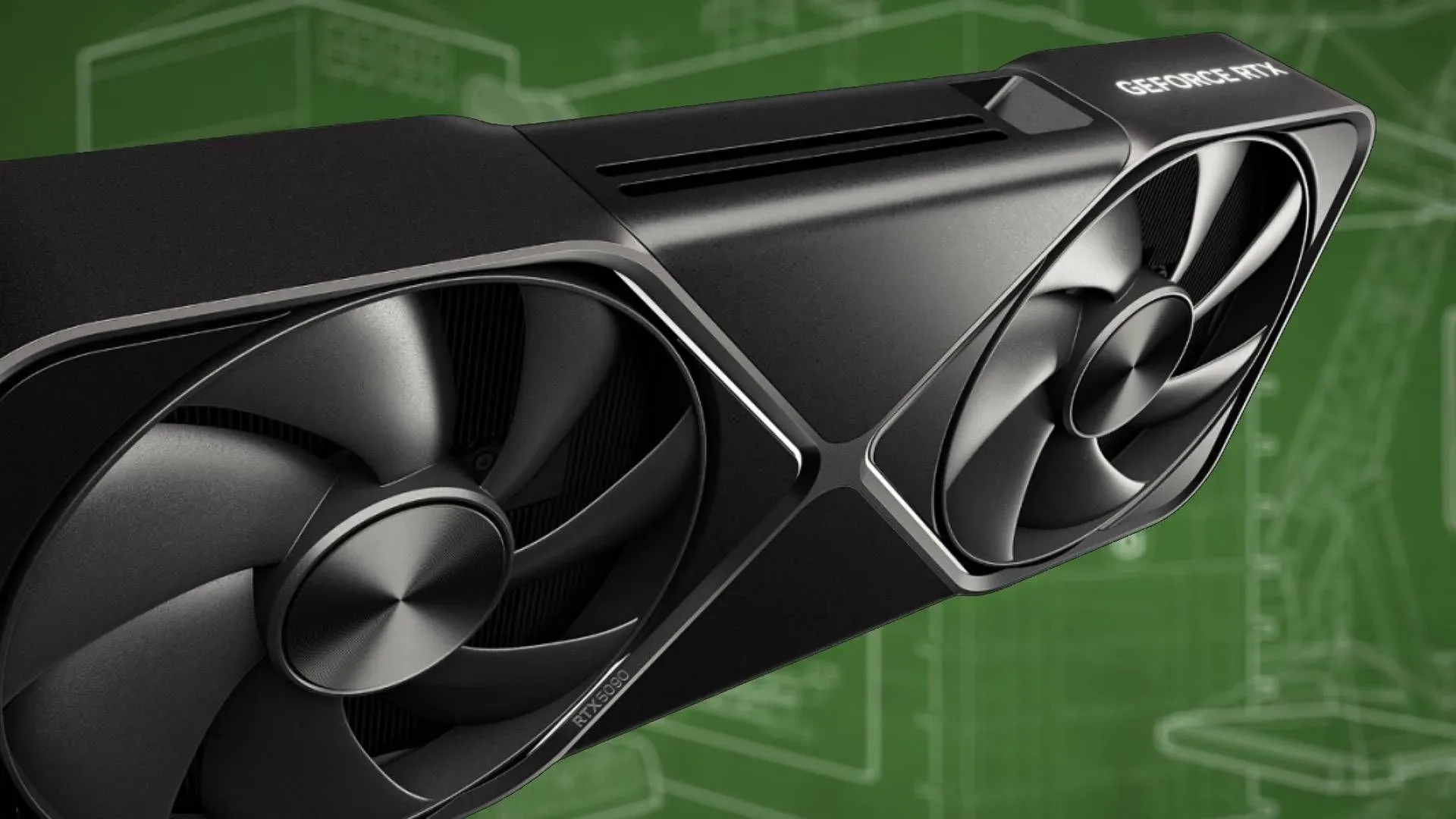
The GeForce RTX 5090 may carry a consumer-facing name and arrive wrapped in the familiar promise of premium PC gaming, but its practical identity is becoming much harder to pin down. Reports and images showing large quantities of MSI and Gigabyte RTX 5090 cards being installed for AI server use point to a blunt reality: a component sold as a flagship for gamers can be far more valuable to a data-center operator than to the person building a desktop at home.
That does not mean an RTX 5090 suddenly stops rendering games. It plainly remains capable of doing exactly that. The issue is economic rather than technical. If commercial AI builders can purchase consumer GeForce cards in bulk at prices that put them beyond even most extravagant gaming builds, “gaming GPU” starts to look less like a description of who gets to use the product and more like an increasingly ceremonial label on the box.
Nvidia continues to position GeForce hardware around gamers and creators. Yet the RTX 5090’s original $1,999 MSRP has become a distant reference point in a market where listings have reportedly climbed beyond $5,000. At that level, the card is not merely a luxury upgrade. It is hardware with a price and supply profile shaped by customers who can treat a room full of GPUs as infrastructure rather than a once-every-few-years personal purchase.
A consumer card with enterprise-sized demand
The notable detail in the reported server images is that the cards are not RTX 6000 Pro workstation models. They are retail-style GeForce RTX 5090 boards from MSI and Gigabyte—the sort of cards ostensibly meant to slot into enthusiast PCs. That distinction matters because it shows AI demand reaching past professional product lines and into the inventory gamers are expected to buy.
For a company assembling compute servers, the math can be difficult to ignore. Nvidia’s RTX 6000 Pro is priced at $16,000 and supplies 96GB of VRAM. That capacity is meaningful for workloads that need it, but not every AI deployment requires that much memory per card. An RTX 5090 with 32GB can be an appealing lower-cost building block, even after a painful retail markup. A price north of $5,000 looks absurd from the perspective of a single-PC owner. Against a $16,000 workstation card, however, it can appear comparatively economical.
In other words, the high street price is not necessarily a deterrent to the buyers now competing for the same stock. It may be confirmation that the card still occupies an attractive gap between capability and cost. Gamers are not just up against other hobbyists, system builders, and scalpers; they may be bidding against businesses that calculate return on investment across models, services, and fleets of machines.
The question is no longer whether the RTX 5090 can play games brilliantly. It is whether its availability and pricing still allow ordinary players to regard it as a realistic gaming product.
The cryptocurrency comparison is uncomfortable—and incomplete
PC players have seen a version of this story before. The cryptocurrency surge of 2021 turned graphics-card shopping into a grim contest against miners, resellers, automated checkout tools, and empty shelves. It left a lasting distrust of a hardware market in which gamers were nominally the target audience but were often the last people able to purchase a GPU at anything close to its suggested price.
Related coverage includes RTX 5090 Demand From AI Server Builders Is Pushing Gaming Further Down the Queue.
There are important differences this time. Crypto demand was connected to mining performance, and Nvidia tried to separate its gaming products from that use case with Lite Hash Rate versions of some RTX 30-series cards. Those designs reduced mining performance, an imperfect measure that did not solve every availability problem but at least acknowledged that gaming demand deserved protection.
There is no obvious equivalent switch for AI. Modern GPU features are deeply shared. Tensor performance, memory capacity, accelerated inference, upscaling technologies, driver maturity, and raw parallel compute all contribute to why a card can appeal to both a player chasing high-resolution frame rates and a company building AI capacity. Deliberately limiting those abilities on a GeForce flagship would cut against the qualities used to sell it.
That overlap makes the present situation potentially more durable than the mining boom. AI is not a single workload that can be conveniently throttled without side effects. It is a wide collection of uses, and Nvidia has prominently defined itself as a leader in artificial intelligence computing and high-performance computing. Gaming is still enormously important to the company’s public identity, but it now shares the stage with markets able to spend at a radically different scale.
DLSS 5 and the double-edged flagship feature set
There is an irony in the features that distinguish a cutting-edge gaming card. Technologies such as DLSS 5 are meant to improve the experience in demanding games, supporting sharper output and stronger performance in the situations where native rendering becomes brutal. But the broader AI-oriented architecture and software ecosystem that enable these advances also preserve the appeal of high-end GeForce hardware outside a Steam library.
That is not an argument against DLSS or against GPU-accelerated AI. Players benefit from hardware innovation, and creators have long used GeForce cards for work alongside games. The problem begins when every improvement that makes a flagship a better gaming purchase also makes it a more attractive unit of commercial compute—and the commercial buyers have the budget to drain retail channels.
Flagship products have always been aspirational. Few people needed the fastest available GPU, and fewer could justify one. But aspirational is different from inaccessible in principle. A halo card helps define a platform when enthusiasts can realistically save for it, compare models, and occasionally decide the splurge is worthwhile. It serves a different purpose when pricing makes it feel destined for racks before a gamer’s shopping cart has finished loading.
The pressure does not end with the 5090
The wider concern is that demand can trickle down the stack. If server builders can make do with RTX 5090s for some tasks, they can also consider the GeForce RTX 5080 where its performance, memory, and price suit a deployment. That leaves the RTX 5070 Ti and lower tiers as the comparatively plausible options for people upgrading gaming PCs—yet even the RTX 5070 Ti has been seen above $1,000 at retail.
That creates a strange division in 4K PC gaming. The most ambitious settings, the biggest displays, and the most expensive cards are marketed through spectacular game footage, but the hardware required to reach that dream can be diverted toward workloads that have nothing to do with play. PC gaming remains functional at sensible settings and resolutions on far less expensive hardware, of course. The concern is not that games become impossible to play; it is that the upper end of local, ownership-based gaming becomes an executive privilege.
That last point matters because expensive local hardware often becomes the alternative to subscription and streaming ecosystems. Services such as GeForce Now and Xbox Game Pass have their uses, and they can lower the immediate barrier to trying games. They are not interchangeable with owning a capable machine, choosing how and when to run software, using mods, preserving older titles, or playing without dependence on a stable connection and an active catalog agreement.
Local play still has a valuable fallback
There is a reasonable response to a distorted flagship market that does not require pretending new games are unworthy: play more of what already works. Retro consoles, older PCs, handheld emulation devices, and modest desktop builds offer enormous libraries without demanding a data-center-class budget. The preservation and tinkering communities around older hardware become more relevant whenever the latest route to local gaming starts to feel locked behind industrial demand.
For players considering a smaller, more affordable machine for classic libraries, the recent Retroid Pocket discounts and discontinuation plans are a reminder that there are other corners of the hobby built around attainable hardware and games that remain playable offline.
None of this makes the RTX 5090 a bad GPU. On its specifications and intended performance, it is still Nvidia’s premier GeForce card. But labels should reflect market reality. If AI server operators can buy retail cards by the pallet while gamers encounter $5,000-plus pricing, calling the RTX 5090 a gaming GPU feels incomplete at best. It is a general-purpose accelerator wearing gaming colors—and the people who most want it for games may be the least equipped to win the contest for one.