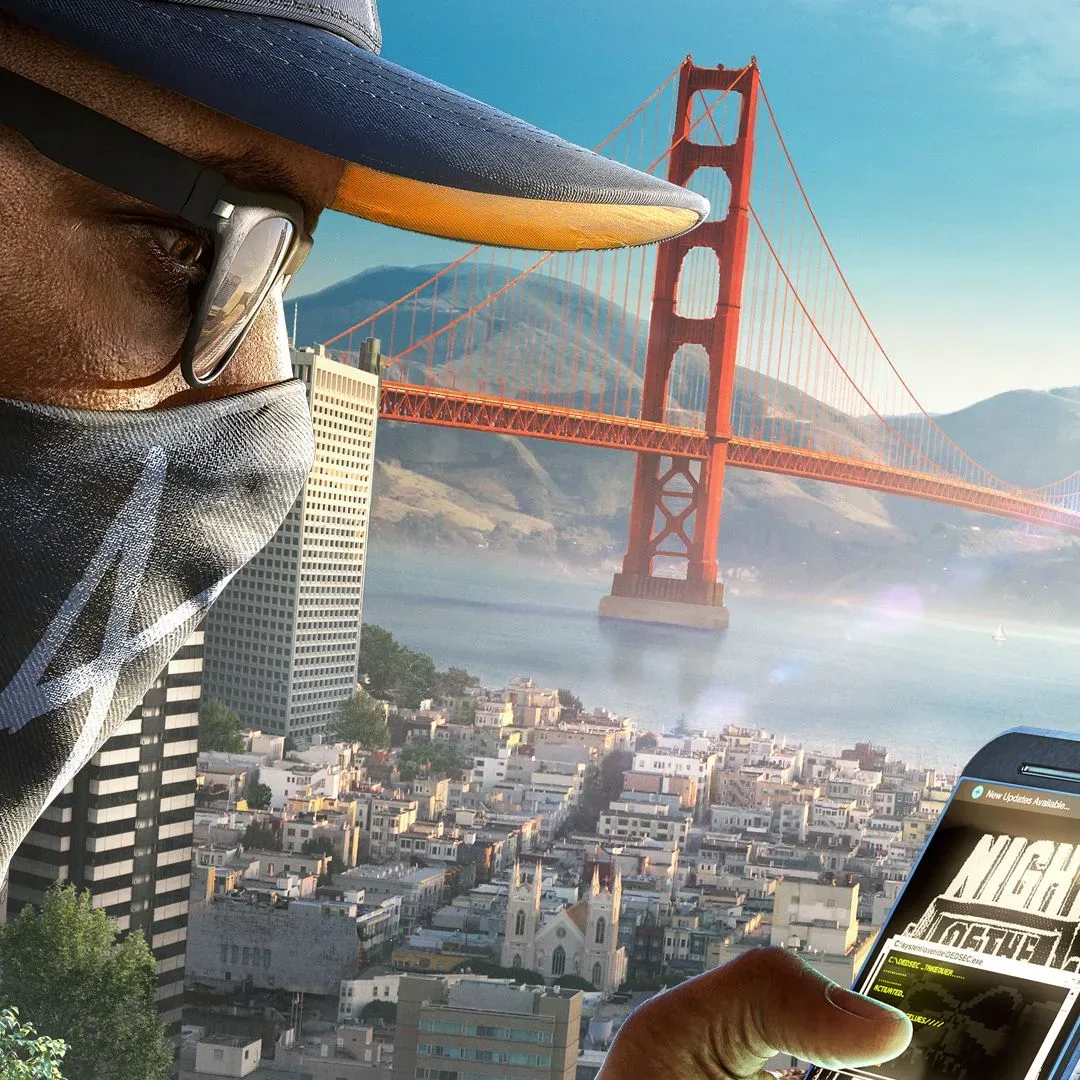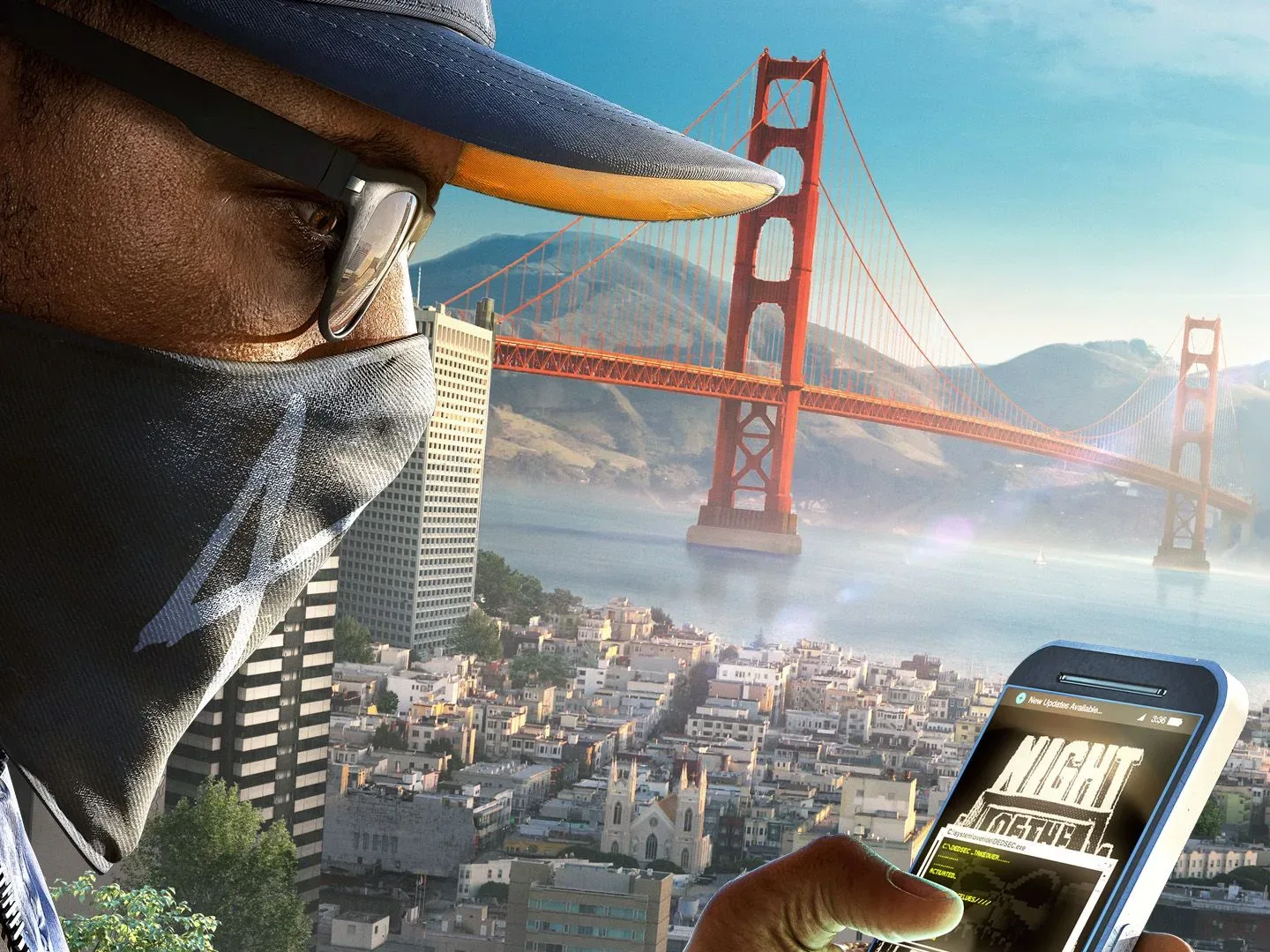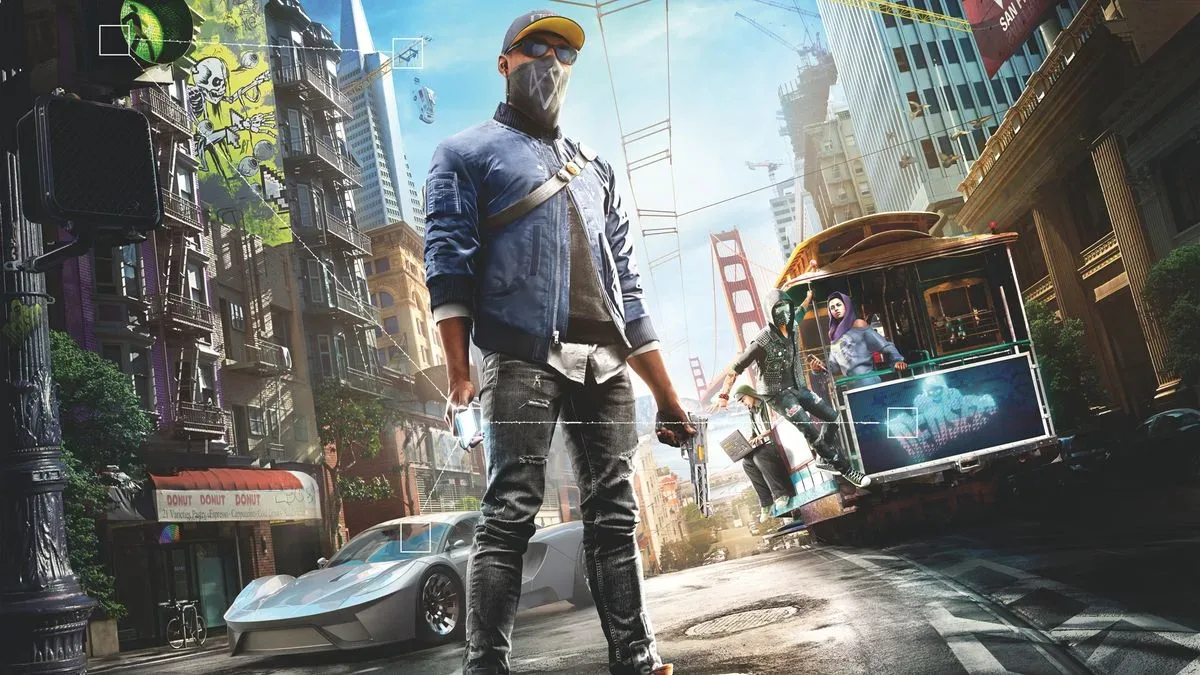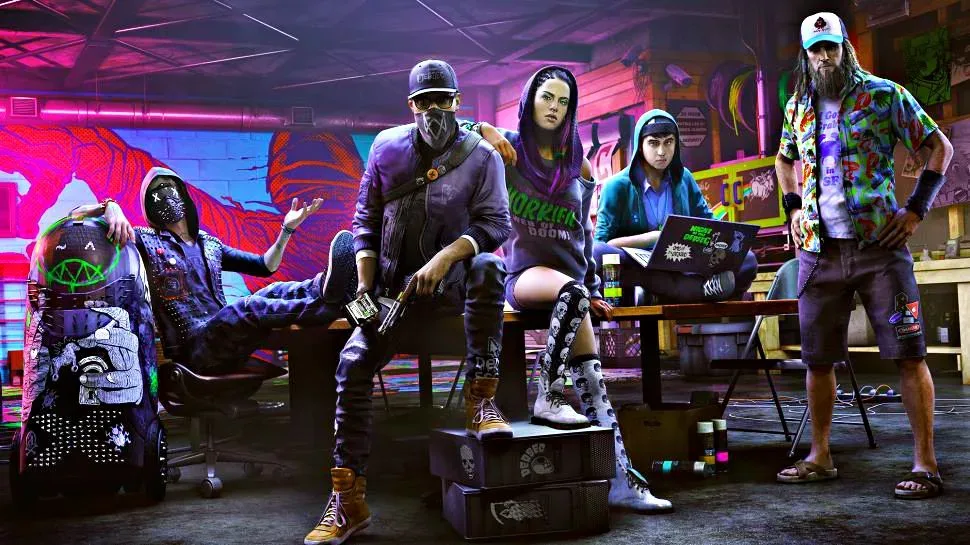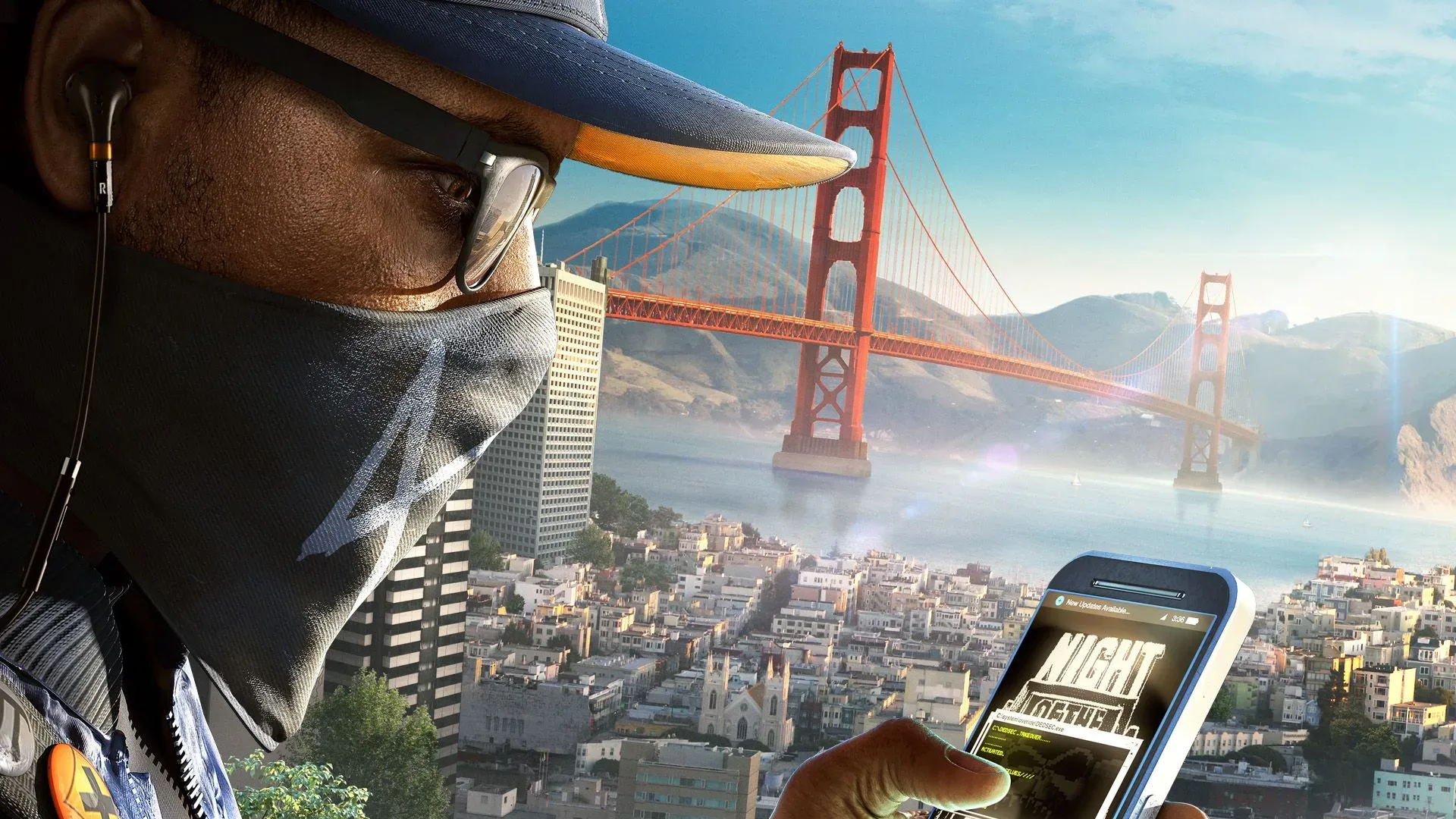
Watch Dogs 2 succeeds because it understands that a fantasy of technological power does not have to be grim to feel meaningful. Ubisoft’s 2016 sequel still has surveillance, corporate data abuse, corrupt institutions and a city wired into a vast network. But instead of treating all of that as an excuse for permanent scowling, it gives Marcus Holloway headphones, a phone full of chaotic tools and a San Francisco that is bright, noisy, ridiculous and inviting.
The result is a major shift from the first Watch Dogs. Where that game’s Chicago was deliberately shadowy and constricted, Watch Dogs 2 puts colour, sunlight and movement at the center of its version of the Bay Area. That change is not superficial window dressing. It changes how the player interprets hacking, open-world disruption and DedSec’s campaign against powerful institutions. Mischief becomes a political language. Exploration becomes participation. Even the soundtrack becomes part of the game’s world rather than a menu option sitting outside it.
The sequel abandoned a mood that was holding it back
The original Watch Dogs arrived in 2014 carrying baggage from its 2012 E3 debut, whose visual promise became inseparable from the eventual conversation around a perceived graphical downgrade. It also committed hard to a serious surveillance-thriller atmosphere: a paranoid Chicago under cameras, a revenge-focused protagonist in Aiden Pearce, and a notably dour tone.
Watch Dogs 2 did not pretend that technology’s relationship with power was harmless. Its San Francisco still presents stark wealth alongside poverty, and the story eventually targets corruption involving law enforcement, politicians and a technology corporation using data as a weapon. The difference is that it sees the tech world as absurd as well as threatening. Glass offices, startup self-importance, aspirational branding and social-media performance all become material for satire.
That is an important distinction. A game about omnipresent digital systems can make the player feel trapped by them, or it can let the player creatively prod, disrupt and ridicule them. Watch Dogs 2 opts for the latter. Marcus and DedSec are not solemn super-spies. They are exuberant activists whose style can be corny, including LED masks and deliberately dated internet-language jokes, but whose energy is essential. Their willingness to be uncool is part of why the game has a pulse.
Marcus is also a far more effective focal point for the premise. He is a brilliant young Black hacker who recognizes that his own treatment is connected to a larger system rather than existing only as an individual grievance. That perspective lets the campaign’s concerns expand beyond a single hero’s vendetta. DedSec can be messy and theatrical, yet its work is framed as collective: building attention, exposing abuses and turning passive observers into people who might act.
Music is a system, not just background noise
The clearest example of Watch Dogs 2’s confidence is Marcus’s earbud player. It allows players to bring selected music into missions or free-roam, whether they are sneaking into a restricted area, wandering the city or conducting a spectacularly ill-advised vehicle stunt. The catalogue ranges across artists including Dizzee Rascal, Anti-Flag, KC & The Sunshine Band and Run The Jewels, making the player’s chosen song an active part of a scene’s emotional tone.
This is more than a novelty. A player-controlled soundtrack gives routine open-world actions a sense of authorship. A mission can be tense, but it can also be transformed by the contrast between what is happening and what is playing. The game makes room for that contradiction: a hacker action game can stage an audacious theft to classical music, or turn remotely driving a car into a public stunt with Mac Dre playing.
Related coverage includes Watch Dogs 2 Found Its Voice When It Stopped Taking Itself So Seriously.
Watch Dogs 2 goes further with SongSneak, an in-world music-recognition feature. When Marcus is near music playing from places such as a bar, boombox or vehicle radio, he can identify it and add it to his playlists. The mechanic is simple, but its design idea is unusually sharp. Rather than handing a song over as an arbitrary completion prize, it ties discovery to place. You encounter music in the city, remember that encounter, then carry the track away with you.
That reflects how music works beyond games. Songs are often attached to a journey, a neighbourhood, a particular night or an unexpected place where they were first heard. By building that connection into SongSneak, Watch Dogs 2 makes its San Francisco feel less like a checklist of activities and more like a place with a soundtrack distributed through its streets.
Its Bay Area musical shorthand can be broad and exaggerated, but that is consistent with the whole project. This is not a restrained simulation of San Francisco. It is a playful caricature of a tech-industry city where creative culture, startup mythology, wealth and public spectacle collide constantly. The game is better when it embraces that loudness than when it tries to imitate the severity of its predecessor.
Its open world works because the chaos is visible
Watch Dogs 2 is built around interacting systems: hackable devices, vehicles, civilians, security and the unpredictable collisions between them. In design terms, a systemic open world is one where rules and simulated elements can combine to make events that are not completely scripted in advance. The goal is not merely to provide a large map, but to create opportunities for players to cause consequences through the systems available to them.
The game’s non-player-character AI does not always make those interactions elegant. Sometimes the systems visibly grind against one another. Yet that imperfection oddly suits the setting. When social situations spiral into arguments, police calls or fights through a chain of ridiculous reactions, the city feels like a deliberately overcharged machine. Its citizens are dramatic; its civic infrastructure is wired for escalation; its surveillance tools make everything more immediately reactive.
This matters because the player can read cause and effect. Whether Marcus interferes with a car, triggers a distraction, changes the flow of a public space or simply creates a spectacle, the response is often apparent. The city may not always react cleanly, but it reacts loudly. For a game about a young activist group seeking to prove that entrenched power can be challenged, that legibility is thematically useful. The player is not merely told that their actions matter; the world frequently performs that fact back at them.
That sense of playful control is far closer to the game’s central fantasy than any individual one-button hack. The fantasy is not just “I can access a camera” or “I can interrupt a signal.” It is that a person with technical knowledge, nerve and allies can make an enormous institution look foolish—and make other people pay attention while doing it.
Followers turn attention into a narrative mechanic
DedSec’s growing reach is represented through followers, an in-game currency gained through missions and social-media-style activity, including photographs. This is one of Watch Dogs 2’s smarter mechanical-narrative connections. A currency is normally an abstract reward, but here it represents public awareness and support. The group’s ability to take on bigger operations is connected to whether it can convince people that its work matters.
That does not make the game a realistic account of organizing, and it is not trying to be one. It is an accessible power fantasy in which a small hacker crew gains momentum through ingenuity, presentation and persistence. Still, the followers system gives the campaign’s anti-corporate stance a clearer basis than a simple revenge plot. DedSec needs an audience because the fight is not only technical; it is cultural.
The early Cyberdriver mission makes that thesis wonderfully obvious. Marcus steals a talking, high-tech movie car because he objects to a fictional film’s caricature of hacker culture. His rebuttal is not a restrained statement. It is a remote-driven run through the city, packed with pyrotechnics and soundtracked by Judas Priest’s “Turbo Lover,” before the vehicle crashes through a promotional billboard. It is petty, excessive and perfectly aligned with the game’s voice.
Crucially, the joke is not separate from the politics. It shows DedSec using spectacle to seize attention and dispute a narrative about itself. Watch Dogs 2 repeatedly argues that control over images, public perception and online conversation is part of the struggle for power. That argument has far more force because Marcus is a character players can recognize, rather than an empty vessel delivering interchangeable mission dialogue.
Why Marcus’s crew matters more than a recruitment gimmick
Later, the campaign grows more serious without discarding its personality. DedSec’s targets become larger, and the group’s investigations expose broader patterns of abuse. A late mission that shifts play between the core members reinforces the idea that resisting a powerful system requires more than one exceptional protagonist. The group is the point.
That makes an instructive contrast with Watch Dogs: Legion. Its “play as anyone” approach aimed to express a similar belief in collective rebellion, but randomized playable Londoners can dilute character specificity. If everyone must fit one flexible gameplay template, individuals can become sets of traits rather than people with a distinct voice, history and place in the story.
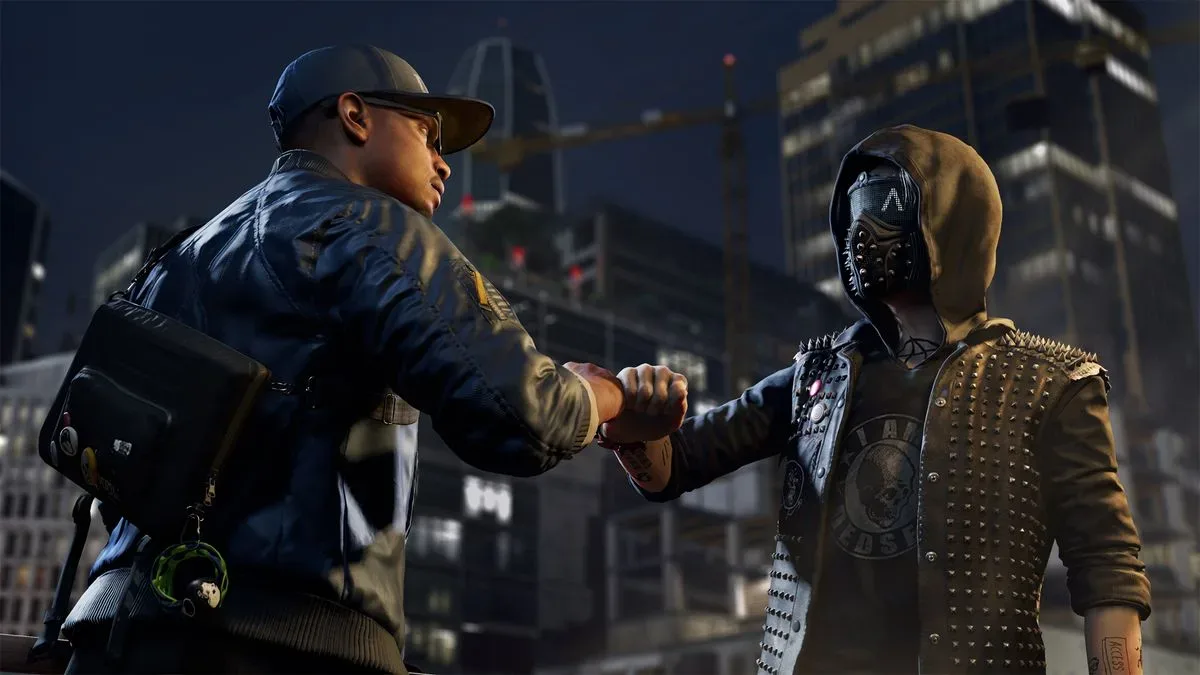
Watch Dogs 2’s answer is narrower but stronger: make the collective small enough that its members can feel like personalities. Not every line or joke lands, and the crew’s style will not work for every player. But the team has identifiable chemistry, and Marcus gives its political ambitions a human center. The game’s comedy therefore feels like something people are choosing to do together, rather than a tone pasted onto a system.
That is why the sequel’s attitude adjustment was so consequential. It did not merely brighten the palette or add a few jokes. It reconsidered what hacking should feel like in an open-world game. Instead of asking players to brood over a hostile network, it lets them turn that network into an instrument of connection, disruption and occasionally very silly public theater.
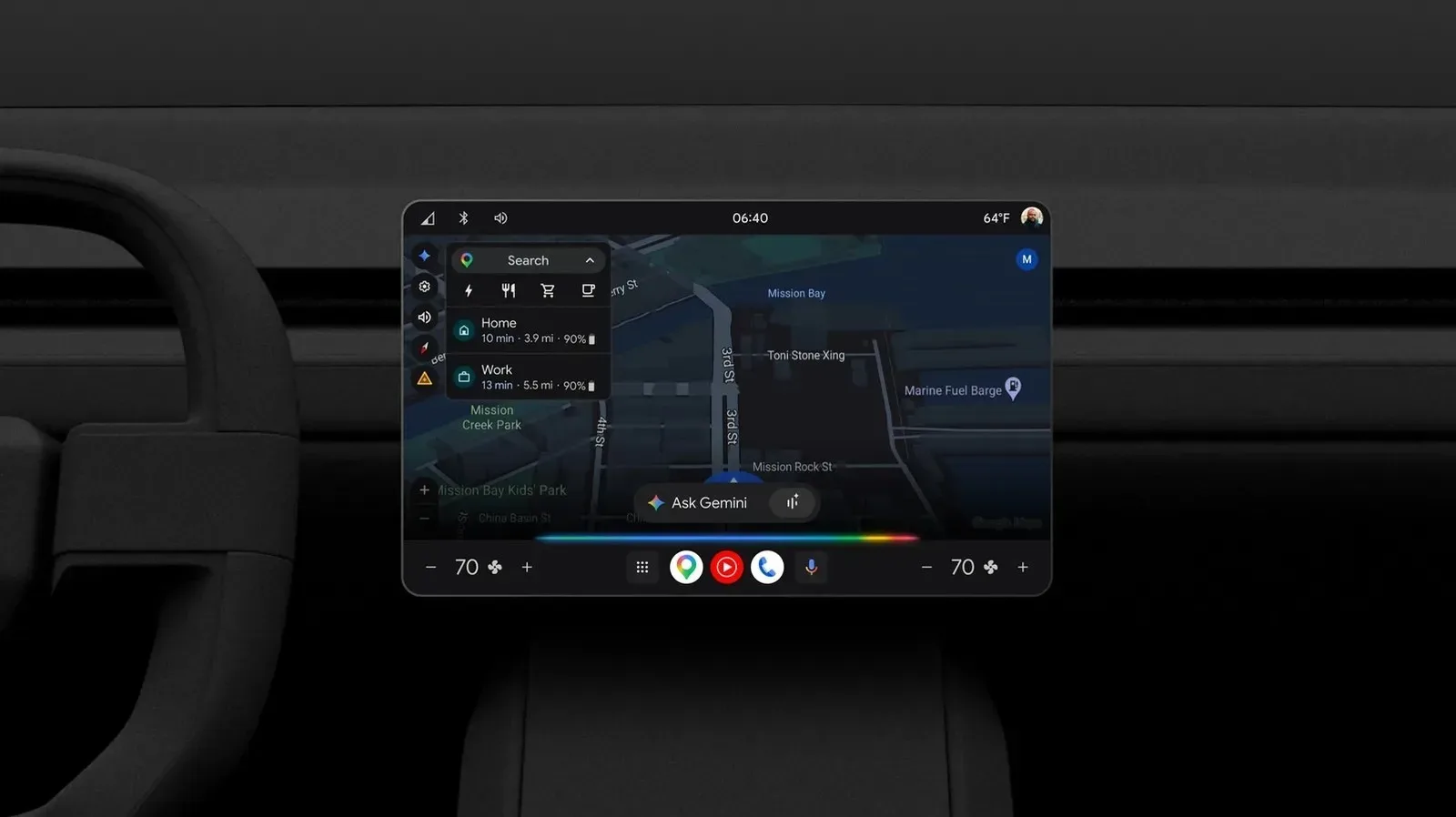
For readers interested in how software increasingly shapes what cars can do—and who controls those systems—our look at Android Automotive versus Google built-in offers a useful real-world companion to Watch Dogs 2’s exaggerated connected-vehicle antics.
Watch Dogs 2 is not flawless, nor is its San Francisco subtle. Its greatest achievement is recognizing that those traits can be strengths when they serve a coherent vision. The game made rebellion social, musical and mischievous. It gave players a world that could respond to their meddling, characters capable of carrying its ideals, and permission to have fun while pushing back against the machine.