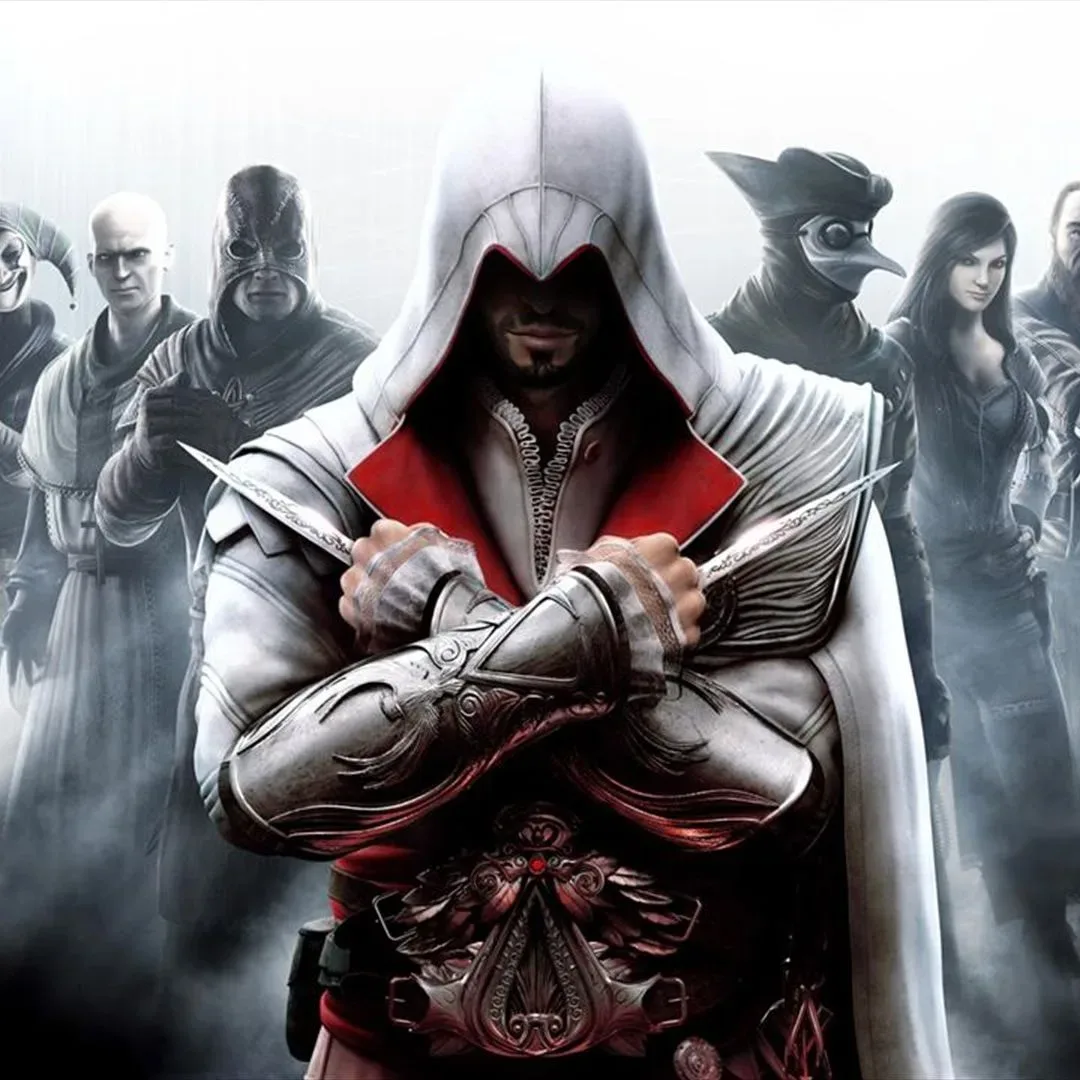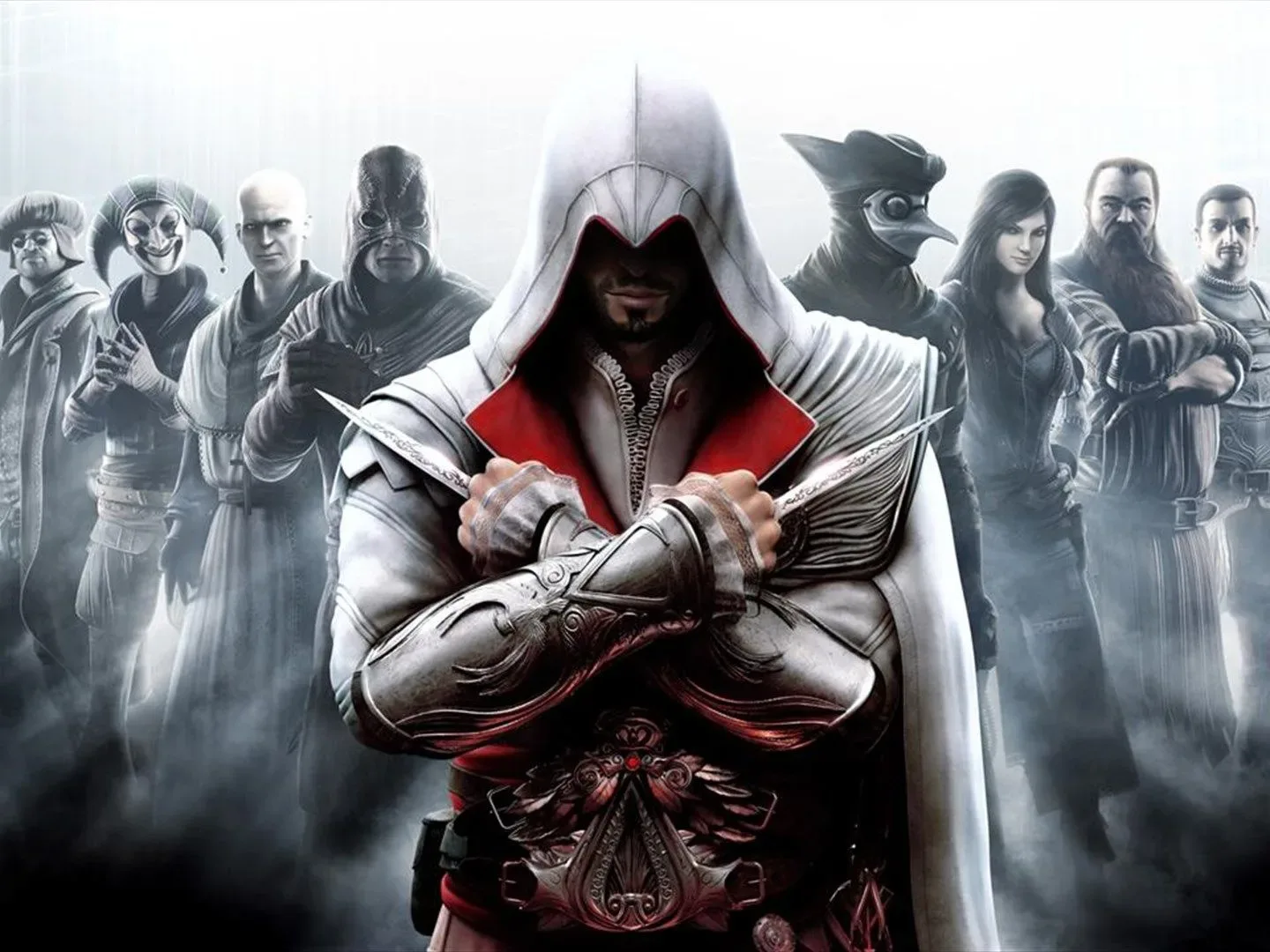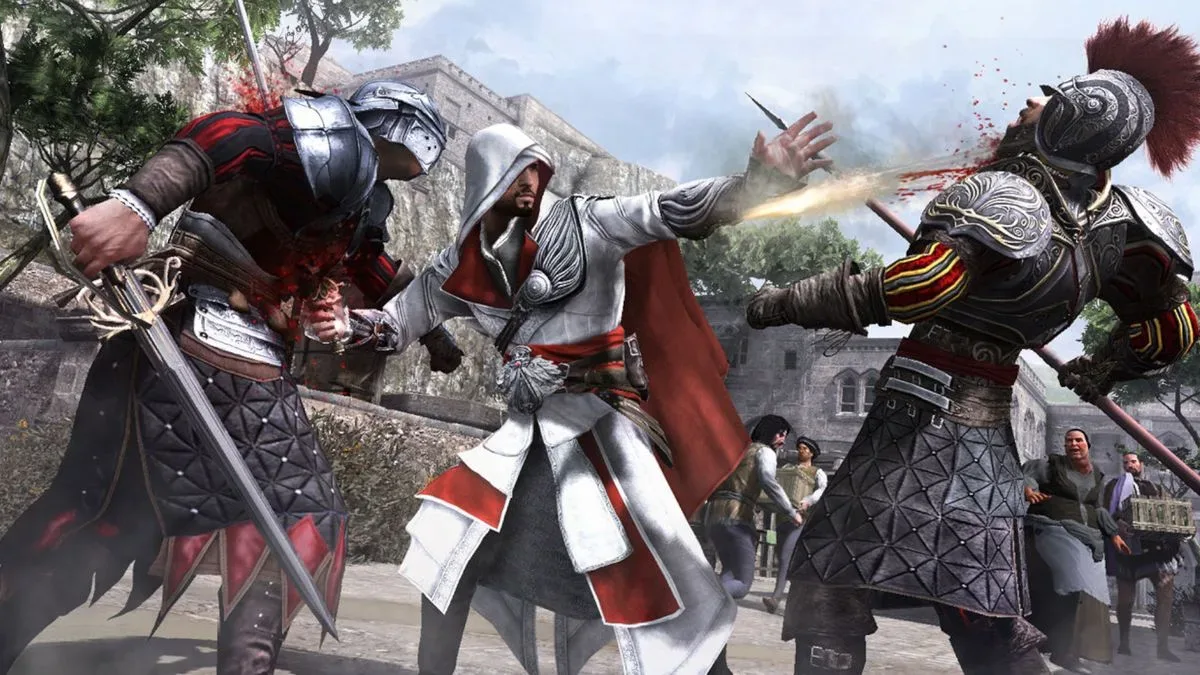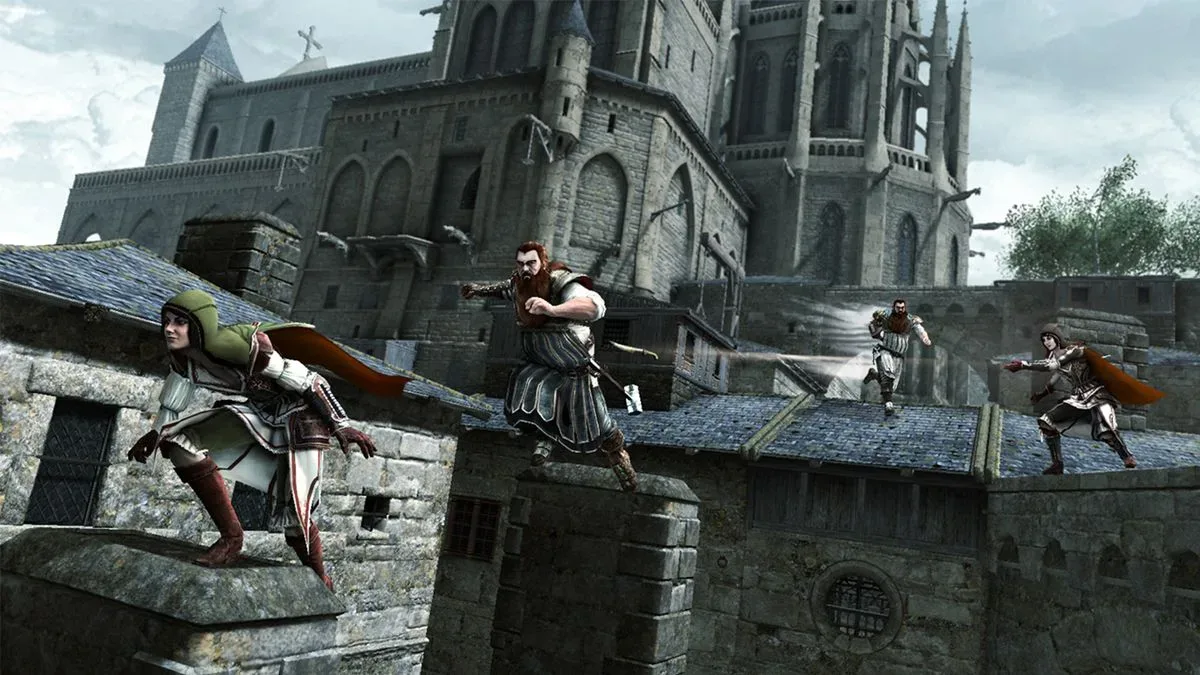
There is a particular kind of open-world fatigue that sets in when a map is full of symbols but the player’s actions leave no visible mark on the place itself. Assassin’s Creed Brotherhood remains an unusually useful counterexample. Its individual ingredients are familiar now: climbable landmarks, districts to liberate, shops to restore, disposable income to collect and a growing list of activities. But the game’s achievement was not inventing every one of those pieces. It was making them point in the same direction.
In Brotherhood’s Rome, Ezio Auditore’s campaign against the Borgia is not confined to cutscenes and assassination targets. As players dismantle Borgia control, the city’s practical and visual state changes. Map visibility, stealth challenges, economic recovery and narrative purpose are tied together. That makes a routine that could have been pure checklist management feel like a campaign of reclamation.
That coherence is why the game has such a large shadow over discussions of Ubisoft-style open worlds. The basic vocabulary has been repeated so widely that it can be easy to dismiss it on sight. Yet repetition is not the same thing as understanding why an idea worked. Brotherhood’s role in shaping Ubisoft’s open-world template is best understood not as a story of towers alone, but of systems giving one another purpose.
Rome is a game board that reacts
The first Assassin’s Creed established the series’ signature act of ascending high points to reveal nearby map information. It was an effective way to frame navigation and sightseeing, even if the logic was always a little strange: standing on a city’s tallest structure does not literally make its errands suddenly materialize below. By the time of Brotherhood, the formula needed more than another scenic panorama.
For more context, explore Drake’s “Quebec” Video Is Private on YouTube, With No Confirmed Reason Yet.
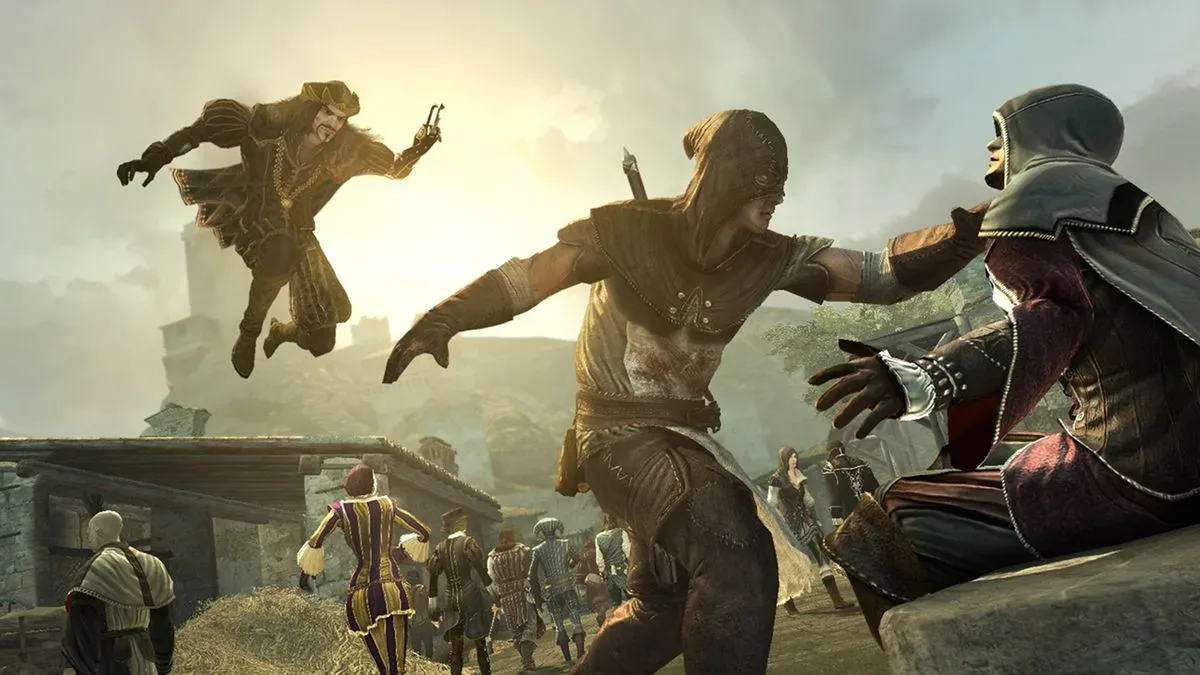
Its answer was the Borgia tower. These structures still function as viewpoints, but access is made into a small operation. Players must deal with guards, locate and eliminate the local captain, climb the tower and destroy it. Clearing one exposes activities in the surrounding area, yet it also represents the removal of a specific occupying force. The unlock is no longer merely an interface event. It is the conclusion of a local struggle.
The design becomes more interesting because failure has consequences. If Ezio is detected, the captain may run for safety. A captain who reaches the safe room cannot simply be pursued through the door; the player must wait for a later guard rotation at dawn or dusk to make another attempt. This is not an instant-fail stealth rule, and it does not force every encounter into perfection. Instead, it places a meaningful cost on being careless while preserving the player’s ability to recover.
That distinction is important. Flexible stealth means a game supports stealth as a preferred approach without treating detection as automatic mission failure. Brotherhood’s tower spaces—dense with cover, corners and guards—allow an approach to unravel into combat. But they also make a quiet clearance materially better because it prevents the most important target from escaping. The system gives stealth stakes without making it brittle.
In many open-world games, an activity’s reward is external: experience points, crafting materials, a new icon or a completion percentage. Brotherhood adds an internal reward: the sense that an oppressive part of Rome has actually been weakened. Burning a tower is theatrically direct, perhaps, but that directness matters. The player sees the change, and the game subsequently builds on it.
The restoration loop makes progress legible
After Borgia influence is removed from an area, Ezio can renovate shuttered businesses. Those businesses then provide periodic income. At its simplest, this is an economic loop: spend money to create a later revenue stream. But it does more work than a passive-income mechanic.
A gameplay loop is the recurring chain of actions and rewards that encourages players to keep engaging: do a task, receive a benefit, gain capacity to do more tasks. Brotherhood’s loop links liberation, renovation and tribute. First, players reduce Borgia control. Then they help reopen parts of the city. Finally, those restored businesses return money over time. Every stage reinforces the same fiction of rebuilding Rome’s civic life.
This is why the system feels more substantial than a shop menu pasted onto a map. The city’s recovery is represented in both story terms and practical terms. Other reconstruction efforts are also tied to the narrative, including work that creates bases for Ezio’s allies and gives members of his family somewhere to remain hidden. The effect is cumulative: the player is not just purchasing upgrades; they are establishing a network and making room for it to function.
That is a useful design lesson for any game using territorial control. Capturing an outpost is more persuasive when it changes what a place means, not simply what the player can harvest from it. A map-clearing task gains weight when it affects social spaces, traversal, opposition, income or the story’s stated conflict. Brotherhood does not eliminate repetition, but it gives its repetition a narrative grammar.
Ezio gives the systems a human centre
Brotherhood also benefits enormously from where it begins. As the middle chapter of Ezio’s trilogy, it follows directly from Assassin’s Creed II. The game does not spend its opening establishing a complete stranger or slowly granting the most basic abilities. Ezio starts capable, equipped with his prior endgame gear and backed by a large health bar. The opening quickly overturns that comfort when a Borgia assault devastates Monteriggioni, scatters or kills people close to him, and sends him to Rome.
It is a familiar structural move for a sequel to take power away, but Brotherhood wraps it into a rapidly advancing plot rather than isolating it as a mechanical reset. The player receives a sense of continuation before the game makes a case for rebuilding. That sequence helps explain why its steady introduction of mechanics does not feel entirely detached from the story.
Tutorialization—the gradual teaching of a game’s controls and systems—is often a weak point in large games because the designer must explain a great many functions before the player has reasons to care about them. Brotherhood has plenty to teach, and new systems continue to appear well into its opening hours. Its relative strength is that these lessons arrive alongside Ezio’s urgent reconstruction of his position in Rome. A new action is usually not presented as an abstract command to memorize; it is part of reclaiming territory, developing allies or pursuing the Borgia.
That does not mean every tutorial becomes invisible. It means context softens the friction. The game understands that systems are more memorable when their first use answers a dramatic problem.
The Brotherhood system thinks beyond the street
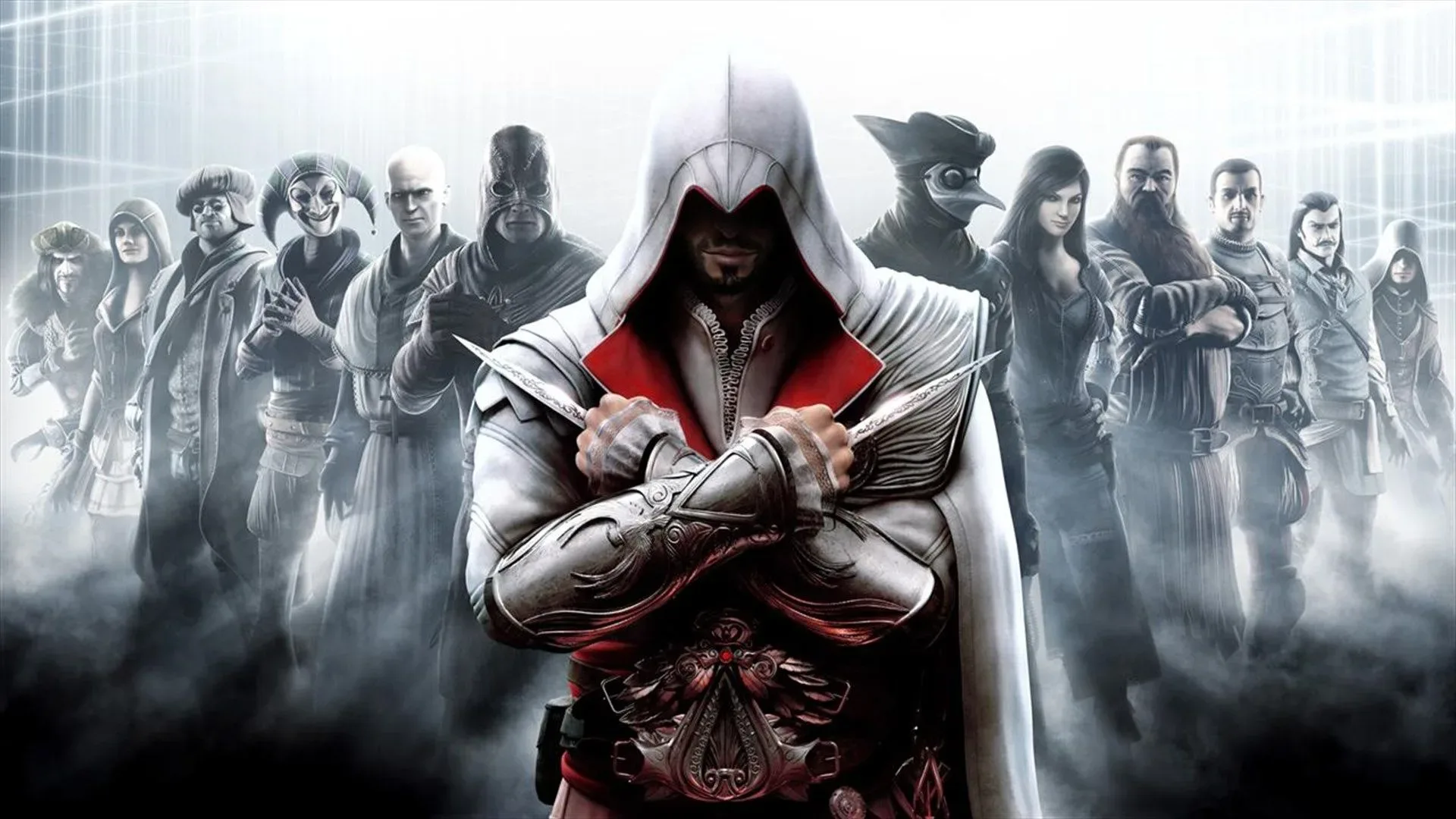
The title’s most distinctive idea is arguably the recruit system. Ezio can bring new Assassins into the Brotherhood and send them on assignments across Europe. This is a metagame: a layer of decision-making that sits alongside the immediate action of climbing, sneaking and fighting. The player is managing a wider organization rather than only controlling Ezio moment to moment.
Crucially, the recruits are not just an unrelated menu minigame. Their assignments extend the same idea already expressed in Rome: Ezio’s work is meant to grow a resistance capable of acting beyond his direct reach. The mechanic turns the word “Brotherhood” into an active proposition. The player is not simply a lone assassin with a growing inventory. They are building an institution.
That expansion of scale gives Brotherhood a satisfying rhythm. Rome supplies the tactile, street-level work: rooftops, patrols, captains, towers and businesses. The recruit system provides a strategic horizon beyond the city. One supports the other. Local victories make the broader organization feel earned, while the broader organization makes local victories feel like part of more than personal revenge.
The system later disappeared for a time and returned in a different form as a mobile companion feature for Assassin’s Creed Unity. Its original impact nevertheless illustrates the difference between a feature that is thematically embedded and a feature that merely increases the volume of things to manage.
A city that supports the fantasy
Rome is more than a delivery mechanism for objectives. Its recognizable architecture, dense streets and prominent landmarks support the series’ blend of historical setting and parkour fantasy. Buildings are not simply decorative backdrops; they are climbing routes, escape paths, lookout points and stages for stalking targets. As Borgia presence diminishes, the city becomes easier to appreciate as a place rather than solely as a guarded obstacle course.
The score by Jesper Kyd contributes to that atmosphere with a restrained, otherworldly character. The result is a Rome that feels grounded in a real, still-standing city while retaining the estrangement required by Assassin’s Creed’s historical-fiction premise. Later entries may offer different eras and larger spaces, but Brotherhood demonstrates the value of a concentrated urban environment where missions, traversal and mood reinforce each other.
Its crowds have a more practical role too. They populate streets, provide concealment and reinforce the feeling that Ezio operates inside a living city. The game is not pretending every passerby has a deep simulated life. Its stronger trick is simpler: the crowd serves both atmosphere and stealth, making the mechanical purpose of public space clear.
What its legacy gets wrong—and right
Brotherhood’s legacy can provoke eye-rolling because later games, within and beyond Assassin’s Creed, made familiar routines out of unlocking regions, taking over strongholds and accumulating side activities. The criticism is understandable. When a pattern is reproduced without a strong relationship to its setting or story, it can become visible as production machinery: a list of tasks built to fill a large map.
But Brotherhood should not be reduced to the origin point of “icons everywhere.” Its better idea is more demanding than that. It asks designers to make their progression systems agree with one another. The tower changes map access, stealth stakes and political control. The liberation enables restoration. Restoration creates income and conveys recovery. Recruitment turns individual success into a broader movement. Ezio’s personal conflict supplies the emotional reason for all of it.
That is why the game remains worth revisiting as a design case study even when some of its once-fresh elements have been worn down by imitation. Its enduring strength is not sheer size, nor historical tourism, nor a pile of separate diversions. It is the rare feeling that almost every major system is helping tell the same story: Rome is under pressure, and the player can meaningfully push back.