Major spoilers for The Witcher 3 quest “A Towerful of Mice” follow.
There is a particular kind of confidence in letting a side quest be sad. Not heroic-sad, with a swelling speech and an obvious moral, but the lingering kind: a story that ends, pays out its objective, and leaves the place behind it feeling no less lonely. “A Towerful of Mice,” one of The Witcher 3’s early quests during Keira Metz’s Velen storyline, understands that feeling perfectly.
The setup is recognizable before it becomes unsettling. Superstitious locals want a curse lifted from Fyke Isle. Keira, a sorceress keeping a low profile while mage hunters operate across the land, needs Geralt to investigate. The recommended level is six, which positions the quest relatively early in the adventure. Yet it does not feel slight. It takes a few classic Gothic ingredients—a fog-bound island, a decaying tower, frightened villagers, an angry mob, doomed lovers and a supernatural curse—and arranges them into a story that feels far larger than its immediate assignment.
That is the impressive trick. The player is not merely sent to clear an enemy-infested location or retrieve an object. The quest makes Fyke Isle feel like a place where something terrible happened, then asks Geralt to determine what the tragedy means now. Combat and investigation are present, but the real tension comes from uncertainty: whether the ghost at the center of the island is a victim, a villain, or both.
Fyke Isle does the work before the revelation
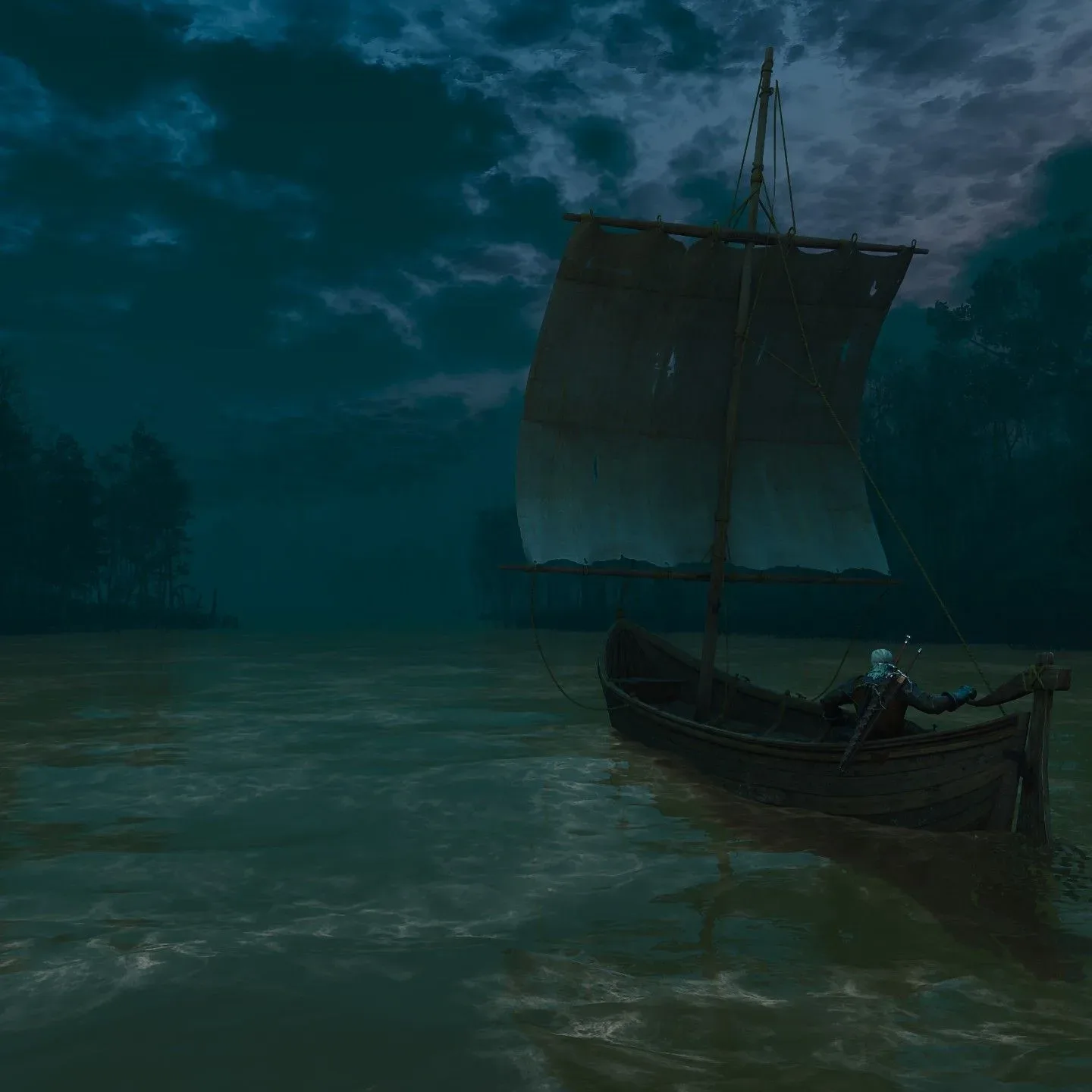
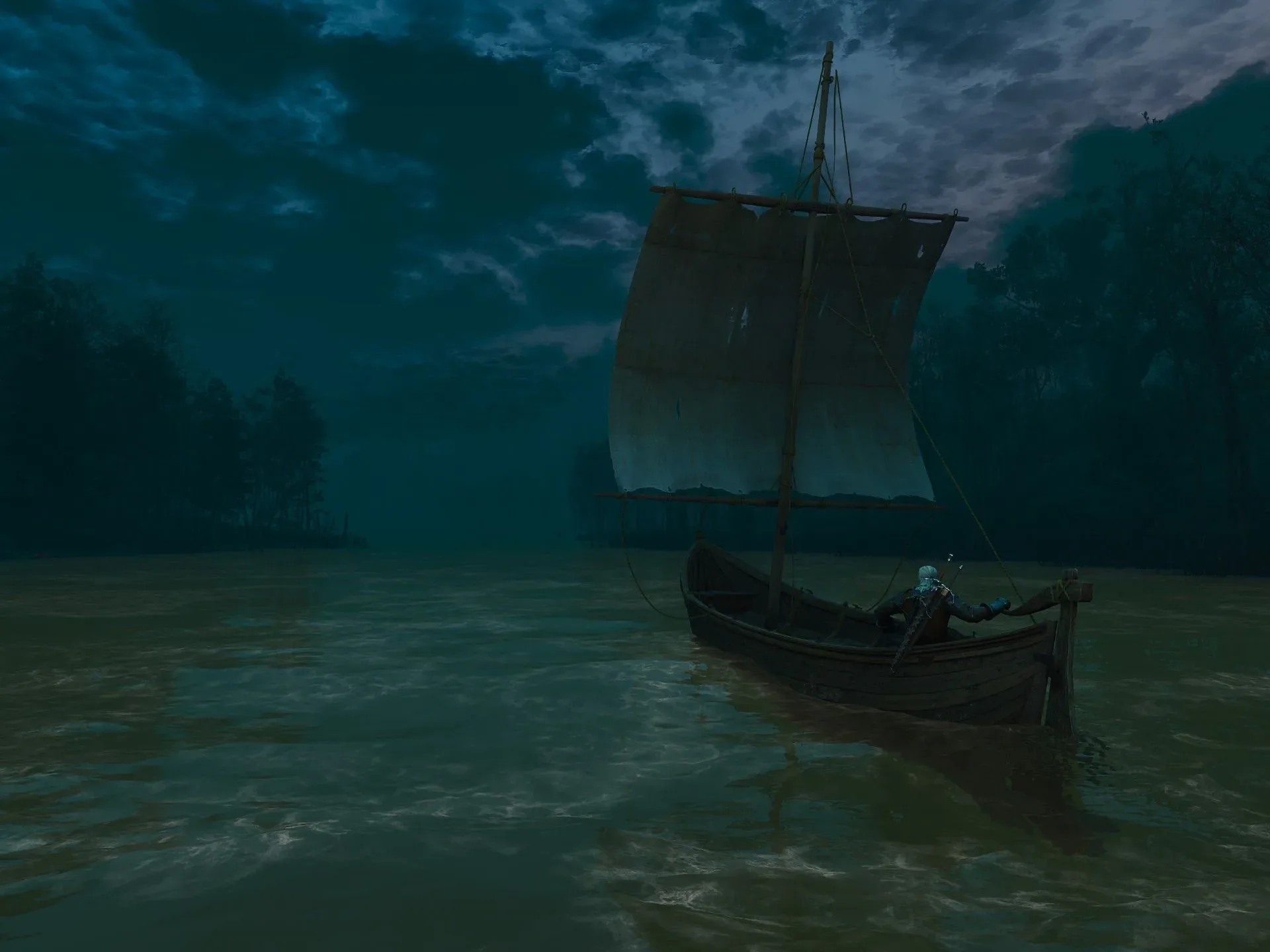
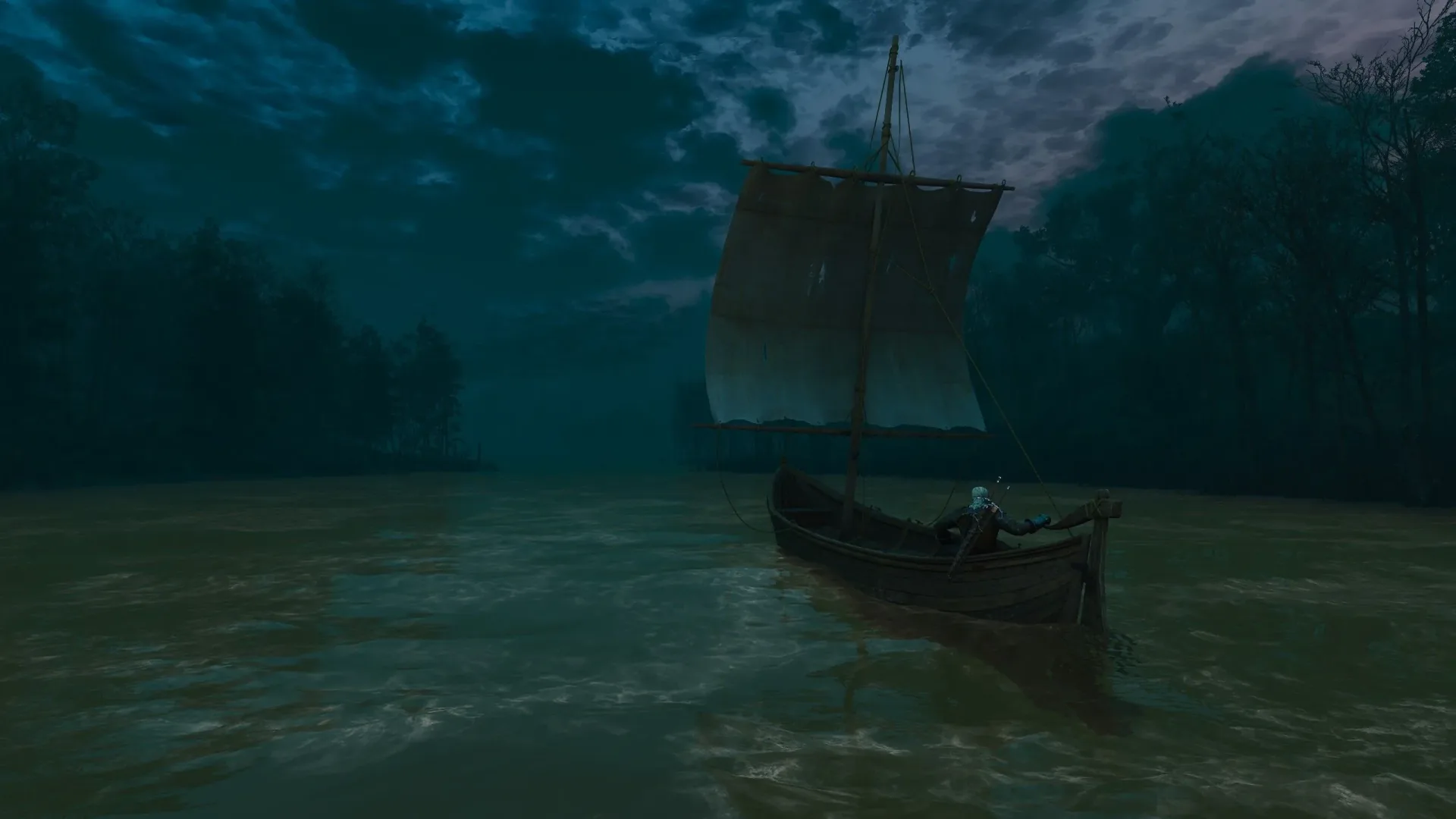
Atmosphere is not simply decorative in “A Towerful of Mice.” The approach to Fyke Isle establishes the emotional rules of the quest before Geralt reaches the tower. Fog, dark woods and the sparse light around the river make the crossing feel isolated. A pale drowner briefly appearing amid the trees is the kind of small visual disturbance that tells a player this is not a normal job, even by Witcher standards.
Inside the tower, the details build dread without initially explaining it. In the basement, spectral peasants question why there are cages full of rats. Higher up, the nobleman’s daughter pleads with her father to aid the locals. An unseen warning announces the arrival of an angry crowd, and the ghostly scene disappears. The present-day evidence is equally grim: a skeleton remains beneath the chair where the nobleman had sat.
Those fragments matter because they make the tower feel less like a conventional dungeon and more like a damaged memory. Each floor supplies another piece, while the physical climb creates a useful sense of inevitability. Geralt is moving upward, but the story is moving downward into the catastrophe hidden at the top.
Gothic horror, in this context, is more than cobwebs, ghosts and a gloomy building. It is a mode of horror in which a location carries the weight of buried history, family tragedy and social violence. The tower is haunted, but it is also a record of the gulf between its noble residents and desperate locals. The rats are not only monsters or gross scenery; they are part of the event that turned human cruelty into a supernatural curse.
Related coverage includes The Witcher 3's 'A Towerful of Mice' Remains a Masterclass in Gothic Side-Quest Horror.
That focus gives the quest more in common with traditional haunted-house fiction than with a simple monster contract. The comparison to works such as The Turn of the Screw and The Haunting of Hill House fits because the fear is rooted in what the past has done to a space—and in the inability to cleanly separate loss, guilt and menace.
The investigation becomes a test of judgment
At the top of the tower, Geralt finds a hidden laboratory and encounters Anabelle, the nobleman’s daughter. Her account is horrific. Facing the mob, she took a paralyzing potion disguised as poison. The crowd eventually left, but she woke much later unable to move, only to be eaten alive by rats. She believed her lover Graham had abandoned her, though he had been with the mob while trying to stop what was happening.
It is an effective revelation partly because Anabelle’s story is coherent. The player has already seen the rats, the remnants of the uprising, the tower and its dead. Her explanation connects those pieces. But coherence is not proof, and the quest asks the player to pay attention to that distinction.
Anabelle first asks Geralt to take her remains to Graham for burial, saying that this will end the curse. Geralt can refuse. She then proposes another route: bring Graham to the tower so that he can seek her forgiveness. Neither path is framed as a triumphal “good choice.” Instead, the scene uses the player’s suspicion as part of the drama. A request can sound reasonable and still conceal a threat.
This is where the quest’s writing earns its reputation. The choice is not built around a broad political alignment, a prominent faction, or a visibly labeled morality meter. It emerges from interpretation. Is Anabelle trustworthy? Is her grief genuine? Does the evidence support her version of events? Geralt’s job, and the player’s, is not just to kill a supernatural being. It is to read a painful situation accurately enough to decide what risk is acceptable.
That compact design is a useful reminder of why side quests can be so effective in role-playing games. The main plot often carries too much structural responsibility: it must keep moving, establish major stakes and service many characters. A smaller quest can instead concentrate on one location, one mystery and one irreversible emotional outcome. The choice has force not because it changes the fate of a kingdom, but because it concerns people whose suffering the player has personally reconstructed.
That attention to specific, contained stories is also part of the broader appeal of RPG world-building. Even a discussion of detailed lore in Oblivion points to the same fundamental idea: a world becomes convincing when its stories feel more particular than the player’s immediate checklist.
A romance becomes the final scare
Graham agrees to return to Fyke Isle. He remains traumatized by the night of the mob, but he is willing to help put Anabelle to rest. The quest then takes its cruelest turn. Back in the laboratory, Anabelle reveals her actual form: a Plague Maiden, jawless and decayed, with sunken skin and a tendrilled tongue.
A Plague Maiden here is not merely a creature encounter. It is the visual and supernatural expression of Anabelle’s unresolved death. Her appearance revises the player’s understanding of everything that came before. The victim has not been replaced by a monster; rather, the story insists that victimhood, resentment and danger can coexist in the same figure.
The apparent solution is brutally intimate. Graham must prove that he still loves Anabelle by kissing her. The scene’s horror is not driven by a sudden battle or a complex mechanical challenge. Its power comes from watching a frightened person make a choice that the audience understands may be fatal. The moonlight on Graham’s exposed neck, his gradual approach, and the knowledge of what Anabelle really is all turn a familiar romantic gesture into a moment of sustained dread.
Then the quest offers its poisoned version of a happy ending. For a brief moment, Anabelle appears young again. The curse is lifted. Graham, however, is dead on the floor. Love has endured in one sense, but it has not rescued either person from the consequences of the past.
This is the Gothic flourish that makes the quest memorable. “True love wins” is usually a promise of restoration. Here it is an ending that resolves the supernatural problem while refusing emotional comfort. Geralt can complete the job, but neither the island nor its history is redeemed. Fyke Isle remains a place shaped by fear, class resentment, abandonment and death.
Why the quest remains larger than its objective marker
“A Towerful of Mice” demonstrates how much a game can do when it treats optional material as narrative rather than interruption. Its structure is clean: Keira provides the reason to investigate; the island establishes unease; the tower reveals the past in fragments; Anabelle presents a persuasive account; the player evaluates it; Graham’s return delivers the resolution. But none of that structure feels mechanical because the quest continually changes the meaning of its own evidence.
The rats initially suggest a disgusting environmental hazard. Later, they become the mechanism of Anabelle’s death. The ghostly memories first look like background exposition, then form an argument about what the mob did and why. Graham begins as an absent lover, becomes a participant in the mob, and ultimately proves willing to return. Anabelle appears as a wronged daughter seeking release before the Plague Maiden reveal recasts her request as something far more dangerous.
That process is what makes the ending sting. The game does not need to announce that the player should feel grief. It has made the player walk through a tower full of evidence, listen to testimony, and participate in the attempt to resolve a relationship that was broken long before Geralt arrived. The final outcome is sad because the player understands the shape of the loss.
There is a practical lesson for players revisiting the quest, too: slow down. Read the scenes in the tower, notice the rats, and treat Anabelle’s explanation as testimony rather than an instruction. This is not advice about pursuing a preferred outcome so much as an invitation to engage with what the quest is actually built around: observation, uncertainty and moral discomfort.
For an early Velen story, “A Towerful of Mice” is remarkably complete. It offers a haunted setting, a mystery that rewards skepticism, a monster design inseparable from the plot, and an ending that chooses melancholy over celebration. Geralt leaves with the curse lifted, yet the island never feels cleansed. That is exactly why it stays with players: for a short stretch of time, Fyke Isle stops being a quest location and becomes a tragedy.