Patrick Stewart’s performance as Emperor Uriel Septim VII occupies only a small portion of The Elder Scrolls IV: Oblivion, but the character’s introduction carries an outsized weight. Before the player is released into Cyrodiil, Uriel is the ruler who frames the crisis, speaks with the unmistakable authority of Stewart’s voice, and sets the story’s central succession drama in motion.
A behind-the-scenes documentary made during Oblivion’s development offers a particularly revealing account of how seriously Bethesda approached that short role. The team gave Stewart a lengthy briefing on Uriel’s history and place in the wider Elder Scrolls setting—material Todd Howard initially felt may have been excessive. Stewart’s response was not impatience. He reportedly said it was the most detailed set of role notes he had received, praised the work that had gone into them, and expressed excitement about recording the part.
It is a small production anecdote, but it says a great deal about what made the performance land. Bethesda did not treat a famous actor’s involvement as a shortcut around the work of characterization. Instead, the developers supplied the context needed for Stewart to understand the Emperor beyond the lines on a recording page.
A brief appearance built on years of fictional history
Uriel Septim VII does not remain a constant companion through Oblivion. His role is concentrated at the beginning of the game, and he dies before the tutorial sequence is over. That economy makes each scene matter: players need to quickly understand that this is a commanding, burdened figure whose death will have consequences for the world around them.
The team’s substantial notes make more sense when viewed through the character’s inherited history. Uriel had already been established across the earlier Elder Scrolls games. In a long-running fictional setting, that accumulated background is commonly called lore: the characters, events, institutions, places, beliefs, and political connections that define how a world fits together. Lore is not automatically useful merely because it is extensive. For a performer, its practical value is that it can clarify what a character knows, fears, values, remembers, or wants in a given moment.
That was evidently Bethesda’s intent with Stewart. Lead designer Ken Rolston prepared the lengthy character material, and Howard later recalled feeling embarrassed by its size before it was sent. But Uriel’s role required more than a generic delivery of royal-sounding dialogue. The Emperor’s scenes had to establish conviction, vulnerability, authority and a sense of history in very little screen time.
Stewart’s enthusiasm was therefore meaningful on two levels. It affirmed that the volume of background had a creative purpose, and it gave the development team confidence that a performer renowned for major film and television roles recognized the thought behind the material.
Why the recording session meant so much to Bethesda
The documentary also captures developers hearing Stewart’s recording for the first time. Rolston described the effect as similar to a reverend addressing a congregation—the exact kind of commanding tone he had hoped the role would have. The comparison is useful because it is about more than volume or formality. A character like Uriel must sound as though people have followed him, feared him, and believed in him. Stewart could make that authority feel immediate.
Related coverage includes Patrick Stewart's Oblivion Role Was Powered by Bethesda's Remarkably Detailed Lore.
Designer Mark Nelson’s reaction underlines the difference an actor’s delivery can make. On hearing Stewart perform the line about generals and kings kneeling at the Emperor’s command, Nelson acknowledged that it was a line that could read as cheesy, yet worked when Stewart spoke it. That is a precise observation about performance: dialogue on a page is only one part of the final effect. Timing, emphasis, restraint, vocal texture and the performer’s command of a sentence all shape whether a heightened fantasy line feels grand or merely exaggerated.
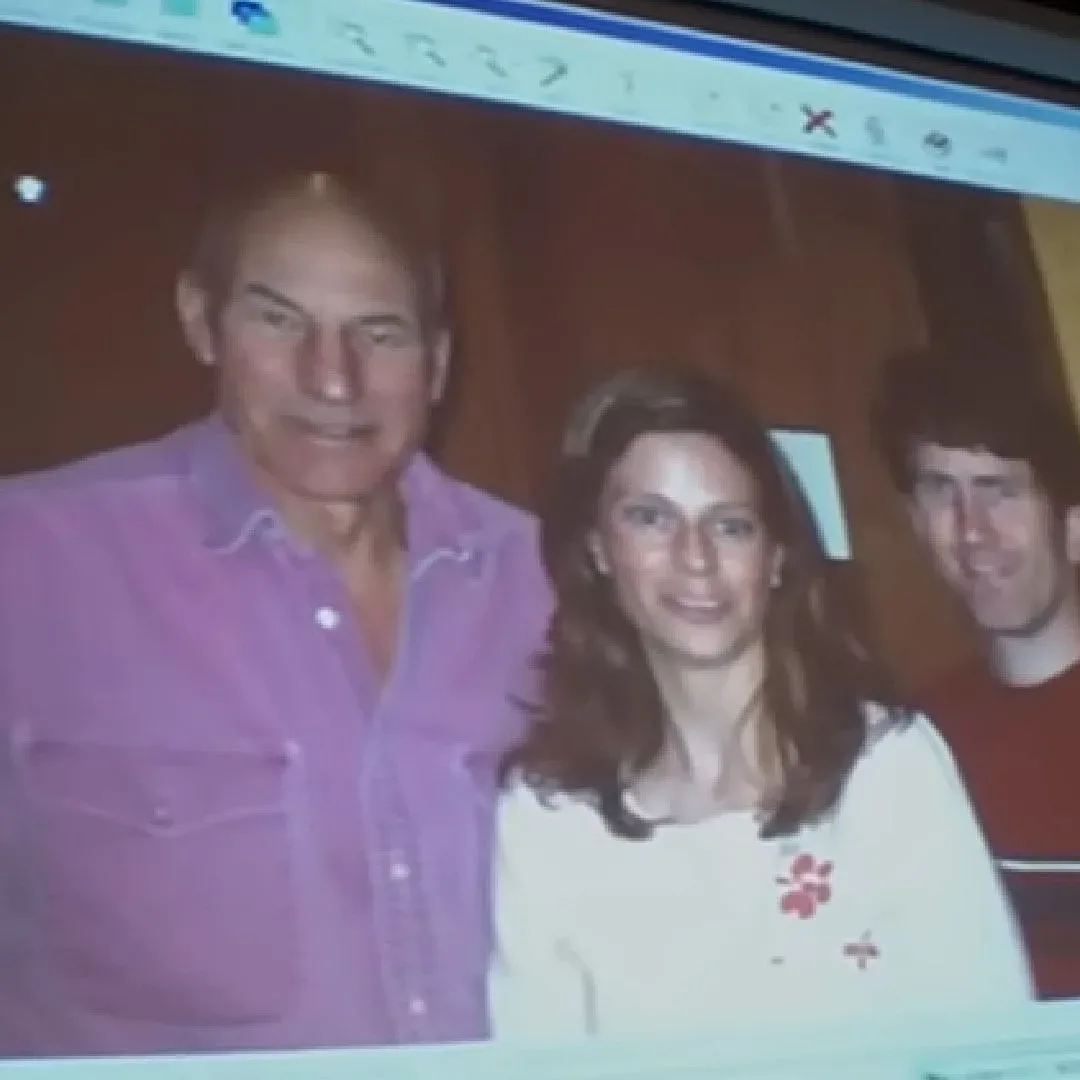
Nelson also made clear that the casting had personal resonance for the developers. He recalled watching Star Trek with friends in college and even showed a worn photo of Stewart that he kept in his wallet. The moment is funny, including Nelson’s admission that his wife might not appreciate the comparison, but it also captures the genuine disbelief in the room. A group of developers who had grown up admiring Stewart’s science-fiction work were now listening to him perform dialogue they had written.
The significance of a major actor in a changing games business
The recording took place at a period when Bethesda was moving beyond its reputation for more specialized, demanding PC role-playing games toward a broader audience. Even the documentary reflects an industry still concerned with the old assumption that games were chiefly children’s toys. Against that backdrop, an actor of Stewart’s stature appearing in a fantasy RPG had clear symbolic importance for the team.
Still, the story is more interesting than a simple tale of celebrity casting. A recognizable name can attract attention, but it cannot by itself make a fictional ruler persuasive. Bethesda’s approach connected the casting to its writing and worldbuilding. The developers prepared the background; Stewart engaged with it; and the recorded scenes gave the opening of Oblivion an intensity that the team felt immediately.
That division of labor is worth separating clearly. Voice acting is not just the technical act of reading lines into a microphone. In narrative games, it is a performance shaped by direction, writing, character research and the structure of the scene. Meanwhile, worldbuilding is not simply a pile of invented facts. At its strongest, it gives artists, writers, designers and performers a shared understanding of what the world means. The Uriel Septim material appears to have done exactly that.
What the anecdote reveals about concise game storytelling
Oblivion gives Uriel a limited amount of time, which makes the decision to send extensive notes especially instructive. The team was not preparing Stewart for dozens of hours as the player’s constant companion. They were trying to make a few scenes feel like they were attached to a much larger reality.
For players, that work can be almost invisible. They may not know the full history behind the Emperor, nor need to. What they experience is the result: a ruler who seems to arrive from a world that existed before the player entered it. This is one of the central tricks of effective fantasy storytelling. The audience does not have to be shown every piece of a setting’s history for the history to influence the present scene.
It is also why extensive briefing materials should not be confused with exposition. Exposition is information directly presented to the audience. Research and character notes are information supplied to creators so they can make more grounded decisions. Stewart did not need to recite every detail Bethesda gave him. He could instead use that understanding to inform the cadence and feeling of Uriel’s words.
The preserved footage gives the anecdote an added value: it records a development team’s unguarded reaction before the game’s place in RPG history was fully established. Howard’s worry that the notes were too long, Rolston’s satisfaction at the vocal tone, and Nelson’s fan-like delight all show a group of people measuring their own work against an actor they greatly admired.
A lasting snapshot of Stewart’s game work
Stewart appeared in several games over the years, but Uriel Septim VII remains his most prominent game role. His death at 86 has led fans to revisit stories from across his career, including this one from Oblivion’s original 2006 Collector’s Edition bonus DVD. The surviving documentary makes the recollection more than secondhand legend: it shows how much the opportunity meant to Bethesda’s staff and why the performance made such an impact.
There is a practical lesson in the memory for game teams, too. Big-name casting is most valuable when it is accompanied by a clear creative relationship between performer and material. Give the actor the reason behind the line, not merely the line itself. For Uriel Septim VII, Bethesda’s detailed preparation helped create a performance with enough gravity to make a brief tutorial appearance feel foundational.
That approach remains relevant as studios continue to pursue ambitious stories and recognizable performers. The industry’s current pressures often center on sustainability and long-range planning, as seen in discussions around how live-service teams are framing enduring game worlds. Bethesda’s old documentary points to a simpler but durable principle: a world feels convincing when the people bringing it to life are given enough context to believe in it themselves.