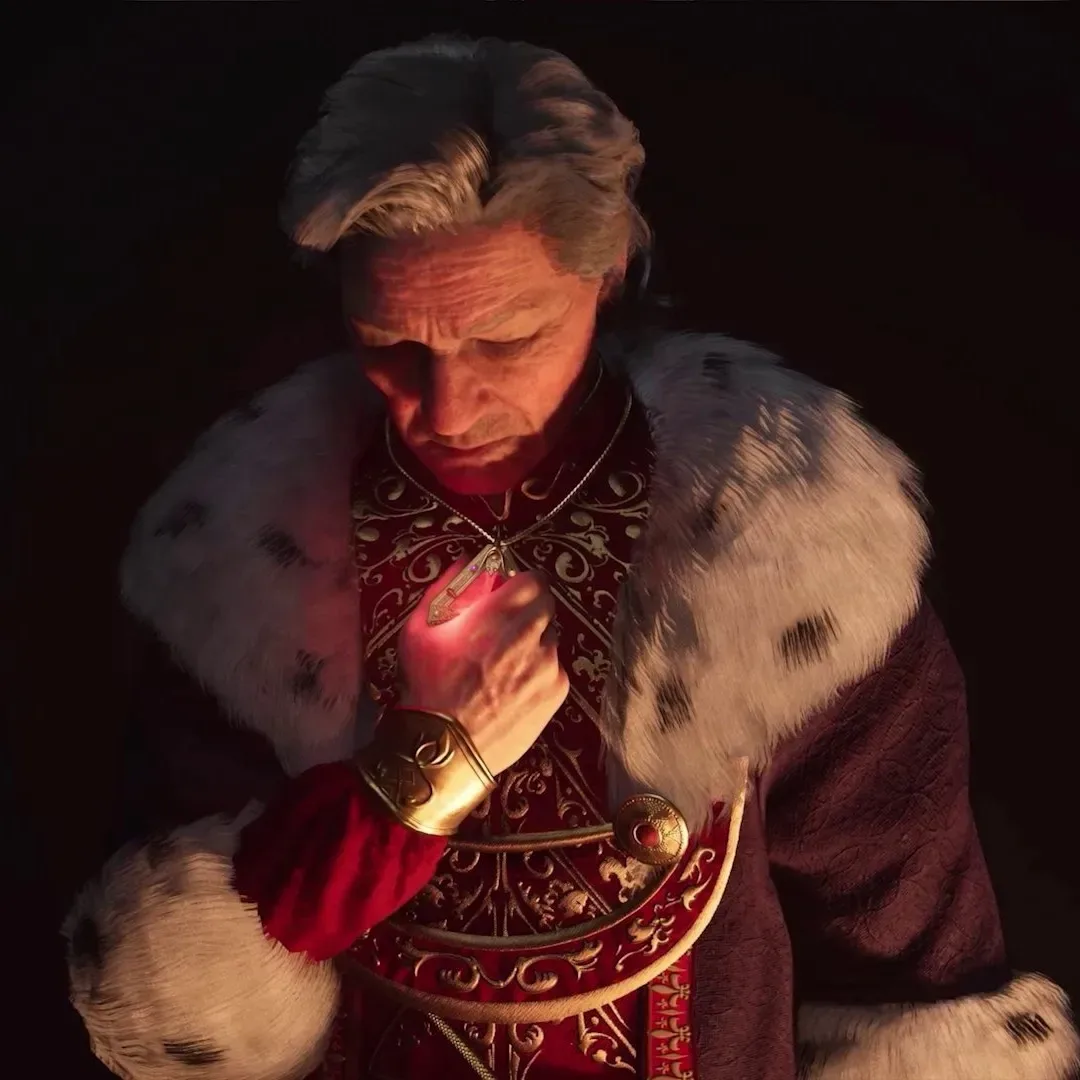
Bethesda has honored Sir Patrick Stewart following reports of the actor’s death at age 86, recognizing a performance that occupies only a small fraction of The Elder Scrolls IV: Oblivion but remains central to how many players remember its first moments.
Stewart played Emperor Uriel Septim VII, the ruler who introduces players to Cyrodiil and to the danger hanging over the realm. The character is killed near the beginning of the game, meaning Stewart’s actual screen time is limited. Yet the role’s placement gives it unusual weight: Uriel is the first major figure to frame the player’s journey, establish the stakes, and lend authority to a world the player is only beginning to understand.
In its tribute, Bethesda called Stewart “an inspiration to us all.” The response from players has similarly focused less on the size of his part than on the effect it had. For a game whose opening begins in confinement and quickly becomes a political crisis, Stewart’s delivery gave the prologue a sense of ceremony and consequence before the player was released into the wider world.
A short role with an outsized place in Oblivion
Oblivion uses its opening to do several jobs at once. It introduces the player character, establishes the setting of Cyrodiil, sets the primary conflict in motion, and points the player toward an uncertain future after the emperor’s death. Uriel Septim VII is therefore not merely a familiar face placed in a cameo. He is the narrative handoff between an imperial order that is collapsing and the adventure that follows.
That is why the performance has endured even though it lasts for less than 10 minutes. In game storytelling, an opening performance can become inseparable from a player’s memory of the whole work. It is heard at a moment of high attention, before dozens of quests, locations, and characters compete for the player’s focus. Stewart’s measured voice and presence gave the emperor an immediate stature, making the loss feel significant even for players who had only just met him.
Fans responding to Bethesda’s message repeatedly described him as the ideal guide into Oblivion. Their point is not that the game depended on a celebrity name alone. Rather, the performance made a dense fantasy premise easier to enter. A player does not need extensive knowledge of the empire, its rulers, or its dangers to understand that Uriel’s words matter.
What “gravitas” means in this context
“Gravitas” is often used as shorthand for a performer’s ability to make dialogue feel serious and important without forcing it. In this case, it describes the authority Stewart brought to a ruler facing imminent danger. Fantasy games frequently ask actors to deliver formal dialogue, historical references, and high-stakes exposition. Those lines can sound overly theatrical if the performance does not make them feel grounded in the character’s situation.
Developers working on Oblivion reportedly recognized that risk. Behind-the-scenes footage from the making of the game shows members of the team listening to Stewart’s first recordings and responding enthusiastically to how he delivered lines they had worried might land poorly. It is a useful reminder that voice acting is not simply decorative polish added after a script is finished. The actor’s choices can determine whether an audience experiences exposition as information or as drama.
Related coverage includes Bethesda Honors Patrick Stewart's Lasting Oblivion Legacy.
The detail behind Uriel Septim VII
Bethesda’s preparation for the role also suggests that the studio treated Uriel as more than a quick introductory device. The development team reportedly assembled an extensive character document, said to run as long as 90 pages, covering the emperor’s background and details. Team members apparently wondered whether the material was excessive for a character with such limited time in the game.
Todd Howard, the game’s executive producer, said Stewart instead embraced the depth of the material and was eager to play the character. That response matters because it points to a collaborative approach that can improve even a concise role. The actor had enough context to understand who Uriel was, what his position meant, and why his final scenes carried urgency.
A character bible or background document is essentially internal reference material: a way for writers, designers, performers, and other contributors to work from a shared understanding of a fictional person or setting. Players may never see the document itself, and a game does not need to present every detail directly. Its value is in consistency. When an actor knows the emotional and political history behind a scene, the performance can imply a larger life without explaining every part of it aloud.
That appears to be part of why Uriel’s presence feels larger than his runtime. The emperor arrives with the confidence of somebody who belongs to a fully realized world, rather than a temporary character created solely to send the player toward the next objective.
The power of an opening voice
Stewart’s work in Oblivion illustrates a practical storytelling lesson for games: a limited performance can have a lasting influence when it sits at a pivotal structural point. An opening sequence establishes the emotional vocabulary of the hours ahead. It tells players whether a game wants to feel intimate, comic, mysterious, oppressive, grand, or some mixture of all of them.
For Oblivion, Uriel Septim VII helps establish a grave, mythic tone. His scenes also create contrast with the freedom that follows. Once players leave the early sequence behind, the game opens outward into exploration and choice. The memory of the emperor’s warning remains a narrative anchor amid that openness.
There is a production implication here as well. Major performers are often discussed in terms of how many lines they record or how much of a game they appear in. But the placement of those lines can be at least as consequential as the quantity. A few minutes at the beginning of a role-playing game can shape a player’s relationship with its premise more than a much longer appearance encountered late in an optional branch.
That does not mean every game needs celebrity casting, nor does it reduce an ensemble’s work to a single performance. It means that casting and direction are especially important when a game asks one character to introduce a world, establish its conflict, and make players care before they have had time to form their own attachments.
A wider body of game voice work
Although Uriel Septim VII is the role now being recalled most prominently by Oblivion players, Stewart’s game work extended beyond Cyrodiil. He reprised characters associated with Star Trek and X-Men in various video games, bringing established screen roles into interactive adaptations. He also performed voice work in Castlevania: Lords of Shadow, another prominent fantasy game.
Those credits underline the range of ways a celebrated screen actor can appear in games. Sometimes the task is continuity: preserving a character audiences already know from another medium. Sometimes it is world-building, as in Oblivion, where the actor lends a new character an immediate sense of history. And sometimes the performance becomes part of a game’s own identity, separate from the actor’s best-known film or television work.
Games are especially well suited to this kind of durable association because players do not merely watch an opening; they proceed from it. The player’s later decisions, discoveries, and setbacks all happen after the initial encounter with Uriel. As a result, Stewart’s brief performance can remain connected to a much longer personal memory of exploration in Oblivion.
Why the tribute resonates now
The reaction to Bethesda’s tribute is also a reminder that video-game legacies are not limited to protagonists or characters who remain visible throughout a campaign. A role can be small in technical terms and still become foundational in cultural memory. Players returning to the game years later may recall the emperor’s voice before they remember a particular quest, item, or location.
That staying power comes from the combination of writing, direction, timing, and performance. Bethesda supplied Uriel with substantial internal background despite the character’s limited screen time. Stewart reportedly welcomed that material. The game then placed the resulting performance in its most consequential narrative position: the doorway into its world.
Elsewhere in games, the industry continues to explore how stories from interactive works travel across media, including projects such as the planned film adaptation of indie horror game Mouthwashing. Stewart’s Oblivion role points in the opposite direction: an actor already famous for screen performances becoming inseparable, for many fans, from the beginning of a game.
Stewart’s family has encouraged those wishing to honor him to donate to the Johns Hopkins Alzheimer’s Disease Research Center Fund and the Alzheimer’s Foundation of America Caregiver Resources.