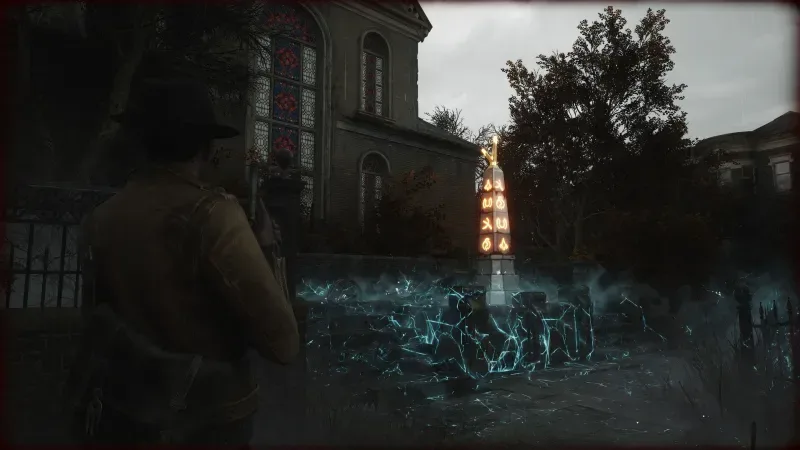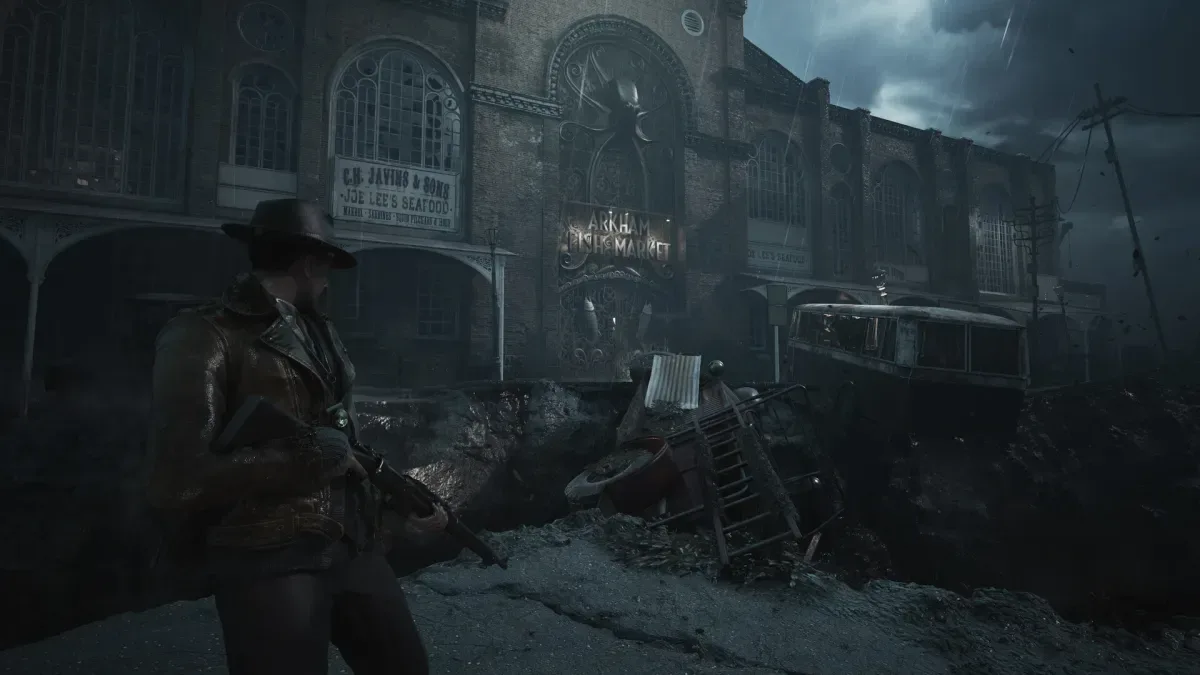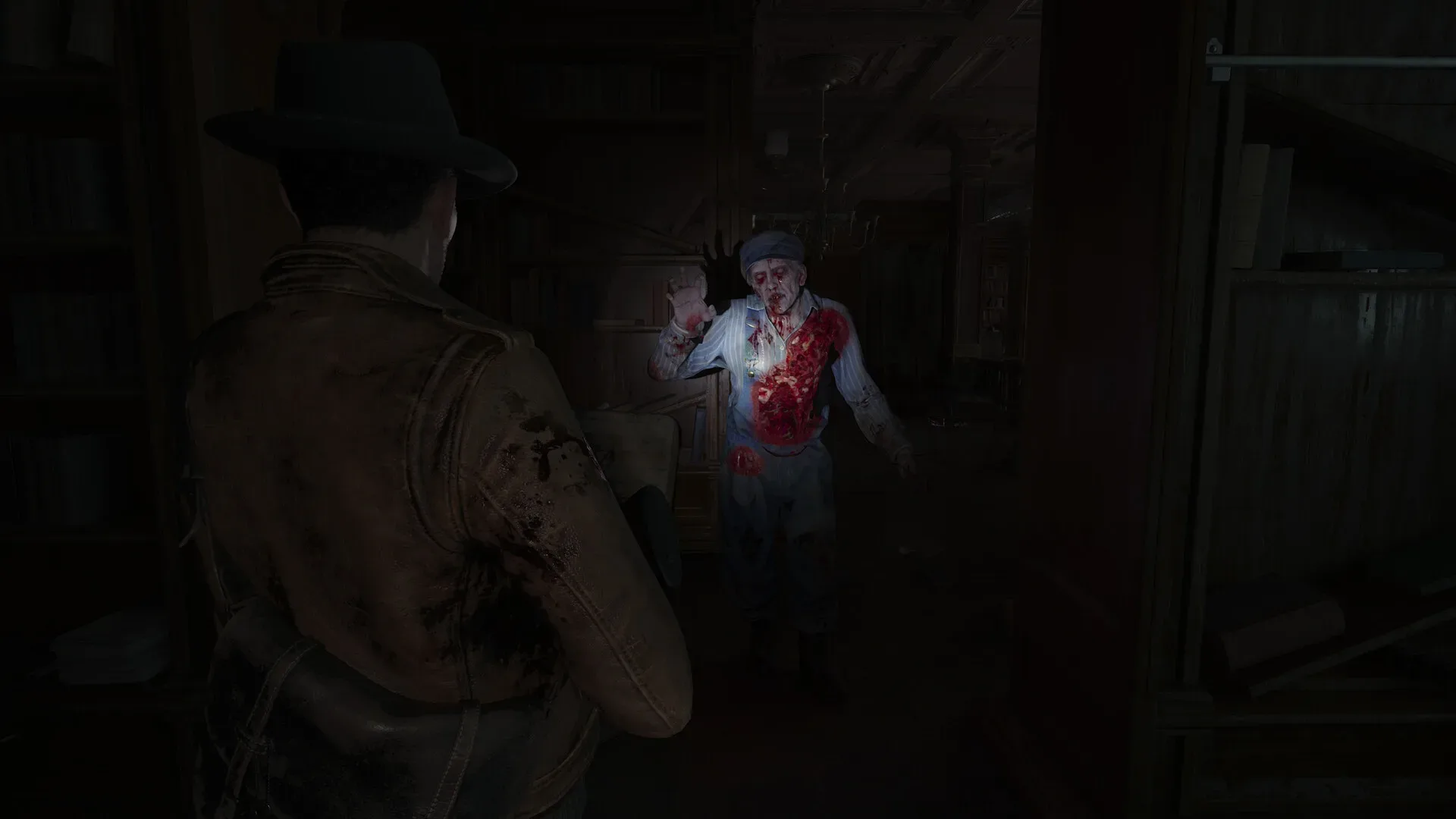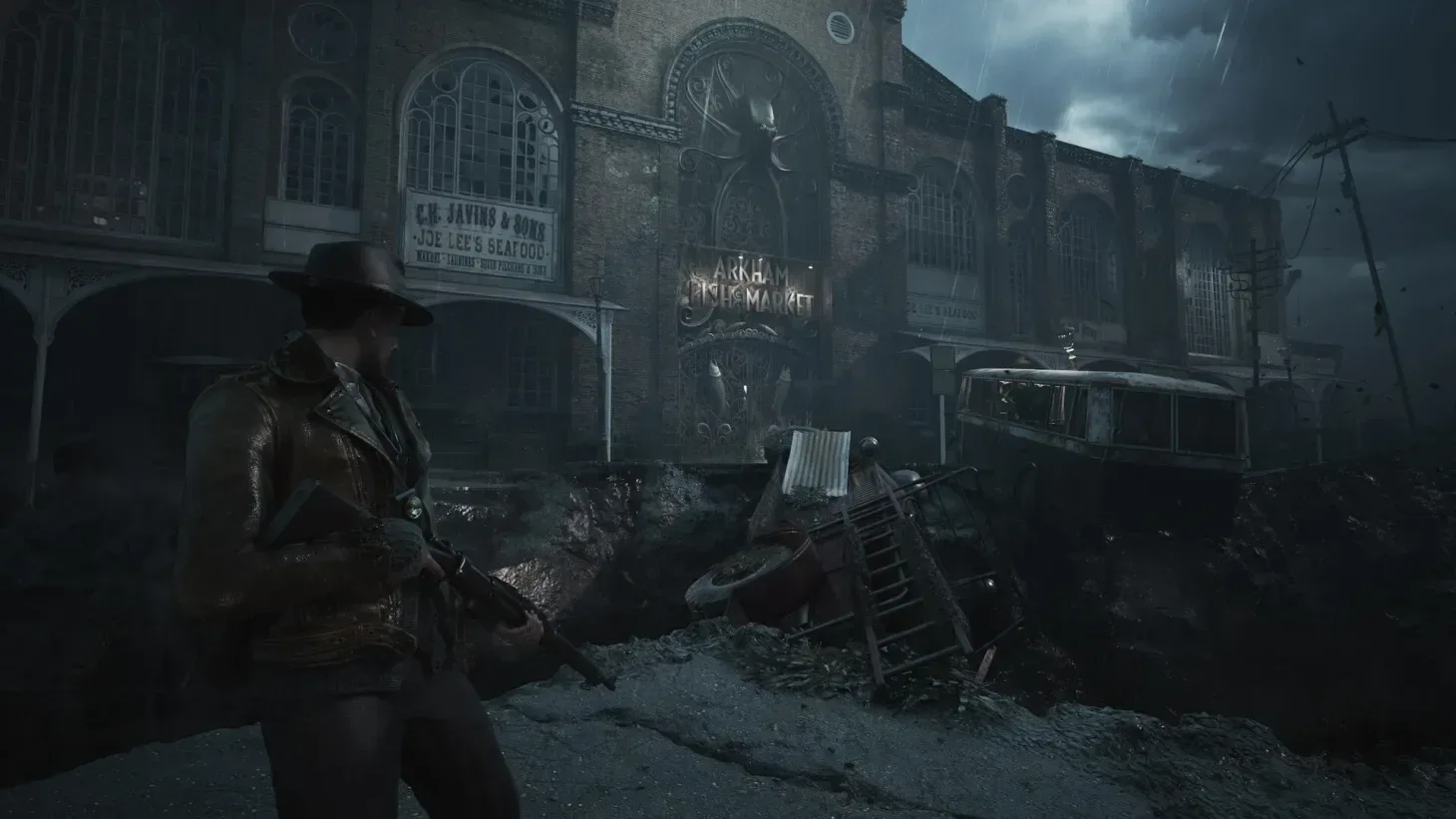
The Sinking City 2 knows how to make a city feel wrong. Its version of Arkham is flooded, rotting and packed with images that invite a long stare even when common sense says to keep moving. The game’s art direction, ominous soundscape and sudden shocks provide the strongest reason to visit. A motorboat ride through drowned streets can be strangely beautiful; a trek into a hospital or fish market can be wonderfully revolting. This is a survival-horror setting with a confident sense of texture.
That confidence does not spread evenly through the rest of the game. The sequel delivers a respectable, roughly 13-hour horror campaign whose puzzle work is often compelling, but it also leans hard on a familiar over-the-shoulder survival-horror blueprint without matching the responsiveness or impact that make the genre’s best systems sing. Combat works, technically. Progression exists, certainly. The narrative has a functional central mystery. Yet all three repeatedly feel less developed than Arkham’s drowned facades.
For players eager for a spooky, puzzle-led adventure, there is enough worthwhile material here to justify curiosity. For those looking for a new standard-bearer in survival horror, The Sinking City 2 is more likely to be remembered as a striking place to visit than a complete package.
A new story beneath familiar waters
Despite the numeral in its title, The Sinking City 2 does not require knowledge of 2019’s The Sinking City. It follows a new lead, Calvin Rafferty, who visually resembles prior protagonist Charles Reed but occupies a standalone story. Calvin is an adventurer trying to save Faye, his partner and a university professor, after she enters a supernatural sleep. Early developments leave Faye’s soul separated from her body, turning her into Calvin’s spectral companion as the pair search flooded Arkham for her stolen physical form.
The setup has immediate genre appeal: devotion, body horror, occult investigation and a cosmic menace all fit together naturally. Calvin and Faye are also supported by solid performances. The problem is that their relationship is given a narrow dramatic range. The audience is frequently reminded that they love one another, but the game offers comparatively little beyond that baseline to deepen either character. Calvin therefore struggles to become engaging in his own right.
Several side characters seem built to carry more of the story’s strange personality. There is an unsettling doctor whose eyes contain worms, and a sharp-tongued fish-woman who has chained herself to her office for reasons that sound appropriately foreboding. They are memorable concepts, but the narrative does not spend enough time with them. The result is a mystery that remains serviceable without ever becoming emotionally gripping. A final act that arrives abruptly further makes the story feel as though it has skipped a few crucial chambers on the way to its destination.
That shortfall is especially noticeable because Arkham’s environmental storytelling is so persuasive. Lore documents offer intriguing context, while a radio DJ broadcasts odd, anthology-like tales that add to the city’s air of unreality. The game is frequently better at suggesting a wider nightmare than at giving its principal cast enough room inside it.
Arkham is the star of the show
The flooded city hub supplies the game’s most immediate pleasures. Boating across submerged roads gives the world an unusual rhythm, and derelict spaces rising from the water create a good balance between open traversal and enclosed dread. The visual design makes even ugly details artistically arresting. The game understands that horror can be memorable when it is not merely dark, but specific: damp corridors, ruined marketplaces, impossible anatomy and architecture that feels diseased rather than simply abandoned.
The hospital and fish market stand out as the game’s best expressions of traditional survival-horror level design. These are the locations where progression means finding the needed key, locating an object that completes a puzzle, opening a previously inaccessible route and gradually translating scattered clues into a solution. It is a well-used structure, but it remains satisfying when the spaces are intricate and the objectives are legible without being handed over instantly.
The investigation board is a useful fit for a detective-flavored horror story, allowing clues to be assembled into conclusions. Puzzles are more consistently successful than combat because they offer varied tasks and a challenge level that asks players to pay attention without turning every step into an opaque guessing game. They create anticipation for the next locked door or bizarre riddle in a way the enemy encounters seldom manage.
That emphasis on deliberate exploration makes this a decisively solo experience, worlds away from the social negotiations covered in The Unwritten Rules of Couch Multiplayer, Now Written Down. Here, the only teammate is Faye’s disembodied presence, which is admittedly less likely to steal the controller but not necessarily more helpful in a haunted fish market.
Combat takes on too much water
The Sinking City 2 adopts a recognizable third-person combat language: firearms, scarce resources, crafting, an inventory arranged in a Tetris-like grid, weapon attachments and enemies with glowing weak points. None of that is inherently a problem. Familiar systems can be a strength when they create clear tactical choices. The issue is the lack of force behind too many of those choices.
Even the shotgun and rifle are said to lack the satisfying kick expected from powerful weapons. Explosive gas canisters do not deliver much visual or mechanical payoff either, with underwhelming blasts and limited impact. Attachments can improve weapons, but damage gains feel modest against creatures that absorb a frustrating number of rounds, including when players target their obvious vulnerable spots.
Movement compounds the trouble. Calvin is comparatively slow and deliberate, while several adversaries are quick enough to flank him or attack from behind. A 180-degree quick turn would have made the difference in cramped confrontations, yet the game lacks one. When multiple enemies crowd a room, manually rotating to retain sightlines can become a bigger battle than selecting the right weapon. Enemies that accurately spit dangerous goo and nimble, spider-like leapers make that lack of mobility particularly irritating.
Variety is another casualty. By around the campaign’s midpoint, the relatively small creature roster can make fights feel repetitive. Arkham’s locations change the scenery effectively, but not always the basic terms of confrontation. A city this imaginative deserved a deeper enemy pool and more distinct tactical scenarios.
Dream Essence promises choices it cannot fund
The progression system is the clearest example of an idea whose numbers undercut its purpose. Dream Essence is awarded for solving puzzles and other accomplishments, then spent on perks such as improved damage reduction or faster reloading. Individual perks can be inexpensive, but unlocking one of the three slots used to equip them costs 10 Dream Essence.
That design appears to invite build experimentation: invest in perks, open slots and customize Calvin around preferred approaches. In practice, Dream Essence seems too scarce to sustain that fantasy. Even after pursuing many optional mysteries and finding special chests, it is possible to have access to only a small portion of the first perk tier. Players are pushed toward an awkward decision between acquiring numerous perks that cannot be equipped together or paying heavily for slots without a meaningful selection to place in them.
Other rewards, including added inventory space and weapon attachments, do offer practical value. Still, the perk economy feels unusually restrictive, and the perks ultimately do not appear transformational. Standard difficulty remains manageable without creating a sense that Calvin has become notably more capable. The system has the outline of buildcrafting without the resource flow or payoff needed to make it matter.
Who should answer Arkham’s call?
The Sinking City 2 is easiest to recommend to horror fans who value mood, environmental detail and puzzle-solving above all else. Its strongest stretch is not an elaborate firefight but the moment a grotesque location opens up, a handful of clues begins to connect and the game asks what unsettling secret is hidden behind the next sealed door. Arkham’s flooded presentation is distinctive enough to carry substantial appeal.
Players who prioritize tight combat, substantial enemy variety, flexible character builds or character-rich storytelling should temper expectations. The game borrows a familiar survival-horror grammar but does not consistently refine it. Its central couple lacks sufficient development, its finale feels hurried, its gunplay lacks weight and its upgrade system offers more apparent freedom than practical freedom.
There is a useful lesson here for anyone drawn to games as objects as much as experiences: presentation can create powerful attachment, but the underlying structure still matters. That same balance of surface appeal and practical usability comes up in How to Store Retro Games: A Collection You Can Find and Play. The Sinking City 2 has a compelling shelf presence in metaphorical form—lavish, grotesque and unmistakably horror-minded—but its mechanics do not always support the promise of its exterior.
Its potential never disappears. It simply remains tantalizingly submerged beneath uneven fighting, constrained upgrades and a story that does not give its most interesting people enough oxygen. The puzzles, atmosphere and visual imagination make it a decent horror detour. They just cannot entirely compensate for the feeling that the game’s best version is still somewhere below the surface.